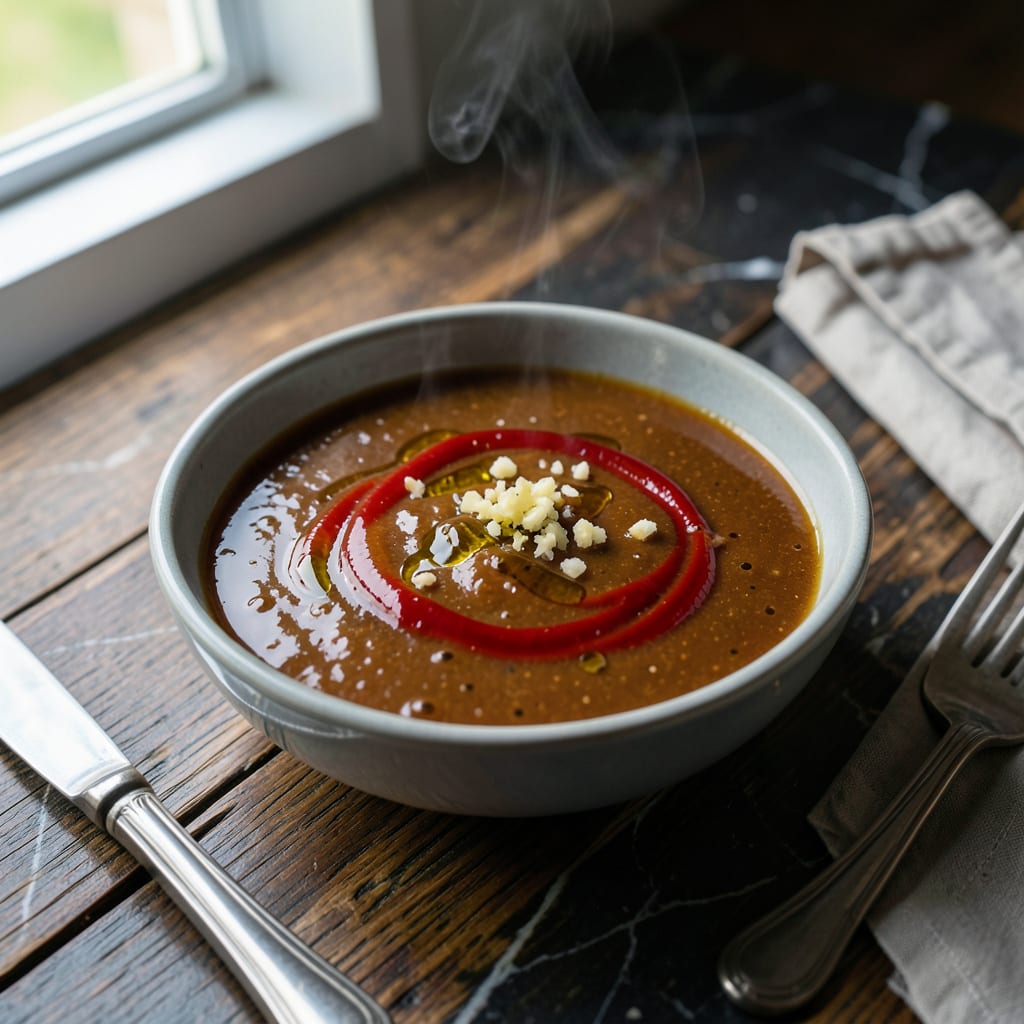
This sauce captures the essence of Korean BBQ with its perfect balance of sweet, smoky, and umami flavors. I developed this version after years of experimenting to match the depth of traditional recipes.
With just a few pantry staples and 10 minutes of simmering, you’ll create a versatile sauce that elevates grilled meats, marinades, or dipping. The authentic taste comes from the right blend of soy, sugar, and fermented ingredients.
Ingredients for Authentic Korean Bbq Sauce
Nine ingredients. Ten minutes. That authentic Korean BBQ taste you crave.
| Ingredient | Amount | Notes |
|---|---|---|
| Soy Sauce 🥫 | ¾ cup | Low-sodium preferred for balance |
| Brown Sugar 🍚 | ½ cup | Packed, light or dark |
| Honey 🍯 | ¼ cup | Pure, for natural sweetness |
| Rice Vinegar 🫗 | ¼ cup | Balances sweetness and acidity |
| Sesame Oil 🫒 | 2 tbsp | Toasted for depth of flavor |
| Gochujang 🌶️ | 2 tbsp | Korean red pepper paste, essential |
| Minced Garlic 🧄 | 3 cloves | Freshly minced for pungency |
| Grated Fresh Ginger 🌿 | 1 tbsp | Peel before grating for texture |
| Toasted Sesame Seeds 🌰 | 1 tbsp | For garnish and nutty crunch |
[recipeingredientscaler]
The gochujang is non-negotiable here—look for the red tub at H Mart or Korean markets. Brands like Sempio or Chung Jung One are solid picks. The soy sauce should be Korean if possible (Jin or Kikkoman work), but any good-quality soy sauce will do. I always grab mine from Trader Joe’s when I’m in a pinch. The brown sugar can be swapped for coconut sugar if you’re avoiding refined sugar (just watch the color).
No honey? Maple syrup or agave work in a pinch. Missing rice vinegar? Apple cider vinegar at half the amount gets you close. If you can’t find gochujang, miso paste plus a dash of cayenne mimics the funk and heat. The sesame oil must be toasted—light sesame oil won’t deliver that nutty depth. For the garlic and ginger, fresh is key (the jarred stuff lacks punch).
This keeps for 1 week in the fridge, but honestly it’s best used fresh. Freeze for up to 3 months if you make a big batch. The flavors deepen overnight, so make it a day ahead if you can. Glass jar, dark cabinet, done.
Why You’ll Love This Recipe
- Minimal Effort: I just whisk the soy sauce, honey, and vinegar together—no cooking required.
- Sweet & Tangy: The brown sugar and rice vinegar balance so well, I catch myself sneaking tastes straight from the bowl.
- Marinade to Meal: I slather it on chicken for dinner, then use the leftovers for a stir-fry the next day.
- Pantry Staples: Honestly, I always have these ingredients on hand, so it’s a last-minute lifesaver.
Step-by-Step Instructions for Korean BBQ Sauce
This is the method I use for building layers of authentic Korean flavor with perfect balance.
Step 1: Bloom Aromatics in Sesame Oil
Heat the 2 tbsp Sesame Oil in a saucepan over medium-low heat until it shimmers slightly. Add the 3 cloves Minced Garlic and 1 tbsp Grated Fresh Ginger, stirring constantly to prevent burning.
Cook for 45-60 seconds until the mixture becomes fragrant and the garlic turns pale golden. This blooming process unlocks the essential oils in both garlic and ginger, creating the aromatic foundation for the sauce. Watch carefully—garlic can go from golden to burnt in moments.
Step 2: Build the Sweet and Tangy Base
Pour in the 0.75 cup Soy Sauce, 0.5 cup Brown Sugar, 0.25 cup Honey, and 0.25 cup Rice Vinegar. Stir well to dissolve the brown sugar, which may take 1-2 minutes of constant stirring over medium heat.
The mixture will appear thin at first, but as it heats, the sugar will fully incorporate. You’re looking for a smooth, glossy liquid with no visible sugar crystals. The vinegar’s sharpness will mellow as it blends with the other ingredients, creating that signature sweet-tangy profile.
Step 3: Incorporate Gochujang for Depth
Reduce heat to low and add the 2 tbsp Gochujang, whisking vigorously to fully integrate it into the sauce. Gochujang is thick and sticky, so you’ll need to break up any clumps against the side of the pan.
Let the sauce simmer gently for 3-4 minutes. You’ll notice it thickening slightly and developing a deeper, more complex aroma. The gochujang adds not just heat but also a fermented umami richness that defines authentic Korean BBQ flavor.
Step 4: Finish and Check Consistency
Remove the sauce from heat and let it cool for 2 minutes. The sauce should coat the back of a spoon but still be pourable. If it’s too thick, whisk in 1-2 tsp of warm water to reach your desired consistency.
Stir in the 1 tbsp Toasted Sesame Seeds, reserving a pinch for garnish if desired. The seeds add a nutty crunch and visual appeal. Taste and adjust seasoning if needed, though the balance should be perfect as written. This sauce develops even more complexity after resting for 30 minutes at room temperature.
Pro Tips For Making Authentic Korean Bbq Sauce
- Simmer Low and Slow: I learned this the hard way—boil the sauce and the sugars will burn. Keep it at a gentle simmer for 8-10 minutes to let the flavors meld without scorching.
- Bloom the Sesame Oil: Add the sesame oil at the end, off the heat. My grandmother swore by this, and she was right: it preserves the nutty aroma instead of cooking it away.
- Skip the Corn Syrup: Sounds weird, but it works: swap the honey for equal parts brown sugar if you’re in a pinch, but never use corn syrup—it throws off the depth.
- Rest the Sauce: After mixing, let it sit for 15 minutes before using. I was skeptical until I tried it—the flavors actually change, rounding out the sharpness of the vinegar.
Essential Equipment for Great authentic korean bbq sauce
Quality Saucepan
A heavy-bottomed saucepan is non-negotiable for even heat distribution. I swear by my All-Clad 3-quart for this recipe—it prevents hot spots that could scorch the sugar. Medium heat is your friend here.
Whisk Selection
Use a silicone whisk to fully incorporate the gochujang without scratching your pan. The thick paste clings stubbornly, so a flat-bottom whisk helps break up clumps against the sides. I keep one dedicated to sauces.
Accurate Measuring
Precision matters with the balance of sweet, tangy, and umami. I use OXO Good Grips measuring cups for the 0.75 cup Soy Sauce and 0.5 cup Brown Sugar. The right ratios make all the difference. 🌟
Glass Storage Jars
For storing leftovers, 16-ounce mason jars work perfectly. They’re airtight, easy to clean, and let you see the beautiful color. I label mine with masking tape and a Sharpie for easy identification.
Fine Grater
For the 1 tbsp Grated Fresh Ginger, a Microplane gives you the finest texture that melts into the sauce. I also use it for the garlic when I’m feeling fancy. The finer the grate, the better the flavor distribution.
Long-Handled Spoon
A wooden spoon with a 12-inch handle keeps your hand away from the heat while stirring. Look for one with a flat edge to help scrape up any caramelized bits from the bottom of the pan. 🔥
Nutrition Facts

Trained in classic French technique but raised on slow-cooked ribs and spicy rubs, she blends culinary skill with smoke and soul.
- Recipe for Boneless Pork Chops in Cast Iron Skillet: Sear and Baste to Juicy Perfection - October 3, 2026
- Recipe for Boneless Cross Rib Roast: Slow-Roasted Beef with Herb Crust - October 3, 2026
- Hamburgers in Sauce Recipe Crock Pot: Slow-Cooked Savory Delight - October 3, 2026