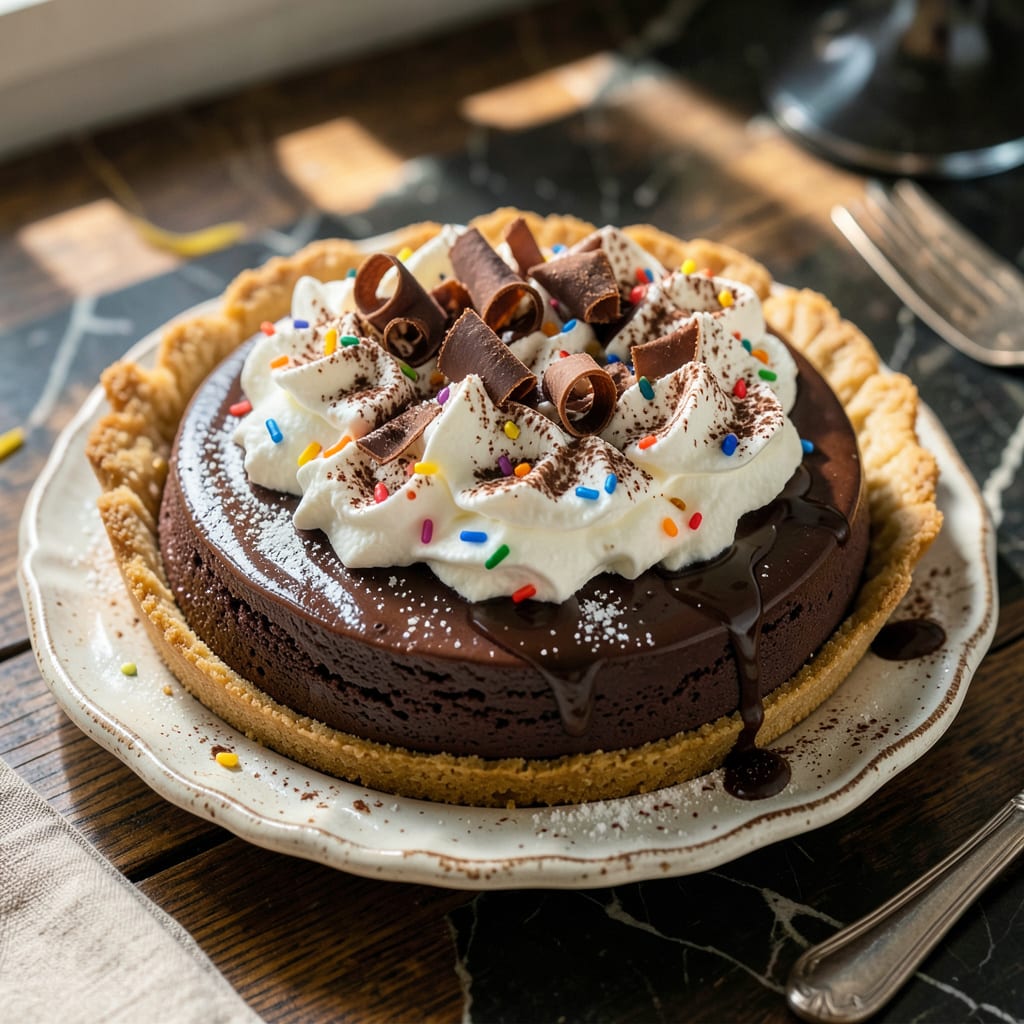
The classic box recipe combines 1 box Jell-O instant pudding mix with 1 ¾ cups cold milk, whipped topping, and a prepared graham cracker crust. Chill 4+ hours for a creamy, no-bake dessert with endless flavor variations.
This timeless no-bake dessert relies on instant pudding’s modified starches to thicken quickly when combined with cold milk—no cooking required. 🔥 The graham crust acts as a flavorful base that softens slightly from the pudding’s moisture, creating that signature creamy-yet-crunchy contrast. I love how versatile this recipe is: swap vanilla for chocolate pudding, use Oreo crumbs instead of graham, or fold in fresh fruit for a bright twist. The key is patience—rushing the chilling time can leave you with a runny filling instead of that perfect sliceable texture.
💡 In This Article
- How the Jell-O Pudding Pie Recipe Works Scientifically
- Creative Twists on the Classic Jell-O Pudding Pie Box Recipe
How the Jell-O Pudding Pie Recipe Works Scientifically
The magic happens when instant pudding mix meets cold milk. The modified cornstarch in the mix contains pre-gelatinized starch molecules that instantly absorb liquid and swell—no heat required. 🔥 These starch granules expand rapidly when hydrated, creating a network that traps milk proteins and sugars to form that signature creamy texture.
Unlike traditional pudding that requires cooking to activate starches, instant versions use chemically treated starches that respond to cold liquids.
Chilling transforms the mixture from liquid to solid through a process called gelation. As the temperature drops below 40°F, the starch network tightens and the milk proteins (casein) begin to set. This is why you’ll notice the filling thickens significantly after just 30 minutes, though full setting takes 4+ hours.
The graham crust plays a crucial role too—it absorbs just enough moisture from the filling to soften slightly while maintaining structural integrity for clean slicing.
What most people don’t realize is that the whipped topping does more than add fluffiness. The air bubbles incorporated during whipping create tiny pockets that make each bite feel lighter. These bubbles also insulate the filling slightly, helping maintain that perfect creamy consistency.
The fat in the whipped topping (typically 30-35%) coats your tongue, enhancing the perception of richness without adding heaviness.
Compare this to homemade pudding pies where you cook a custard base. Those rely on egg proteins coagulating at 160-180°F to set the structure. Instant pudding skips this step entirely, which is why it’s foolproof for beginners. The tradeoff?
Homemade versions develop deeper caramelized flavors from cooking, while instant pudding offers convenience with consistently smooth results every time. ✨
The science explains why certain mistakes ruin the texture. Overmixing after adding milk breaks down the starch network, leading to a thinner filling. Using warm milk prevents proper starch hydration, resulting in graininess. And skipping the full chill time means the protein-starch matrix hasn’t fully stabilized—hence the dreaded “pie soup” when sliced too soon.
The box instructions account for all these factors to guarantee that perfect slice.
Here’s what’s actually happening during that 4-hour chill:
- First 30 minutes: Starch granules absorb maximum liquid and begin expanding
- 1-2 hours: Protein-starch network forms but remains fragile
- 3-4 hours: Full gelation occurs as bonds strengthen and moisture redistributes
This understanding lets you troubleshoot like a pro. Need it to set faster?
Pop it in the freezer for 1 hour, then transfer to fridge. Too thick? Fold in 2-3 tablespoons extra milk before chilling. The science gives you control to adapt the classic recipe while keeping that perfect creamy-sliceable balance. 💫

Trained in classic French technique but raised on slow-cooked ribs and spicy rubs, she blends culinary skill with smoke and soul.
- Recipe for Boneless Pork Chops in Cast Iron Skillet: Sear and Baste to Juicy Perfection - October 3, 2026
- Recipe for Boneless Cross Rib Roast: Slow-Roasted Beef with Herb Crust - October 3, 2026
- Hamburgers in Sauce Recipe Crock Pot: Slow-Cooked Savory Delight - October 3, 2026