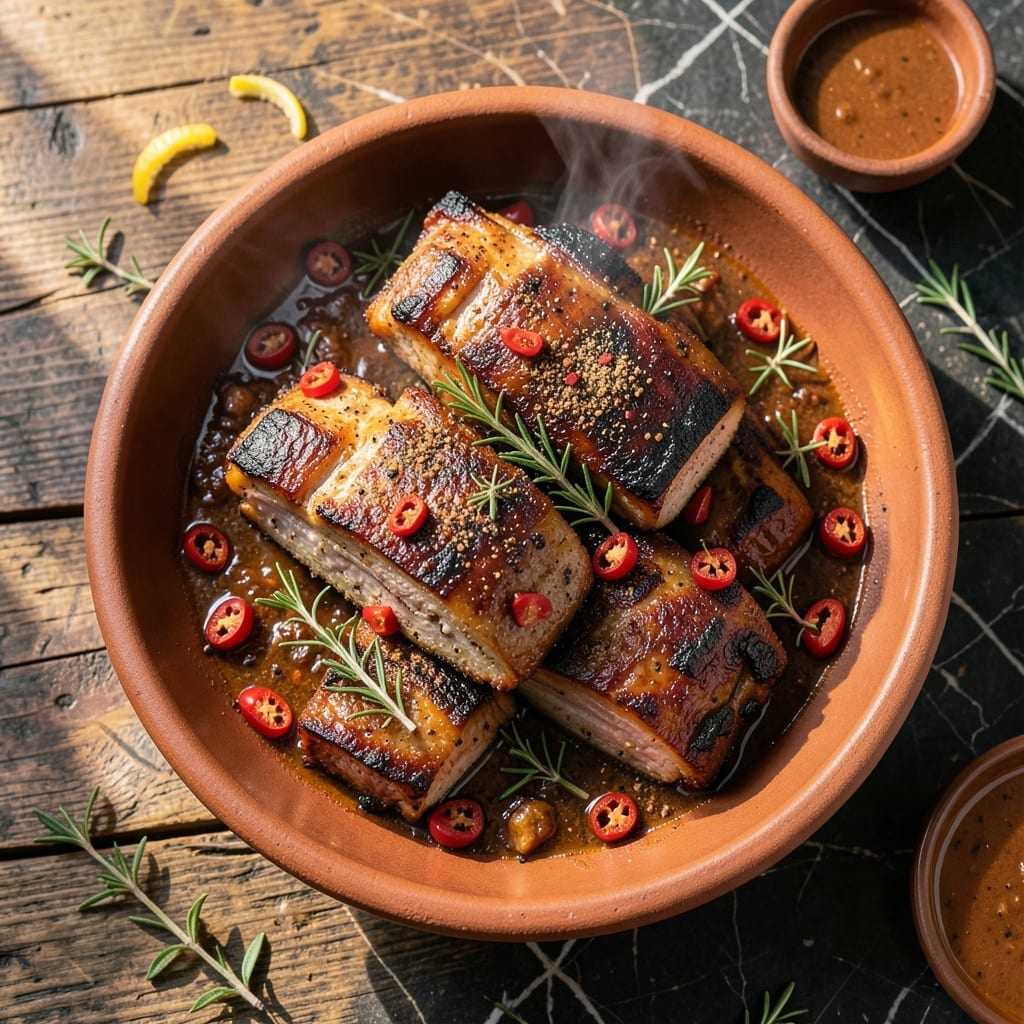
Bringing Caribbean flavors indoors is easier than you think. This stovetop method delivers bold, authentic jerk seasoning without needing a grill.
I developed this approach after years of trial and error, learning how to balance the heat and spices just right. The key is a proper marinade and careful cooking to develop depth of flavor.
What you get is tender pork infused with traditional jerk spices—allspice, Scotch bonnet, thyme—cooked to perfection. The aroma alone will transport you to a Jamaican street market.
The result is juicy, flavorful pork with that characteristic smoky-sweet-spicy profile. Ready in about 40 minutes, it’s a weeknight game-changer.
Ingredients for Jerk Pork Recipe Stove Top
Authentic Caribbean jerk spices meet tender pork for a bold, stovetop masterpiece.
| Ingredient | Amount | Notes |
|---|---|---|
| Pork Shoulder 🍖 | 1 ½ lb | Cut into 1-inch cubes, boneless |
| Ground Allspice 🌶️ | 2 tbsp | Essential jerk spice base |
| Scotch Bonnet Peppers 🌶️ | 2 whole | Seeded and minced (or habanero) |
| Fresh Thyme Leaves 🌿 | 2 tbsp | Stems removed, finely chopped |
| Ground Cinnamon 🌿 | 1 tsp | Adds warmth to jerk blend |
| Ground Nutmeg 🌰 | 1 tsp | Freshly ground preferred |
| Garlic Cloves 🧄 | 6 cloves | Minced for marinade depth |
| Soy Sauce 🥢 | ¼ cup | Low-sodium preferred |
| Brown Sugar 🍚 | 3 tbsp | Balances heat with sweetness |
| Olive Oil 🫒 | 2 tbsp | For marinade and cooking |
| Lime Juice 🍈 | 3 tbsp | Freshly squeezed for acidity |
| Fresh Ginger 🌿 | 1 tbsp | Peeled and grated |
| Green Onions 🧅 | 4 whole | Chopped, white and green parts |
| Kosher Salt 🧂 | 1 tsp | Adjust to taste |
| Black Pepper 🌶️ | 1 tsp | Freshly ground |
[recipe_ingredient_scaler]
The pork shoulder is non-negotiable here—bone-in adds flavor, but boneless cubes are easier to eat. Look for good marbling at Whole Foods or your local butcher. Scotch bonnet peppers are the true jerk star (habaneros work in a pinch). Wear gloves when handling—those oils are no joke. Fresh thyme is a must for that authentic Jamaican taste; dried just won’t cut it.
No Scotch bonnet? Habanero plus a pinch of cayenne gets you close. Missing allspice? Equal parts cinnamon, nutmeg, and cloves works in a bind. For the soy sauce, tamari or coconut aminos keep it gluten-free. The brown sugar can be swapped for coconut sugar (same amount). If you’re out of fresh ginger, ground ginger at one-third the amount will do.
Marinate the pork for at least 2 hours—overnight is ideal. Cooked jerk keeps in the fridge for 4 days or freezes for 3 months. Reheat gently to keep the meat tender (that’s when it tastes even better).
Why You’ll Love This Recipe
- One Pan Wonder: I can sear the pork shoulder and build all that jerk flavor in a single skillet—minimal cleanup, maximum taste.
- Smoky Heat: The allspice and Scotch bonnet give it that authentic Jamaican kick, while cinnamon and thyme add layers I didn’t know I needed.
- Crowd Pleaser: Honestly, it’s my go-to for game day or when friends drop by unannounced—everyone leaves asking for the recipe.
- Leftovers Gold: The flavors deepen overnight, so I make extra for next-day tacos or rice bowls that taste even better.
Step-by-Step Instructions for Jerk Pork Stove Top
Bring the islands to your kitchen with this foolproof method for bold, smoky jerk pork.
Step 1: Create the Authentic Jerk Marinade
In a large bowl, combine the 2 tbsp Ground Allspice, 2 whole Scotch Bonnet Peppers (seeded and minced), 2 tbsp Fresh Thyme Leaves, 1 tsp Ground Cinnamon, and 1 tsp Ground Nutmeg. I like to crush the allspice and nutmeg between my fingers to release their oils for maximum flavor impact.
Add the 6 cloves Garlic Cloves (minced), 0.25 cup Soy Sauce, 3 tbsp Brown Sugar, 2 tbsp Olive Oil, 3 tbsp Lime Juice, 1 tbsp Fresh Ginger (grated), and 4 whole Green Onions (chopped). Whisk until the brown sugar dissolves and the mixture becomes a thick, fragrant paste. The scent should be potent and complex—this is how you know it’s working.
Step 2: Marinate the Pork for Maximum Flavor
Pat the 1.5 lb Pork Shoulder (cut into 1-inch cubes) completely dry with paper towels. This ensures the marinade adheres properly to every piece. Place the pork in a large resealable bag or shallow dish and pour the marinade over it.
Massage the marinade into the pork for 2-3 minutes until every cube is thoroughly coated. Cover and refrigerate for at least 4 hours, or preferably overnight. The longer it marinates, the deeper the flavors penetrate. I always taste a tiny piece of the raw marinade (just a drop on my finger) to check the balance—it should be spicy, sweet, and tangy all at once.
Step 3: Sear the Pork for Deep Caramelization
Heat a large, heavy skillet (cast iron works best) over medium-high heat until it’s screaming hot—you should see a faint wisp of smoke. Add the marinated pork in a single layer, being careful not to crowd the pan. Work in batches if needed to avoid steaming the pork.
Sear undisturbed for 3-4 minutes per side until deeply browned and slightly charred in spots. The natural sugars in the marinade will caramelize, creating that signature jerk crust. You’ll notice the edges becoming dark and crispy—this is the flavor foundation we’re building. Reduce heat to medium if it starts to burn.
Step 4: Simmer to Tender Perfection
Once all pork is seared, return it to the skillet in a single layer. Pour in any remaining marinade and add ¼ cup of water. The liquid should come about halfway up the pork. Bring to a simmer, then reduce heat to medium-low.
Cover and cook for 30-40 minutes, stirring occasionally, until the pork is fork-tender and the sauce has thickened to a glossy, clinging consistency. The pork should be tender enough to pull apart with a fork and the sauce should coat the back of a spoon. If it reduces too quickly, add a splash of water to maintain the simmer.
Step 5: Rest and Adjust for Serving
Remove from heat and let the pork rest in its juices for 10 minutes. This allows the flavors to meld and the meat to reabsorb some of the sauce. Taste and adjust seasoning with 1 tsp Kosher Salt and 1 tsp Black Pepper if needed—the flavors should be bold and balanced.
Serve hot with the thickened sauce spooned over the top. The pork should have a deep, mahogany-colored crust with juicy, flavorful meat inside. The sauce should be rich and complex, with layers of spice, sweetness, and heat that linger on the palate.
Pro Tips For Making Jerk Pork Recipe Stove Top
- Sear the Pork First: I learned this the hard way—start with a hot pan and sear the pork shoulder for 3-4 minutes per side until deeply browned before adding the jerk spices. This builds a flavor base that the allspice and cinnamon can cling to.
- Wear Gloves for Peppers: Scotch bonnets are no joke; even a tiny amount of capsaicin on your fingers can ruin your evening. I was skeptical until I tried it, but thin disposable gloves make handling these peppers painless.
- Don’t Rush the Simmer: After adding the spices and liquid, keep the heat at a gentle simmer for at least 45 minutes. Resist the urge to crank it up—this slow cook time lets the thyme and allspice really sink into the meat.
- Bloom the Spices: Sounds weird, but it works: toast the ground allspice and cinnamon in the dry pan for 30 seconds before adding oil. This wakes up the flavors and makes the jerk marinade taste richer and more complex.
Dietary Considerations for This Recipe
Gluten-Free Adaptation
Swap the soy sauce for tamari or coconut aminos to eliminate gluten while keeping that umami depth. I always keep a bottle of San-J Tamari in my pantry for this exact reason. The flavor difference is minimal, and it works perfectly in this marinade. 💡
Low-Sodium Option
Use low-sodium soy sauce or coconut aminos and reduce the kosher salt to ½ tsp. The jerk spices provide plenty of flavor, so you won’t miss the salt. I’ve made this version for friends watching their sodium intake, and they never notice the difference.
Spice Level Adjustments
For milder heat, remove the seeds from the Scotch bonnet peppers or use only 1 pepper instead of 2. If you prefer more fire, add ½ tsp cayenne pepper to the marinade. I always wear gloves when handling these peppers—trust me on this one.
Sugar Alternatives
Replace the brown sugar with coconut sugar or honey for a lower glycemic index. The 3 tbsp measurement stays the same. I’ve tested both, and they caramelize just as beautifully, adding that signature jerk sweetness.
Dairy-Free Note
This recipe is naturally dairy-free, so no modifications are needed. The richness comes from the pork and the marinade itself. I love that this dish is inclusive for so many dietary needs without any extra effort.
Allergen Awareness
The main allergen here is soy from the soy sauce. For soy-free versions, use coconut aminos and ensure all other ingredients are soy-free. Always check labels on spices, as some blends may contain hidden soy. 🌱
Nutrition Facts
Frequently Asked Questions
What’s the best cut of pork for this?
Use pork shoulder for the juiciest results. Its fat content keeps the meat tender during cooking. Avoid lean cuts like tenderloin—they dry out too easily.
How do I know when the pork is done?
The pork should reach 145°F internally and pull apart easily with a fork. The sauce will thicken as it cooks down.
Can I make this ahead?
Marinate the pork overnight for deeper flavor. Cooked pork keeps in the fridge for 4 days or freezes for 3 months.
What if I don’t have Scotch bonnet peppers?
Substitute with habanero peppers or ½ tsp cayenne for similar heat. Adjust to taste—these peppers pack serious spice!

Trained in classic French technique but raised on slow-cooked ribs and spicy rubs, she blends culinary skill with smoke and soul.
- Recipe for Boneless Pork Chops in Cast Iron Skillet: Sear and Baste to Juicy Perfection - October 3, 2026
- Recipe for Boneless Cross Rib Roast: Slow-Roasted Beef with Herb Crust - October 3, 2026
- Hamburgers in Sauce Recipe Crock Pot: Slow-Cooked Savory Delight - October 3, 2026