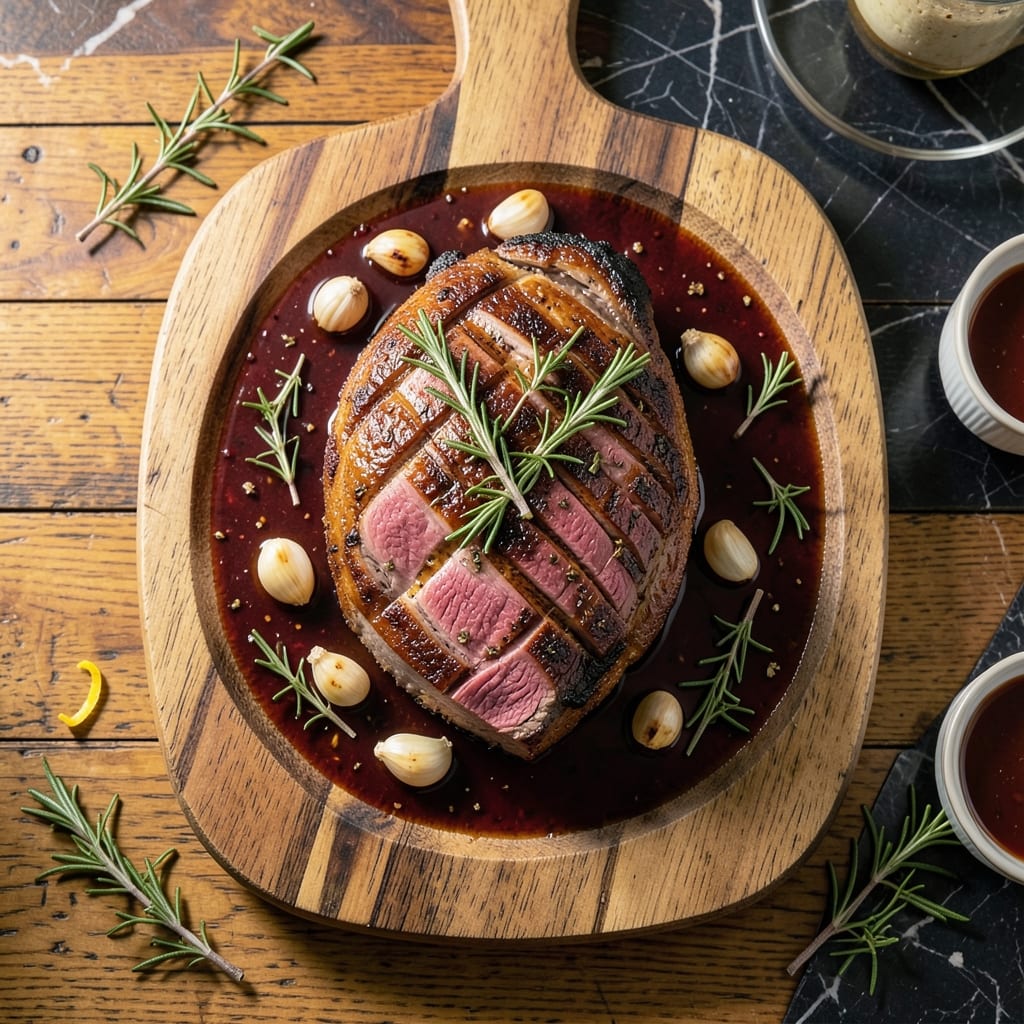
There’s nothing like a perfectly cooked prime rib to turn a meal into a celebration. This oven method delivers a herb-crusted centerpiece with a tender, juicy interior and a flavorful crust that impresses every time.
I’ve refined this technique over the years, ensuring the meat cooks evenly while the herbs and garlic form a golden seal that locks in moisture. The low-and-slow approach guarantees consistent results, whether it’s for a holiday feast or a special Sunday dinner.
The key is letting the roast rest before slicing—this ensures every bite is as succulent as the last. The aroma alone will have your guests gathering around the table in anticipation.
Serve with roasted vegetables or a simple red wine reduction to complete the experience.
Ingredients for Joy of Cooking Prime Rib Recipe Oven
A bone-in prime rib plus fresh herbs form this impressive centerpiece with rich, savory depth.
| Ingredient | Amount | Notes |
|---|---|---|
| Prime Rib Roast 🥩 | 5 lb | Bone-in, ribeye end preferred |
| Kosher Salt 🧂 | 2 tbsp | Diamond Crystal preferred for even distribution |
| Freshly Ground Black Pepper 🌶️ | 1 ½ tbsp | Coarse grind for texture |
| Garlic Cloves 🧄 | 8 cloves | Peeled and smashed into paste |
| Fresh Rosemary 🌿 | ¼ cup | Finely chopped, stems discarded |
| Fresh Thyme 🍃 | ¼ cup | Finely chopped, stems discarded |
| Dijon Mustard 🟡 | 3 tbsp | Whole grain variety acceptable |
| Extra-Virgin Olive Oil 🫒 | ¼ cup | For herb crust binding |
| Unsalted Butter 🧈 | 4 tbsp | Softened to room temperature |
| Red Wine 🍷 | 1 cup | Dry variety like Cabernet Sauvignon |
| Beef Stock 🥩 | 2 cups | Low-sodium preferred for control |
| All-Purpose Flour 🌾 | 2 tbsp | For optional pan gravy thickening |
| Shallot 🧅 | 1 whole | Finely minced for pan sauce |
[recipe_ingredient_scaler]
The prime rib is non-negotiable—bone-in ribeye end provides the best marbling and flavor. Source from a trusted butcher like Whole Foods or Local Butcher Shop for consistent quality. Request a roast with the fat cap left intact (about 1/4-inch thick) for optimal crust development. For the herbs, organic rosemary and thyme from the produce section outperform dried by a mile.
No red wine? Substitute beef stock with 1 tbsp balsamic vinegar for similar depth. Fresh herbs can be swapped for dried at one-third the quantity, though texture will differ. For a nutty twist, replace Dijon with whole grain mustard. If avoiding alcohol entirely, low-sodium beef broth works in a pinch, though the wine’s acidity adds complexity worth seeking.
Prime rib benefits from a 24-hour dry brine in the fridge (uncovered) for enhanced crust formation. Store uncooked roast on a wire rack over a tray. Leftovers keep 4-5 days refrigerated, or freeze carved slices for 3 months. Reheat gently in au jus to preserve moisture.
Why You’ll Love This Recipe
- Set It and Forget: Honestly, I just rub the prime rib with salt, pepper, garlic, and rosemary, pop it in the oven, and let the heat do the work.
- Melt-in-Your-Mouth Taste: That rosemary and garlic crust with the juicy, pink center? I make it every Christmas and my family still talks about it.
- Impresses Every Time: I’ve served this at dinner parties and casual Sunday suppers—always gets rave reviews.
- Leftovers for Days: I love slicing the extras thin for sandwiches or dice it up for tacos the next day.
Step-by-Step Instructions for Herb-Crusted Prime Rib
Master the reverse sear method for a perfectly even cook and tender, medium-rare center.
Step 1: Prepare the Herb Crust and Season the Roast
Combine the 0.25 cup Fresh Rosemary, 0.25 cup Fresh Thyme, 8 cloves Garlic Cloves (smashed into paste), 2 tbsp Kosher Salt, and 1.5 tbsp Freshly Ground Black Pepper in a bowl. Stir in the 0.25 cup Extra-Virgin Olive Oil and 3 tbsp Dijon Mustard to form a thick paste.
Pat the 5 lb Prime Rib Roast dry with paper towels, then spread the herb mixture evenly over all surfaces. This crust will form a flavorful bark during cooking. Place the roast on a wire rack set in a rimmed baking sheet, fat-side up, and refrigerate uncovered for 12-24 hours to dry the surface.
Step 2: Slow-Roast at Low Temperature
Preheat your oven to 250°F. Remove the roast from the refrigerator and let it sit at room temperature for 1 hour before cooking. This ensures even heat distribution throughout the meat.
Roast the prime rib on the center rack for 2.5-3 hours, or until an instant-read thermometer inserted into the thickest part registers 120-125°F for medium-rare. The low-and-slow method guarantees a uniform doneness from edge to edge, with no overcooked edges.
Step 3: Sear for a Perfect Crust
Increase the oven temperature to 450°F. Spread the 4 tbsp Unsalted Butter over the top of the roast. Return it to the oven and cook for 10-15 minutes, or until the exterior develops a deep, golden-brown crust.
Watch closely during this phase to prevent burning. The butter will create a rich, glossy finish while enhancing the herb crust’s aroma. Remove the roast when the internal temperature reaches 130°F, as it will continue to rise during resting.
Step 4: Rest and Prepare the Pan Gravy
Transfer the prime rib to a cutting board and tent loosely with foil. Let it rest for 30 minutes before carving. This allows the juices to redistribute, ensuring each slice is moist and flavorful.
Place the baking sheet on the stovetop over medium heat. Add the 1 whole Shallot (finely minced) and cook for 2 minutes until softened. Pour in the 1 cup Red Wine and simmer for 3 minutes, scraping up the browned bits. Stir in the 2 cups Beef Stock and 2 tbsp All-Purpose Flour, then simmer for 5 minutes until thickened. Strain and serve with the prime rib.
Pro Tips For Making Joy Of Cooking Prime Rib Recipe Oven
- Reverse Sear First: Start at 200°F until the internal temp hits 110°F, then crank it to 450°F for 15-20 minutes for that perfect crust—I learned this the hard way after my first few roasts came out uneven.
- Salt Overnight: Dry-brine the roast with kosher salt at least 12 hours before cooking; it penetrates deeper than a last-minute rub and guarantees juicier meat.
- Skip the Cold Roast: Pull the prime rib out of the fridge 2-3 hours before cooking so it cooks evenly—my first attempt was still cold in the middle and overdone on the ends.
- Crush the Garlic: Smash the garlic cloves with the flat of your knife before rubbing them on the meat; it releases more flavor and sticks better than whole cloves.
Health Benefits of joy of cooking prime rib recipe oven
Rich Protein Source
This roast delivers an impressive 45 grams of protein per serving, supporting muscle growth and repair. The high-quality protein in beef contains all essential amino acids, making it a complete protein source. I love knowing this meal fuels our active family in Portland. 💪
Iron and Zinc Boost
Prime rib is packed with heme iron—the most easily absorbed form—which helps prevent anemia. A single serving provides about 25% of your daily iron needs. It’s also rich in zinc, crucial for immune function and wound healing.
B Vitamin Complex
You’ll get a full spectrum of B vitamins, especially B12, B6, and niacin. These support energy metabolism and nervous system health. The natural marbling in prime rib enhances the absorption of these fat-soluble nutrients.
Healthy Fats
While moderate in saturated fat, prime rib provides monounsaturated fats when trimmed properly. The fat cap renders during cooking, creating that flavorful crust while contributing to satiety. I find the fats here more satisfying than processed alternatives.
Selenium and Antioxidants
This cut offers selenium, a powerful antioxidant that protects cells from damage. Combined with the zinc content, it supports thyroid function and boosts immunity. The herbs in our crust add their own antioxidant properties. 🌱
Low-Carb Friendly
With zero carbohydrates naturally, this dish fits perfectly into low-carb or keto diets. The protein and fat content keep you full for hours, making it ideal for special occasions without the carb crash. I often serve it with roasted seasonal veggies.
Nutrition Facts
Frequently Asked Questions
Should I use a meat thermometer?
For perfect results, use an instant-read thermometer to check the internal temperature. Aim for 120-125°F for medium-rare before resting. This ensures you avoid overcooking.
Can I prepare the herb crust ahead of time?
Yes! Mix the herb paste up to 2 days in advance and store it in the fridge. Spread it on the roast just before the dry brine step for freshest flavor.
What if my prime rib doesn’t have a fat cap?
Ask your butcher to leave a 1/4-inch fat cap intact. Without it, the crust may not develop as well, and the meat could dry out. Always specify your preference when ordering.
How do I know when it’s done resting?
The internal temperature will rise 5-10°F during resting. After 30 minutes, it’s ready to carve. This step is crucial for juicy slices.

Trained in classic French technique but raised on slow-cooked ribs and spicy rubs, she blends culinary skill with smoke and soul.
- Recipe for Boneless Pork Chops in Cast Iron Skillet: Sear and Baste to Juicy Perfection - October 3, 2026
- Recipe for Boneless Cross Rib Roast: Slow-Roasted Beef with Herb Crust - October 3, 2026
- Hamburgers in Sauce Recipe Crock Pot: Slow-Cooked Savory Delight - October 3, 2026