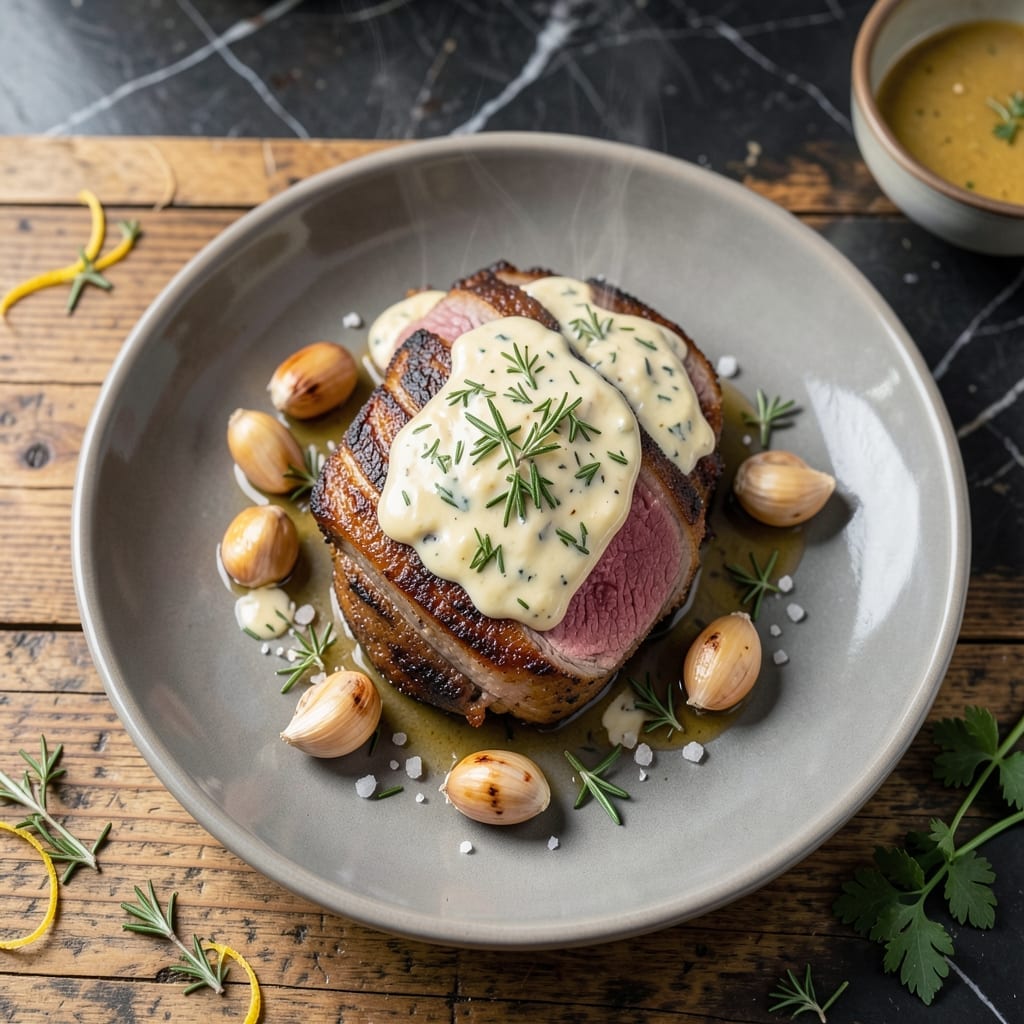
This prime rib delivers a succulent center with an aromatic herb crust that’s impossible to resist. The butter and herb blend creates a golden, flavorful seal that locks in juices.
With precise oven temperatures and resting time, you’ll achieve restaurant-quality results every time. The method ensures a perfectly cooked roast with a rich, savory exterior.
Ingredients for Prime Rib Recipe with Butter and Herbs
Restaurant-quality roast begins with prime ingredients and a fragrant herb-butter crust.
| Ingredient | Amount | Notes |
|---|---|---|
| Prime Rib Roast 🥩 | 4 lb | Bone-in, well-marbled preferred |
| Unsalted Butter 🧈 | ½ cup | Room temperature, softened |
| Fresh Rosemary 🌿 | 2 tbsp | Finely chopped, stems discarded |
| Fresh Thyme 🍃 | 2 tbsp | Leaves stripped from stems |
| Garlic Cloves 🧄 | 6 cloves | Minced to fine paste |
| Kosher Salt 🧂 | 2 tbsp | Diamond Crystal preferred |
| Freshly Ground Black Pepper 🌶️ | 2 tsp | Coarse grind for texture |
| Dijon Mustard 🟡 | 2 tbsp | For herb crust adhesion |
| Shallots 🧅 | 2 whole | Finely minced for depth |
| Red Wine 🍷 | ½ cup | Dry variety for deglazing |
| Beef Stock 🥣 | 1 cup | Low-sodium for reduction |
| Extra-Virgin Olive Oil 🫒 | 2 tbsp | For high-heat searing |
[recipe_ingredient_scaler]
The prime rib itself demands attention. Bone-in roasts from reputable butchers like Whole Foods or Local Farms ensure superior marbling and flavor. Look for USDA Prime grade if available—its fat cap renders beautifully during cooking. The butter should be European-style (82% fat content) for richer crust formation, and herbs must be fresh for vibrant aroma.
No fresh rosemary or thyme? Dried herbs at one-third the amount work, though fresh is strongly preferred. Out of Dijon? Whole-grain mustard adds pleasant texture, while dry white wine can replace red in a pinch. For the stock, Better Than Bouillon paste creates an intense base. The garlic can be pre-minced from jars (the good stuff, not the watery kind) if time is limited.
Prime rib benefits from dry aging in your fridge—unwrapped on a rack for 24-48 hours intensifies flavor. Leftovers keep for 4-5 days and make incredible sandwiches. The herb butter can be prepared 2 days ahead and refrigerated until ready to use.
Why You’ll Love This Recipe
- Set It & Forget: The prime rib does all the work in the oven while I sip coffee or prepping sides.
- Butter & Herb Magic: That crust from the garlic, rosemary, and thyme butter? Ridiculously good.
- Holiday Star: I make this for Christmas and birthdays—always impresses with zero stress.
- Leftovers Luxury: The next-day sandwiches with the herby au jus for dipping? I live for those.
Step-by-Step Instructions for Prime Rib With Butter and Herbs
Master the technique for a perfectly seared crust and evenly cooked interior every time.
Step 1: Prepare the Herb Butter and Season the Roast
In a small bowl, combine the 0.5 cup unsalted butter with 2 tbsp fresh rosemary, 2 tbsp fresh thyme, 6 cloves garlic cloves, 2 tbsp kosher salt, and 2 tsp freshly ground black pepper. Mix thoroughly until the herbs and garlic are evenly distributed throughout the butter.
Pat the 4 lb prime rib roast dry with paper towels to ensure a good sear. Rub the entire surface with 2 tbsp Dijon mustard—this acts as a glue for the herb butter. Spread the herb butter mixture evenly over the roast, pressing it into all crevices. Let the roast sit at room temperature for 1 hour to take the chill off.
Step 2: Sear the Roast for a Flavorful Crust
Preheat your oven to 450°F. In a large oven-safe roasting pan or Dutch oven, heat 2 tbsp extra-virgin olive oil over medium-high heat until shimmering. Place the roast in the pan, fat-side down, and sear for 3-4 minutes until deeply browned.
Turn the roast and sear the other sides for 2-3 minutes each until uniformly browned. This step develops a rich, aromatic crust. Remove the roast from the pan and set it on a wire rack placed over a rimmed baking sheet.
Step 3: Roast to Perfection
Insert a meat thermometer into the thickest part of the roast, avoiding bone and fat. Place the roast in the preheated oven and reduce the temperature to 325°F. Roast for approximately 1.5 to 2 hours, or until the internal temperature reaches 125-130°F for medium-rare.
The exact cooking time depends on your oven and the roast’s shape. Baste the roast with its juices every 30 minutes to enhance flavor and moisture. The crust should be deep golden brown and the meat should feel slightly springy to the touch.
Step 4: Rest and Prepare the Pan Sauce
Transfer the roast to a cutting board and tent loosely with aluminum foil. Let it rest for 20-30 minutes to allow the juices to redistribute. Meanwhile, place the roasting pan on the stovetop over medium heat.
Add 2 whole shallots to the pan and sauté for 2 minutes until softened. Deglaze with 0.5 cup red wine, scraping up the browned bits. Simmer for 3-4 minutes until reduced by half. Add 1 cup beef stock and simmer for another 5-6 minutes until the sauce thickens slightly. Strain and serve alongside the sliced roast.
Pro Tips For Making Prime Rib Recipe With Butter And Herbs
- Reverse Sear First: Start at 250°F until internal temp hits 110°F for medium-rare, then blast with 450°F for 10-15 minutes to get that buttery herb crust—I learned this the hard way after serving gray prime rib to my in-laws.
- Dry the Roast: Pat the prime rib bone-dry with paper towels before seasoning, or the butter-herb rub won’t stick properly and you’ll end up with a steamed exterior instead of a caramelized crust.
- Skip Cold Butter: Let the unsalted butter sit out for 30 minutes before mixing with rosemary, thyme, and garlic—cold butter won’t incorporate well and you’ll waste time mashing it into a paste.
- Rest Under Foil: Tent the roast with foil and let it rest 20-30 minutes after cooking; it keeps the juices from pooling on the cutting board and makes carving a hell of a lot easier.
Pro Cooking Tips for This Dish
💡 Master the Heat
Start with a high-heat sear (450°F) to lock in juices and create a flavorful crust. After 20 minutes, reduce the oven temp to 325°F for slow, even cooking. This two-step method ensures a perfect medium-rare center while keeping the exterior crispy and golden.
✨ Let It Rest
Resist the urge to slice immediately! Let the roast rest for 15–20 minutes after removing it from the oven. This allows the juices to redistribute, guaranteeing moist, tender meat in every bite. Cover loosely with foil to retain heat.
🌡️ Use a Meat Thermometer
Guesswork leads to overcooking. Aim for an internal temp of 125–130°F for medium-rare. Insert the thermometer into the thickest part, avoiding bone or fat. Precision here means a melt-in-your-mouth result every time.
🎯 Herb Butter Perfection
For maximum flavor, mix softened butter with fresh rosemary, thyme, and garlic before rubbing it under the fat cap. This not only seasons the meat but also creates a rich, aromatic crust as it roasts.
Nutrition Facts

Trained in classic French technique but raised on slow-cooked ribs and spicy rubs, she blends culinary skill with smoke and soul.
- Recipe for Boneless Pork Chops in Cast Iron Skillet: Sear and Baste to Juicy Perfection - October 3, 2026
- Recipe for Boneless Cross Rib Roast: Slow-Roasted Beef with Herb Crust - October 3, 2026
- Hamburgers in Sauce Recipe Crock Pot: Slow-Cooked Savory Delight - October 3, 2026