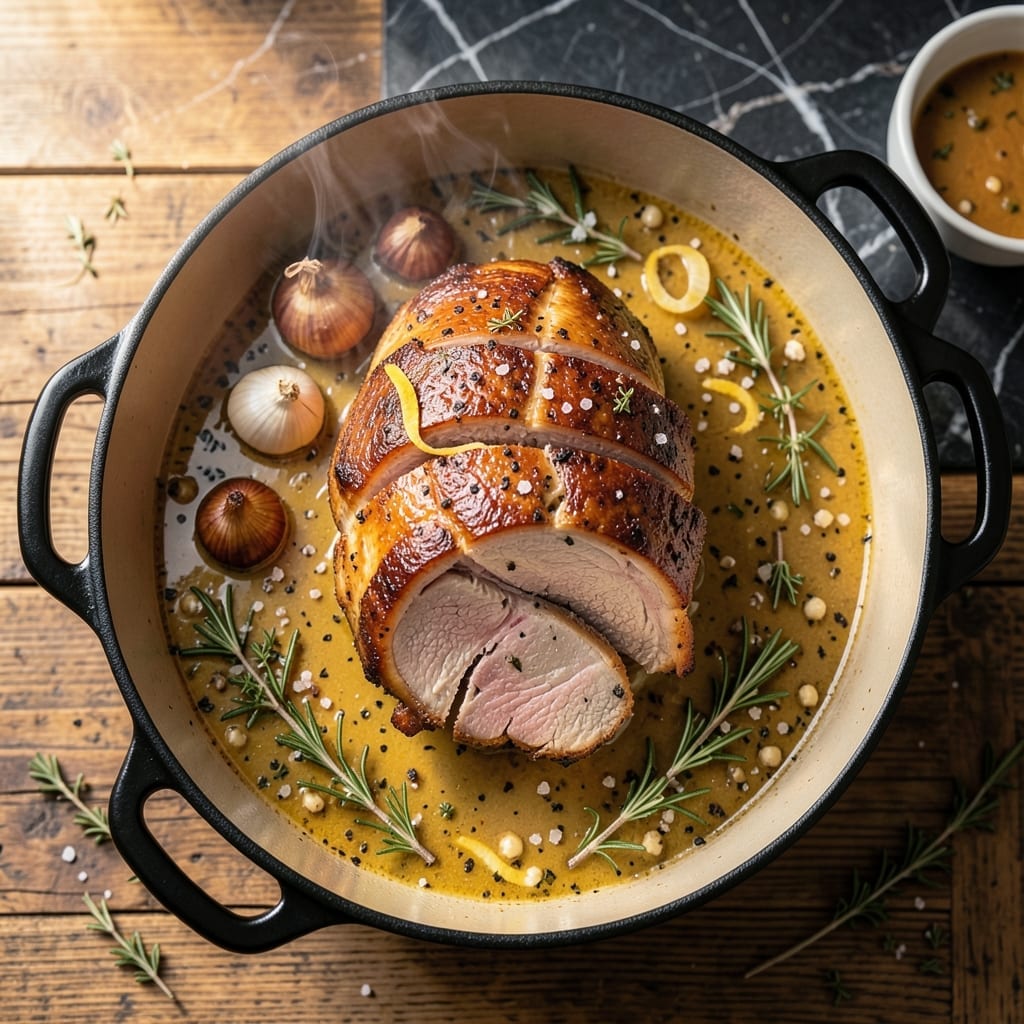
My grandmother’s pork roast always came out juicy without a single measurement written down. I spent years decoding her intuitive method into a foolproof technique anyone can follow.
The secret lies in starting with a high-heat sear to lock in moisture, then finishing low and slow. A simple herb crust forms a golden, flavorful exterior while keeping the meat tender and succulent.
What emerges from the oven is a centerpiece-worthy roast with a perfectly caramelized crust and interior so tender it falls apart with minimal effort. The aromas alone will have everyone gathered around the table.
This method delivers consistent results every time, proving that juicy pork doesn’t require complicated techniques—just patience and the right approach.
Ingredients for Juicy Pork Roast Recipe Oven
A bone-in pork shoulder and fresh herbs create this oven-roasted centerpiece with golden crust.
| Ingredient | Amount | Notes |
|---|---|---|
| Pork Shoulder Roast 🥩 | 3 lb | Bone-in preferred for moisture |
| Kosher Salt 🧂 | 1 ½ tbsp | Diamond Crystal brand recommended |
| Black Pepper 🌶️ | 1 tbsp | Freshly ground coarse |
| Garlic Cloves 🧄 | 6 cloves | Minced finely for crust |
| Fresh Rosemary 🌿 | 2 tbsp | Chopped, stems discarded |
| Fresh Thyme 🍃 | 2 tbsp | Leaves stripped from stems |
| Dijon Mustard 🟡 | ¼ cup | Whole grain preferred |
| Olive Oil 🫒 | ¼ cup | Extra-virgin for searing |
| Chicken Stock 🍲 | 1 cup | Low-sodium for control |
| Dry White Wine 🍷 | ½ cup | Sauvignon Blanc or Pinot Grigio |
| Yellow Onion 🧅 | 1 whole | Large, roughly chopped |
| Carrots 🥕 | 3 whole | Peeled, cut into chunks |
| Celery Stalks 🌿 | 3 whole | Cut into 2-inch pieces |
[recipe_ingredient_scaler]
The pork shoulder is non-negotiable here. Bone-in ensures maximum juiciness—look for good marbling at Whole Foods or a reputable butcher. The herb combination of rosemary and thyme forms the classic crust; organic fresh herbs from the farmers market have superior aroma. For the wine, any crisp dry white works—Trader Joe’s has affordable options that won’t overpower the dish.
No pork shoulder? Pork loin works at a 1:1 ratio but requires careful monitoring to prevent drying. Fresh herbs unavailable? Dried at one-third quantity, though the flavor profile will be less vibrant. For a non-alcoholic version, substitute additional chicken stock for the wine. The mustard can be swapped for whole grain mustard if that’s your preference.
The roast benefits from resting 15-20 minutes before slicing. Store leftovers in airtight containers for 4-5 days in the fridge or freeze portions for 3 months. Reheat gently in the oven to maintain moisture.
Why You’ll Love This Recipe
- Set It & Forget It: I rub the pork with salt, pepper, and rosemary, pop it in the oven, and let it do its thing.
- Garlic-Rosemary Magic: That combo with the pork’s natural juices? Ridiculously good.
- Feeds the Gang: One roast, multiple meals—sandwiches, tacos, or just as-is.
- Leftovers for Days: Honestly, it tastes even better the next day in a sandwich or stew.
Step-by-Step Instructions for Herb-Crusted Pork Roast
This method ensures maximum moisture retention and a perfectly golden, herb-infused crust every time.
Step 1: Prepare the Herb Crust and Season the Roast
In a small bowl, combine the 0.25 cup Dijon mustard, 1.5 tbsp Kosher Salt, 1 tbsp Black Pepper, minced 6 cloves Garlic Cloves, chopped 2 tbsp Fresh Rosemary, and 2 tbsp Fresh Thyme. This paste will create a flavorful seal that locks in juices.
Pat the 3 lb Pork Shoulder Roast completely dry with paper towels. Rub the herb mixture evenly over the entire surface of the roast, pressing it into the meat. I’ve found that massaging the paste into every crevice ensures the crust adheres properly and infuses the meat with aromatic depth.
Step 2: Sear the Roast for a Golden Crust
Heat the 0.25 cup Olive Oil in a large Dutch oven or heavy-bottomed pot over medium-high heat until shimmering. Add the roast and sear on all sides for 3-4 minutes per side until deeply browned. You’ll know it’s ready to turn when the crust releases easily from the pot.
This searing step is critical—it develops the Maillard reaction, creating complex flavors and that coveted golden crust. Don’t rush it; the deep caramelization here translates directly to the final dish’s depth of flavor.
Step 3: Deglaze and Add Aromatics
Remove the roast and set it aside. In the same pot, add the roughly chopped 1 whole Yellow Onion, 3 whole Carrots, and 3 whole Celery Stalks. Sauté for 3-4 minutes until the vegetables begin to soften and brown.
Pour in the 0.5 cup Dry White Wine and scrape up all the browned bits from the bottom of the pot with a wooden spoon. This deglazing step dissolves the fond into the liquid, building layers of flavor. Let the wine reduce by half, about 2-3 minutes.
Step 4: Braise to Juicy Perfection
Return the roast to the pot, add the 1 cup Chicken Stock, and bring to a gentle simmer. Cover and transfer to a preheated 325°F oven. Braise for 2.5 to 3 hours, turning the roast every 45 minutes to ensure even cooking.
The pork is done when it reaches an internal temperature of 195°F and a fork slides in with no resistance. At this point, the collagen in the pork shoulder has fully broken down, guaranteeing a juicy, fall-apart texture. The braising liquid should be rich and aromatic, ready to serve alongside the roast.
Pro Tips For Making Juicy Pork Roast Recipe Oven
- Start High, Finish Low: Sear the pork shoulder at 450°F for 20 minutes to lock in juices, then drop to 325°F for slow roasting—I learned this the hard way after my first few attempts came out dry.
- Score the Fat: Cut 1-inch slits in the fat cap before seasoning so the salt, garlic, and rosemary penetrate deep, not just sit on the surface.
- Don’t Rush Resting: Let the roast rest under foil for at least 15 minutes after pulling it from the oven—skipping this is why your pork drips all its juices onto the cutting board.
- Use a Meat Thermometer: Pull it at 195°F internal temp, not when it “looks done”—I burned three roasts before I stopped guessing.
Essential Equipment for Perfect Results
Oven and Thermometer
A reliable oven is essential—most home ovens work fine, but I recommend using an oven thermometer to verify the temperature. Many ovens can be off by 10-15°F, which can significantly impact cooking times. I use a Taylor Precision oven thermometer from my local grocery store. 🌡️
Dutch Oven or Heavy Pot
Invest in a heavy-bottomed Dutch oven—it conducts heat evenly and maintains consistent temperatures. A 5-6 quart size works perfectly for this roast. I love my Lodge enameled cast iron, which I found at a neighborhood specialty shop.
Instant-Read Thermometer
An instant-read thermometer is non-negotiable for checking the pork’s internal temperature. Aim for one that reads in 2-3 seconds. The ThermoWorks ThermoPop is both affordable and accurate—available at most kitchen stores.
Wooden Spoon
A sturdy wooden spoon is perfect for deglazing and stirring without scratching your pot. I prefer a long-handled one to keep my hands safe from the heat. It’s also ideal for pressing the herb crust into the meat.
Sharp Chef’s Knife
A sharp chef’s knife makes prepping the vegetables and herbs quick and safe. I use an 8-inch Victorinox from my farmers market. Dull knives slip easily and can lead to accidents—keep yours honed!
Cutting Board
Use a large cutting board with a groove to catch juices. A 12×18-inch board gives you plenty of space for prepping all the ingredients at once. Honestly, it’s one of the most underrated tools in my kitchen. 💪
Nutrition Facts
Frequently Asked Questions
What’s the best cut for a tender roast?
Pork shoulder with the bone in guarantees the juiciest results. The connective tissue breaks down during slow cooking, creating that fall-apart texture. Avoid lean cuts like tenderloin for this method.
How do I prevent dry meat?
Start with a high-heat sear and finish at 325°F. Use enough liquid to cover the bottom of the pot, and don’t skip the resting time—15-20 minutes lets juices redistribute.
Can I use dried herbs instead?
Yes, but reduce the amount to 1/3 of fresh. Rehydrate them in 1 tablespoon warm water before mixing with the mustard paste for better flavor distribution.
Why does the internal temp need to reach 195°F?
At 195°F, collagen fully converts to gelatin, creating that signature melt-in-your-mouth texture. Lower temps may leave the meat tough, even if it’s technically “done” at 145°F.

Trained in classic French technique but raised on slow-cooked ribs and spicy rubs, she blends culinary skill with smoke and soul.
- Recipe for Boneless Pork Chops in Cast Iron Skillet: Sear and Baste to Juicy Perfection - October 3, 2026
- Recipe for Boneless Cross Rib Roast: Slow-Roasted Beef with Herb Crust - October 3, 2026
- Hamburgers in Sauce Recipe Crock Pot: Slow-Cooked Savory Delight - October 3, 2026