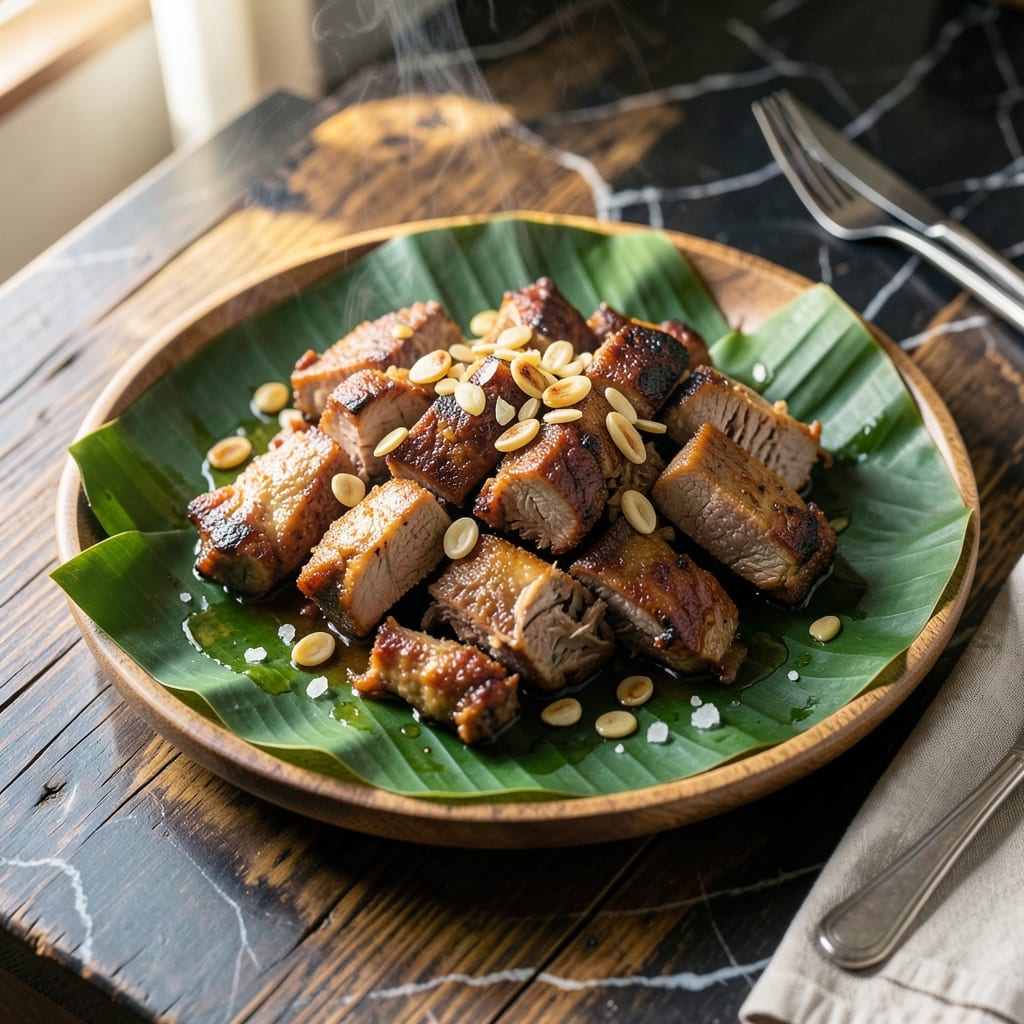
This slow-cooked creation brings the flavors of Hawaii to your kitchen with minimal effort. Traditional imu methods inspire the tender results, but a standard slow cooker works just as well.
I’ve adapted this recipe to honor Sam Choy’s approach while keeping it accessible for home cooks. The key is patience—low heat transforms tough pork shoulder into pull-apart perfection.
What you’ll get is juicy, smoky-sweet meat that melts in your mouth, just like the kind served at a proper luau. No fancy equipment required.
Serve it with rice and cabbage for an authentic island meal. Here’s how to make it right every time.
Ingredients for Kalua Pork Recipe Sam Choy
Simple island flavors meet your slow cooker. Pork, salt, and smoke do all the work.
| Ingredient | Amount | Notes |
|---|---|---|
| Pork Shoulder 🥩 | 4 lb | Boneless, cut into large chunks |
| Hawaiian Sea Salt 🧂 | 1 tbsp | Coarse, or alaea salt preferred |
| Liquid Smoke 💨 | 1 tbsp | For authentic smoky flavor |
| Water 💧 | 1 cup | Or substitute chicken broth |
| Banana Leaves 🍌 | 2 pieces | Optional, for wrapping pork |
| Garlic Cloves 🧄 | 6 cloves | Smashed, peeled |
| Ginger 🌿 | 1 whole | 2-inch piece, sliced |
| Green Onions 🧅 | 4 whole | Chopped, for garnish |
| White Rice 🍚 | 2 cups | Uncooked, for serving |
| Cabbage 🥬 | ½ whole | Green or Napa, shredded |
| Soy Sauce 🫒 | 2 tbsp | For seasoning, optional |
| Brown Sugar 🍚 | 2 tbsp | For caramelized crust |
[recipe_ingredient_scaler]
The pork shoulder is non-negotiable here—bone-in or boneless both work (I prefer boneless for easier shredding). Costco or Sam’s Club have great prices on large cuts, or ask your butcher to cube it for you. Hawaiian sea salt (alaea salt) gives that authentic mineral tang, but any coarse kosher salt works in a pinch. Don’t skip the liquid smoke—it’s the secret to that imu pit flavor without the actual pit.
No banana leaves? Parchment paper or foil wraps the pork just fine. Short on time? Pressure cooker cuts it to 2 hours on high. If you want extra richness, swap the water for low-sodium chicken broth. The green onions are for freshness at the end—don’t cook them in, just sprinkle on top. Frozen ginger works too (thaw and slice).
Leftovers keep 4-5 days in the fridge, or freeze for 3 months (it’s even better reheated). The cabbage and rice are best fresh, but the pork itself holds up great. Portion into containers for easy lunches.
Why You’ll Love This Recipe
- Set It and Forget: I toss the pork shoulder with Hawaiian sea salt and liquid smoke, wrap it in banana leaves, and let it cook low and slow—hardly any hands-on time.
- Smoky Island Magic: The combo of liquid smoke and banana leaves gives it that authentic kalua flavor without a traditional imu pit.
- Feeds a Hungry Crowd: Honestly, this makes enough for a luau or meal prep for the week, and it reheats like a dream.
- Budget-Friendly Feast: Pork shoulder is cheap, and this recipe stretches it into a meal that feels special without breaking the bank.
Step-by-Step Instructions for Kalua Pork
Here’s how I create that melt-in-your-mouth texture every time with this traditional method.
Step 1: Season and Prepare the Pork
Start by rubbing the 4 lb Pork Shoulder chunks all over with 1 tbsp Hawaiian Sea Salt. I like to press it in firmly so it really adheres to the meat. Then drizzle 1 tbsp Liquid Smoke over all the pieces, making sure each chunk gets an even coating.
This step is where the magic begins—the salt starts breaking down the muscle fibers for tenderness while the liquid smoke gives that authentic Hawaiian imu (underground oven) flavor. Let the seasoned pork sit for 10 minutes while you prep the other ingredients.
Step 2: Wrap in Banana Leaves (If Using)
Lay out the 2 pieces Banana Leaves on your work surface. If they’re stiff (which they often are when bought frozen), run them under warm water for 30 seconds to soften. Place half the pork chunks on each leaf, then divide the 6 cloves Garlic Cloves and sliced ginger evenly over the meat.
Fold the leaves up and around the pork, creating tight packets. The banana leaves add another layer of authentic flavor and help keep the pork incredibly moist during cooking. If you don’t have banana leaves, you can skip this step and cook directly in the slow cooker.
Step 3: Slow Cook to Perfection
Place your wrapped pork packets (or seasoned pork chunks) in the slow cooker. Pour 1 cup Water around the base—not over the pork. Add the 2 tbsp Brown Sugar to the water, which will create that signature caramelized crust on the pork as it cooks.
Cover and cook on low heat for 8-10 hours or on high heat for 5-6 hours. You’ll know it’s done when the pork shreds easily with a fork and reaches an internal temperature of 195-200°F. The meat should be so tender it falls apart at the slightest touch.
Step 4: Shred and Serve
Carefully unwrap the pork (if using banana leaves) and transfer to a large bowl. Shred the meat using two forks, pulling it apart into bite-sized pieces. The pork should be incredibly juicy and flavorful from the long, slow cooking process.
Serve the kalua pork over 2 cups White Rice with shredded 0.5 whole Cabbage on the side. For extra flavor, drizzle with 2 tbsp Soy Sauce and top with chopped green onions. The cabbage soaks up all the delicious pork juices beautifully.
Pro Tips For Making Kalua Pork Recipe Sam Choy
- Rub Overnight: I learned this the hard way—coat the pork shoulder with Hawaiian sea salt the night before, not just before cooking. It penetrates deeper and gives that authentic kalua flavor.
- Use Real Banana Leaves: Skip the foil substitute; real banana leaves add a subtle earthy aroma that aluminum just can’t replicate. I was skeptical until I tried it.
- Don’t Overdo Liquid Smoke: Start with 1 teaspoon of liquid smoke per pound of pork—it’s potent. After burning a batch with too much, I now measure carefully.
- Low and Slow Wins: Keep the oven at 300°F and give it 6-8 hours. Sounds tedious, but rushing with higher heat dries it out every time.
Troubleshooting This Recipe
Too Salty?
If your pork turns out overly salty, it’s likely from using regular table salt instead of coarse Hawaiian sea salt. I learned this the hard way—table salt is much denser. Soak the cooked pork in warm water for 10-15 minutes to draw out excess salt, then pat dry. 💡
Not Smoky Enough
When the smoky flavor is weak, you probably used stale liquid smoke. Check the expiration date—it loses potency over time. Add an extra ½ tbsp during cooking, or brush the meat with smoked paprika mixed with oil before serving.
Dry Pork Problem
Dry results usually mean the cooker ran out of liquid. Always add at least 1 cup water at the start. If it still dries out, inject the pork with ½ cup chicken broth halfway through cooking. I also tent mine with foil after shredding to retain moisture.
Banana Leaf Issues
If your banana leaves tear when wrapping, thaw them completely and warm under running water for 1 minute to make them pliable. Secure with kitchen twine if needed. No leaves? Use parchment paper—it won’t add flavor but keeps the meat juicy.
Undercooked Pork
Pork needs to reach 195-200°F internal temperature to shred properly. If it’s tough after 8 hours on low, give it another 1-2 hours. Never rush it—this is the one dish where patience truly pays off.
Nutrition Facts
Frequently Asked Questions
What can I use instead of banana leaves?
Use parchment paper or aluminum foil to wrap the pork. While they won’t add flavor, they’ll keep the meat juicy during cooking. Secure with kitchen twine if needed.
Can I cook this in an Instant Pot?
Yes! Cook on high pressure for 90 minutes, then natural release. The texture won’t be quite as tender as slow cooking, but it’s a great time-saver. Add an extra ½ cup broth for moisture.
Why is my pork tough instead of shredding?
It likely didn’t cook long enough. Pork needs to reach 195-200°F internally to break down properly. Give it another 1-2 hours on low heat if needed. Patience is key!
How do I store leftovers?
Store in the fridge for 4-5 days or freeze for up to 3 months. Reheat gently with a splash of water to prevent drying out. It often tastes even better the next day!

Trained in classic French technique but raised on slow-cooked ribs and spicy rubs, she blends culinary skill with smoke and soul.
- Recipe for Boneless Pork Chops in Cast Iron Skillet: Sear and Baste to Juicy Perfection - October 3, 2026
- Recipe for Boneless Cross Rib Roast: Slow-Roasted Beef with Herb Crust - October 3, 2026
- Hamburgers in Sauce Recipe Crock Pot: Slow-Cooked Savory Delight - October 3, 2026