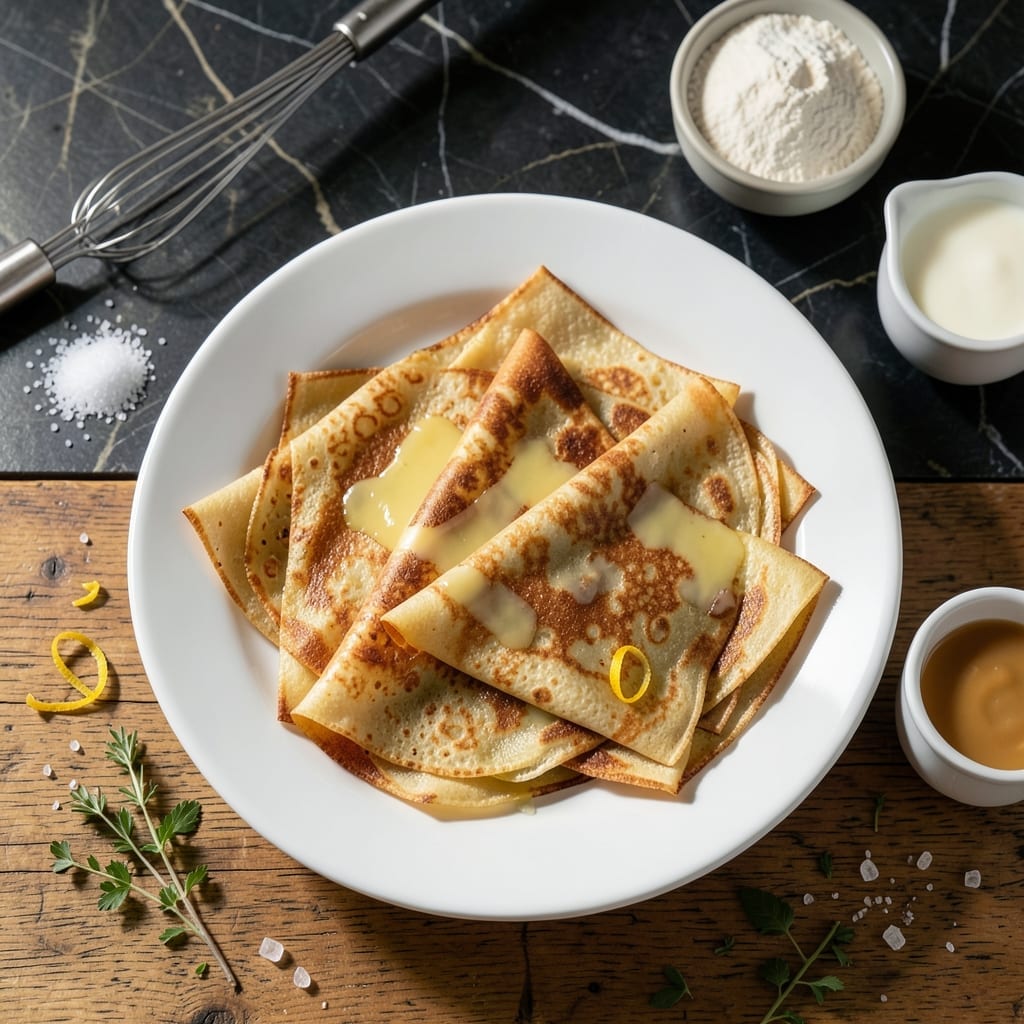
Mastering the art of French crepes requires precision and patience, but the results are worth every effort. This recipe distills Julia Child’s classic technique into accessible steps for home cooks.
The batter rests for 1 hour to develop a smooth texture, ensuring crepes that are tender yet sturdy. A hot, lightly buttered pan is essential for achieving that signature golden lace around the edges.
Each crepe cooks in under 2 minutes, revealing a delicate, slightly blistered surface. The versatility of this dish makes it ideal for both sweet and savory fillings.
With practice, you’ll perfect the wrist flick that spreads the batter evenly. This method guarantees restaurant-quality crepes every time.
Ingredients for Julia Childs Crepe
Classic French crepes demand precision with these accessible yet refined ingredients.
| Ingredient | Amount | Notes |
|---|---|---|
| All-Purpose Flour 🌾 | 1 cup | Sifted for smooth batter |
| Granulated Sugar 🍚 | 2 tbsp | Fine grain for even distribution |
| Kosher Salt 🧂 | ¼ tsp | Diamond Crystal preferred |
| Large Eggs 🥚 | 4 whole | Room temperature for best results |
| Whole Milk 🥛 | 1 ½ cups | Full-fat for richness |
| Melted Unsalted Butter 🧈 | ¼ cup | Plus extra for pan |
| Vanilla Extract 🌿 | 1 tsp | Pure extract for best flavor |
| Dark Rum 🍹 | 1 tbsp | Optional, adds depth |
| Orange Zest 🍊 | 1 tsp | Finely grated for brightness |
| Water 💧 | ½ cup | Cold, for batter consistency |
[recipe_ingredient_scaler]
The flour is the foundation—King Arthur all-purpose is the gold standard for consistent results. Eggs at room temperature emulsify better with the fat, creating a smoother batter. Whole milk provides the necessary fat content for that tender yet sturdy texture Julia Child insisted upon. Unsalted butter allows you to control the salt content precisely, a critical detail in French pastry.
No dark rum? Brandy or orange liqueur work equally well. For a non-alcoholic version, vanilla bean paste at double the quantity adds complexity. Substitute half-and-half for milk if you prefer extra richness. The orange zest can be omitted, but it adds that signature brightness that elevates the flavor profile significantly.
Batter must rest 1 hour at room temperature—this develops the gluten for optimal texture. Store unused batter in the fridge for up to 24 hours. Always bring chilled batter to room temperature before cooking to ensure even cooking and that delicate, golden lace.
Why You’ll Love This Recipe
- No-Fuss Batter: I just whisk the flour, eggs, milk, and a pinch of salt—no resting required, and it still turns out silky.
- Buttery Richness: The whole milk gives them that luxurious, melt-in-your-mouth quality Julia Child swore by.
- Breakfast to Dessert: I’ve served these plain with jam, stuffed with ham and cheese, even drizzled with chocolate for a late-night treat.
- Pocketbook Friendly: Flour, eggs, milk—basic pantry staples that feed a crowd for pennies. Honestly, it’s my cheap thrill.
Step-by-Step Instructions for Classic French Crepes
Master the technique with these precise steps for flawless results every time.
Step 1: Create the Smooth Batter Base
In a large mixing bowl, whisk together the 1 cup All-Purpose Flour, 2 tbsp Granulated Sugar, and 0.25 tsp Kosher Salt until fully combined. This dry mixture forms the foundation of your crepe batter, ensuring consistent texture.
Make a well in the center of the dry ingredients. This traditional technique allows for gradual incorporation of the wet ingredients, preventing lumps in your final batter. The sifted flour specified in the ingredients guarantees a smooth, professional-quality result.
Step 2: Incorporate Wet Ingredients Gradually
Add the 4 whole Large Eggs one at a time to the well, whisking constantly to incorporate each before adding the next. Then slowly pour in the 1.5 cups Whole Milk while continuing to whisk vigorously. The room temperature eggs will emulsify more easily with the milk.
Next, whisk in the 0.25 cup Melted Unsalted Butter, 1 tsp Vanilla Extract, 1 tbsp Dark Rum, and 1 tsp Orange Zest. These flavor elements create the distinctive taste profile. Finally, whisk in the 0.5 cup Water until the batter is completely smooth with no visible lumps.
Step 3: Rest the Batter for Optimal Texture
Cover the bowl with plastic wrap and let the batter rest at room temperature for at least 30 minutes, or up to 2 hours in the refrigerator. This resting period allows the gluten in the flour to relax, resulting in more tender crepes.
The batter will thicken slightly as it rests. If it becomes too thick after refrigeration, whisk in a small amount of additional water to return it to a thin, pourable consistency—similar to heavy cream. This step is crucial for achieving the classic delicate texture.
Step 4: Cook the Crepes with Precision
Heat a crepe pan or nonstick skillet over medium-high heat until hot. Brush the surface lightly with additional melted butter. The pan is ready when a drop of water sizzles and evaporates immediately upon contact.
Pour ¼ cup of batter into the center of the pan, immediately swirling and tilting to spread the batter evenly across the bottom. Cook for 30-45 seconds until the edges begin to lift and the bottom is light golden brown with a few darker spots.
Step 5: Finish and Stack the Crepes
Using a thin spatula, carefully lift one edge of the crepe and flip it over. Cook for an additional 15-20 seconds on the second side. The finished crepe should be lightly colored with a delicate, slightly lacy appearance.
Transfer to a plate and repeat with the remaining batter, stacking finished crepes with parchment paper between each to prevent sticking. This method maintains their moisture while you finish the batch. Serve warm with your choice of sweet or savory fillings.
Pro Tips For Making Julia Childs Crepe
- Rest the Batter: After mixing, let the batter sit for at least 30 minutes at room temperature. I learned this the hard way—skipping this step leaves you with dense crepes that lack that delicate Julia Child texture.
- Heat the Pan First: Crank your skillet to medium-high and let it get properly hot before adding butter or batter. Sounds obvious, but I used to rush this and ended up with pale, gummy crepes every time.
- Use Room-Temp Eggs: Take your eggs out of the fridge 20-30 minutes before starting. Cold eggs resist blending, and you’ll spend too much time whisking out lumps instead of making crepes.
- Swirl, Don’t Spread: Pour the batter into the pan and immediately tilt to swirl it evenly—resist the urge to spread it with a spoon. This keeps the crepes thin and uniform without overworking the batter.
Make-Ahead Tips for This Dish
Batter Prep Ahead
I always mix the batter the night before—this gives the gluten time to relax completely. Cover with plastic wrap and refrigerate for up to 24 hours. The flavors deepen overnight, and you’ll wake up to a ready-to-cook base.
Room Temp Rule
Cold batter straight from the fridge can shock your hot pan. Let it sit at room temperature for 30-60 minutes before cooking. If it thickens too much, whisk in 1-2 tbsp cold water to restore the perfect consistency. 💡
Stacking Strategy
Cook all your crepes in advance, then stack with parchment paper between each. Store in an airtight container in the fridge for up to 3 days. This keeps them moist and prevents sticking.
Reheating Method
For warm crepes, place stacks in a 300°F oven for 5-10 minutes wrapped in foil. Alternatively, microwave individual crepes for 15-20 seconds between damp paper towels. Avoid high heat to prevent drying out.
Freezing for Later
Freeze stacks wrapped tightly in plastic wrap, then in a freezer bag for up to 2 months. Thaw overnight in the fridge before reheating. Label with the date—I’ve found King Arthur flour batches hold up best. ❄️
Pro Tip
For local BBQ competitions, I forage wild herbs to add unique flavors to the batter. But for classic Julia Child style, stick to the original recipe—it’s already perfect.
Nutrition Facts
Frequently Asked Questions
Do I need a special pan for crepes?
Not necessarily. A nonstick skillet works fine, but a dedicated crepe pan with shallow sides makes flipping easier. Ensure it’s heated to medium-high heat before adding batter.
Why does my batter need to rest?
Resting allows the gluten to relax, preventing tough crepes. This step also lets the flour fully hydrate, creating a smoother, more consistent texture. 1 hour is ideal.
How thin should the batter be?
It should resemble heavy cream. If too thick after resting, whisk in 1-2 tbsp cold water. Too thin? Add a sprinkle of flour and whisk until smooth.
Can I make crepes without alcohol?
Yes, simply omit the rum. For extra flavor, double the vanilla extract or add 1 tsp orange blossom water. The crepes will still taste delicious.

Trained in classic French technique but raised on slow-cooked ribs and spicy rubs, she blends culinary skill with smoke and soul.
- Recipe for Cream of Rice: Silky Smooth Breakfast Comfort - October 3, 2026
- Old Fashioned Beef and Noodles Recipe Crock Pot: Set-It-and-Forget-It Hearty Meal - October 3, 2026
- Recipe for Deep Fry Turkey: Crispy Golden Skin and Juicy Meat - October 3, 2026