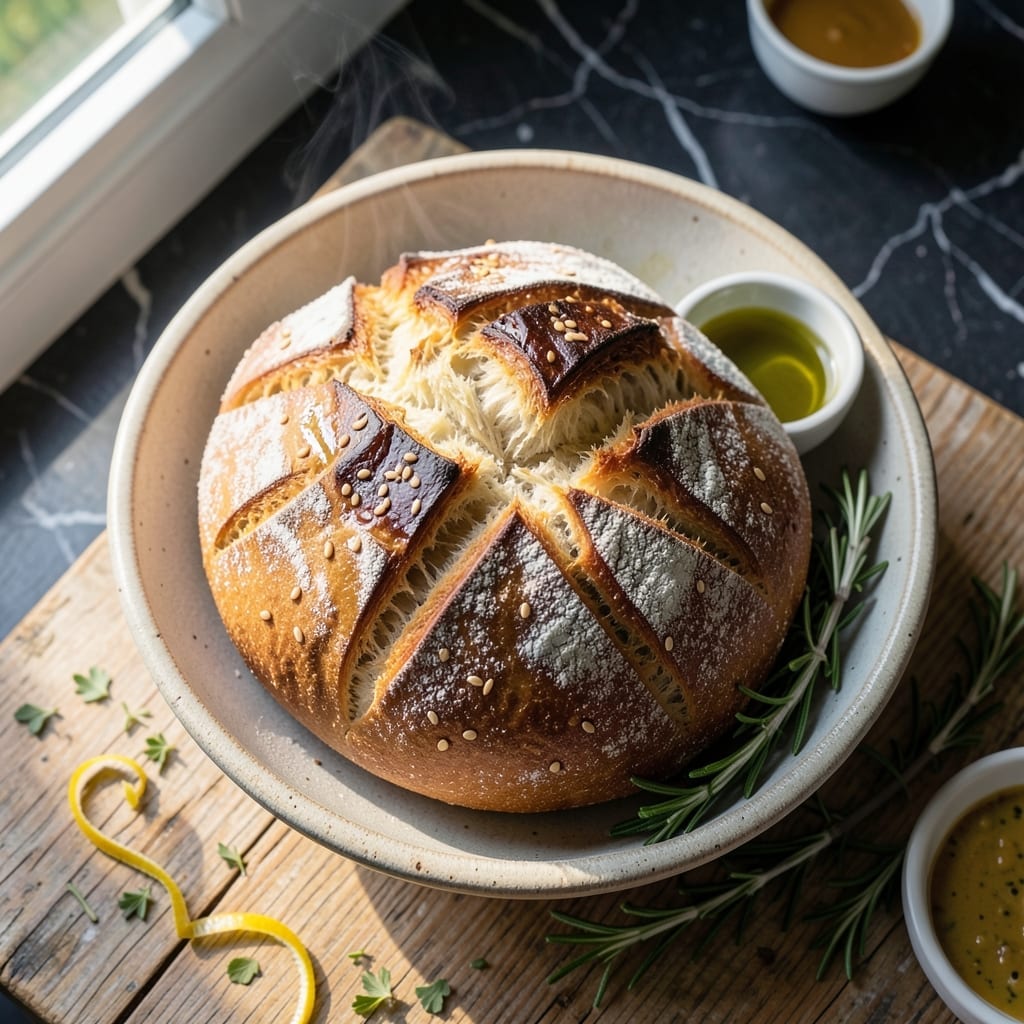
There’s nothing like the aroma of freshly baked bread filling your kitchen. This Italian bakery-style loaf delivers that same professional quality at home with simple ingredients and proven techniques.
The key is patience—allowing the dough to rise properly and baking until golden brown. I’ve perfected this method through years of testing, ensuring a crisp crust and soft, airy interior every time.
What you’ll achieve is a beautiful, rustic loaf with a chewy texture and rich flavor. The crust develops a deep golden color while the inside stays light and tender, just like from your favorite bakery.
Serve warm with olive oil or use for sandwiches that will impress everyone. This recipe brings authentic Italian bread-making into your own kitchen.
Ingredients for Turano Bread
Simple pantry staples create that Italian bakery magic at home. Nothing exotic here.
| Ingredient | Amount | Notes |
|---|---|---|
| Bread Flour 🌾 | 4 cups | High-protein for chewy texture |
| Active Dry Yeast 🍞 | 1 package | 2 1/4 tsp per package |
| Warm Water 💧 | 1 ½ cups | 110°F for yeast activation |
| Olive Oil 🫒 | 2 tbsp | Extra-virgin for richness |
| Granulated Sugar 🍚 | 1 tbsp | Feeds the yeast for rise |
| Kosher Salt 🧂 | 2 tsp | Diamond Crystal preferred |
| Cornmeal 🌽 | ¼ cup | For dusting baking surface |
| All-Purpose Flour 🌾 | ½ cup | For dusting work surface |
| Large Egg 🥚 | 1 whole | For egg wash finish |
| Sesame Seeds 🌰 | 1 tbsp | Optional for topping |
[recipe_ingredient_scaler]
The flour is non-negotiable—bread flour (I use King Arthur) gives you that signature chewy texture. Yeast should be fresh; check the expiration date. Warm water needs to be just right—too hot kills the yeast, too cold won’t activate it. 110°F is the sweet spot (a kitchen thermometer helps). Olive oil adds richness, but any neutral oil works if that’s what you’ve got.
No bread flour? All-purpose in a pinch, but add 1 tbsp vital wheat gluten per cup to mimic the protein. Swap sugar for honey if you prefer. The cornmeal prevents sticking and adds a crisp bottom—fine or coarse, both work. Skip the egg wash for a rustic look, or use milk or cream instead. Sesame seeds are traditional but poppy or everything bagel seasoning works too.
Dough rises best in a warm spot—75-80°F. Leftovers? Wrap tightly in plastic, then foil. Stays fresh for 3 days, or freeze slices for up to 3 months (toast straight from frozen).
Why You’ll Love This Recipe
- Minimal Kneading: I just mix the flour, yeast, water, olive oil, and sugar—no complicated steps or fancy equipment.
- Crispy Outside, Soft Inside: The olive oil gives it that signature golden crust while keeping the center light and airy.
- Sandwich Superstar: It holds up to hearty fillings for lunch or turns into killer garlic bread for dinner.
- Budget Bake: Five basic ingredients and it feeds a crowd—no specialty store trips required.
Step-by-Step Instructions for Italian Bakery-Style Loaf at Home
This method delivers that signature soft interior and crisp crust you love from the bakery.
Step 1: Activate the Yeast and Mix the Dough
In a small bowl, combine the 1.5 cups Warm Water, 1 tbsp Granulated Sugar, and 1 package Active Dry Yeast. Let it sit for 5-10 minutes until the mixture becomes frothy and cloudy—that’s your sign the yeast is alive and ready to work its magic.
In a large mixing bowl, whisk together the 4 cups Bread Flour and 2 tsp Kosher Salt. Pour in the activated yeast mixture and 2 tbsp Olive Oil, then stir with a wooden spoon until a shaggy dough forms. This is where the high-protein bread flour starts building that chewy texture.
Step 2: Knead Until Smooth and Elastic
Turn the dough out onto a surface lightly dusted with 0.5 cup All-Purpose Flour. Knead for 8-10 minutes by hand until the dough becomes smooth, elastic, and slightly tacky but not sticky. If it feels too wet, resist the urge to add more flour—stickiness is part of the process.
You’ll know it’s ready when you can stretch a small piece thin enough to see light through it without tearing (the windowpane test). This develops the gluten strands that give the bread its structure and chew.
Step 3: Let the Dough Rise Until Doubled
Place the dough in a lightly oiled bowl, turning once to coat all sides. Cover with a damp towel and let it rise in a warm, draft-free spot for 1-1.5 hours, or until it has doubled in size. I like to preheat my oven to the lowest setting then turn it off to create the perfect rising environment.
Don’t rush this step—proper rising ensures a light, airy crumb. The dough should spring back slowly when gently pressed with a finger. If it springs back quickly, it needs more time.
Step 4: Shape, Proof, and Prepare for Baking
Punch down the risen dough to release the air, then shape it into a round loaf. Place it on a baking sheet dusted with 0.25 cup Cornmeal—this gives the bottom that signature rustic texture. Use a sharp knife to make a shallow X on the top for that classic bakery look.
Cover loosely and let it proof for another 30-45 minutes while you preheat your oven to 400°F. The loaf should rise noticeably but not double again during this time.
Step 5: Bake and Finish with Egg Wash
Brush the top of the loaf with the 1 whole Large Egg beaten with a splash of water. This creates a beautiful golden-brown sheen. Sprinkle with 1 tbsp Sesame Seeds if you’re using them—they add a subtle nutty flavor and visual appeal.
Bake for 25-30 minutes until the crust is deep golden brown and the loaf sounds hollow when tapped on the bottom. Transfer to a wire rack to cool completely—this prevents the crust from becoming soggy. Slice and enjoy the soft, pillowy interior with that perfect bakery-style crunch.
Pro Tips For Making Turano Bread
- Test Your Yeast: Always activate the dry yeast in warm water with a pinch of sugar first—if it doesn’t foam within 5 minutes, your bread won’t rise and you’ll waste flour.
- Use High-Protein Flour: Bread flour’s extra gluten gives Turano bread that chewy texture; all-purpose just won’t cut it for the right structure.
- Don’t Over-Knead: Mix just until the dough pulls away from the bowl—overworking it makes the bread tough, and I learned this the hard way with a few dense loaves.
- Brush With Olive Oil: Coat the dough with olive oil before the first rise to prevent a dry crust from forming—sounds simple, but it actually changes the outcome.
Make-Ahead Tips for This Dish
Overnight Dough Prep
Mix the dough as directed, then let it rise at room temperature for just 30 minutes. Cover and refrigerate overnight for up to 12 hours. The cold fermentation develops deeper flavor and makes the dough easier to handle. 💡
Morning Bake
Remove the dough from the fridge and let it warm up for 1 hour before shaping. The cold dough will take slightly longer to proof—about 45-60 minutes—but the wait is worth it for that enhanced taste.
Dough Balls for Later
After the first rise, divide the dough into 4 equal portions, shape into balls, and place on a floured tray. Cover tightly and refrigerate for up to 24 hours. Bake as needed for fresh loaves throughout the day.
Par-Baked Loaves
Bake the bread for only 15 minutes at 400°F, then cool and freeze. When ready to serve, finish baking at 375°F for 10-12 minutes until golden. This method works great for meal prep.
Freezing Baked Bread
Cool the loaf completely, then wrap tightly in plastic wrap and foil. Freeze for up to 3 months. To revive, thaw overnight at room temperature, then warm in a 350°F oven for 5-10 minutes. ❄️
Room Temperature Storage
Keep the baked loaf in a paper bag at room temperature for up to 2 days. For longer storage, slice and freeze individual pieces. Toast directly from frozen for a quick, fresh-tasting breakfast.
Nutrition Facts
Frequently Asked Questions
Why does my bread turn out dense instead of light?
Underproofing is the most common cause. Ensure your dough doubles in size during the first rise (1-1.5 hours) and proof again after shaping (30-45 minutes). Also, knead until the windowpane test passes.
Can I use all-purpose flour instead of bread flour?
Yes, but add 1 tbsp vital wheat gluten per cup to compensate. Bread flour’s higher protein content creates the chewy texture. Without it, your loaf may be softer but less structured.
How do I know when the bread is fully baked?
Check for a deep golden brown crust and a hollow sound when tapped. An internal temperature of 190-200°F confirms it’s done. Overbaking dries it out, so start checking at 25 minutes.

Trained in classic French technique but raised on slow-cooked ribs and spicy rubs, she blends culinary skill with smoke and soul.
- Recipe for Boneless Pork Chops in Cast Iron Skillet: Sear and Baste to Juicy Perfection - October 3, 2026
- Recipe for Boneless Cross Rib Roast: Slow-Roasted Beef with Herb Crust - October 3, 2026
- Hamburgers in Sauce Recipe Crock Pot: Slow-Cooked Savory Delight - October 3, 2026