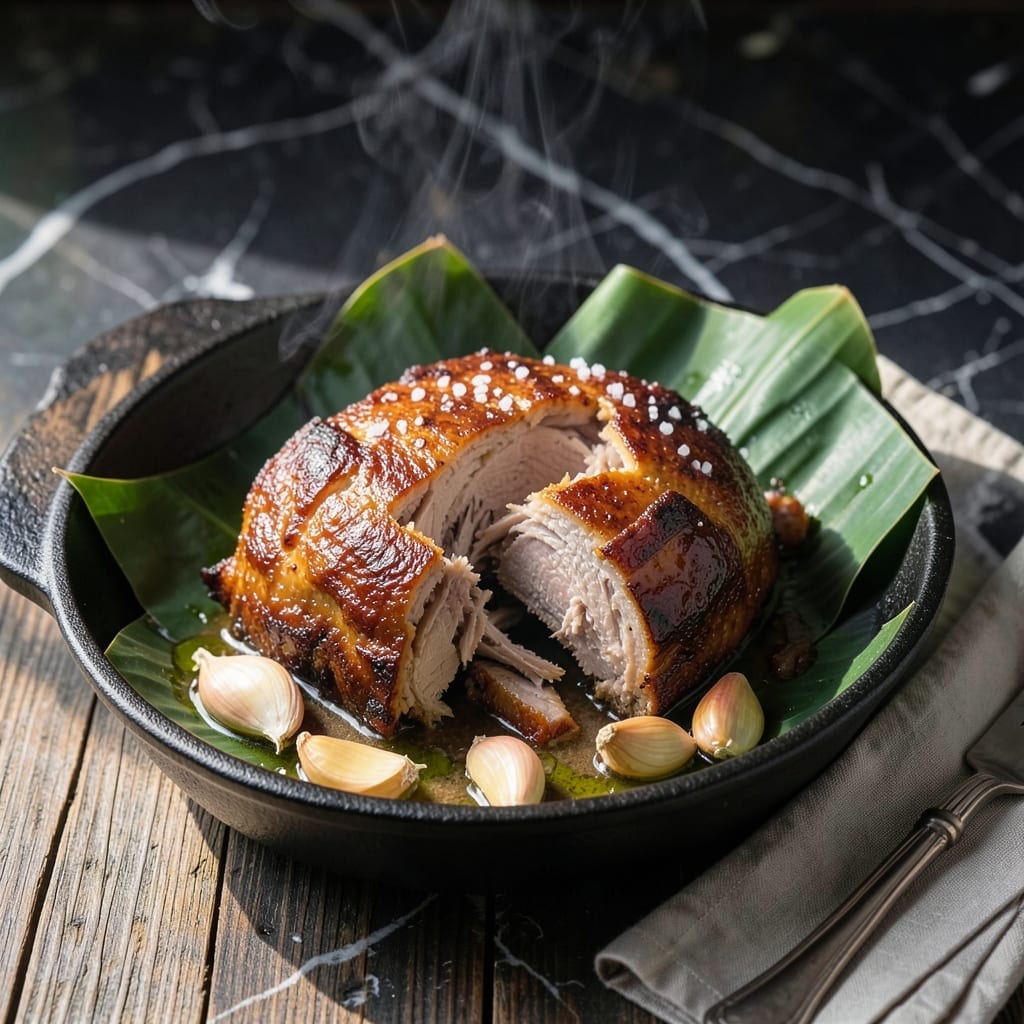
Traditional Hawaiian kalua pork doesn’t require a pit or specialty equipment—just a Dutch oven and patience. This method captures the smoky depth of the original with simple techniques.
I adapted my grandmother’s handwritten notes into a reliable process anyone can follow. The key is low, slow heat that transforms pork shoulder into tender, fall-apart perfection.
What emerges is meat infused with authentic island flavor, ready to serve at luaus or weeknight dinners. The Dutch oven locks in moisture while creating that signature texture.
One pot, minimal effort, and a dish that honors tradition without sacrifice.
Ingredients for Kalua Pork Recipe Dutch Oven
Pantry staples plus pork shoulder. One pot, island flavors ready to shine.
| Ingredient | Amount | Notes |
|---|---|---|
| Pork Shoulder 🐖 | 4 lb | Bone-in, skin-on preferred |
| Hawaiian Sea Salt 🧂 | 2 tbsp | Coarse, or alaea salt |
| Liquid Smoke 💨 | 2 tsp | Hickory flavor preferred |
| Water 💧 | 2 cups | Or substitute chicken broth |
| Banana Leaves 🍌 | 2 pieces | Optional, for authenticity |
| Garlic Cloves 🧄 | 6 cloves | Smashed, not minced |
| Yellow Onion 🧅 | 1 whole | Peeled, quartered |
| Fresh Ginger Root 🌿 | 2 tbsp | Peeled, grated |
| Black Peppercorns 🌶️ | 1 tsp | Whole, lightly crushed |
| Bay Leaves 🍃 | 2 pieces | Dried, whole |
| Green Onions 🧅 | ½ cup | Thinly sliced, for garnish |
| Fresh Cilantro 🌿 | ¼ cup | Chopped, for garnish |
[recipe_ingredient_scaler]
The pork shoulder is non-negotiable—bone-in, skin-on gives you that authentic texture. I grab mine from Costco or Whole Foods when they’ve got good marbling (the fat renders down into pure flavor). Hawaiian sea salt or alaea salt (that pink stuff) adds the right mineral note, but any coarse salt works in a pinch. Liquid smoke is the secret weapon here—Wright’s brand is what I keep in my pantry.
No banana leaves? Skip ’em—this still tastes amazing. Out of liquid smoke? Smoked paprika at half the amount (mix with water to make a paste) gets you close. The ginger and garlic can be swapped for 1 tbsp each of powdered versions, but fresh is better. Chicken broth instead of water adds depth, and if you’ve got a Instant Pot, you can speed this up (but Dutch oven is the traditional way).
Leftovers taste even better the next day. Store in the fridge for up to 5 days or freeze for 3 months. Reheat gently with a splash of water to keep it moist. The garnishes (green onions, cilantro) are best added fresh when serving.
Why You’ll Love This Recipe
- Set It and Forget: I toss the pork shoulder with Hawaiian sea salt, liquid smoke, and water into the Dutch oven, then let it work its magic hands-off.
- Smoky Island Vibes: The liquid smoke and banana leaves give it that authentic, slow-roasted flavor without needing a traditional imu pit.
- Feeds the Whole Crew: This recipe makes enough to fill a crowd or keep me in leftovers for sandwiches, tacos, and rice bowls all week.
- Budget-Friendly Feast: Pork shoulder is one of the most affordable cuts, and it transforms into this rich, tender dish that feels like a splurge.
Step-by-Step Instructions for Kalua Pork in a Dutch Oven
This method delivers authentic Hawaiian flavor with minimal effort and maximum taste.
Step 1: Season and Prepare the Pork Shoulder
Rub the 4 lb Pork Shoulder all over with the 2 tbsp Hawaiian Sea Salt. I press it in firmly to ensure every surface is well coated—this is what gives kalua pork its signature flavor. Don’t skip this step or the meat won’t have that deep, salty taste traditional to the dish.
Next, drizzle the 2 tsp Liquid Smoke evenly over the pork. I like to use my hands to spread it around, making sure to get it into all the crevices. This is what creates that authentic smoky depth without needing an imu (traditional underground oven).
Step 2: Layer the Aromatics in the Dutch Oven
Place the 2 pieces Banana Leaves in the bottom of your Dutch oven, if using. These add a subtle earthy flavor and help prevent sticking, though they’re optional. On top of the leaves, add the 6 cloves Garlic Cloves (smashed), 1 whole Yellow Onion (quartered), 2 tbsp Fresh Ginger Root (grated), 1 tsp Black Peppercorns (lightly crushed), and 2 pieces Bay Leaves.
These aromatics infuse the pork with incredible flavor as it cooks. I always crush the peppercorns lightly to release their oils, and I leave the ginger and garlic in larger pieces so they can be removed easily before serving.
Step 3: Add the Pork and Liquid, Then Cook Low and Slow
Place the seasoned pork shoulder on top of the aromatics in the Dutch oven. Pour the 2 cups Water around the pork—not over it, as you want to preserve the salt and liquid smoke coating. The liquid should come about halfway up the side of the pork.
Cover the Dutch oven with its lid and place it in a preheated 300°F oven. Cook for 4-5 hours, checking occasionally to ensure the liquid hasn’t evaporated. You want the pork to become fork-tender, where it shreds easily with a gentle pull. The meat should fall apart effortlessly when done.
Step 4: Shred and Garnish for Serving
Once the pork is tender, remove it from the Dutch oven and shred it using two forks. I like to discard the large aromatics (onion, ginger, garlic) at this point, as they’ve imparted all their flavor. The cooking liquid can be reserved if you want to serve the pork with extra juices.
Transfer the shredded pork to a serving platter and garnish with 0.5 cup Green Onions (thinly sliced) and 0.25 cup Fresh Cilantro (chopped). These fresh elements add a bright contrast to the rich, smoky pork. Serve immediately with rice or other traditional sides.
Pro Tips For Making Kalua Pork Recipe Dutch Oven
- Preheat the Dutch Oven: Start with a hot Dutch oven over medium-high heat to sear the pork shoulder first—this locks in juices before the long, slow cook. I learned this the hard way after my first batch came out dry.
- Use Real Banana Leaves: Skip the foil substitutes and line your Dutch oven with actual banana leaves; they add an authentic earthy flavor that liquid smoke alone can’t replicate.
- Don’t Overdo Liquid Smoke: A teaspoon of liquid smoke is plenty for 3-4 lbs of pork—any more and it’ll taste like a campfire instead of slow-roasted kalua pork.
- Shred After Resting: Let the pork rest 15-20 minutes in its juices before shredding—this keeps it moist and makes pulling apart effortless, even with a fork.
Storing and Reheating Leftovers
Fridge Storage
Let your kalua pork cool completely before transferring to airtight containers. It’ll keep in the fridge for up to 5 days—the flavors deepen over time. I always store the cooking liquid separately to prevent sogginess. ❄️
Freezer Storage
For longer storage, portion the pork into freezer-safe bags or containers. It freezes beautifully for up to 3 months. I recommend quart-sized bags for easy thawing. Squeeze out excess air to prevent freezer burn.
Stovetop Reheating
Place the pork in a skillet with ¼ cup water or broth over medium-low heat. Cover and warm for 10-15 minutes, stirring occasionally. This method keeps it juicy and prevents drying out. 🔥
Microwave Reheating
For quick meals, microwave individual portions covered with a damp paper towel. Use 50% power in 1-minute intervals, stirring between each, until heated to 165°F. Add a splash of liquid if needed.
Oven Reheating
Wrap the pork in foil with 2 tbsp water and warm at 300°F for 20-25 minutes. This is my go-to for larger batches, as it restores that fall-apart texture perfectly.
Nutrition Facts
Frequently Asked Questions
Can I use a different cut of pork?
Stick with pork shoulder for best results. Its high fat content renders down during the 4-5 hour cook time, creating that signature tenderness. Pork butt works in a pinch, but avoid lean cuts like tenderloin.
What if I don’t have liquid smoke?
Substitute with 1 tbsp smoked paprika mixed with 2 tbsp water. The flavor won’t be identical, but it adds a similar smoky depth. Some cooks also use a small piece of smoked wood chip wrapped in foil.
How do I know when it’s done?
The pork is ready when it shreds effortlessly with forks. Check at the 4-hour mark. If it resists, give it another 30-60 minutes. The internal temperature should reach at least 195°F.
Can I make this in a slow cooker?
Yes! Use the low setting for 8-10 hours. The Dutch oven method gives better crust formation, but a slow cooker works well for hands-off cooking. Add ½ cup extra liquid to prevent drying.

Trained in classic French technique but raised on slow-cooked ribs and spicy rubs, she blends culinary skill with smoke and soul.
- Recipe for Boneless Pork Chops in Cast Iron Skillet: Sear and Baste to Juicy Perfection - October 3, 2026
- Recipe for Boneless Cross Rib Roast: Slow-Roasted Beef with Herb Crust - October 3, 2026
- Hamburgers in Sauce Recipe Crock Pot: Slow-Cooked Savory Delight - October 3, 2026