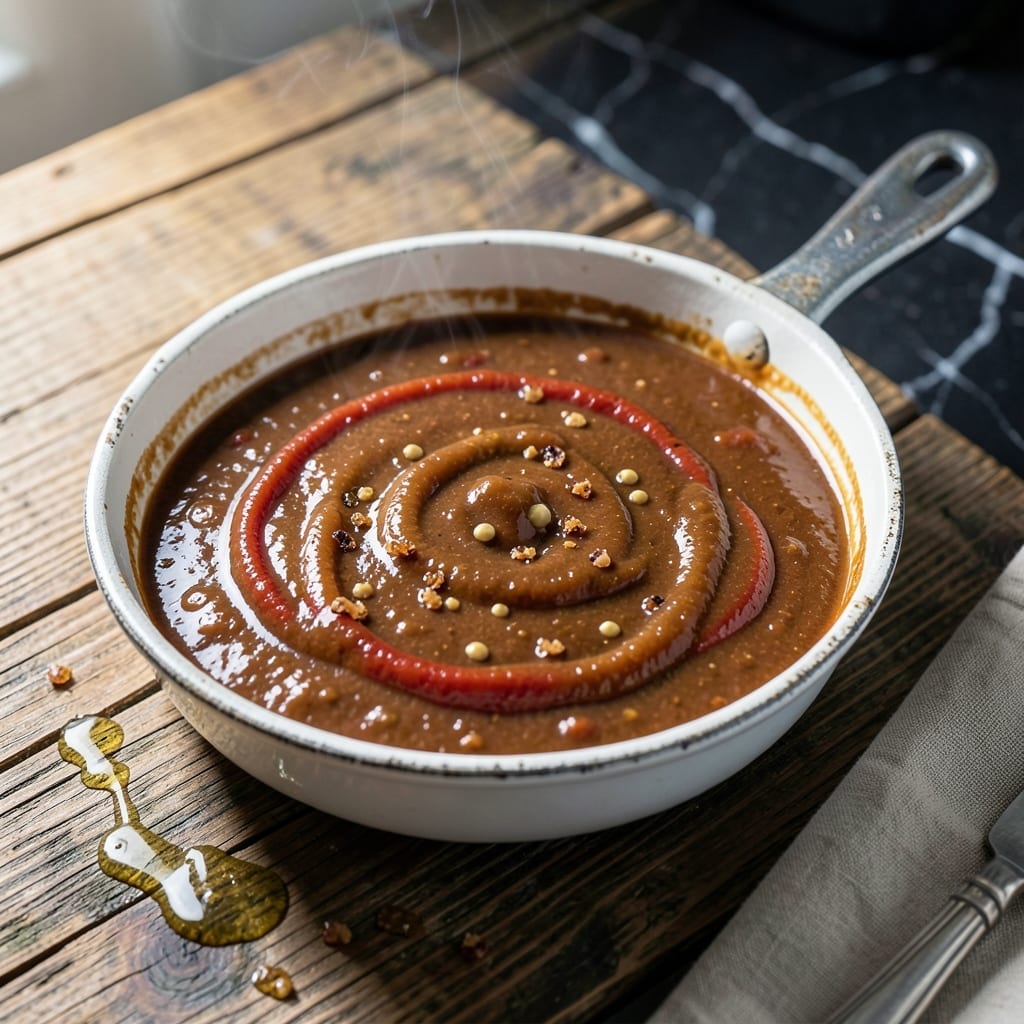
This Kansas-style sauce captures the perfect balance of sweet, smoky, and tangy that defines Midwestern barbecue. I developed this blend after years of studying regional variations and perfecting the ratio of brown sugar to vinegar.
Thicker than vinegar-based sauces but not as heavy as some southern styles, it clings beautifully to ribs and pulled pork. The molasses adds depth while tomato paste provides body without overpowering the other flavors.
Ingredients for Kansas Barbecue Sauce
Sweet, smoky, tangy—this sauce brings Kansas flavor to your grill with just 11 ingredients.
| Ingredient | Amount | Notes |
|---|---|---|
| Tomato Paste 🍅 | ½ cup | For body and richness |
| Apple Cider Vinegar 💧 | ½ cup | Tangy backbone essential |
| Brown Sugar 🍚 | ¾ cup | Light or dark works |
| Molasses 🍯 | ¼ cup | Adds deep, smoky sweetness |
| Worcestershire Sauce 🫒 | 2 tbsp | Use vegetarian if preferred |
| Dijon Mustard 🟡 | 1 tbsp | Smooth, not grainy |
| Smoked Paprika 🌶️ | 1 tsp | Key for smoky depth |
| Garlic Powder 🧄 | 1 tsp | Finer than granulated |
| Onion Powder 🧅 | 1 tsp | Balances sweetness |
| Salt 🧂 | ½ tsp | Kosher or sea salt |
| Black Pepper 🌶️ | ½ tsp | Freshly ground preferred |
[recipe_ingredient_scaler]
The molasses is what sets this apart from other regional sauces. Grandma’s or Brer Rabbit are solid brands you’ll find at any supermarket. Look for robust molasses (not blackstrap) for that perfect balance of sweetness and depth. Tomato paste in a can is fine, but those little tubes at Trader Joe’s are way more convenient—no waste, keeps forever in the pantry.
No molasses? Honey or maple syrup at a 1:1 swap works in a pinch (though it’ll be lighter in flavor). Out of apple cider vinegar? White vinegar plus a pinch of sugar gets you close. The Worcestershire is non-negotiable for that umami kick, but if you need it vegetarian, Annie’s or Edward & Sons make great versions. Smoked paprika is the secret weapon here—don’t skip it.
This keeps for 2 weeks in the fridge in a sealed jar. The flavors actually meld and improve over time. Freezes beautifully for 3 months too—portion into ice cube trays for easy single-use servings. Always give it a good stir before using since the spices settle.
Why You’ll Love This Recipe
- 5-Minute Mix: I just dump everything in a pot and simmer—no chopping, no fuss.
- Sweet & Tangy Kick: The molasses and apple cider vinegar give it that perfect Kansas-style balance.
- Slather on Anything: I use it on ribs, burgers, even as a dipping sauce for fries. Honestly, it’s my secret weapon.
- Pantry Staples Only: All the ingredients are already in my kitchen, so I can make it anytime the craving hits.
Step-by-Step Instructions for Kansas Barbecue Sauce
This comes together quickly with simple stovetop simmering and careful attention to texture.
Step 1: Combine the Liquid Base
In a medium saucepan over medium heat, whisk together the 0.5 cup Tomato Paste, 0.5 cup Apple Cider Vinegar, 0.75 cup Brown Sugar, and 0.25 cup Molasses until smooth. The mixture will look thick at first, but it loosens as it heats.
Use a silicone whisk to prevent scratching your pan—the tomato paste can be stubborn. You’ll notice the brown sugar dissolving into the liquid within 2-3 minutes. Don’t let it boil yet; gentle heating ensures everything incorporates evenly.
Step 2: Add the Flavor Builders
Stir in the 2 tbsp Worcestershire Sauce, 1 tbsp Dijon Mustard, 1 tsp Smoked Paprika, 1 tsp Garlic Powder, and 1 tsp Onion Powder. These ingredients add complexity and depth to the sauce’s character.
The Dijon mustard will create a slight tang, while the smoked paprika gives it that signature Kansas-style smokiness. Whisk vigorously for 30 seconds to break up any clumps from the mustard and distribute the spices evenly throughout the mixture.
Step 3: Season and Simmer to Perfection
Add the 0.5 tsp Salt and 0.5 tsp Black Pepper, then reduce the heat to low-medium. Let the sauce simmer uncovered for 15-20 minutes, stirring occasionally to prevent sticking.
As it cooks, the sauce will thicken slightly and develop a glossy sheen. You’re aiming for a consistency that coats the back of a spoon but still drizzles easily. If it reduces too much, add a splash of water and adjust the seasoning accordingly.
Step 4: Cool and Store for Optimal Flavor
Remove the sauce from the heat and let it cool to room temperature. The flavors will meld and deepen as it sits, so resist the urge to taste-test immediately. This step usually takes about 30 minutes.
Once cooled, transfer the sauce to an airtight container. It will keep in the refrigerator for up to 2 weeks, and the flavors continue to improve over time. For the best results, let it sit overnight before using it on your favorite barbecue dishes.
Pro Tips For Making Kansas Barbecue Sauce
- Simmer Low and Slow: Keep the heat at a gentle simmer for at least 20-25 minutes—any higher and the sugars in the brown sugar and molasses will burn, giving your sauce a bitter edge.
- Bloom the Tomato Paste: Cook the tomato paste in the pot for 2-3 minutes before adding liquids; I learned this the hard way after my first batch tasted raw and flat.
- Skip the Substitutes: Apple cider vinegar isn’t interchangeable here—its mild tang balances the molasses better than white or red wine vinegar, which can overpower the sauce.
- Add Vinegar Last: Stir in the apple cider vinegar in the final 5 minutes of cooking to preserve its bright acidity; adding it too early makes the whole batch taste dull.
Health Benefits of This Dish
Antioxidant Rich Blend
This sauce delivers serious antioxidant power from tomato paste and molasses, both packed with compounds that combat oxidative stress. The 0.5 cup tomato paste alone provides a significant dose of lycopene, which supports heart health. 💪
Blood Sugar Benefits
While it’s sweet, the brown sugar and molasses contain small amounts of minerals like iron and calcium. The apple cider vinegar may help moderate blood sugar spikes when paired with meals, though moderation is still key with any sauce.
Low-Fat Flavor Boost
At just 20-30 calories per tablespoon, this sauce adds big flavor without significant fat. The Worcestershire sauce contributes umami depth with minimal calories, making it a smart choice for flavor-conscious cooks.
Digestion Support
The apple cider vinegar in this recipe contains acetic acid, which may aid digestion. I’ve found that a touch of vinegar-based sauce can help balance richer meats like ribs or pulled pork.
Vitamin and Mineral Source
Molasses is particularly rich in iron, magnesium, and manganese. Just 1 tablespoon provides about 3.5% of your daily iron needs. The spices like smoked paprika also contribute small amounts of vitamins.
Versatile Nutrition
Unlike many store-bought sauces, this homemade version skips preservatives and artificial additives. You control the sodium too—I use 0.5 tsp salt for the whole batch, which you can adjust. The vinegar base also means it’s naturally fat-free. 🌟
Nutrition Facts
Frequently Asked Questions
Can I make this sauce ahead of time?
It actually tastes better after resting for 24 hours. The flavors meld beautifully in the fridge.
What’s the best way to adjust sweetness?
Reduce brown sugar by 2 tablespoons for a tangier profile. Balance with extra apple cider vinegar to taste.
Can I use this for smoking instead of grilling?
Yes! Apply during the last 30 minutes of smoking. Its thickness helps it cling to meats without burning.
How do I fix sauce that’s too thin?
Simmer uncovered for an extra 5-10 minutes. For quick fixes, mix in 1 tsp cornstarch slurry.

Trained in classic French technique but raised on slow-cooked ribs and spicy rubs, she blends culinary skill with smoke and soul.
- Recipe for Fried Pork Chops With Flour: Crispy Crust and Juicy Centers - October 3, 2026
- Octopus Recipe Pan Fried: Crispy Edges With Tender Bites - October 3, 2026
- Recipe For Fried Pork Chops In An Iron Skillet: Crispy Crust With Juicy Centers - October 3, 2026