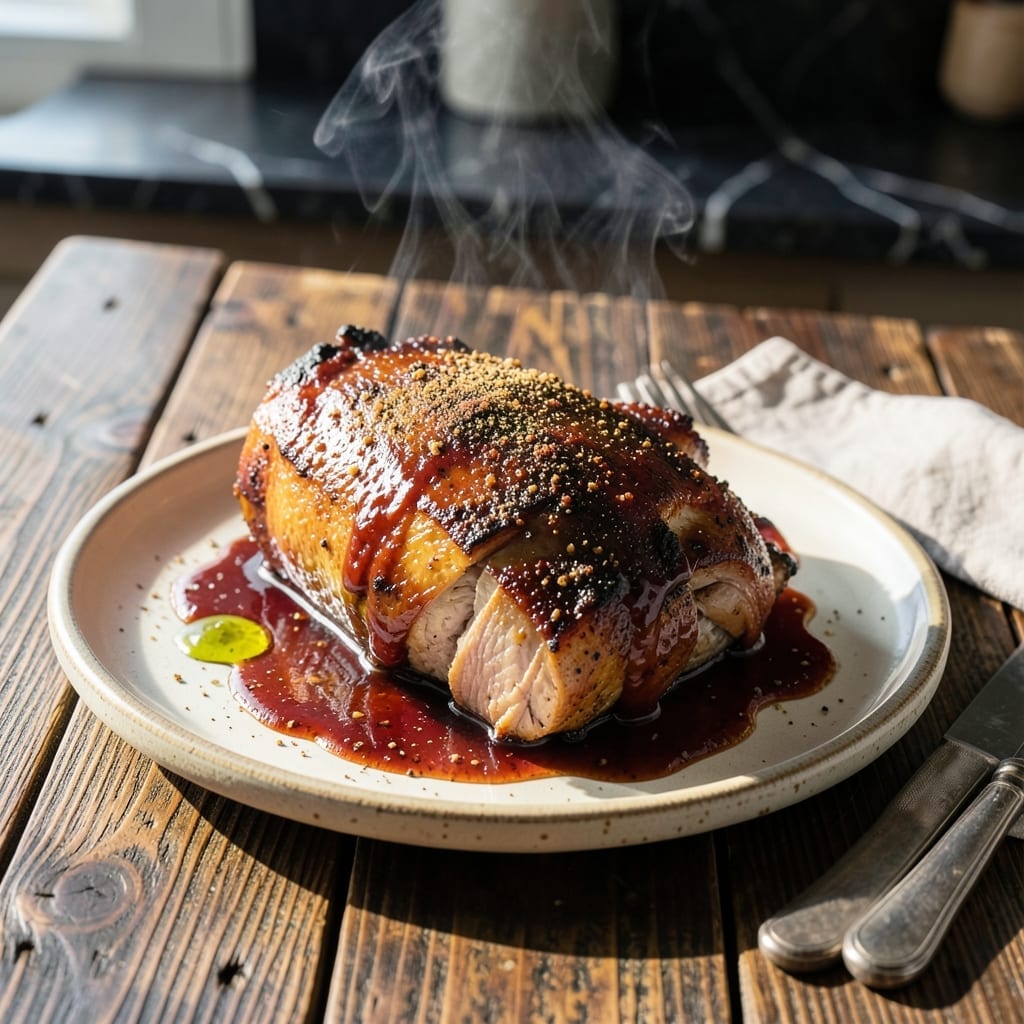
Achieving tender pork barbecue in the oven requires precision and patience. This method delivers fall-apart meat with a sticky, caramelized glaze.
I developed this technique to bring smoky pit flavors indoors. The low-and-slow approach ensures every bite stays juicy, while the glaze locks in moisture.
Ingredients for Pork Barbecue Recipe Oven
These carefully selected ingredients ensure tender, fall-apart pork with rich, caramelized glaze every time.
| Ingredient | Amount | Notes |
|---|---|---|
| Pork Shoulder 🥩 | 3 lb | Boneless, well-marbled for tenderness |
| BBQ Sauce 🍯 | 2 cups | High-quality, smoky variety preferred |
| Apple Cider Vinegar 🍏 | ¼ cup | Balances sweetness in glaze |
| Brown Sugar 🧈 | ½ cup | Light or dark, packed firmly |
| Worcestershire Sauce 🫒 | 2 tbsp | Adds depth to marinade |
| Garlic Powder 🧄 | 1 tbsp | Enhances savory profile |
| Onion Powder 🧅 | 1 tbsp | Complements pork flavor |
| Smoked Paprika 🌶️ | 1 tsp | Essential for smoky aroma |
| Kosher Salt 🧂 | 1 tbsp | Diamond Crystal preferred for even seasoning |
| Black Pepper 🌶️ | 1 tsp | Freshly ground for best results |
| Yellow Mustard 🟡 | 1 tbsp | Emulsifies glaze ingredients |
| Olive Oil 🫒 | 1 tbsp | For searing pork surface |
[recipe_ingredient_scaler]
The pork shoulder is non-negotiable for optimal texture—look for well-marbled cuts at your butcher or Costco. Avoid leaner cuts like tenderloin, as they dry out during the low-and-slow process. Diamond Crystal kosher salt is preferred for its clean flavor and even distribution. For the BBQ sauce, Stubb’s Original or Sweet Baby Ray’s provide the right balance of sweetness and tang.
Short on time? Pork butt works as a substitute for shoulder (they’re often sold interchangeably). No apple cider vinegar? White vinegar at half the amount maintains acidity. Skip the Worcestershire? Soy sauce with a dash of lemon juice offers similar umami depth. The smoked paprika is key—don’t swap for regular unless absolutely necessary.
Store uncooked pork in the fridge for up to 3 days or freeze for 6 months. Once cooked, leftovers keep for 4-5 days refrigerated or 3 months frozen. Reheat gently in a saucepan with a splash of water to maintain moisture.
Why You’ll Love This Recipe
- Set It and Forget: I toss the pork shoulder in the oven with a simple rub, and the slow heat does all the work while I do something else.
- Sweet and Tangy: The mix of brown sugar, apple cider vinegar, and Worcestershire in the BBQ sauce gives it that deep, balanced flavor I crave.
- Feeds a Crowd: This pulls apart so easily, it’s become my go-to for family dinners, potlucks, and even casual get-togethers.
- Budget Stretch: A big pork shoulder cooks down to a lot of food, so I get multiple meals—or leftovers for sandwiches all week.
Step-by-Step Instructions for Pork Barbecue Oven
This method guarantees fall-apart tenderness with a glossy, finger-licking finish.
Step 1: Season and Sear the Pork Shoulder
Pat the 3 lb Pork Shoulder dry with paper towels to ensure a good sear. Rub it evenly with the 1 tbsp Olive Oil, then coat thoroughly with the 1 tbsp Kosher Salt, 1 tsp Black Pepper, 1 tbsp Garlic Powder, 1 tbsp Onion Powder, and 1 tsp Smoked Paprika. These spices create a robust crust that locks in moisture.
Heat a large oven-safe pot or Dutch oven over medium-high heat. Sear the pork on all sides for 3-4 minutes per side until deeply browned. This step builds a flavorful fond that will infuse into the cooking liquid, so don’t rush it. The meat should release easily from the pot when ready to turn.
Step 2: Create the Braising Liquid
In a bowl, whisk together the 2 cups BBQ Sauce, 0.25 cup Apple Cider Vinegar, 0.5 cup Brown Sugar, 2 tbsp Worcestershire Sauce, and 1 tbsp Yellow Mustard until the Brown Sugar is fully dissolved. The vinegar and mustard balance the sweetness of the sauce, while the Worcestershire adds umami depth.
Pour this mixture over the seared pork in the pot. The liquid should come about halfway up the meat—if it doesn’t, add a splash of water. This ensures the pork braises rather than roasts, keeping it juicy. Stir to coat the pork evenly, then cover the pot tightly with a lid or foil.
Step 3: Braise Until Fork-Tender
Transfer the pot to a preheated 325°F oven. Braise for 2.5 to 3 hours, turning the pork halfway through the cooking time. This low-and-slow method breaks down the collagen in the pork shoulder, transforming it into gelatin that makes the meat incredibly tender.
Check for doneness by inserting a fork into the thickest part of the pork—it should slide in with no resistance and twist out easily. The internal temperature should reach at least 195°F for optimal tenderness. If the liquid reduces too much during cooking, add a little water to maintain the braising environment.
Step 4: Reduce the Sauce and Shred
Carefully remove the pork from the pot and place it on a cutting board. Skim any excess fat from the surface of the braising liquid, then return the pot to the stovetop over medium heat. Simmer the liquid for 5-7 minutes until it thickens into a glossy, coating consistency.
While the sauce reduces, shred the pork using two forks, discarding any large fat chunks. The meat should pull apart effortlessly. Once the sauce has thickened, return the shredded pork to the pot and toss to coat evenly. Let it sit for 5 minutes to absorb the flavors fully before serving.
Pro Tips For Making Pork Barbecue Recipe Oven
- Low and Slow First: Cook the pork shoulder at 275°F for 4-5 hours before saucing—this renders the fat and makes it fall-apart tender without drying it out. I learned this the hard way after pulling tough pork out of a 350°F oven.
- Score the Fat Cap: Cut 1/4-inch crosshatches into the fat cap before seasoning so the rub and sauce penetrate deeper. Sounds fussy, but it actually changes the outcome.
- Skip the Early Sauce: Resist the urge to slather on BBQ sauce before the last 30 minutes—it’ll burn and turn bitter. Brush it on only after the pork reaches 195°F internally.
- Rest in Juices: Let the shredded pork sit in its cooking liquid for 10 minutes after pulling—it soaks up all that brown sugar and vinegar goodness. My grandmother swore by this, and she was right.
Regional Styles of pork barbecue recipe oven
Carolina Shredded Style
In the Carolinas, they keep it simple with a vinegar-based sauce. Replace BBQ sauce with 2 cups apple cider vinegar, ¼ cup brown sugar, 1 tbsp red pepper flakes, and 2 tsp black pepper. The tangy bite cuts through the richness beautifully. I love this with coleslaw on a bun. 🌶️
Texas Pit Boss
Texas-style means bold, dry-rubbed pork with minimal sauce. Use 2 tbsp chili powder, 1 tbsp cumin, and 1 tsp cayenne in your rub. After braising, finish under the broiler for 3-4 minutes to caramelize the spices. Serve with pickles and white bread.
Kansas City Sweet
Kansas City loves its sweet, thick sauces. Use 1 cup ketchup, ½ cup molasses, and ¼ cup honey in your glaze. The molasses adds a deep, almost licorice-like complexity. I always add 1 tsp liquid smoke for that authentic pit flavor when cooking indoors.
Memphis Dry-Rubbed
Memphis-style skips the sauce entirely. Coat your pork with a dry rub of ¼ cup paprika, 2 tbsp brown sugar, 1 tbsp garlic powder, and 1 tbsp onion powder. After cooking, let the meat rest with the rub forming a crispy bark. Serve with sauce on the side. 💛
Alabama White Sauce
For a unique twist, try Alabama’s famous white sauce. Mix 1 cup mayonnaise, ¼ cup apple cider vinegar, and 1 tbsp prepared horseradish. Drizzle this creamy sauce over your pulled pork for a tangy, refreshing change. It’s surprisingly addictive.
Nutrition Facts
Frequently Asked Questions
Can I use a different cut of pork?
Pork butt works as a substitute since it’s similar to shoulder. Avoid lean cuts like tenderloin—they dry out. Stick to well-marbled pieces for best results.
How do I know when it’s done?
The pork is ready when it reaches 195°F internally and shreds easily with a fork. Don’t rely on time alone—always check temperature.
Can I make this ahead of time?
Yes! Cook and shred the pork, then store it in its sauce for up to 4-5 days in the fridge. Reheat gently with a splash of water to keep it moist.
What if my sauce is too thin?
Simmer it uncovered for 5-7 minutes to reduce. If it’s still loose, mix in 1 tsp cornstarch with water and cook briefly to thicken.

Trained in classic French technique but raised on slow-cooked ribs and spicy rubs, she blends culinary skill with smoke and soul.
- Recipe for Boneless Pork Chops in Cast Iron Skillet: Sear and Baste to Juicy Perfection - October 3, 2026
- Recipe for Boneless Cross Rib Roast: Slow-Roasted Beef with Herb Crust - October 3, 2026
- Hamburgers in Sauce Recipe Crock Pot: Slow-Cooked Savory Delight - October 3, 2026