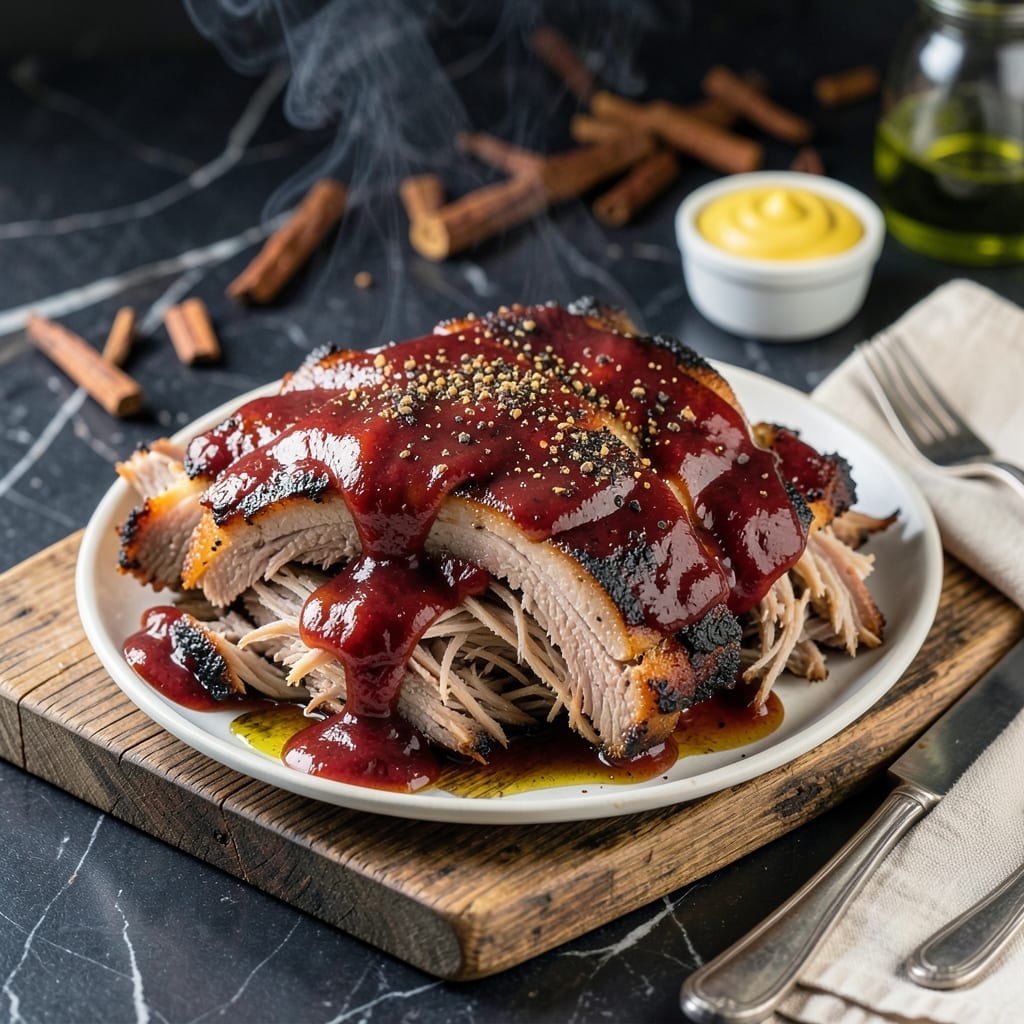
Getting my first whiff of hickory smoke at a family cookout sparked my obsession with authentic BBQ. This recipe captures that tradition with a tender result that falls apart at the touch.
Kansas City style means slow-smoked pork bathed in a sweet molasses-based sauce. The low-and-slow method ensures the meat absorbs every smoky, savory note while maintaining its juiciness.
Ingredients for Kansas City Bbq Pulled Pork
Slow-smoked pork and a molasses-rich sauce bring Kansas City tradition to your kitchen.
| Ingredient | Amount | Notes |
|---|---|---|
| Pork Shoulder 🥩 | 3 lb | Bone-in, well-marbled preferred |
| Hickory Wood Chips 🪵 | 2 cups | Soaked in water 1 hour |
| Yellow Mustard 🟡 | ¼ cup | For binder on pork rub |
| Kosher Salt 🧂 | 2 tbsp | Diamond Crystal preferred |
| Black Pepper 🌶️ | 2 tbsp | Freshly ground coarse |
| Paprika 🌶️ | 2 tbsp | Sweet or smoked variety |
| Garlic Powder 🧄 | 1 tbsp | Not garlic salt |
| Onion Powder 🧅 | 1 tbsp | Fresh ground preferred |
| Brown Sugar 🏝️ | ½ cup | Light or dark both work |
| Molasses 🍯 | 1 cup | Unsulphured for cleaner flavor |
| Ketchup 🍅 | 1 ½ cups | High-quality recommended |
| Apple Cider Vinegar 🍏 | ¼ cup | For tang in sauce |
| Worcestershire Sauce 🫒 | 2 tbsp | Anchovy-free if preferred |
| Butter 🧈 | ½ cup | Unsalted, for sauce |
[recipe_ingredient_scaler]
The pork shoulder is non-negotiable—bone-in, well-marbled cuts provide the best texture. Costco or Sam’s Club offer excellent quality in bulk, but your local butcher can source premium heritage breeds. For wood chips, hickory delivers that classic smokiness (avoid mesquite, which can overpower). Soak them thoroughly—dry chips burn instead of smolder.
No hickory? Apple or cherry wood provides a sweeter smoke profile. Brown sugar can be swapped for turbinado or coconut sugar in the rub. For a deeper sauce, substitute half the ketchup with tomato paste. The vinegar is essential for balance—white vinegar works in a pinch, though cider vinegar’s fruitiness complements the molasses better.
The cooked pork holds well in a warm oven (170°F) for up to 4 hours. Sauce keeps 10 days refrigerated or 3 months frozen. For best results, shred the pork just before serving to retain moisture.
Why You’ll Love This Recipe
- Low-Effort Smoking: The hickory wood chips do most of the work while I kick back with a drink.
- That KC Flavor: Honestly, the yellow mustard rub with salt and pepper gives it that tangy, smoky depth I crave.
- Feeds a Crowd: I’ll smoke a big pork shoulder on Saturday and we’re eating all week—sandwiches, tacos, you name it.
- Budget Hero: Pork shoulder is cheap, and one cut turns into multiple meals without breaking the bank.
Step-by-Step Instructions for Kansas City BBQ Pulled Pork
Master the art of low-and-slow smoking combined with a signature molasses-based sauce.
Step 1: Prepare and Season the Pork Shoulder
Pat the 3 lb Pork Shoulder dry with paper towels to ensure the rub adheres properly. Apply a thin layer of 0.25 cup Yellow Mustard all over the surface—this acts as a binder for the dry rub without adding mustard flavor.
In a bowl, combine 2 tbsp Kosher Salt, 2 tbsp Black Pepper, 2 tbsp Paprika, 1 tbsp Garlic Powder, 1 tbsp Onion Powder, and 0.5 cup Brown Sugar. Massage this mixture generously over the pork, pressing it into every crevice. Let it sit at room temperature for 30-45 minutes while you prepare the smoker.
Step 2: Smoke the Pork Low and Slow
Soak the 2 cups Hickory Wood Chips in water for 1 hour before use. Preheat your smoker to 225°F and add the drained wood chips to the smoker box or directly onto the coals. Place the pork shoulder fat-side up on the grill grates.
Smoke undisturbed for 5-6 hours until the internal temperature reaches 165°F. Maintain consistent heat—fluctuations can extend cooking time. Spritz the pork with apple juice or water every 2 hours to keep the surface moist and develop a good bark.
Step 3: Wrap and Continue Cooking
Once the pork hits 165°F, wrap it tightly in pink butcher paper or aluminum foil. This step, called the “Texas crutch,” helps push through the stall—a plateau in temperature where evaporation cools the meat.
Return the wrapped pork to the smoker and continue cooking until the internal temperature reaches 203-205°F, about 3-4 additional hours. The pork should be probe-tender, meaning a meat thermometer slides in like butter with no resistance.
Step 4: Rest and Shred the Pork
Remove the pork from the smoker and let it rest in the wrapper for 1 hour. This resting period allows the juices to redistribute, ensuring moist, flavorful meat. Unwrap the pork and discard any large fat chunks, then shred it using two forks or meat claws.
Place the shredded pork in a large serving tray or slow cooker to keep warm. Discard any excess liquid from the wrapper, but retain the rendered fat for added moisture if desired.
Step 5: Prepare and Toss with Kansas City Sauce
In a saucepan, combine 1 cup Molasses, 1.5 cups Ketchup, 0.25 cup Apple Cider Vinegar, 2 tbsp Worcestershire Sauce, and 0.5 cup Butter. Simmer over medium-low heat for 15-20 minutes, stirring occasionally, until thickened.
Pour the warm sauce over the shredded pork and toss gently to coat evenly. Let it sit for 10-15 minutes to allow the flavors to meld. Serve immediately on buns or as a main dish with classic sides like coleslaw and pickles.
Pro Tips For Making Kansas City Bbq Pulled Pork
- Low and Slow: Keep your smoker between 225-250°F—any higher and the pork shoulder dries out before it gets that fall-apart tenderness. I learned this the hard way after pulling tough pork at 275°F.
- Mustard First: Rub the pork shoulder with yellow mustard before the dry rub—it helps the salt and pepper stick and forms a better bark. Sounds weird, but it works.
- Don’t Rush the Rest: Let the pork rest wrapped in foil for at least 30 minutes after pulling it from the smoker. Skipping this step means all the juices end up on the cutting board instead of in the meat.
- Soak the Wood: Soak hickory chips in water for 30 minutes before adding them to the smoker—dry chips burn too fast and give a bitter flavor. My grandmother swore by this, and she was right.
Essential Equipment for Perfect Results
Smoker Selection
I swear by my Weber Smokey Mountain for consistent temperature control at 225°F. For beginners, a Pellet smoker like Traeger Pro 575 offers set-it-and-forget-it convenience. Avoid cheap offset smokers that struggle to maintain heat. 🌡️
Thermometer Essentials
A dual-probe thermometer is non-negotiable—I use ThermoWorks Smoke for monitoring both meat and smoker temps. The probe should read internal temp in 1-2 seconds for accuracy. Never rely on built-in smoker thermometers alone.
Wood Chip Tools
Soak your 2 cups Hickory Wood Chips in a large metal bowl for 1 hour. I keep a dedicated cast iron smoker box for my gas grill. For charcoal setups, use a chimney starter to get coals ready before adding wood.
Resting Equipment
After smoking, rest your pork in a coolers lined with towels for 1 hour. I use a Yeti Hopper that maintains temperature perfectly. This setup keeps the meat warm while allowing juices to redistribute.
Sauce Preparation
A heavy-bottomed 3-quart saucepan prevents scorching when simmering your sauce. I prefer All-Clad stainless steel for even heat distribution. A whisk helps combine the molasses and ketchup smoothly. 💡
Shredding Tools
Invest in quality meat claws or bear paw shredders for effortless pulling. I also keep a large cutting board with a groove to catch juices. For competitions, I use a commercial-grade shredder for consistent texture.
Nutrition Facts

Trained in classic French technique but raised on slow-cooked ribs and spicy rubs, she blends culinary skill with smoke and soul.
- Recipe for Boneless Pork Chops in Cast Iron Skillet: Sear and Baste to Juicy Perfection - October 3, 2026
- Recipe for Boneless Cross Rib Roast: Slow-Roasted Beef with Herb Crust - October 3, 2026
- Hamburgers in Sauce Recipe Crock Pot: Slow-Cooked Savory Delight - October 3, 2026