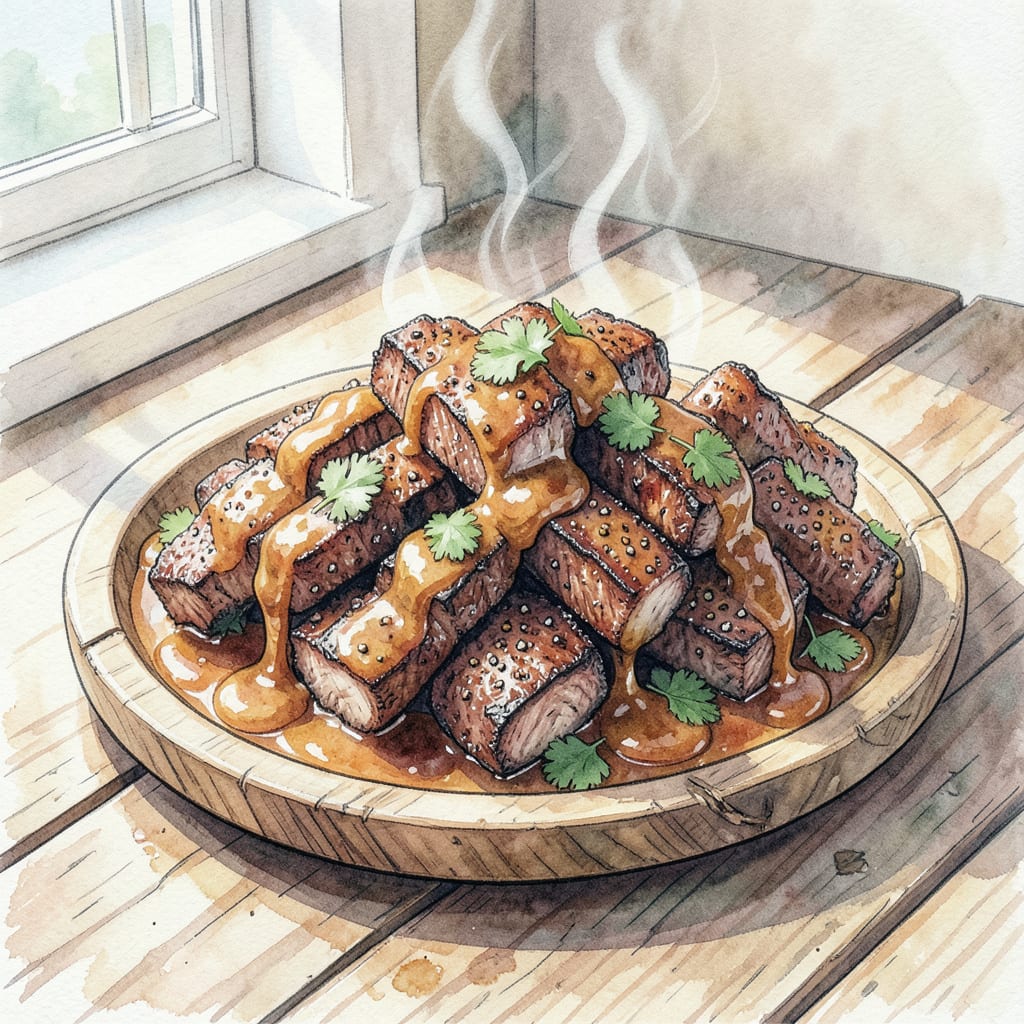
I’m sharing my secret Kansas City-style burnt ends BBQ recipe that’s sure to become a backyard favorite. 🔥 As a pitmaster with French technique training, I’ve perfected the art of tender, smoky burnt ends that are tender and finger-licking.
By combining classic BBQ techniques with precise temperature control, you’ll achieve perfectly caramelized edges and a rich, smoky flavor. Let’s get started on this smoky culinary journey!
Ingredients for Kansas City Burnt Ends Bbq
Gather these ingredients to create tender, smoky Kansas City-style burnt ends.
| Ingredient | Amount | Notes |
|---|---|---|
| Beef Brisket 🥩 | 2 ½ lb | Trimmed, point cut preferred |
| Kosher Salt 🧂 | 2 tbsp | Coarse, Diamond Crystal preferred |
| Black Pepper 🌶️ | 1 tbsp | Freshly ground, coarse grind |
| Brown Sugar 🍮 | 2 tbsp | Dark or light, packed |
| Smoked Paprika 🌶️ | 1 tbsp | Smoked for authentic Kansas City flavor |
| Chili Powder 🌶️ | 1 tbsp | Ancho or guajillo chili powder |
| Garlic Powder 🧄 | 1 tsp | Not garlic salt |
| Onion Powder 🧅 | 1 tsp | Dehydrated onion powder |
| Cumin 🌿 | 1 tsp | Ground, toasted cumin preferred |
| Apple Cider Vinegar 🍎 | ¼ cup | For BBQ sauce, unfiltered preferred |
| Kansas City-style BBQ Sauce 🍅 | 1 cup | Thick, sweet, and tangy variety |
| Wood Chips 🌲 | 2 cups | Hickory or post oak, soaked |
[recipe_ingredient_scaler]
For authentic Kansas City flavor, KC Masterpiece or Gates BBQ sauce is ideal. You can find these at most supermarkets or specialty BBQ stores. If you’re feeling adventurous, making your own BBQ sauce from scratch is a great option too. Look for hickory or post oak wood chips for that authentic smoky flavor.
No beef brisket? You can substitute with chuck roast or short ribs, though the cooking time will vary. For a spicier kick, add some cayenne pepper or red pepper flakes to the dry rub. If you prefer a sweeter flavor, you can increase the brown sugar to 1/4 cup.
These burnt ends reheat beautifully—store them in an airtight container in the fridge for up to 5 days. You can also freeze them for up to 3 months. Simply reheat in the oven or on the grill when you’re ready to enjoy them again.
Step-by-Step Instructions for Kansas City Burnt Ends BBQ
Let’s get started with this classic BBQ recipe that’s sure to impress.
🔥 Step 1: Prepare the Brisket for Smoking
First, trim the 2.5 lb Beef Brisket to your desired fat cap thickness. I prefer about ¼ inch for optimal flavor. Next, mix the dry rub ingredients – 2 tbsp Kosher Salt, 1 tbsp Black Pepper, 2 tbsp Brown Sugar, 1 tbsp Smoked Paprika, 1 tbsp Chili Powder, 1 tsp Garlic Powder, 1 tsp Onion Powder, and 1 tsp Cumin – in a bowl until well combined. Apply this rub evenly to all surfaces of the brisket, making sure to coat it thoroughly. Let the brisket sit at room temperature for 1 hour before smoking to allow the meat to relax and absorb the flavors.
While the brisket is resting, preheat your smoker to 225-250°F using your preferred type of wood, such as hickory or post oak. I recommend using 2 cups Wood Chips that have been soaked in water for at least 30 minutes. Once the smoker is ready, place the brisket in the smoker fat-side up. Close the lid and let it smoke undisturbed for 4-5 hours until it reaches an internal temperature of 165°F. You’ll know it’s ready when the bark is dark and the internal temperature is just right.
🔪 Step 2: Separate and Cube the Brisket
After the brisket has finished smoking, remove it from the heat and let it rest for 15-20 minutes. This resting period allows the juices to redistribute, making the meat even more tender. Once rested, separate the brisket into two parts: the flat and the point. For burnt ends, we’re focusing on the point. Cube the point into 1-inch pieces. These cubes will become your burnt ends.
Place the cubed brisket pieces into a foil pan or a disposable aluminum pan. You’re now ready to add more flavor to these tender pieces.
🍳 Step 3: Toss with BBQ Sauce and Continue Cooking
Pour 1 cup Kansas City-style BBQ Sauce and 0.25 cup Apple Cider Vinegar over the cubed brisket pieces in the pan. Toss everything together until the burnt ends are evenly coated with the sauce mixture. Cover the pan tightly with aluminum foil.
Return the pan to the smoker and continue cooking for another 1-2 hours at 225-250°F. The burnt ends are done when they’re tender and have absorbed the flavors of the BBQ sauce. You’ll notice they’re nicely caramelized on the outside, which is exactly what we’re looking for.
🔥 Step 4: Crisp the Burnt Ends
After the burnt ends have cooked for 1-2 hours, remove the foil covering the pan. Increase the smoker temperature to 300-325°F to crisp up the exterior of the burnt ends. Let them cook uncovered for an additional 30-45 minutes, stirring occasionally, until they develop a nice crust on the outside. Watch them closely to prevent burning – you want that perfect balance of tender interior and crispy exterior.
Once done, remove the burnt ends from the smoker and let them cool slightly. Serve them hot, garnished with additional BBQ sauce if desired. These tender, smoky burnt ends are sure to be a hit at any BBQ gathering.
Troubleshooting This Dish
Common Pitfalls to Avoid
One of the most common issues with burnt ends is uneven cooking. To prevent this,
Temperature Control Challenges
Maintaining a consistent temperature in your smoker is crucial. If your smoker temperature drops too low, the burnt ends might not develop that perfect crispy exterior. Keep your smoker between 225-250°F during the initial cooking phase, and don’t be afraid to adjust as needed. I use a dual-probe thermometer to monitor both the smoker and internal meat temperatures.
Sauce-Related Issues
Too much BBQ sauce can make the burnt ends soggy. Start with 1 cup Kansas City-style BBQ Sauce mixed with ¼ cup Apple Cider Vinegar, and adjust to taste. If you prefer a thicker coating, reduce the vinegar or add a little cornstarch to thicken the sauce before tossing.
Troubleshooting Dry Burnt Ends
If your burnt ends turn out dry, it might be due to overcooking or insufficient wrapping during the cooking process. To prevent dryness, wrap the cubed brisket tightly in foil during the 1-2 hour saucing phase. If they’re already dry, try adding a bit more BBQ sauce or serving with extra sauce on the side.
Fixing Undercooked Burnt Ends
If the burnt ends are undercooked, simply return them to the smoker at 225°F and continue cooking until they reach your desired tenderness. Check every 30 minutes until they’re done. You can also finish them at a higher temperature (300-325°F) to speed up the process, but watch closely to avoid burning.
Crisping Without Burning
To achieve that perfect crispy exterior without burning, remove the foil during the last 30-45 minutes and increase the smoker temperature to 300-325°F. Stir the burnt ends every 10-15 minutes to ensure even crisping. Keep a close eye on them, as the line between crispy and burnt is thin.
Nutrition Facts

Trained in classic French technique but raised on slow-cooked ribs and spicy rubs, she blends culinary skill with smoke and soul.
- Recipe for Boneless Pork Chops in Cast Iron Skillet: Sear and Baste to Juicy Perfection - October 3, 2026
- Recipe for Boneless Cross Rib Roast: Slow-Roasted Beef with Herb Crust - October 3, 2026
- Hamburgers in Sauce Recipe Crock Pot: Slow-Cooked Savory Delight - October 3, 2026