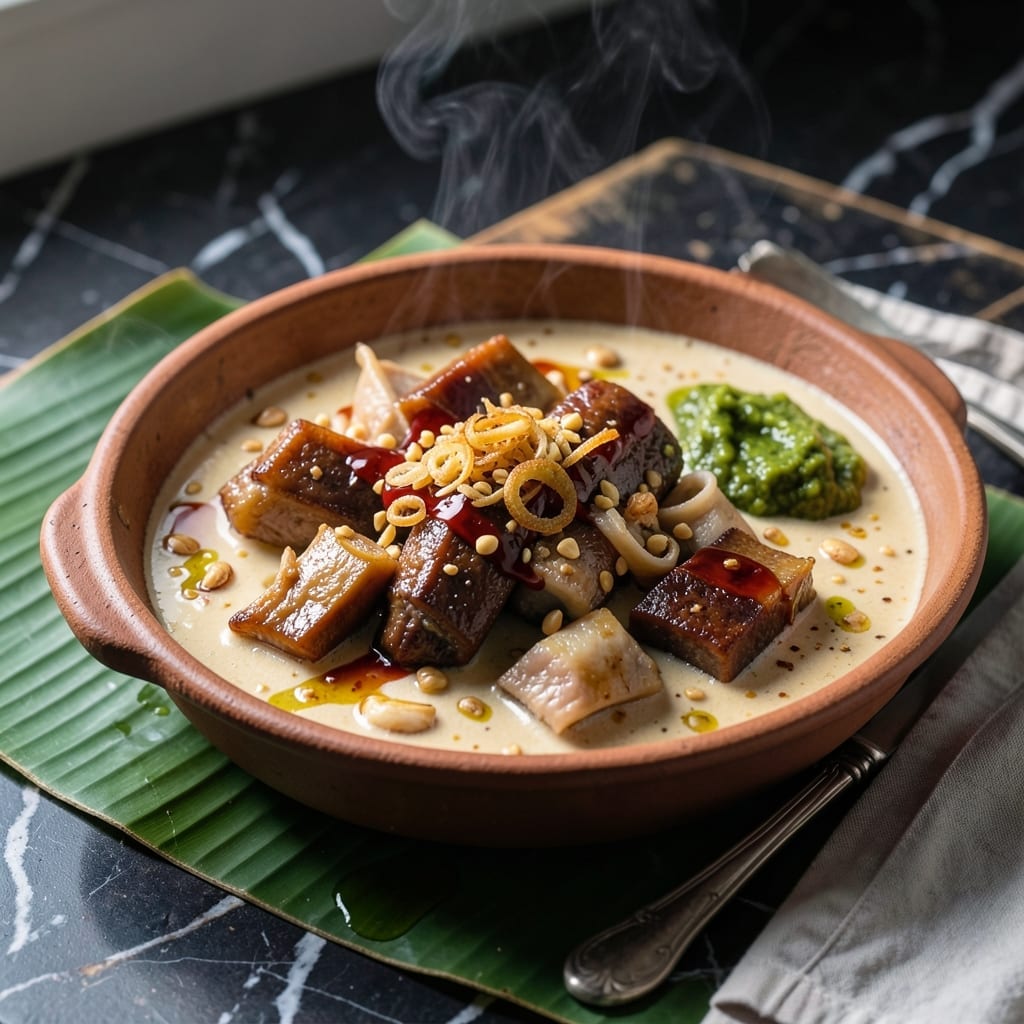
This Filipino classic brings together tender oxtail and vegetables in a rich, peanut-based sauce that’s deeply satisfying.
Traditional bagoong (shrimp paste) on the side adds the perfect salty contrast to this slow-cooked dish.
Ingredients for Kare Kare Recipe Philippines
Rich peanut sauce meets slow-cooked oxtail and fresh vegetables for authentic flavor.
| Ingredient | Amount | Notes |
|---|---|---|
| Oxtail 🥩 | 2 ½ lb | Cut into segments, trimmed of excess fat |
| Peanut Butter 🥜 | ½ cup | Unsweetened, smooth variety preferred |
| Ground Peanuts 🥜 | ½ cup | Toasted for deeper flavor |
| Onion 🧅 | 1 whole | Yellow onion, diced |
| Garlic Cloves 🧄 | 6 cloves | Minced finely |
| Ginger Root 🌿 | 1 whole | Peeled and sliced (2-inch piece) |
| Eggplant 🍆 | 1 whole | Asian eggplant preferred, cut into chunks |
| String Beans 🌱 | ½ lb | Trimmed and cut into 2-inch pieces |
| Banana Heart 🍌 | 1 whole | Peeled and sliced (or substitute with cabbage) |
| Peanuts 🥜 | ¼ cup | Crushed for garnish |
| Annatto Seeds 🌶️ | 1 tsp | Soaked in hot water for color |
| Fish Sauce 🐟 | 2 tbsp | Patis or substitute with soy sauce |
| Bagoong 🦐 | ½ cup | Shrimp paste, for serving |
| Beef Stock 🥣 | 4 cups | Low-sodium preferred |
| Cooking Oil 🫒 | 2 tbsp | Neutral oil like canola or vegetable |
[recipe_ingredient_scaler]
The oxtail is non-negotiable for authenticity—look for well-marbled pieces at Asian markets or specialty butchers. If unavailable, beef shank works as a substitute (though the flavor profile differs slightly). The peanut butter should be unsweetened to avoid cloying sweetness in the finished dish. Asian eggplant has fewer seeds and a more delicate texture, but Italian eggplant can be used in a pinch.
No bagoong? Fish sauce with a pinch of salt mimics the salty depth, though the fermented complexity won’t be identical. For a vegetarian approach, miso paste mixed with a bit of soy sauce offers umami. The annatto seeds are for color—skip if unavailable, but the dish will lack its signature golden hue. Toast the ground peanuts until fragrant before adding to intensify their nuttiness.
Kare kare tastes even better the next day as flavors meld. Store in the fridge for up to 3 days or freeze for 3 months. Reheat gently to preserve the sauce’s creamy texture. The bagoong keeps indefinitely in the fridge, but bring it to room temperature before serving for optimal flavor.
Why You’ll Love This Recipe
- I’ll be real: the leftovers taste even deeper the next day, and the oxtail just gets more tender.
- Slow Cooker Magic: I can let the oxtail simmer all afternoon with barely any effort—just toss in onions, garlic, and peanut butter when it’s time.
- Rich Peanut Sauce: That deep, nutty flavor from the peanut butter and ground peanuts coating the tender oxtail is ridiculously good.
- Feeds My Crowd: Between us, this is my go-to for family gatherings since it stretches beautifully with extra veggies or rice.
Step-by-Step Instructions for Peanut-Stewed Oxtail
Master this traditional Filipino technique for rich, nutty stew with fall-off-the-bone meat.
Step 1: Sear and Sauté the Aromatics
Heat the 2 tbsp cooking oil in a large, heavy pot over medium-high heat until shimmering. Add the 2.5 lb oxtail pieces and sear until deeply browned on all sides, about 5-7 minutes per batch. This builds a flavorful fond that enriches the stew.
Remove the oxtail and set aside. In the same pot, sauté the 1 whole onion (diced), 6 cloves garlic cloves (minced), and 1 whole ginger root (sliced) for 3-4 minutes until fragrant and the onion turns translucent. The aroma should be potent and inviting at this stage.
Step 2: Build the Stew Base
Return the oxtail to the pot. Pour in the 4 cups beef stock and add the 2 tbsp fish sauce. Stir to deglaze, scraping up any browned bits from the bottom. These caramelized particles dissolve into the liquid, intensifying the stew’s depth.
Add the soaked 1 tsp annatto seeds (with their soaking liquid) for a vibrant golden hue. Bring to a boil, then reduce heat to low, cover, and simmer for 2 to 2.5 hours until the oxtail is fork-tender. Check occasionally and skim any foam that rises to the surface.
Step 3: Add Vegetables and Peanut Sauce
Once the oxtail is tender, stir in the 0.5 cup peanut butter and 0.5 cup ground peanuts until fully dissolved and the sauce thickens. The mixture should be smooth and glossy, coating the back of a spoon.
Add the 1 whole eggplant (cut into chunks), 0.5 lb string beans (cut into 2-inch pieces), and 1 whole banana heart (peeled and sliced). Simmer for an additional 15-20 minutes until the vegetables are tender but still hold their shape. Avoid overcooking to retain texture.
Step 4: Finish and Serve
Taste and adjust seasoning with additional fish sauce if needed. The stew should have a balanced savory-sweet profile with a rich peanut undertone. Garnish with the 0.25 cup peanuts (crushed) for added crunch.
Ladle the kare-kare into serving bowls and serve hot with 0.5 cup bagoong on the side for dipping. The dish should have a thick, creamy sauce with tender meat and vegetables that soak up the flavors beautifully.
Pro Tips For Making Kare Kare Recipe Philippines
- Brown the Oxtail: Sear the oxtail in batches over medium-high heat until deeply browned on all sides—this builds the rich, caramelized base that defines kare kare’s depth. I learned this the hard way after skipping it once and ending up with a flat-tasting stew.
- Toast the Peanuts: Dry-toast the ground peanuts in a pan for 3-4 minutes until fragrant before adding them to the sauce. Sounds weird, but it works: it removes the raw taste and amplifies their nuttiness in the final dish.
- Skip the Rush: Resist the urge to crank up the heat to speed up the oxtail cooking—low and slow (2-3 hours) is non-negotiable for tender meat that falls off the bone. After burning three batches trying to hurry, I finally figured out patience is the thing that matters most.
- Strain the Sauce: For a silky-smooth peanut sauce, strain it through a fine-mesh sieve after blending. This isn’t the prettiest method, but it’s the tastiest—no one wants grainy kare kare, and I skip this when I’m lazy, but the dish is noticeably better when I don’t.
Flavor Customization for This Recipe
Spice Level Adjustments
For heat lovers, add 1-2 chopped siling labuyo (bird’s eye chili) when sautéing the aromatics. The chili infuses the oil with spice that carries through the entire dish. I often add ½ tsp chili flakes for a milder kick that doesn’t overpower the peanut sauce. 🌶️
Peanut Variations
Swap the peanut butter for black sesame paste for a darker, more complex flavor. The nutty richness remains but with an earthier profile. For a smoother sauce, blend the ground peanuts with ¼ cup warm beef stock before adding to the pot.
Vegetable Customization
If banana heart is unavailable, use napa cabbage for a similar texture. For extra color, add ½ cup sliced bell peppers with the other vegetables. I love adding baby bok choy in the final 5 minutes of cooking for a fresh, crisp element.
Protein Alternatives
Replace oxtail with beef shank or pork hock for equally tender results. Chicken thighs work too but reduce simmering time to 45-60 minutes. For seafood lovers, shrimp or squid cook in just 8-10 minutes in the peanut sauce.
Vegetarian? Use tofu and mushrooms—they absorb the peanut flavor beautifully. 💡
Sauce Consistency
For a thicker sauce, stir in 1-2 tbsp toasted rice flour mixed with water. For a thinner sauce, add ½ cup additional beef stock gradually. The perfect consistency should coat the back of a spoon without being gluey.
Nutrition Facts
Frequently Asked Questions
Can I use a pressure cooker for faster cooking?
Yes! Cook on high pressure for 45 minutes after searing. This cuts the cooking time significantly while keeping the meat tender. Always allow natural pressure release.
What if I can’t find banana heart?
Substitute with napa cabbage or green papaya. Both hold up well to simmering and absorb the peanut sauce beautifully.
How do I prevent the peanut sauce from separating?
Stir constantly while adding peanut butter and ground peanuts. Use warm beef stock to help emulsify the sauce. A splash of stock at the end can fix minor separation.
Is bagoong absolutely necessary?
While traditional, you can use fish sauce mixed with salt as a substitute. The dish will still be flavorful, though it’ll lack the fermented depth of bagoong.

Trained in classic French technique but raised on slow-cooked ribs and spicy rubs, she blends culinary skill with smoke and soul.
- Recipe for Boneless Pork Chops in Cast Iron Skillet: Sear and Baste to Juicy Perfection - October 3, 2026
- Recipe for Boneless Cross Rib Roast: Slow-Roasted Beef with Herb Crust - October 3, 2026
- Hamburgers in Sauce Recipe Crock Pot: Slow-Cooked Savory Delight - October 3, 2026