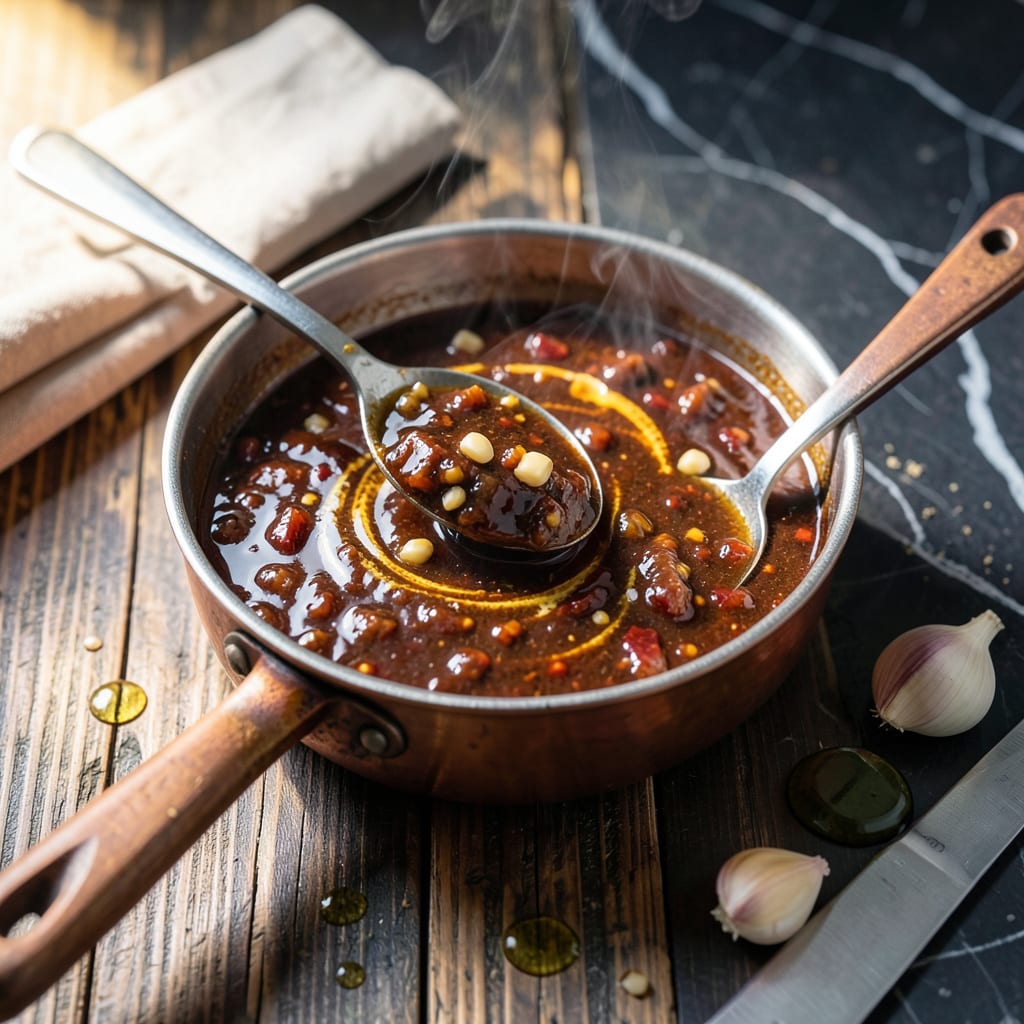
This sauce transforms good brisket into something unforgettable. A perfect balance of sweet, tangy, and umami depth comes from just a few key ingredients.
I developed this blend to complement smoky brisket without overpowering it. The vinegar cuts through richness while soy sauce and gochujang build layers of flavor. Store it for up to two weeks.
Ingredients for Kbbq Brisket Sauce
Nine ingredients deliver the perfect balance of sweet, tangy, and umami for smoky brisket.
| Ingredient | Amount | Notes |
|---|---|---|
| Gochujang 🌶️ | ¼ cup | Korean fermented chili paste essential |
| Soy Sauce 🫒 | ¼ cup | Low-sodium preferred for balance |
| Apple Cider Vinegar 🍎 | ¼ cup | Bright acidity to cut richness |
| Brown Sugar 🍚 | ¼ cup | Light or dark, packed |
| Honey 🍯 | 2 tbsp | Natural sweetener for depth |
| Minced Garlic 🧄 | 2 tbsp | Freshly minced preferred |
| Grated Fresh Ginger 🌿 | 1 tbsp | Peeled and finely grated |
| Sesame Oil 🫒 | 1 tbsp | Toasted for nutty aroma |
| Rice Vinegar 🍚 | 1 tbsp | Mild acidity for balance |
[recipe_ingredient_scaler]
The gochujang is non-negotiable here—look for the red tub at H Mart or Korean markets (avoid the green maesilaek variety). Soy sauce should be Japanese or Korean style for cleaner flavor; skip the Chinese brands which can be saltier. Brown sugar adds molasses notes that complement the smokiness, while raw or local honey brings floral complexity you won’t get from processed stuff.
No gochujang? Sriracha plus 1 tsp miso paste gets you close but lacks depth. Out of apple cider vinegar? White vinegar with 1 tsp sugar works in a pinch. Fresh ginger and garlic are ideal, but jarred minced versions save time without sacrificing much. For extra umami, add 1 tbsp fish sauce (though this makes it non-vegetarian).
This sauce keeps beautifully in the fridge for up to 2 weeks. The flavors actually deepen over time. For longer storage, freeze in ice cube trays for 6 months. Always bring to room temperature and stir well before using, as the sugars may settle.
Why You’ll Love This Recipe
- Five-Minute Mix: I just dump everything in a bowl—gochujang, soy, vinegar, sugar, honey—and stir. No cooking, no fuss.
- Sweet Heat Balance: The brown sugar and honey mellow out the gochujang’s kick, so it’s spicy but still approachable.
- Grill Night Hero: Slather it on brisket, ribs, or even tofu—it works for weeknight dinners or backyard cookouts.
Step-by-Step Instructions for KBBQ Brisket Sauce
This method ensures a balanced sauce with complex layers of sweet, spicy, and tangy flavors.
Step 1: Combine Wet Ingredients in a Saucepan
In a medium saucepan, add the 0.25 cup Apple Cider Vinegar, 0.25 cup Soy Sauce, 0.25 cup Gochujang, 2 tbsp Honey, and 1 tbsp Rice Vinegar. These liquid components form the foundation of your sauce, providing acidity, umami, and heat in perfect harmony.
Whisk the mixture vigorously until the gochujang is fully incorporated and no lumps remain. The gochujang will initially resist dissolving, but persistent whisking ensures a smooth, homogeneous base. This step prevents clumping during cooking.
Step 2: Incorporate Sweet and Aromatic Elements
Add the 0.25 cup Brown Sugar, 2 tbsp Minced Garlic, 1 tbsp Grated Fresh Ginger, and 1 tbsp Sesame Oil to the saucepan. The brown sugar adds depth with its molasses notes, while the garlic and ginger introduce aromatic complexity.
Stir well to combine, ensuring the brown sugar begins to dissolve in the liquid. The sesame oil should create a subtle sheen on the surface—this is normal and indicates proper incorporation. At this stage, the mixture will appear thick and slightly grainy from the sugar.
Step 3: Simmer and Reduce to Desired Consistency
Place the saucepan over medium heat and bring the mixture to a gentle simmer. You’ll notice small bubbles forming around the edges first, followed by a slow, steady bubble pattern across the surface. This indicates the sauce has reached the correct temperature.
Reduce heat to medium-low and let the sauce simmer for 10-12 minutes, stirring occasionally with a wooden spoon. The sauce will begin to thicken and darken slightly as the sugars caramelize. You’re aiming for a consistency that coats the back of a spoon but still drizzles easily—about the thickness of maple syrup.
Watch carefully toward the end of cooking to prevent burning. The sauce should reduce by about 20-25% in volume, and the raw garlic aroma will mellow into a rich, savory fragrance that fills your kitchen.
Step 4: Cool and Adjust Seasoning
Remove the saucepan from heat and let the sauce cool to room temperature, about 30 minutes. As it cools, the sauce will continue to thicken slightly. This resting period allows the flavors to meld and mellow, particularly the sharpness of the vinegars.
Taste and adjust the balance if needed. If the sauce tastes too sharp, a pinch of additional brown sugar can help. If it’s too thick, thin with a teaspoon of water at a time. The finished sauce should have a glossy appearance with a deep, complex flavor profile that balances sweet, spicy, tangy, and umami notes perfectly.
Pro Tips For Making Kbbq Brisket Sauce
- Bloom the Gochujang: Cook the gochujang in a little oil for 1-2 minutes before adding liquids—I learned this the hard way after my first batch tasted raw and harsh.
- Balance the Sweetness: Taste before adding all the brown sugar and honey; gochujang brands vary wildly in sweetness, and you can always adjust but can’t take it back.
- Skip the Boil: Simmer gently instead of boiling to keep the sauce from breaking or turning bitter—after ruining a batch by rushing it, I now keep it at a lazy bubble.
- Thin with Water: If the sauce thickens too much while reducing, whisk in a tablespoon of warm water at a time—sounds simple, but it’s the easiest way to save it without diluting flavor.
Regional Styles of This kbbq brisket sauce
Texas-Style Adaptation
For a Lone Star twist, I swap apple cider vinegar with white vinegar and add 1 tbsp molasses for deeper sweetness. The result pairs beautifully with slow-smoked brisket at local competitions.
Carolina Gold Version
I blend in ¼ cup mustard and reduce the brown sugar to 2 tbsp for a tangier profile. This yellow sauce variation brightens up the gochujang’s heat while keeping that smoky depth.
Kansan Sweet Heat
My Midwestern take increases honey to ¼ cup and adds 1 tsp smoked paprika. The extra sweetness balances the spice, creating a glaze that caramelizes beautifully on the grill.
California Fusion
I lighten the sauce with 2 tbsp orange juice and 1 tbsp lime zest for a citrusy kick. This coastal variation reflects my love for bright, fresh flavors that cut through rich meats. 🌊
Memphis Dry-Style
For a thicker version, I reduce the vinegars by half and add 1 tbsp tomato paste. This creates a sticky sauce that clings to brisket slices, perfect for sandwiches at local cookouts.
Pacific Northwest
I incorporate 1 tbsp maple syrup and 1 tsp coffee for earthy depth. This version pairs wonderfully with the region’s love for bold, complex flavors. 💛
Nutrition Facts

Trained in classic French technique but raised on slow-cooked ribs and spicy rubs, she blends culinary skill with smoke and soul.
- Recipe for Boneless Pork Chops in Cast Iron Skillet: Sear and Baste to Juicy Perfection - October 3, 2026
- Recipe for Boneless Cross Rib Roast: Slow-Roasted Beef with Herb Crust - October 3, 2026
- Hamburgers in Sauce Recipe Crock Pot: Slow-Cooked Savory Delight - October 3, 2026