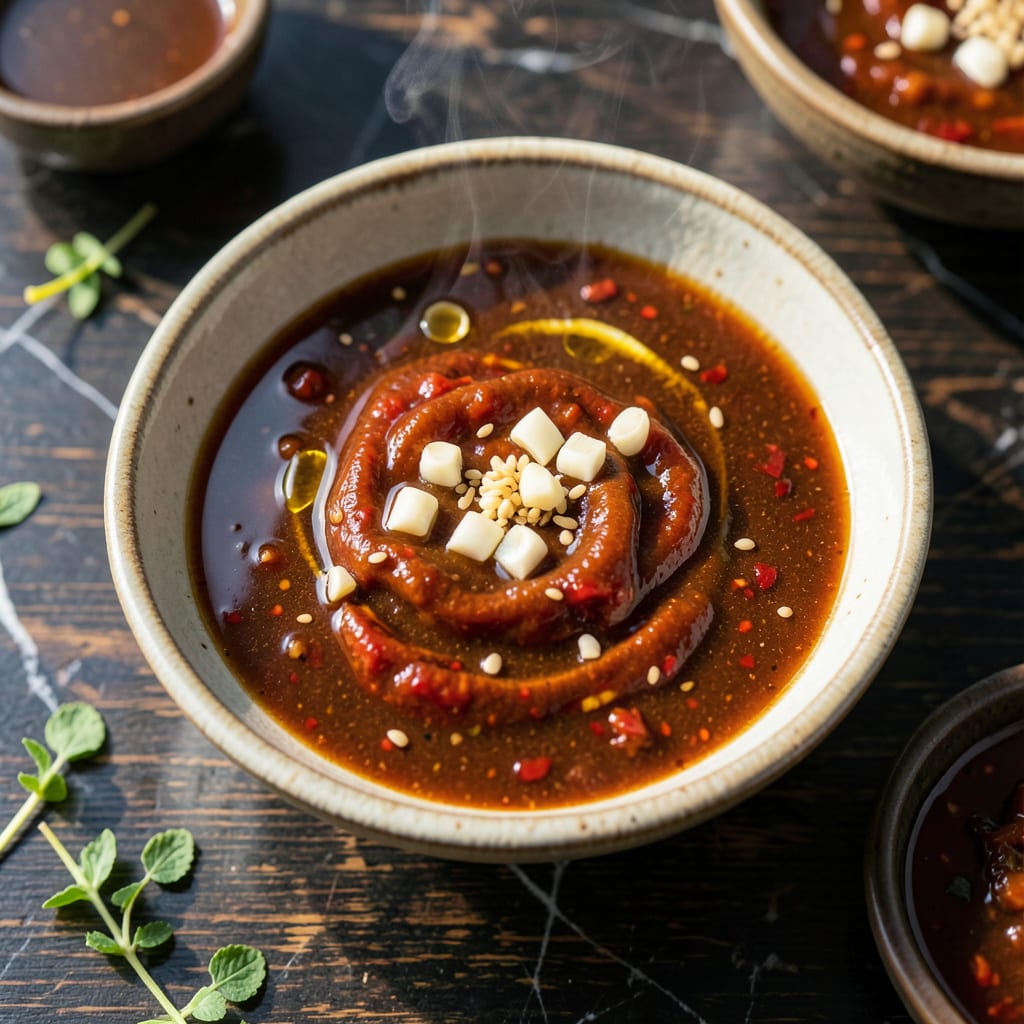
This sauce captures the essence of Korean BBQ with its perfect balance of sweet, savory, and smoky notes. I developed it to complement grilled meats without overpowering them.
With just a few pantry staples and 10 minutes, you’ll create a versatile dipping sauce that elevates any protein. It keeps well, so make a double batch for your next cookout.
Ingredients for Kbbq Dipping Sauce
Nine pantry staples create this bold, balanced dipping sauce in minutes.
| Ingredient | Amount | Notes |
|---|---|---|
| Soy Sauce 🫒 | ½ cup | Low-sodium preferred for balance |
| Brown Sugar 🍚 | ¼ cup | Light or dark both work |
| Rice Vinegar 🍶 | 2 tbsp | Mild acidity essential |
| Sesame Oil 🫒 | 1 tbsp | Toasted for nutty depth |
| Gochujang 🌶️ | 1 tbsp | Korean chili paste for heat |
| Garlic Cloves 🧄 | 3 cloves | Minced finely for even flavor |
| Fresh Ginger 🌿 | 1 tbsp | Grated for zesty kick |
| Green Onions 🧅 | 2 whole | Thinly sliced for garnish |
| Toasted Sesame Seeds 🌾 | 1 tbsp | For aromatic crunch |
[recipe_ingredient_scaler]
The soy sauce is your base, so use a good one—Kikkoman or a Korean brand like Jin if you can find it. Low-sodium lets you control the saltiness. Brown sugar adds that caramelized sweetness; I keep a bag of Domino in the pantry just for this. Rice vinegar might be in the Asian aisle at Walmart or H-E-B, but any grocery store should have it.
No gochujang? Sriracha plus 1/2 tsp sugar gets you close, but it won’t have that fermented depth. Fresh ginger is ideal, but ground ginger at half the amount works in a pinch. Green onions can be swapped for chives or even a pinch of onion powder. The sesame oil is non-negotiable though—it’s what gives that authentic Korean BBQ flavor.
This keeps for 1 week in the fridge, but honestly, it’s so good you’ll use it up fast. Store in a jar with a tight lid. The flavors deepen after a day, so make it ahead if you can. Freezes for 3 months too.
Why You’ll Love This Recipe
- I’ll be real: I make a double batch and it stays fresh in the fridge, so I’m never scrambling last-minute when cravings hit.
- 5-Minute Mix: I just dump everything in a bowl—soy sauce, brown sugar, rice vinegar, sesame oil, gochujang—and stir. No cooking, no fuss.
- Sweet Heat Balance: The brown sugar caramelizes with the gochujang for that sticky, spicy-sweet kick that clings to every bite of meat.
- Grill Night Hero: Honestly, it’s my secret for turning basic grilled chicken or store-bought bulgogi into a restaurant-worthy spread.
Step-by-Step Instructions for KBBQ Dipping Sauce
Here’s the method. Straightforward, tested, works every time.
Step 1: Create the Flavor Base with Aromatics
In a medium bowl, combine the 0.5 cup Soy Sauce and 0.25 cup Brown Sugar. Stir vigorously until the brown sugar completely dissolves—this might take a minute as the grains break down into the liquid. The mixture should look smooth with no visible sugar crystals remaining.
Add the 1 tbsp Gochujang and mix well. The chili paste will create a beautiful reddish hue and add depth to the base. I use a whisk here to break up any clumps of gochujang, ensuring it incorporates evenly throughout the sauce.
Step 2: Introduce Acid and Umami Elements
Pour in the 2 tbsp Rice Vinegar and 1 tbsp Sesame Oil. The vinegar will brighten the rich flavors, while the sesame oil adds that distinctive nutty aroma essential to Korean BBQ. Stir for 20-30 seconds until the liquids are fully emulsified.
You’ll notice the sauce start to develop a glossy sheen—that’s the sesame oil doing its work. The acid from the vinegar also helps balance the sweetness from the brown sugar, creating that perfect sweet-tangy profile we’re after.
Step 3: Add Fresh Aromatics for Zing
Stir in the 3 cloves Garlic Cloves (minced finely) and 1 tbsp Fresh Ginger (grated). These fresh ingredients add a bright, pungent kick that cuts through the richness of the other components. I like to press the grated ginger against the side of the bowl with the back of a spoon to extract as much juice as possible.
The garlic and ginger should be evenly distributed throughout the sauce. Let the mixture sit for 5 minutes to allow the flavors to meld together—this resting time is crucial for the raw aromatics to mellow slightly and blend with the other ingredients.
Step 4: Finish and Garnish
Give the sauce one final stir, then taste and adjust seasoning if needed. The flavors should be balanced—sweet, salty, tangy, with a bit of heat from the gochujang. If it tastes too sharp, let it sit for another 5 minutes to mellow.
Transfer to a serving bowl and sprinkle with the 2 whole Green Onions (thinly sliced) and 1 tbsp Toasted Sesame Seeds. These garnishes add freshness, color, and a delightful crunch that elevates every bite. Serve at room temperature for the best flavor experience.
Pro Tips For Making Kbbq Dipping Sauce
- Dissolve the Sugar: Heat the soy sauce and brown sugar together first—stirring until the sugar fully dissolves prevents grainy texture in your final sauce.
- Bloom the Gochujang: I learned this the hard way—mix the gochujang with a splash of warm water before adding to the sauce to prevent clumping.
- Skip the Boiling: Keep it at a gentle simmer, never a rolling boil, or the vinegar will overpower the balance of sweet and savory.
- Rest Before Serving: Let the sauce sit for 10 minutes before using—this gives the sesame oil time to infuse properly and the flavors to meld.
Wine and Beer Pairings for These Flavors
Korean Beer Pairings
I love serving this sauce with ice-cold Hite or OB beer—their crisp, clean profiles cut through the richness beautifully. The light body won’t compete with the bold flavors, making each bite taste fresher. These are easy to find at any Asian market. 🍺
Craft Beer Alternatives
For craft beer lovers, try a Belgian witbier like Hoegaarden. Its citrus and coriander notes complement the ginger and garlic in the sauce. A pilsner with its crisp finish also works wonderfully.
Wine Choices
Surprisingly, a slightly off-dry Riesling pairs perfectly—the sweetness mirrors the brown sugar while the acidity balances the saltiness. I also enjoy a chilled rosé with its berry notes that enhance the gochujang’s fruitiness. 🍷
White Wine Options
An unoaked Chardonnay offers a creamy texture that contrasts nicely with the sauce’s tang. Pinot Grigio is another safe bet—its light body and citrus undertones cleanse your palate between bites.
Non-Alcoholic Pairings
For non-drinkers, sparkling water with lime refreshes beautifully. I also recommend Korean barley tea (boricha) for its nutty, toasted flavor that complements the sesame oil perfectly.
Nutrition Facts

Trained in classic French technique but raised on slow-cooked ribs and spicy rubs, she blends culinary skill with smoke and soul.
- Recipe for Boneless Pork Chops in Cast Iron Skillet: Sear and Baste to Juicy Perfection - October 3, 2026
- Recipe for Boneless Cross Rib Roast: Slow-Roasted Beef with Herb Crust - October 3, 2026
- Hamburgers in Sauce Recipe Crock Pot: Slow-Cooked Savory Delight - October 3, 2026