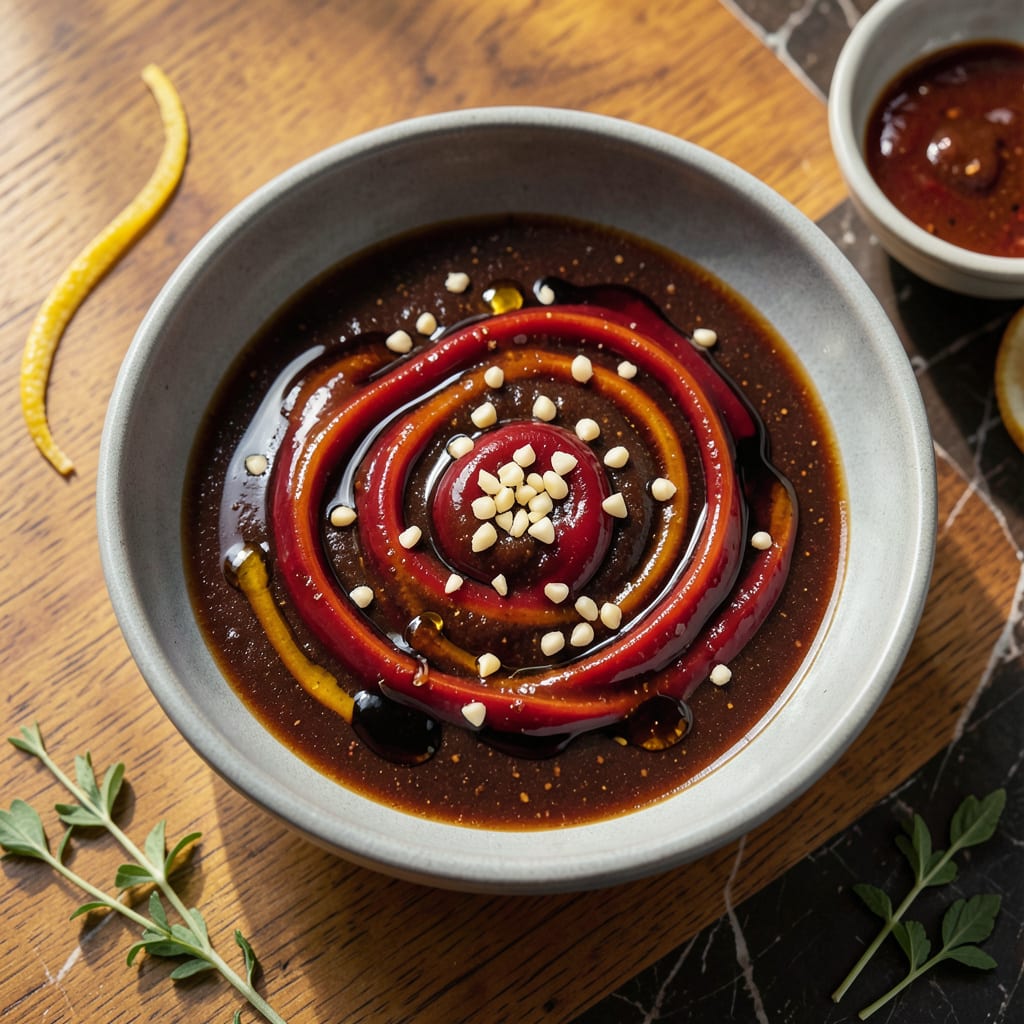
This Korean-inspired dressing transforms any salad into a bold, flavor-packed experience. The sweet and tangy blend captures the essence of KBBQ without overwhelming the greens.
With soy sauce, sesame oil, and a touch of gochujang, it delivers depth in every drop. Store in the fridge for up to 5 days and drizzle generously over fresh vegetables or grilled meats.
Ingredients for Kbbq Salad Dressing
Transform salads with this bold, Korean-inspired blend of sweet, tangy, and umami flavors.
| Ingredient | Amount | Notes |
|---|---|---|
| Soy Sauce 🥢 | ⅓ cup | Use low-sodium for balance |
| Rice Vinegar 💧 | ¼ cup | Unseasoned for clean acidity |
| Gochujang 🌶️ | 2 tbsp | Korean fermented chili paste |
| Honey 🍯 | 3 tbsp | Or sub maple syrup |
| Sesame Oil 🫒 | 1 tbsp | Toasted for nutty depth |
| Garlic Cloves 🧄 | 2 cloves | Minced for even distribution |
| Fresh Ginger 🌿 | 1 tbsp | Grated fine for texture |
| Sesame Seeds 🌰 | 1 tsp | Toasted for garnish |
| Scallions 🧅 | 2 whole | Thinly sliced for freshness |
[recipeingredientscaler]
The soy sauce and gochujang are non-negotiable for authentic flavor. Kikkoman for soy sauce, and Sempio or Mother-in-Law’s for gochujang—both widely available at H Mart or Asian markets. Rice vinegar should be unseasoned to avoid added sugars. For the sesame oil, Kadoya is a reliable brand with consistent quality.
No gochujang? Sriracha plus 1 tsp miso paste mimics the depth (use half the amount). Swap honey for maple syrup or agave if vegan. Fresh ginger is ideal, but ground ginger at one-third the quantity works. The scallions can be omitted, though they add a bright finish. For extra richness, add 1 tbsp tahini.
This keeps in the fridge for 5-7 days—the flavors meld and deepen over time. Store in a glass jar with a tight lid. If it separates, just shake before using. For longer storage, freeze for up to 3 months in ice cube trays.
Why You’ll Love This Recipe
- Five-Minute Mix: I just dump everything in a jar, shake, and it’s ready—no whisking, no fuss.
- Umami Bomb: The gochujang and soy sauce hit that sweet-spicy-savory spot every time.
- Drizzle on Everything: I use it on greens, grain bowls, even as a dip for dumplings.
- Keeps for Weeks: Honestly, it tastes even better after a day in the fridge, and it never goes to waste.
Step-by-Step Instructions for KBBQ Salad Dressing
This straightforward method ensures a perfectly balanced dressing with authentic Korean flavors.
Step 1: Combine Liquid Base and Sweetener
In a medium bowl, whisk together the 0.33 cup Soy Sauce, 0.25 cup Rice Vinegar, and 3 tbsp Honey until the honey fully dissolves. The acidity of the rice vinegar will begin to mellow as it combines with the sweetness of the honey.
This foundation creates the signature sweet-tangy profile that defines this dressing. The mixture should appear glossy and uniform, with no visible separation between the liquid components.
Step 2: Incorporate Umami and Spice Elements
Add the 2 tbsp Gochujang and 1 tbsp Sesame Oil to the bowl. The gochujang will create a vibrant red swirl as it incorporates, while the sesame oil adds its distinctive nutty aroma. Whisk vigorously for 30-45 seconds until completely smooth.
The gochujang’s fermented depth combines with the sesame oil’s richness to build complex layers of flavor. Ensure no streaks of gochujang remain visible in the mixture.
Step 3: Add Fresh Aromatics
Stir in the 2 cloves Garlic Cloves (minced) and 1 tbsp Fresh Ginger (grated). The garlic and ginger will release their pungent aromas immediately, infusing the dressing with bright, fresh notes.
Let the mixture rest for 5 minutes to allow the flavors to meld. This resting period softens the sharpness of the raw aromatics while enhancing their presence in the final dressing.
Step 4: Finish and Store
Gently fold in the 1 tsp Sesame Seeds and 2 whole Scallions (thinly sliced). The sesame seeds will add subtle texture, while the scallions contribute a mild onion crunch and vibrant green color.
Transfer to an airtight container and refrigerate for at least 1 hour before using. This chilling time allows all components to fully marry, resulting in a cohesive, restaurant-quality dressing that will keep for up to 5 days in the refrigerator.
Pro Tips For Making Kbbq Salad Dressing
- Whisk While Warm: Heat the honey for 10 seconds in the microwave first—it blends into the gochujang and soy sauce way more smoothly than when cold. I learned this the hard way after too many clumpy dressings.
- Balance the Gochujang: Start with half the gochujang you think you need, then adjust. Its heat and saltiness can overpower the soy and rice vinegar if you go heavy-handed upfront.
- Skip the Cheap Vinegar: Use a good rice vinegar, not the generic “seasoned” stuff—it’s sweeter and less sharp, which lets the gochujang and sesame oil actually shine. Sounds picky, but it works.
- Rest Before Using: Let the dressing sit for at least 15 minutes after mixing—it gives the flavors time to meld, and the honey stops separating at the bottom. My grandmother swore by this, and she was right.
Essential Equipment for kbbq salad dressing
Mixing Bowls
I always reach for my 2-cup Pyrex glass mixing bowls when making this dressing. The clear glass lets me see the vibrant colors as the gochujang swirls into the soy sauce base. A medium bowl gives enough room for vigorous whisking without spills.
Whisk Selection
My OXO Good Grips balloon whisk is perfect for emulsifying the sesame oil into the vinegar base. The curved shape fits comfortably in my hand, and the stainless steel wires blend ingredients smoothly. A fork works in a pinch, but a whisk makes the process effortless. 💡
Measuring Tools
For precise measurements, I use my stainless steel measuring cups and spoons from Cuisinox. The 1/3 cup and 1/4 cup markers are clearly etched, and the set nests compactly in my drawer. Accurate measuring ensures consistent flavor every time.
Fine Grater
A Microplane fine grater is essential for the ginger. It creates the perfect fine texture that blends seamlessly into the dressing. I also use it for the garlic when I want an even finer consistency than mincing provides.
Storage Jars
I store my finished dressing in 16-oz mason jars with airtight lids. The wide mouth makes pouring easy, and the glass won’t absorb odors. For smaller batches, 8-oz squeeze bottles from Oggi are great for controlled drizzling. ❄️
Optional Emulsifier
For perfectly smooth dressings every time, a small immersion blender works wonders. I use my Bamix to blend the ingredients in the storage jar itself—less cleanup, and it creates a silky texture that clings beautifully to greens.
Nutrition Facts

Trained in classic French technique but raised on slow-cooked ribs and spicy rubs, she blends culinary skill with smoke and soul.
- Recipe for Boneless Pork Chops in Cast Iron Skillet: Sear and Baste to Juicy Perfection - October 3, 2026
- Recipe for Boneless Cross Rib Roast: Slow-Roasted Beef with Herb Crust - October 3, 2026
- Hamburgers in Sauce Recipe Crock Pot: Slow-Cooked Savory Delight - October 3, 2026