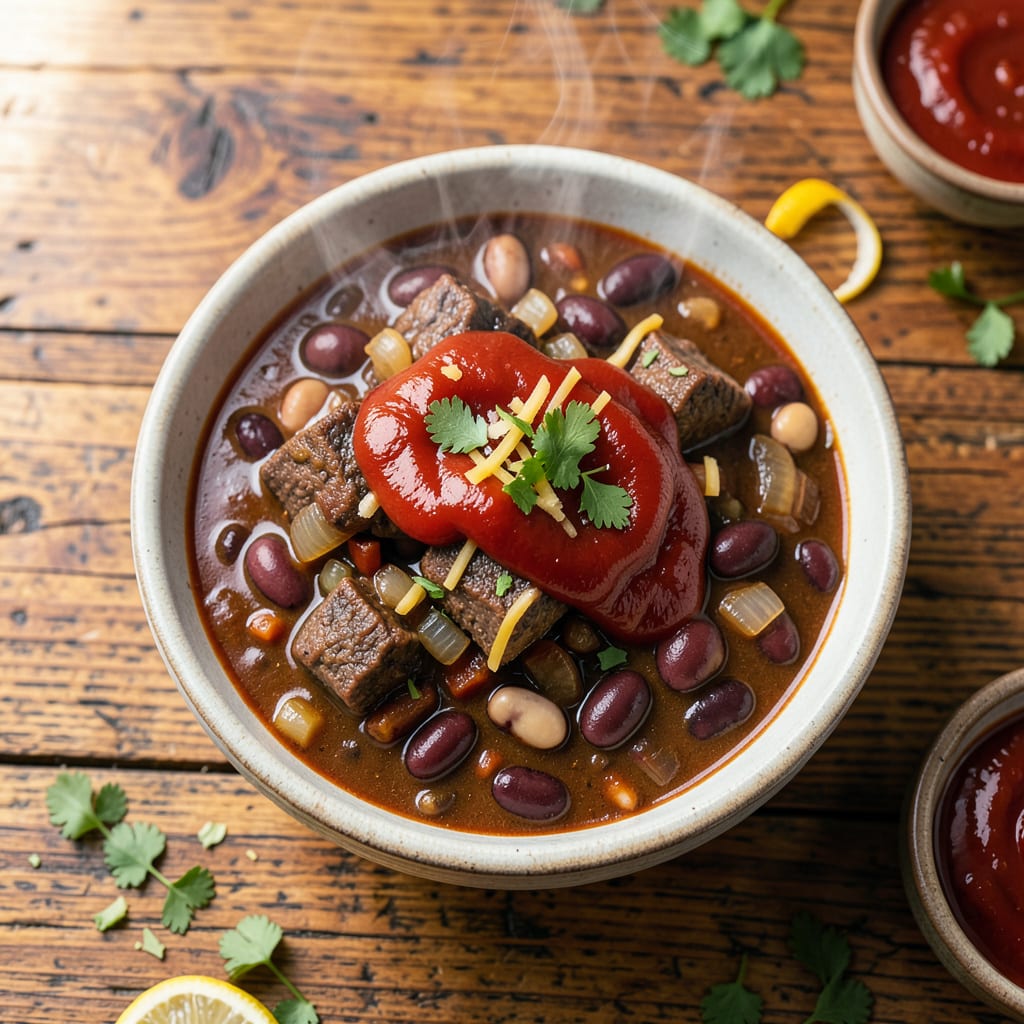
I’ll admit it—I used to turn my nose up at the idea of putting ketchup in chili. Then one rainy afternoon, with a pantry that was running low on tomato paste, I gave it a shot. Game changer. That single tablespoon transformed my chili from good to “please pass me the recipe” good. The ketchup doesn’t make it taste like a burger—it adds a subtle sweetness and tang that balances the deep, smoky flavors perfectly.
Here’s the thing—chili is all about layers. You’ve got your rich, meaty base, your earthy spices, and then that bright note that ties everything together. Ketchup brings that brightness without overpowering, like a backstage guitarist making the whole band sound better. I’ve been making chili for years, from backyard cookouts to competition pits, and this simple addition gets more compliments than any fancy technique I’ve tried.
What you end up with is a pot of chili that’s rich, complex, and perfectly balanced—the kind that tastes even better the next day. The ketchup melts into the broth, enhancing the tomato base while adding just enough sweetness to mellow out the heat. It’s not about shortcuts; it’s about smart flavor building. And don’t worry, no one will guess your secret unless you tell them.
Whether you’re feeding a crowd or just meal prepping for the week, this chili delivers. The ketchup trick works with any protein—beef, turkey, or even a hearty bean-based version. Serve it with cornbread, top it with cheese and onions, and get ready for empty bowls all around. Let’s make some chili that’ll have everyone asking for seconds.
📚 In This Guide
- What You’ll Need
- Instructions
- Tips and Common Mistakes
What Youll Need
- ● Ground beef or protein of choice: 2 lbs (80% lean, 20% fat for best flavor 🥩)
- ● Kidney beans: 2 cans (15 oz each), drained & rinsed (or 3 cups cooked)
- ● Crushed tomatoes: 1 can (28 oz) or 3 cups fresh, diced
- ● Ketchup: ½ cup (use classic tomato ketchup—no fancy flavors!)
- ● Onion & garlic: 1 large onion (diced), 4 cloves garlic (minced)
- ● Beef or vegetable broth: 2 cups (low-sodium preferred)
- ● Chili seasoning: 2 tbsp (or mix 1 tbsp each cumin & paprika + 1 tsp cayenne)
- ● Salt & black pepper: To taste (start with 1 tsp salt, ½ tsp pepper)
- ● Large pot or Dutch oven: 5-6 quart (heavy-bottomed for even cooking)
- ● Wooden spoon: For stirring (no scratching!)
- ● Chef’s knife & cutting board: Sharp blade for prep efficiency
- ○ Optional: Toppings like shredded cheese, sour cream, or green onions 🧀
- ○ Optional: Hot sauce or extra ketchup for serving (trust us, it works!)
Instructions for Adding Ketchup to Chili
Here’s exactly when and how to incorporate this secret ingredient for maximum flavor impact.
Choose the Right Ketchup
Not all ketchups are created equal for chili. I recommend using classic, full-flavored ketchup rather than reduced-sugar or organic varieties. The standard tomato-forward sweetness with a touch of vinegar tang works best to balance the deep, spicy flavors in your chili.
For a 4-serving batch of chili, you’ll want to start with about ¼ cup of ketchup. This amount provides noticeable depth without overwhelming the dish. If you’re using a particularly tangy or sweet ketchup brand, you might want to reduce this slightly to 3 tablespoons initially.
Add Ketchup at the Right Moment
The secret to getting the most from your ketchup is timing. Add it during the final 30 minutes of simmering, after you’ve already built your chili’s base flavors. This gives the ketchup enough time to meld with the other ingredients without its sugars breaking down too much.
Stir the ketchup in thoroughly, making sure it’s completely incorporated. You’ll notice the chili’s color deepen slightly and the aroma become more complex. At this point, the ketchup acts as both a flavor enhancer and a natural thickener, helping to create that perfect chili consistency.
Balance the Flavors
After adding the ketchup, taste your chili carefully. The ketchup should add a subtle sweetness and richness in the background, not dominate the flavor profile. If the sweetness feels too pronounced, balance it with a pinch of salt or a dash of hot sauce.
If you want to enhance the ketchup’s effect, consider adding a splash of apple cider vinegar or a pinch of smoked paprika. These ingredients complement the ketchup’s natural acidity and sweetness, creating a more complex flavor profile that will have everyone asking for your secret.
Adjust for Personal Preference
Remember that ketchup in chili is all about personal taste. Some prefer just a hint of its influence, while others enjoy a more noticeable tomato sweetness. Start with the recommended ¼ cup, then adjust in 1-tablespoon increments during that final simmering period.
The beauty of this technique is its flexibility. You can use it in traditional beef chili, turkey chili, or even vegetarian versions. The ketchup works its magic regardless of the protein base, adding that special something that makes your chili stand out from the ordinary.
Tips and Common Mistakes
Adding ketchup to chili might seem unconventional, but these practical insights will help you master the technique for perfectly balanced flavor every time.
Timing Secret: The final 30 minutes of simmering mentioned in Step 2 isn’t arbitrary—this window allows the ketchup’s sugars to caramelize gently without burning. I’ve found that adding it earlier can make the chili taste overly sweet, while adding it too late won’t give the flavors enough time to meld properly. Stir it in thoroughly and let it work its magic during this precise timeframe.
Flavor Balance Technique: When tasting after Step 3, pay attention to how the ketchup interacts with your other spices. The ¼ cup measurement is ideal for most chilis, but I’ve noticed that particularly smoky or heavily spiced batches might need that adjustment to 3 tablespoons mentioned in Step 1. Remember, you’re aiming for depth, not sweetness—think of ketchup as a flavor bridge between your spices and meat.
Ingredient Quality Matters: Not all ketchups perform equally in chili. Through years of testing (and a few disappointing batches), I’ve learned that classic, full-flavored ketchup works best because its balanced sweetness and acidity complement rather than compete with your chili’s base flavors. The reduced-sugar varieties often lack the necessary body to properly enhance the dish.
Adjustment Strategy: The 1-tablespoon increments suggested in Step 4 aren’t just for adding more ketchup—they’re equally important for dialing it back if needed. If you’ve added the full ¼ cup and find the flavor too prominent, don’t panic. Simply add a bit more broth or tomatoes to dilute, then let it simmer another 10 minutes to rebalance. This flexibility is what makes ketchup such a forgiving secret ingredient.
Pro Tips for Ketchup In Chili
- Adding ketchup to chili might seem unconventional, but these practical insights will help you master the technique fo…
- Timing Secret: The final 30 minutes of simmering mentioned in Step 2 isn’t arbitrary—this window allows the ketchup’s…
- Flavor Balance Technique: When tasting after Step 3, pay attention to how the ketchup interacts with your other spice…
Frequently Asked Questions
Can I use ketchup in chili without making it taste sweet?
The key is balance. Use 1-2 tablespoons per pound of meat and pair it with tangy ingredients like tomato paste, vinegar, or Worcestershire sauce. Ketchup’s sugar caramelizes during cooking, adding depth—not just sweetness. For extra richness, try a dash of smoked paprika or cocoa powder to offset it.
When’s the best time to add ketchup to chili?
Add it midway through cooking (after browning meat and sautéing aromatics, but before the final simmer). This gives the sugars time to mellow and blend with spices. Avoid adding it too early (can burn) or too late (won’t integrate fully). Stir well and taste before adjusting seasoning!
What’s a good ketchup substitute for chili if I don’t have any?
Try these swaps for similar tangy-sweet depth:
- Tomato paste + brown sugar (1 tbsp paste + ½ tsp sugar per 1 tbsp ketchup)
- BBQ sauce (use sparingly—it’s stronger!)
- Tomato jam (for a gourmet twist)
- Vinegar + honey (½ tsp each, adjust to taste)
Why does my chili taste like ketchup after adding it?
Too much ketchup or not enough simmering time! Fix it by:
- Adding acid (lime juice, vinegar, or more chili powder)
- Balancing with umami (soy sauce, fish sauce, or bouillon)
- Simmering 10-15 more minutes to mellow flavors
Start with less ketchup next time—you can always add more!
Is ketchup in chili a regional thing? Where’s it popular?
While not tied to one region, ketchup in chili is a Midwestern and Southern U.S. staple—especially in home-style or competition chili. It’s loved for adding quick complexity without hours of simmering. Texas purists might frown, but many swear by it for family-friendly or game-day chili!
Whether you’re a chili purist or an adventurous home cook, ketchup in chili might just become your new go-to trick for depth and balance. 🍲 This humble pantry staple adds sweetness, tang, and complexity—proving that sometimes the best flavors come from unexpected places. Don’t be afraid to experiment with ratios or pair it with other secret ingredients like coffee or cocoa!
Ready to give it a try? Grab a bottle of ketchup and your favorite chili recipe, then tweak it to taste. Your next bowl could be the richest, most crowd-pleasing one yet—happy cooking! 👨🍳

Trained in classic French technique but raised on slow-cooked ribs and spicy rubs, she blends culinary skill with smoke and soul.
- Recipe for Boneless Pork Chops in Cast Iron Skillet: Sear and Baste to Juicy Perfection - October 3, 2026
- Recipe for Boneless Cross Rib Roast: Slow-Roasted Beef with Herb Crust - October 3, 2026
- Hamburgers in Sauce Recipe Crock Pot: Slow-Cooked Savory Delight - October 3, 2026