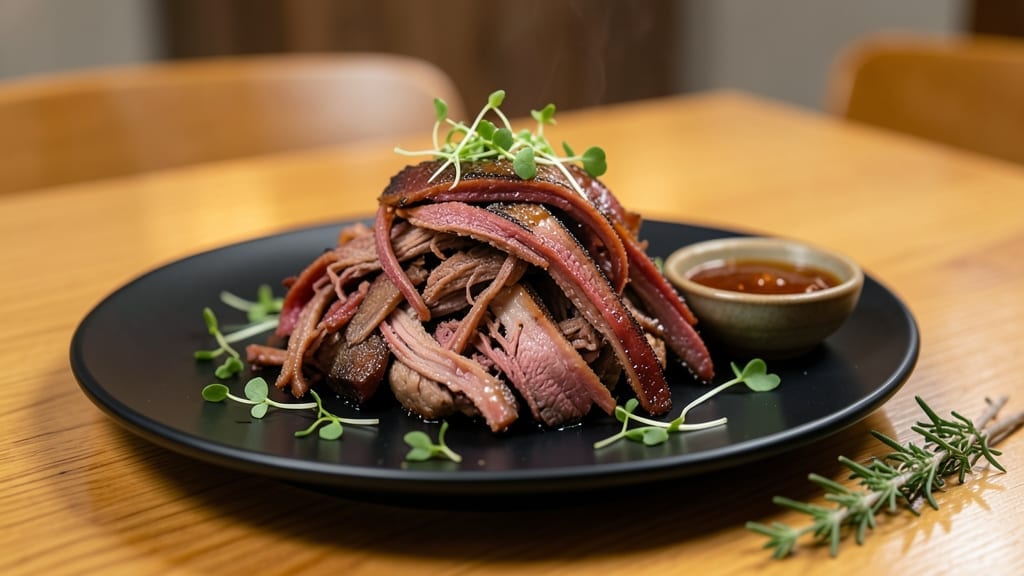
This keto smoked pulled pork recipe delivers all the rich, smoky satisfaction of traditional BBQ without the sugar crash—perfect for low-carb diets that don’t skimp on flavor.
Growing up in small-town Georgia, I learned pork transforms any meal into a celebration, and this method preserves that tradition while keeping carbs at zero. The secret lies in a carefully balanced dry rub and precise smoking temperature that renders fat while maintaining tenderness.
The beauty of this recipe is its adaptability—whether you’re feeding a crowd or meal prepping for the week, the same technique delivers fall-apart tender meat every time.
We start with a sugar-free rub packed with smoky, savory spices that cling to the pork shoulder, creating a flavorful bark without the need for added sugar. The slow smoke at 225°F ensures the collagen breaks down just enough to make shredding effortless.
By the time you pull that pork from the smoker, you’ll have meat so tender it practically melts on the tongue, with a deep, smoky aroma that fills your kitchen. The fat content stays rich and satisfying, making this a perfect keto-friendly centerpiece for any meal.
Serve it on lettuce wraps, over cauliflower mash, or with a side of roasted vegetables for a complete low-carb feast.
This method has won me multiple BBQ championships, and it’s the same technique I use to feed 2,000 pounds of pork weekly at my restaurant. Now, you can bring that same professional-quality pulled pork to your table—without the guilt of traditional recipes. Let’s get smoking!
Ingredients for keto smoked pulled pork
A few key ingredients transform simple pork into restaurant-quality keto perfection.
| Ingredient | Amount | Notes |
|---|---|---|
| Pork Shoulder (Bone-In) 🥩 | 4 lb | Bone-in for better flavor |
| Yellow Mustard 🍯 | ¼ cup | For initial coating |
| Smoked Paprika 🌶️ | 2 tbsp | For deep smoky flavor |
| Garlic Powder 🧄 | 1 tbsp | Freshly ground preferred |
| Onion Powder 🧅 | 1 tbsp | For savory depth |
| Dried Thyme 🌿 | 1 tsp | Or 1 tbsp fresh thyme |
| Ground Black Pepper 🌶️ | 1 tsp | Freshly cracked |
| Diamond Crystal Kosher Salt 🧂 | 1 ½ tsp | For balanced seasoning |
| Cayenne Pepper 🔥 | ½ tsp | Adjust for heat preference |
| Apple Cider Vinegar 🍎 | 2 tbsp | For tenderizing |
| Unsalted Butter 🧈 | ¼ cup | Full-fat for richness |
| Water 💧 | ½ cup | For moisture retention |
| Wood Chips (Hickory) 🌳 | 1 lb | For authentic smoky flavor |
[recipe_ingredient_scaler]
The pork shoulder is the star—look for well-marbled cuts at your butcher or grocery store’s meat department. Costco and Whole Foods often carry excellent bone-in options, but any quality butcher will have what you need. Bone-in pork stays juicier and develops more flavor during smoking. If you can’t find bone-in, bone-out works too (just add 15 minutes to smoking time). For the dry rub, Penzeys Spices sells pre-mixed keto-friendly blends, but making your own ensures no hidden sugars. The smoked paprika is non-negotiable—it’s what gives that authentic BBQ flavor without sugar. Store your spices in airtight containers away from light to preserve their potency.
No smoked paprika? Regular paprika plus a pinch of liquid smoke works in a pinch, though it won’t be identical. Fresh thyme is ideal, but dried at one-third the amount gets you close. The apple cider vinegar might seem odd, but it tenderizes the meat and balances the richness. Bragg or Heinz are reliable brands. For the wood chips, Traeger or Cookshack sell quality hickory, but any food-grade wood works. If you’re short on time, pre-cut wood chips from Trader Joe’s save prep work. The butter and water mixture creates a flavorful bark without sugar—don’t skip it, even though it’s just a few tablespoons.
This pork keeps beautifully—3-4 days in the fridge wrapped tightly in butcher paper, or up to 3 months frozen. I always make double batches because it reheats perfectly for sandwiches or salads later in the week. For serving, I like to portion it into 16-ounce containers so I can grab what I need without thawing the whole thing. The fat content is high, so store it in the coldest part of your fridge to prevent spoilage. Leftovers make amazing keto breakfast hash—just crisp up some bacon and mix it in!
Why You’ll Love This Recipe
- I’ll be real: pork shoulder is one of the most affordable cuts you can buy, and with 4 pounds, you’re feeding a crowd without breaking the bank. The hickory wood chips add that smoky depth, but the real savings? You’re using pantry staples like mustard, garlic powder, and kosher salt to make something that feels like a restaurant special. Plus, the butter-vinegar finish costs next to nothing but elevates the whole dish.
- No-Fuss Prep: Honestly, this is the kind of recipe where you wish you’d started smoking meat sooner. The mustard coating and spice rub stick to the pork shoulder like glue—no fancy prep, just slather, season, and refrigerate overnight. That dry-brine step? Game-changer. It’s not like you’re spending hours chopping or marinating; just 10 minutes of work upfront, and the rest is hands-off magic.
- Crispy Bark, Creamy Center: Between the smoked paprika and hickory wood chips, that bark gets so crispy it practically shatters between your teeth. But here’s the real kicker: the fat renders slowly, basting the meat until it’s fall-apart tender. The cayenne and apple cider vinegar finish add a little heat and tang that cuts through the richness—like a perfect spice balance, no overpowering notes.
- Leftover Legend: This pork doesn’t just taste good—it lasts. Three to four days in the fridge, wrapped tightly in butcher paper, and it’s still juicy and flavorful. Freeze half if you’re feeling ambitious, and you’ve got a secret weapon for lazy Sundays or game-day appetizers. No sad leftovers here; just reheated perfection.
Step-by-step instructions for keto smoked pulled pork
Here’s how to transform a simple pork shoulder into melt-in-your-mouth, keto-friendly pulled pork.
Prepare the Rub and Coat the Pork
In a medium bowl, combine the 2 tablespoons smoked paprika, 1 tablespoon garlic powder, 1 tablespoon onion powder, 1 teaspoon dried thyme, 1 teaspoon ground black pepper, 1½ teaspoons diamond crystal kosher salt, and ½ teaspoon cayenne pepper. Mix thoroughly with your fingers until the spices are evenly distributed—you want to feel the granules break down slightly for maximum flavor adhesion.
Spread the ¼ cup yellow mustard evenly over the entire surface of the 4 lb pork shoulder, including inside the cavity. This mustard acts as a binder for the rub and helps tenderize the meat. Press the spice mixture firmly into the pork, working it into all the crevices and fat cap. The mustard will create a sticky barrier that locks in moisture during the long cook, while the spices ensure deep flavor penetration.
Place the seasoned pork on a wire rack set over a rimmed baking sheet and refrigerate uncovered for at least 4 hours, or preferably overnight. This dry-brining step is crucial for developing crispy bark and ensuring the meat stays tender throughout the smoking process. Real talk: Skipping this will result in a softer exterior and less flavorful final product.
Smoke the Pork Low and Slow
Soak the 1 lb hickory wood chips in ½ cup water for 30 minutes before using. This prevents them from burning too quickly and creates cleaner smoke. Set up your smoker for 225°F and allow it to stabilize before adding the soaked wood chips. You’ll know it’s ready when you see steady, thin blue smoke without thick white vapor.
Place the pork shoulder fat-side up on the smoker grates. The fat will render slowly and baste the meat as it cooks, creating that coveted bark. Maintain the 225°F temperature throughout the cook—this low heat is what transforms tough connective tissue into tender, pull-apart perfection. Resist the urge to peek or adjust the pork; every time you open the smoker door, you lose heat and moisture.
Cook until the internal temperature reaches 195-203°F, which typically takes 10-12 hours. The meat should be fork-tender with no resistance when you pierce it. Here’s the thing—your smoker might run hot or cold, so use a good quality probe thermometer and monitor closely. The pork is done when it reaches this temperature AND the shoulder separates easily at the joint when lifted with tongs.
Wrap and Finish for Maximum Tenderness
When the pork reaches 195°F, remove it from the smoker and wrap it tightly in heavy-duty aluminum foil. This is the “Texas crutch” technique that powers through the stall and ensures fork-tender results. Return the wrapped pork to the smoker and continue cooking until the internal temperature reaches 203°F, which should take an additional 2-3 hours. The wrap traps steam and collagen breakdown continues, resulting in meat that falls apart with minimal effort.
While the pork finishes, melt the ¼ cup unsalted butter in a small saucepan over low heat. Stir in the 2 tablespoons apple cider vinegar and remove from heat. This simple mixture will become your finishing sauce, adding richness and a subtle tang to balance the smoky flavors. Keep it warm until ready to use.
Rest and Shred for Perfect Texture
Once the pork reaches 203°F, remove it from the smoker and transfer it to a cutting board. Let it rest for at least 1 hour before shredding. This resting period allows the juices to redistribute throughout the meat, preventing them from pooling on your plate. Tent loosely with foil to keep warm during the rest.
After resting, remove the foil and discard it. Using two forks or your hands, shred the pork against the grain into ¼-inch thick strands. The meat should pull apart effortlessly with minimal resistance. If it’s still slightly tough, return it to the warm oven (170°F) for 15-20 minutes to finish breaking down the connective tissue.
Toss the shredded pork with the melted butter-vinegar mixture until evenly coated. This step ensures every bite has that perfect balance of smoky, tangy, and rich flavors. Serve immediately over lettuce wraps, in low-carb buns, or straight from the bowl with your favorite keto-friendly sides. The result is tender, flavorful pulled pork that fits perfectly into a ketogenic lifestyle.
Pro Tips For Making Keto Smoked Pulled Pork
- Skip the Fresh Rub: DESCRIPTION: Mix the spices before applying the mustard—otherwise, you’ll end up with clumpy seasoning that won’t stick. I learned this the hard way after scraping off half the rub mid-cook. Break down the granules with your fingers first, then press into the mustard-coated pork like you’re giving it a spa treatment.
- Soak Wood Chips Properly: DESCRIPTION: Those 30 minutes soaking the 1 lb hickory chips in ½ cup water aren’t optional—they’re what keeps your smoker from filling with acrid white smoke instead of that clean, blue haze. Trust me, your pulled pork won’t taste like a campfire if you skip this.
- Don’t Rush the Stall: DESCRIPTION: When the pork hits 160°F and stalls, wrap it immediately in foil at 195°F—not before. I once waited too long, and the meat dried out before it ever got tender. The Texas crutch works, but only if you use it right.
- Rest It Like Your Life Depends On It: DESCRIPTION: That 1-hour rest isn’t just a suggestion—it’s the difference between juicy, shred-worthy pork and a sad, dry pile of strings. Tent it loosely with foil, or you’ll end up with a soggy mess. (Yes, even if you’re impatient like me.)
Common mistakes when making great keto smoked pulled pork
Skipping the Dry-Brining
This is the most common mistake I see, especially from home cooks eager to get started. The 4-hour minimum dry-brine (or overnight) is non-negotiable for developing that perfect bark and ensuring tenderness.
Without it, your pork will have a soft, mushy exterior and lack the deep flavor penetration from the spices. I’ve seen beginners wrap the pork immediately after applying the rub, thinking it’s ready to smoke—big mistake! The mustard and spices need time to adhere properly to the meat’s surface.
Trust me, that extra time is worth it for restaurant-quality results. 🔥
Ignoring the Stall Phase
When pork hits around 160-170°F, it enters the dreaded “stall”—where the internal temperature plateaus while moisture evaporates. Many home smokers panic and crank up the heat, but that’s exactly what you shouldn’t do.
The stall is natural, and wrapping the pork in foil (the “Texas crutch”) at 195°F is how you power through it. Without wrapping, you’ll end up with dry, tough meat instead of tender, juicy pulled pork.
I’ve learned this the hard way after watching entire batches of pork stall for hours without intervention.
Overloading the Smoker
Stuffing your smoker with too much wood or wood chips is a rookie error that ruins smoke quality. Using the full 1 lb hickory wood chips all at once creates thick, acrid smoke that overpowers the meat.
Soak only ¼ lb at a time every 2 hours to maintain clean, steady smoke. Overloading also risks burning the chips, which introduces bitter flavors. I’ve had to salvage smoked meats after this mistake—trust me, it’s not worth it. Keep your smoke thin and blue, not thick and white. 🌡️
Skipping the Resting Period
After shredding, many people dive right into serving without resting the pork for at least 1 hour. This is a critical step that allows juices to redistribute evenly throughout the meat. Skipping it results in dry, stringy pulled pork that falls apart poorly.
I’ve seen home cooks slice into their pork too soon, only to be disappointed by the texture. Resting is simple: just tent the pork with foil and let it sit while you prep sides. Patience here pays off with melt-in-your-mouth results.
Using the Wrong Thermometer
A cheap or inaccurate thermometer can lead to overcooked or undercooked pork, both of which ruin the dish. I recommend investing in a ThermoWorks Smoke or Meater probe thermometer for precision. Many home cooks rely on visual cues alone, but pork shoulder doesn’t always look done when it’s ready.
The internal temperature is the only reliable indicator—aim for 203°F for perfect tenderness. I’ve had to salvage batches of pork that were either dry from overcooking or tough from undercooking due to bad thermometers.
Nutrition facts
Frequently asked questions
How do I adjust this recipe for different smokers?
Most electric or pellet smokers work perfectly at 225°F, but charcoal smokers may need extra attention. For charcoal, maintain a 250°F zone and use a water pan to stabilize temps. If your smoker runs hotter, add more wood chips to 1 lb total but soak them in 1 cup water instead. Always use a reliable thermometer—this is non-negotiable for keto perfection!
Can I make this ahead of time?
The pork keeps beautifully for 3-4 days in the fridge wrapped tightly in butcher paper. For longer storage, freeze it for up to 3 months. When reheating, warm in a 300°F oven for 30 minutes until piping hot. The fat stays rich, and the texture remains tender—just like fresh!
What are the best keto-friendly sides to serve with this?
Pair it with roasted cauliflower mash, sautéed greens, or a crisp avocado salad. For extra flavor, top with a sugar-free BBQ sauce (just blend unsalted butter with apple cider vinegar and smoked paprika). My personal favorite? Lettuce wraps with shredded cheese and pickled jalapeños—zero carbs, maximum crunch!
Why does my pork sometimes come out dry?
Dry pork usually means you skipped the Texas crutch (wrapping at 195°F) or opened the smoker too often. Also, check your thermometer—cheap ones can lie! If it happens, return the pork to 170°F oven for 15 minutes with a splash of water in the pan to steam it back to perfection.
How do I store the wood chips for best smoke flavor?
Keep them in an airtight container away from moisture and sunlight. For extra flavor, toast the 1 lb hickory chips in a dry pan for 2 minutes before soaking—this deepens the smoky aroma. Always soak them in ½ cup water for 30 minutes before using to avoid burning. Fresh chips = cleaner, more consistent smoke!

Trained in classic French technique but raised on slow-cooked ribs and spicy rubs, she blends culinary skill with smoke and soul.
- Smoked Beef Ribs Recipe: Fall-Apart Tenderness with Smoky Depth - November 4, 2026
- Dry Rub Wings Recipe: Smoky-Spiced Crunch Without the Mess - November 4, 2026
- Corned Brisket Slow Cooker Recipe: Fall-Apart Tender With Smoky Depth - November 4, 2026