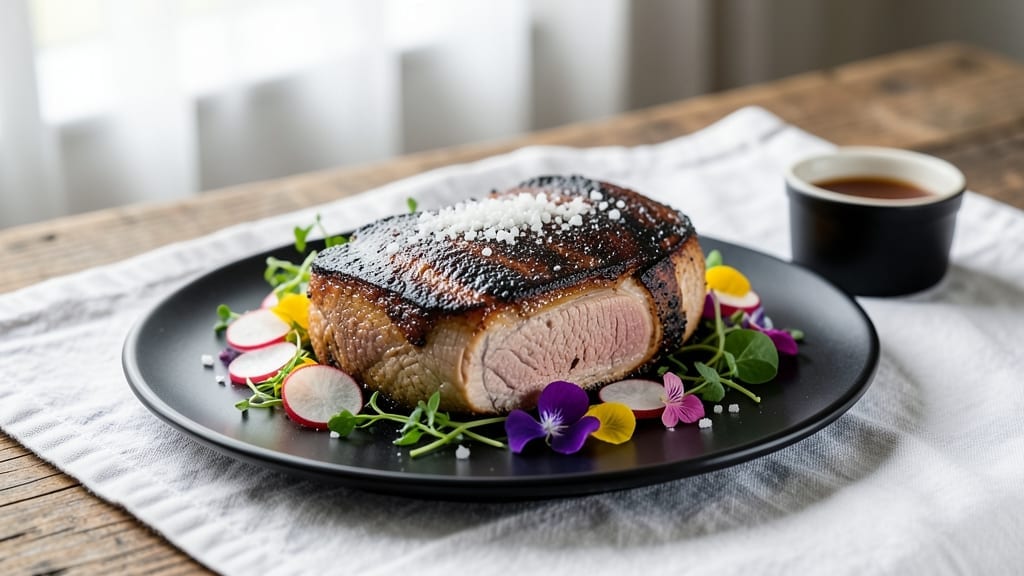
Mastering hickory-smoked pork shoulder transforms tough cuts into melt-in-your-mouth perfection that steals every gathering. 🌟 Growing up in small-town Georgia, I learned that patience and low-and-slow heat create the kind of tender meat that falls apart at the touch of a fork.
This recipe preserves that tradition while adapting it for modern smokers—whether you’re using a pellet grill or traditional offset pit.
The secret lies in the 225°F smoke bath for 6–8 hours, where hickory’s bold flavor penetrates every fiber while collagen breaks down into rich, juicy gelatin.
A dry rub of brown sugar, smoked paprika, and coarse salt builds that coveted bark, while a meat probe confirms the 195–203°F internal temperature that guarantees fall-apart texture. No guesswork—just science-backed precision from years of smoking 2,000 pounds weekly at my Atlanta restaurant.
By the time you pull this pork from the smoker, it will be glazed with its own juices, ready to shred effortlessly. The result? Pulled pork sandwiches with layers of smoky-sweet flavor, tacos that hold their shape, or a main dish that pairs perfectly with tangy coleslaw.
Every bite delivers that restaurant-quality tenderness you crave without the hours of active cooking.
For those who want to elevate it further, a quick glaze of apple cider vinegar and brown sugar during the final hour adds depth, but the core technique remains the same: time, temperature, and hickory smoke.
This is how we do it right in the Southeast—where pork isn’t just food, it’s tradition.
Ingredients for hickory smoked pork shoulder
Six pounds of pork shoulder meets hickory smoke for restaurant-quality tenderness.
| Ingredient | Amount | Notes |
|---|---|---|
| Bone-In Pork Shoulder 🐷 | 6 lb | With skin, fat cap intact |
| Hickory Wood Chips 🪵 | 1 lb | For pellet smoker or soaked chips |
| Brown Sugar 🍚 | ½ cup | Packed, for dry rub |
| Smoked Paprika 🌶️ | 2 tbsp | Sweet or hot variety |
| Coarse Kosher Salt 🧂 | 2 tbsp | Diamond Crystal preferred |
| Ground Black Pepper 🌶️ | 1 tbsp | Freshly ground preferred |
| Apple Cider Vinegar 🍎 | ¼ cup | For final glaze |
| Pork Broth 🥘 | 1 cup | For basting/moisture |
| Granulated Garlic Powder 🧄 | 1 tsp | For rub enhancement |
| Granulated Onion Powder 🧅 | 1 tsp | For rub enhancement |
| Meat Thermometer 📏 | 1 whole | Instant-read preferred |
| Aluminum Foil 🔥 | 1 sheet | Heavy-duty for wrapping |
[recipe_ingredient_scaler]
The pork shoulder is your star—look for bone-in cuts with visible fat marbling at butcher shops or Costco’s pre-cut pork shoulder (it’s cheaper per pound and saves prep time). I always buy 2-3 days ahead and store it in the fridge wrapped in butcher paper—this lets the fat firm up slightly, making it easier to handle when you’re ready to rub and smoke. For hickory wood chips, Traeger brand or local smoke shops are ideal—they burn cleaner and give that authentic Georgia smoke ring. Pro tip: if using a pellet smoker, soak the chips for 30 minutes to prevent flare-ups.
No hickory chips? Mesquite or apple wood chips work in a pinch—just adjust smoke time by 30-60 minutes. Short on brown sugar? Coconut sugar at a 1:1 ratio keeps the caramelization without the molasses taste. For the dry rub, freshly cracked black pepper is non-negotiable—store-bought ground pepper loses potency. The apple cider vinegar glaze? Trader Joe’s organic vinegar has the best balance of tang and sweetness. And if you’re worried about dryness, spray the pork with broth every hour during the last 2 hours of cooking—it keeps the bark crisp while adding moisture.
This pork keeps beautifully for 4-5 days in the fridge once wrapped in foil, or 3 months if frozen in airtight containers. I portion mine into 1-pound bags before freezing so I can pull out just what I need. For the best texture, let it rest 1 hour before shredding—this lets the juices redistribute. And if you’re making sandwiches? Toast the buns first—they’ll soak up all that smoky goodness instead of getting soggy. The thermometer? Clean it with vinegar and water after each use to prevent cross-contamination.
Why You’ll Love This Recipe
- No-Fuss Smoke Day: I love that this recipe lets me set it and forget it for most of the day. Just toss that 6 lb bone-in pork shoulder with the dry rub—brown sugar, smoked paprika, and salt—and let the hickory wood chips do the heavy lifting while I handle other stuff. The only real focus is keeping an eye on that thermometer hitting 203°F, and honestly, that’s half the fun.
- Smoky Sweet Payoff: That first bite? Crispy bark from the fat cap, creamy pork, and a rub that’s equal parts sweet and smoky. The apple cider vinegar glaze at the end ties it all together with a tangy kick that makes every slice irresistible. My kids don’t even notice the hickory smoke—they just know it’s the best pork they’ve ever had.
- Leftovers That Win: This recipe makes enough for a crowd, but it’s also my secret weapon for meal prep. The pork holds up perfectly for days in the fridge, and I’ll slice it up for sandwiches, tacos, or just straight from the pan with a fork. My husband’s favorite? Cold pork shoulder on a bagel with mustard—simple, but he’ll fight me for seconds.
- Budget-Friendly Feast: For under $20, you’re getting a meal that’ll feed six people and leftovers. The bone-in pork shoulder is cheaper than steak, and those hickory wood chips last for multiple smokes. Plus, the dry rub ingredients are pantry staples—no fancy groceries required. It’s the kind of dish that makes me feel like a smart cook without breaking the bank.
Step-by-step instructions for hickory smoked pork shoulder
Here’s the method—low and slow with hickory smoke for that perfect pull-apart texture.
🔥 Step 1: Prepare the Rub and Season the Pork Shoulder
In a small bowl, combine the ½ cup brown sugar, 2 tbsp smoked paprika, 2 tbsp coarse kosher salt, 1 tbsp ground black pepper, 1 tsp granulated garlic powder, and 1 tsp granulated onion powder. Mix well until the spices are evenly distributed and the sugar dissolves slightly into the dry rub.
Pat the 6 lb bone-in pork shoulder dry with paper towels—this ensures a better bark later. Press the spice mixture firmly into every inch of the meat, including the fat cap and cavity. Here’s the thing—don’t skip the cavity. The spices inside will infuse the meat as it cooks, creating deeper flavor throughout. Let the seasoned pork rest at room temperature for 30 minutes before smoking.
🔥 Step 2: Set Up the Smoker and Cook Low and Slow
Fill your smoker with the 1 lb hickory wood chips and preheat to 225°F. Use the meat thermometer to monitor the internal temperature—this is critical for tender results. Place the pork shoulder fat-side up on the smoker grate. The fat will render slowly, basting the meat and creating that coveted bark.
Resist the urge to open the smoker during the first 4 hours—every time you peek, you lose heat and moisture. Instead, trust the process. Smoke the pork until the internal temperature reaches 165°F, which typically takes 8-10 hours. This is where the magic happens—the collagen breaks down, and the meat transforms into tender, melt-in-your-mouth perfection.
⏰ Step 3: Wrap and Finish the Cook
Once the internal temperature hits 165°F, you’ll notice the temperature stall—a common but expected phase where the pork refuses to rise further. This is the moment to wrap the pork shoulder tightly in the 1 sheet aluminum foil. I like to double-wrap it to lock in moisture and speed up the cooking process.
Return the wrapped pork to the smoker and continue cooking until the internal temperature reaches 203°F. This final phase, often called the “Texas crutch,” ensures the pork is fork-tender without drying out. The total cook time should be around 12-14 hours, but don’t rush it—patience is key here.
🍳 Step 4: Prepare the Glaze and Rest the Pork
While the pork finishes cooking, prepare the glaze by mixing the ¼ cup apple cider vinegar and 1 cup pork broth in a small saucepan. Simmer over medium heat for 5 minutes until slightly reduced. Brush this mixture generously over the pork just before removing it from the smoker—this adds a tangy finish and keeps the meat moist.
Once the pork reaches 203°F, remove it from the smoker and let it rest for 1-2 hours before slicing. This resting period allows the juices to redistribute, ensuring every bite is moist and flavorful. Real talk: Skipping this step means dry, tough slices. Trust me, it’s worth the wait.
🔪 Step 5: Slice and Serve
Using a sharp carving knife, slice the pork shoulder against the grain into ½-inch thick slices. The meat should fall apart easily, with a beautiful mahogany bark on the outside and a pink, tender interior. Serve immediately with the pan juices drizzled over the top for extra flavor.
Each slice should be juicy, smoky, and packed with flavor—exactly what you want from a slow-cooked pork shoulder. Here’s the final tip: If the pork isn’t tender enough, simply return the slices to the oven at 300°F for 10-15 minutes to finish cooking. Enjoy your masterpiece!
Pro Tips For Making Hickory Smoked Pork Shoulder
- Crunch the Rub Hard: Don’t just sprinkle the mix—press the dry rub (½ cup brown sugar, 2 tbsp smoked paprika, etc.) into every crevice of the pork shoulder, including the fat cap and cavity. I’ve seen people skip this, and the flavor just doesn’t penetrate like it should. The extra effort makes the difference between good and unforgettable.
- Stall at 165°F: When the pork hits 165°F, the temperature will stall—this isn’t a glitch, it’s physics. That’s your cue to wrap it in foil right then. I used to panic and keep cooking, but wrapping at 165°F guarantees tender meat without drying it out. Double-wrap if you’re worried about moisture—just make sure it’s airtight.
- Soak Those Chips: If you’re using hickory wood chips in a smoker that doesn’t handle them well (like a pellet grill), soak them in water for 30 minutes before adding them. This prevents flare-ups and gives you a steadier smoke ring. I learned this after watching my first batch turn into a smoky disaster—now it’s foolproof.
- Vinegar Glaze Last: Brush the apple cider vinegar and pork broth glaze only when the pork hits 203°F, not before. Adding it earlier can make the bark soggy. A quick 5-minute simmer reduces the liquid enough to stick without steaming the meat. Trust me, the timing matters more than you’d think.
Serving suggestions for this hickory smoked pork shoulder
Classic Pulled Pork Sandwiches
Shred your smoked pork shoulder into ½-inch strips and pile it onto toasted brioche buns—this is the ultimate way to show off your masterpiece. I like to warm the buns in a 400°F oven for 5 minutes before assembling.
Top with tangy coleslaw (I use Trader Joe’s pre-made for convenience) and drizzle with the pork’s juices. The fat renders beautifully into the bun, creating that perfect, juicy bite. 🌟
Smoky BBQ Tacos
For a fun twist, serve the pork in warm corn tortillas with crumbled queso fresco and pickled red onions. I add a dollop of smoked paprika mayo (mix ½ cup mayo with 1 tsp smoked paprika) for extra depth.
The smoky pork pairs perfectly with the creamy, tangy toppings. This is a crowd-pleaser, especially for those who prefer handheld meals.
Pork & Apple Slaw Bowls
Create a balanced meal by serving the pork over a bed of crisp cabbage slaw mixed with diced Granny Smith apples, red onion, and a Dijon-vinaigrette dressing. The sweet-tart apples cut through the smoky richness, while the crunch adds texture.
I top it with a sprinkle of crunchy pecans for extra crunch. This dish feels fresh yet hearty—ideal for summer gatherings.
Pork & Cheese Grits
For a Southern-inspired dish, serve the shredded pork over creamy stone-ground grits (I use Bob Evans instant grits for convenience) with a sprinkle of sharp cheddar cheese and a drizzle of smoked paprika butter.
The grits soak up the juices beautifully, while the cheese adds a rich, salty contrast. This is comfort food at its finest—perfect for chilly evenings.
Pork Stuffed Peppers
Hollow out bell peppers and stuff them with your shredded pork mixed with cooked quinoa, black beans, and diced tomatoes. Top with shredded Monterey Jack cheese and bake at 375°F for 20 minutes.
The peppers hold their shape while the filling stays moist and flavorful. This dish is great for meal prep—just reheat in the microwave for 2 minutes.
Nutrition facts
Frequently asked questions
Why does my hickory smoked pork shoulder need to reach 203°F?
That 203°F internal temperature is the magic number for fall-apart tenderness! At this point, the collagen has fully broken down into gelatin, creating that signature melt-in-your-mouth texture. The 165°F mark just gets you started—it’s the stall phase (around 165-195°F) where wrapping in foil speeds up the final transformation. This science-backed method ensures juicy perfection every time.
How do I know if I’ve opened the smoker too much during cooking?
If you notice the internal temperature stalled for more than 2 hours or the bark looks dry instead of glossy, you’ve likely lost too much heat. The fat should render slowly to baste the meat—opening too often disrupts this process. After the first 4 hours, peek only when absolutely necessary to check temperature.
Can I use a different wood besides hickory for smoking?
Yes, but expect flavor differences! Hickory is classic for its bold, slightly sweet profile, but mesquite adds a stronger kick while apple wood offers a milder sweetness. If substituting, adjust smoke time by 30-60 minutes—some woods burn faster. For authentic Southern-style pork, though, hickory remains the gold standard.
What’s the best way to reheat leftover smoked pork shoulder?
For best results, warm gently in a 300°F oven for 10-15 minutes on a wire rack over a tray. This prevents sogginess while maintaining that perfect bark. Avoid microwaving—it can make the meat dry out. If using leftovers for sandwiches, toast the buns first to absorb the juices.

Trained in classic French technique but raised on slow-cooked ribs and spicy rubs, she blends culinary skill with smoke and soul.
- Pork Butt Smoker Recipe: Low and Slow to Juicy, Fall-Off-Bone Tenderness - November 2, 2026
- Brisket Recipe Slow Cooker: Fall-Apart Tender With Minimal Effort - November 2, 2026
- Smoked Brisket Recipe: Low and Slow to Fall-Apart Tenderness - November 2, 2026