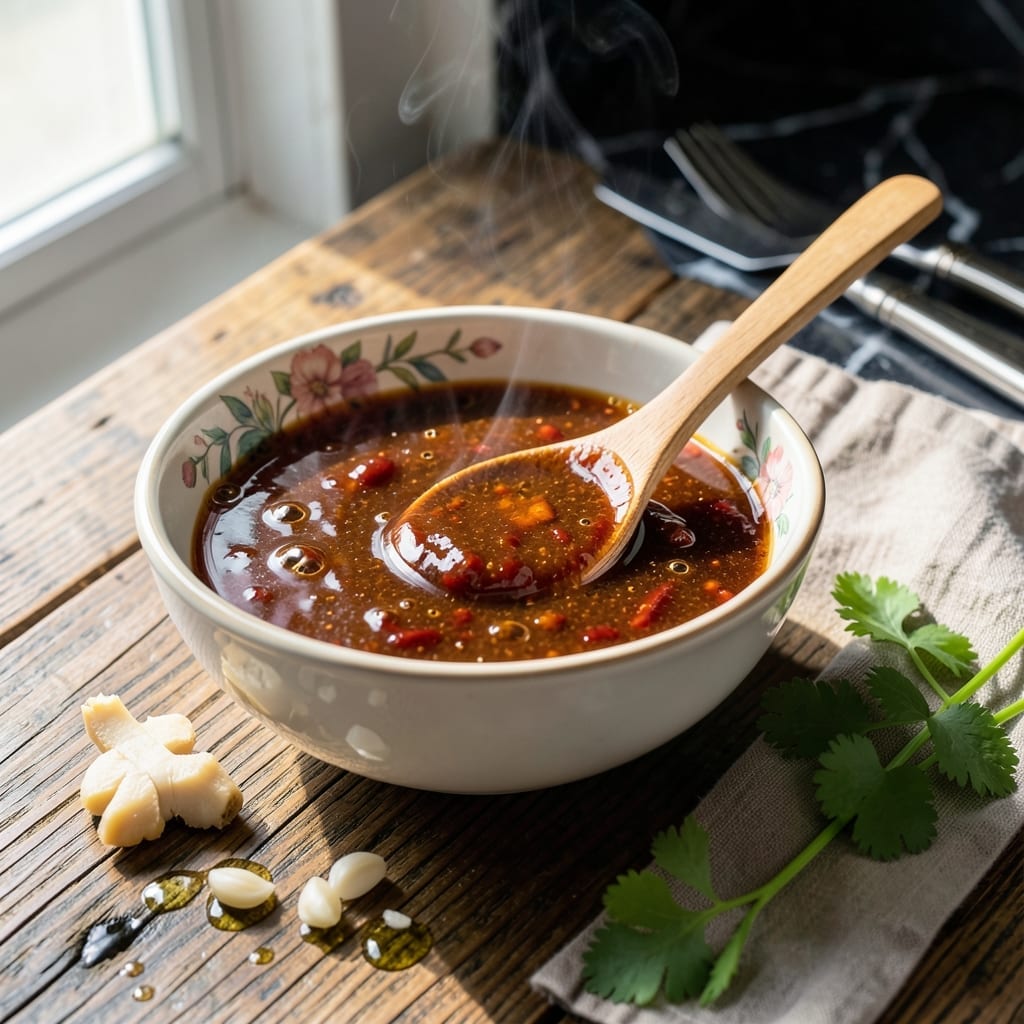
This sauce captures the essence of Korean barbecue—sweet, umami, and deeply flavorful. I developed it to elevate grilled meats with authentic taste.
With simple ingredients and 10 minutes on the stove, you’ll have a versatile glaze that transforms any dish. Store it for up to a week to use whenever inspiration strikes.
Ingredients for Korean Barbecue Sauce
Ten ingredients transform into that signature sweet-umami Korean BBQ magic in minutes.
| Ingredient | Amount | Notes |
|---|---|---|
| Soy Sauce 🫒 | ½ cup | Low-sodium preferred for balance |
| Brown Sugar 🍚 | ½ cup | Packed, light or dark |
| Gochujang 🌶️ | 3 tbsp | Korean fermented chili paste |
| Rice Vinegar 🍯 | 2 tbsp | Adds necessary tanginess |
| Sesame Oil 🫒 | 1 tbsp | Toasted for nutty aroma |
| Garlic Cloves 🧄 | 4 cloves | Minced for full flavor infusion |
| Fresh Ginger 🌿 | 1 tbsp | Grated, no skin |
| Honey 🍯 | 2 tbsp | Or agave for vegan option |
| Toasted Sesame Seeds 🌰 | 1 tbsp | For garnish and texture |
| Green Onions 🧅 | 2 whole | Thinly sliced for freshness |
[recipe_ingredient_scaler]
The gochujang is non-negotiable—look for Sempio or CJ brands at H Mart or the Asian aisle. Brown sugar adds depth, but coconut sugar works if you’re avoiding refined stuff. Fresh ginger and garlic make the difference here (no powdered shortcuts). I grab mine from the produce section in one trip, usually with the green onions.
No gochujang? Sriracha plus 1 tsp miso paste gets you 80% there. Out of rice vinegar? Apple cider vinegar at half the amount. Brown sugar can be swapped for white, but the molasses notes in brown really shine. The honey can be maple syrup or agave (vegan-friendly). Toasted sesame oil is key—don’t use the untoasted kind.
Keeps beautifully in a jar in the fridge for 7-10 days. The flavors deepen after a day, so make it ahead. Freezes for 3 months too (portion into ice cube trays for easy use). Stir before each use—the sesame seeds settle.
Why You’ll Love This Recipe
- 5-Minute Mix: I just dump everything in a bowl—soy sauce, gochujang, the works—and stir. No cooking, no fuss.
- Sweet & Spicy Fix: The brown sugar caramelizes with the gochujang into this sticky, finger-licking glaze I could drink straight from the spoon.
- Marinade or Dip: Slather it on chicken before grilling or drizzle over rice bowls. Honestly, I’ve even caught my husband eating it with a spoon.
- Stretches Far: One batch covers three meals for my family of four, and the leftovers keep for weeks in the fridge.
Step-by-Step Instructions for Korean Barbecue Sauce
This method delivers a glossy, balanced sauce with deep umami and a perfect sweet-spicy kick.
Step 1: Bloom the Aromatics in Sesame Oil
Heat the 1 tbsp Sesame Oil in a medium saucepan over medium heat until shimmering. Add the 4 cloves Garlic Cloves and 1 tbsp Fresh Ginger, stirring constantly for 30-45 seconds until fragrant but not browned.
This step unlocks the pungent, complex flavors of the garlic and ginger. If you see the garlic start to turn golden, lower the heat immediately—burnt garlic turns bitter and ruins the balance of your sauce. The sesame oil’s nutty aroma should deepen as it heats.
Step 2: Combine the Sweet and Savory Base
Pour in the 0.5 cup Soy Sauce, 0.5 cup Brown Sugar, 3 tbsp Gochujang, 2 tbsp Rice Vinegar, and 2 tbsp Honey. Whisk vigorously to dissolve the brown sugar completely and blend the gochujang into the liquid.
The mixture will appear thin at first, but the sugar will dissolve as it heats. Watch for the sauce to turn a deep mahogany color and begin to thicken slightly at the edges—this tells you the sugar is melting properly.
Step 3: Simmer to Thicken the Sauce
Increase heat to medium-high and bring the mixture to a gentle boil. Reduce heat to medium-low and let it simmer for 8-10 minutes, stirring occasionally.
You’re aiming for a syrupy consistency that coats the back of a spoon. The sauce should reduce by about a third, becoming glossy and slightly thickened. If it starts to bubble too vigorously, lower the heat—you want a steady simmer, not a rolling boil that could cause scorching.
Step 4: Finish and Garnish for Optimal Flavor
Remove the saucepan from heat and let the sauce cool for 5 minutes. Stir in the 1 tbsp Toasted Sesame Seeds and 2 whole Green Onions (thinly sliced).
The sauce will thicken slightly more as it cools. The sesame seeds add a nutty crunch and visual appeal, while the green onions bring a fresh, sharp contrast to the rich sauce. Taste and adjust seasoning if needed—though with these proportions, it should be perfectly balanced.
Pro Tips For Making Korean Barbecue Sauce
- Simmer Low and Slow: I learned this the hard way—boiling the sauce makes the brown sugar caramelize too fast and turn bitter. Keep it at a gentle simmer for 5-7 minutes to let the flavors meld without burning.
- Bloom the Gochujang: Before adding liquids, cook the gochujang in a dry pan for 1-2 minutes until it darkens slightly. Sounds weird, but it deepens the flavor and removes any raw paste taste.
- Balance the Sweetness: Brown sugar can overpower the other ingredients, so start with 2 tablespoons less than the recipe calls for, then adjust to taste. I skip this when I’m lazy, but the sauce is always better when I don’t.
- Finish with Sesame Oil: Stir in the sesame oil at the very end, off the heat. Adding it early makes it lose its aroma, and after cooling, the nutty flavor really shines through.
Make-Ahead Tips for This Dish
Prep Ahead Strategy
I always make a double batch of this sauce—it keeps beautifully in the fridge for up to 7-10 days. The flavors deepen after 24 hours, so preparing it a day ahead actually improves the taste. Just store in an airtight glass jar.
Freezing for Later
This sauce freezes perfectly for up to 3 months. I portion it into ice cube trays for easy single-use servings. Once frozen, transfer the cubes to a freezer bag. Thaw overnight in the fridge before using.
Garnish Last Minute
Wait to add the 1 tbsp Toasted Sesame Seeds and 2 whole Green Onions until just before serving. This keeps them fresh and prevents sogginess. The sesame seeds add that perfect crunch when freshly sprinkled.
Reheating Tips
Gently reheat on the stove over low heat for 2-3 minutes, stirring often. Avoid microwaving as it can cause uneven heating. If too thick, thin with 1-2 tbsp water. 🔥
Flavor Boost
A day in the fridge lets the gochujang and soy sauce meld beautifully. I notice the umami depth increases significantly. This is why I always recommend making it ahead for Korean BBQ nights.
Portion Control
For meal prep, divide into small mason jars or squeeze bottles. This makes it easy to grab and use for marinating or as a finishing glaze throughout the week.
Nutrition Facts
Frequently Asked Questions
Can I make this spicier or milder?
Easily adjust the heat! Add 1 extra tbsp gochujang for more spice, or reduce to 1 tbsp for a milder version.
What can I use instead of honey?
Maple syrup or agave work perfectly as vegan alternatives. Maintain the same 2 tbsp measurement.
How long does the sauce keep fresh?
Store in an airtight container in the fridge for 7-10 days. Freeze for up to 3 months for longer storage.
Can I use this as a marinade?
Marinade meats for 30 minutes to 2 hours. The sugar content means it can burn if left too long.

Trained in classic French technique but raised on slow-cooked ribs and spicy rubs, she blends culinary skill with smoke and soul.
- Recipe for Boneless Pork Chops in Cast Iron Skillet: Sear and Baste to Juicy Perfection - October 3, 2026
- Recipe for Boneless Cross Rib Roast: Slow-Roasted Beef with Herb Crust - October 3, 2026
- Hamburgers in Sauce Recipe Crock Pot: Slow-Cooked Savory Delight - October 3, 2026