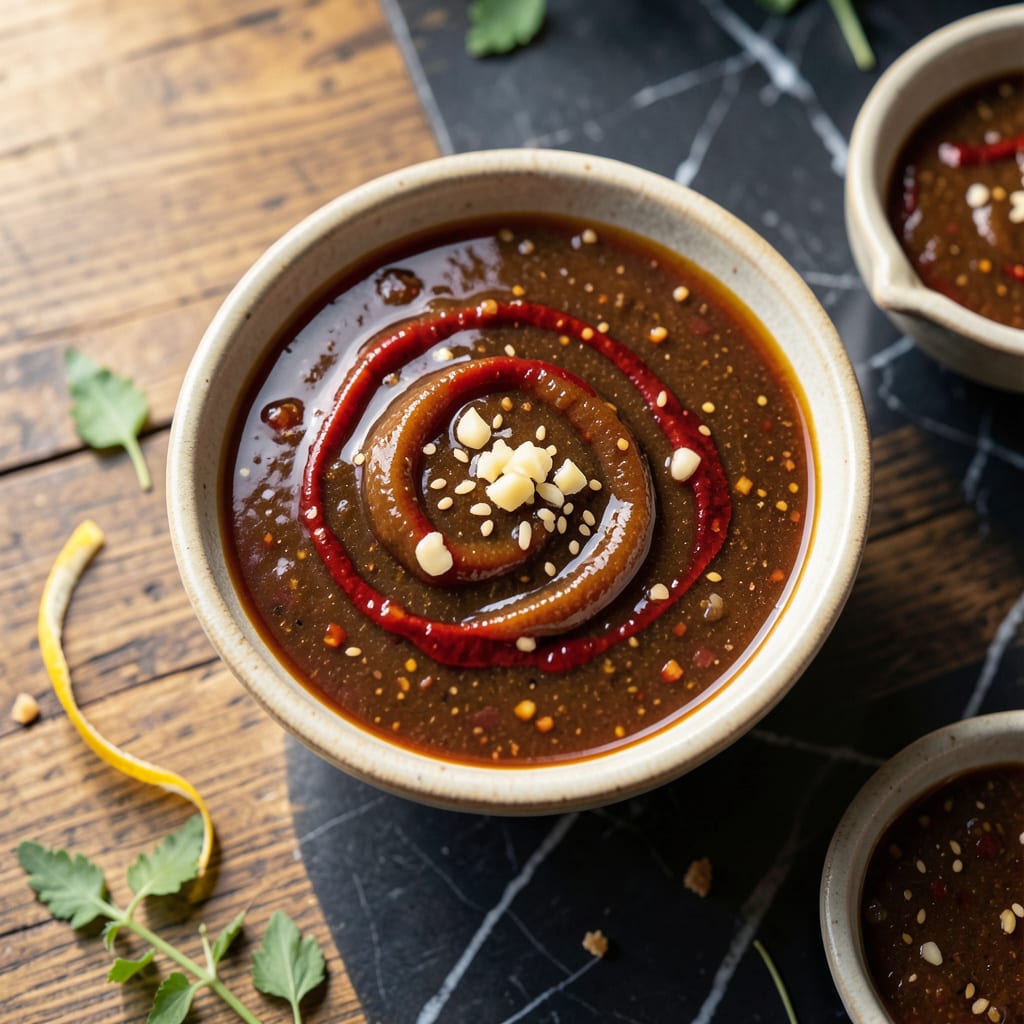
This sauce captures the essence of Korean BBQ with its perfect balance of sweet and savory flavors.
I developed this blend to elevate grilled meats with minimal effort, using simple pantry staples for a restaurant-quality result at home.
Ingredients for Korean Bbq Dip Sauce
Nine ingredients. Bold flavors. Your grilled meats just leveled up significantly.
| Ingredient | Amount | Notes |
|---|---|---|
| Soy Sauce 🥢 | ½ cup | Low-sodium preferred for balance |
| Brown Sugar 🍚 | ¼ cup | Packed, for caramelized sweetness |
| Rice Vinegar 🍶 | 3 tbsp | Adds essential tangy brightness |
| Sesame Oil 🫒 | 1 tbsp | Toasted variety for depth |
| Gochujang 🌶️ | 2 tbsp | Korean chili paste for heat |
| Garlic Cloves 🧄 | 4 cloves | Minced finely for even distribution |
| Fresh Ginger 🌿 | 1 tbsp | Peeled and grated |
| Toasted Sesame Seeds 🌰 | 1 tbsp | For garnish and texture |
| Green Onions 🧅 | 3 whole | Thinly sliced for fresh bite |
[recipe_ingredient_scaler]
The gochujang is non-negotiable here—H Mart or Korean markets will have the real deal (look for Sempio or Chung Jung One brands). Soy sauce matters too: Kikkoman low-sodium keeps the salt in check without sacrificing depth. Fresh ginger and garlic make all the difference, so don’t reach for the jarred stuff. The brown sugar should be dark if you’ve got it (more molasses = more complexity).
No gochujang? Sriracha plus 1 tsp miso paste gets you 80% there. Out of brown sugar? Honey or maple syrup at 1:1 works, though the flavor profile shifts slightly. Rice vinegar can be swapped for apple cider vinegar in a pinch (less authentic but still tasty). The sesame oil? Don’t skip it—it’s the secret to that restaurant-quality aroma.
This keeps 1 week in the fridge in a sealed jar. The flavors actually deepen after 24 hours, so make it ahead. Freezes for 3 months if you double the batch. Stir before using—the sesame seeds settle.
Why You’ll Love This Recipe
- 5-Minute Whisk: I dump everything in one bowl and whisk—no chopping, no fuss. Honestly, it’s ready before the grill heats up.
- Sweet-Spicy Kick: The gochujang and brown sugar balance is ridiculous—sweet with just enough heat to keep you reaching for more.
- Dip or Marinade: I slather it on ribs, toss it with veggies, or just use it as a dip for dumplings. Between us, it’s my secret for leftovers that disappear fast.
- Pantry Staples: Soy sauce, sugar, vinegar—stuff I already have. I’ll be real: it saves me a grocery run every time.
Step-by-Step Instructions for Korean BBQ Dip Sauce
This method ensures perfect balance between sweet, savory, and spicy with minimal effort.
Step 1: Combine the Liquid Base
In a medium bowl, whisk together the 0.5 cup Soy Sauce, 0.25 cup Brown Sugar, and 3 tbsp Rice Vinegar until the sugar begins to dissolve. I always use a bowl with a pour spout for easier transfer later.
The brown sugar may leave some grains at first—that’s fine. The acidity from the rice vinegar will help break them down as you continue mixing. Let the mixture sit for 2 minutes to allow the sugar to soften fully before proceeding.
Step 2: Incorporate the Aromatics and Spices
Add the 2 tbsp Gochujang, 1 tbsp Sesame Oil, minced 4 cloves Garlic Cloves, and grated 1 tbsp Fresh Ginger to the bowl. Whisk vigorously for 30-45 seconds until the gochujang fully dissolves into the liquid.
Here’s the thing—the gochujang is thick and sticky, so you’ll need to press it against the bowl’s sides with your whisk to break it up. The sauce should turn a deep reddish-brown color with no visible streaks of paste. The aroma will be intoxicating at this stage.
Step 3: Finish and Rest for Optimal Flavor
Stir in the 1 tbsp Toasted Sesame Seeds and thinly sliced 3 whole Green Onions. The sesame seeds will float on top initially, but they’ll distribute evenly as the sauce rests.
Let the sauce sit at room temperature for 10 minutes before serving. This resting period allows the flavors to meld together and the garlic to mellow slightly. The brown sugar will fully dissolve during this time, and the sauce will thicken just enough to cling perfectly to your BBQ meats.
Step 4: Adjust and Serve
Give the sauce one final stir and taste. The flavor should be a perfect harmony of salty, sweet, tangy, and spicy with the sesame oil adding a nutty depth. If you prefer it sweeter, add a pinch more brown sugar. For more heat, mix in another teaspoon of gochujang.
Transfer to a serving bowl and use immediately, or store in an airtight container in the refrigerator for up to 1 week. The flavors will intensify over time, so you might find it tastes even better the next day.
Pro Tips For Making Korean Bbq Dip Sauce
- Bloom the Gochujang: Heat the gochujang in the pan for 30 seconds before adding liquids—this deepens its flavor and removes the raw edge. I learned this the hard way after tasting a flat, uncooked paste in my first few batches.
- Whisk the Sugar: Dissolve the brown sugar completely in the warm soy sauce mixture before adding the rest. Those stubborn brown sugar clumps ruin the smooth texture, and nobody wants a gritty dip.
- Skip the Boiling: Keep the heat low to medium—boiling the sauce makes it too thick and can separate the sesame oil. A gentle simmer for 3-4 minutes is all you need to meld the flavors.
- Finish with Sesame Oil: Stir in the sesame oil at the very end, off the heat. Adding it too early dulls its aroma, and you’ll lose that nutty punch that makes the sauce addictive.
Serving Suggestions for This Dish
Dipping Station Setup
Create a communal experience with this sauce as the star. I set out small ceramic ramekins for individual dipping, or one large stoneware bowl in the center. The sauce’s thick consistency makes it perfect for clinging to grilled meats. 💛
Grilled Meat Pairings
This sauce shines with bulgogi beef, kalbi short ribs, or even simple grilled chicken. The sweetness caramelizes slightly when brushed on meats during the last minute of cooking. I also love it with pork belly slices fresh off the grill.
Vegetable Companions
Don’t overlook the veggies! The sauce transforms grilled zucchini, bell peppers, or eggplant slices into something extraordinary. For raw options, try it with crisp cucumber sticks or carrot batons for a refreshing contrast.
Rice and Noodles
Drizzle over steamed white rice or toss with soba noodles for an instant flavor boost. I sometimes use it as a dressing for cold noodle salads – the tangy brightness cuts through the richness beautifully.
Garnish and Presentation
Sprinkle extra toasted sesame seeds and green onions on top for visual appeal. Serve with lettuce wraps for a DIY Korean BBQ experience at home. The vibrant colors make the dish as beautiful as it is delicious.
Leftovers Reinvented
Use leftover sauce as a marinade for tofu or as a stir-fry sauce base. Thicken it with a cornstarch slurry for a glaze on roasted vegetables. I’ve even used it as a dressing for coleslaw with great results. ✨
Nutrition Facts

Trained in classic French technique but raised on slow-cooked ribs and spicy rubs, she blends culinary skill with smoke and soul.
- Recipe for Boneless Pork Chops in Cast Iron Skillet: Sear and Baste to Juicy Perfection - October 3, 2026
- Recipe for Boneless Cross Rib Roast: Slow-Roasted Beef with Herb Crust - October 3, 2026
- Hamburgers in Sauce Recipe Crock Pot: Slow-Cooked Savory Delight - October 3, 2026