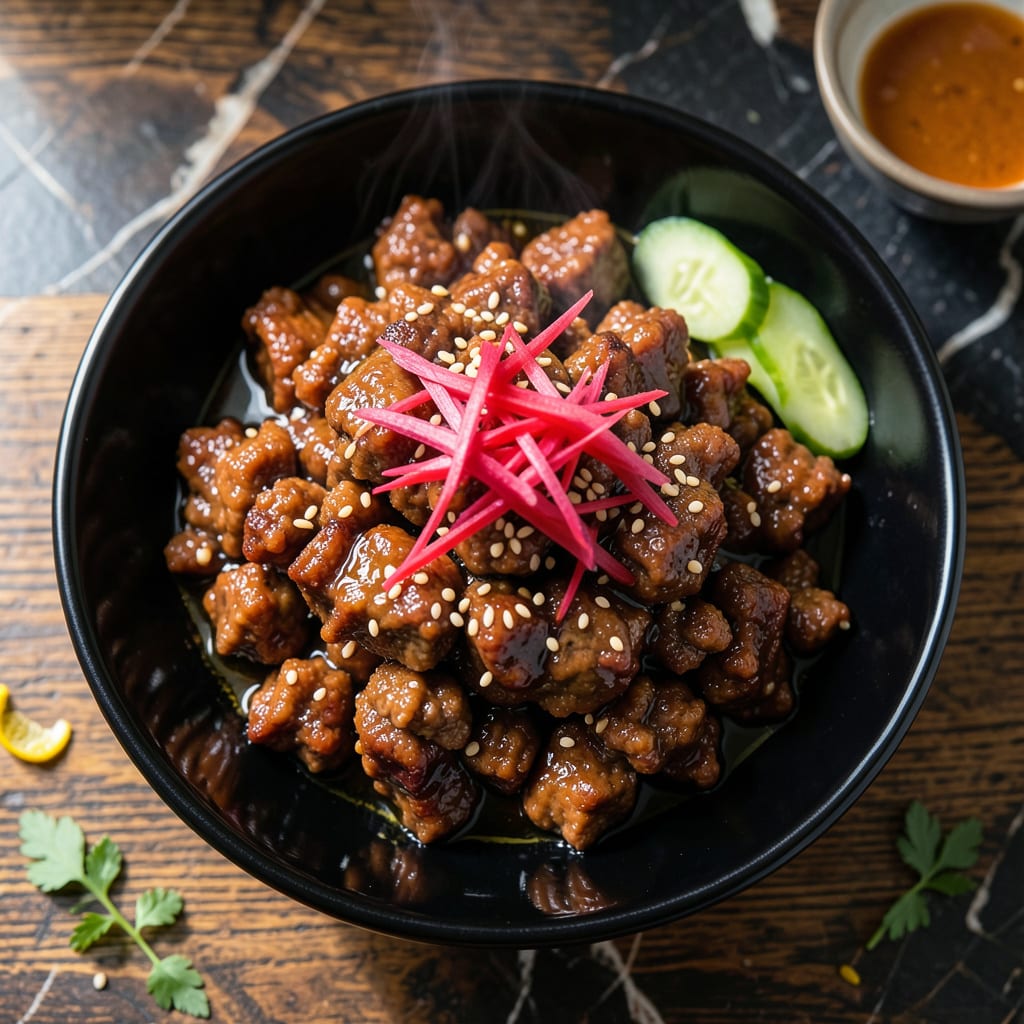
This Korean-inspired ground beef delivers bold bulgogi flavors without the long marinating time. The combination of soy sauce, brown sugar, and garlic creates a sweet-savory profile that’s both quick and authentic.
I developed this version for busy weeknights when you want restaurant-quality results in 20 minutes. The ground beef absorbs the marinade faster than traditional cuts, making it perfect for spontaneous Korean BBQ cravings.
Ingredients for Korean Bbq Ground Beef
Pantry staples and a quick grocery run for fresh ginger and pear. Bold flavors, zero fuss.
| Ingredient | Amount | Notes |
|---|---|---|
| Ground Beef 🥩 | 1 ½ lb | 80/20 fat ratio preferred |
| Soy Sauce 🫒 | ½ cup | Low-sodium or regular |
| Brown Sugar 🍚 | ¼ cup | Packed, for sweetness |
| Garlic Cloves 🧄 | 4 cloves | Minced for maximum flavor |
| Sesame Oil 🫒 | 1 tbsp | Toasted for depth |
| Ginger Root 🌿 | 1 tbsp | Freshly grated |
| Asian Pear 🍐 | ¼ cup | Grated, for tenderness |
| Green Onions 🧅 | 4 whole | Thinly sliced for garnish |
| Sesame Seeds 🌰 | 1 tbsp | Toasted for garnish |
| Rice Vinegar 🍶 | 1 tbsp | For acidity balance |
| Gochujang 🌶️ | 1 tbsp | Korean chili paste optional |
| Black Pepper 🌶️ | ½ tsp | Freshly ground preferred |
| Vegetable Oil 🫒 | 1 tbsp | For cooking beef |
[recipeingredientscaler]
The beef is the foundation here. 80/20 ground chuck gives you the right fat for flavor and juiciness. Most grocery stores carry it, but Costco or Whole Foods have great quality if you’re doing a big batch. The soy sauce matters too—Kikkoman or a quality Korean brand makes a difference. Skip the pre-grated ginger (the good stuff, not the jarred kind) for the freshest taste.
No Asian pear? Grated apple or extra brown sugar works in a pinch. Missing gochujang? Sriracha at half the amount gets you close to the heat. The sesame oil is key though—Kadoya or Ottogi brands are easy to find at H Mart or the international aisle. Fresh garlic is a must (don’t even think about the jarred stuff).
This keeps beautifully in the fridge for 3-4 days, and the flavors actually deepen overnight. Freeze cooked portions for up to 3 months. I always make extra—leftovers disappear fast in my house (worth the extra minute).
Why You’ll Love This Recipe
- One Pan Wonder: I just brown the beef, toss in the soy sauce, brown sugar, and garlic, and let the sesame oil work its magic.
- Sweet & Savory Bomb: That first bite where the caramelized brown sugar hits the garlicky beef? I make extra just to snack on while cooking.
- Meal Prep Hero: I use it in lettuce wraps for lunch, then rice bowls for dinner—same batch, zero boredom.
- Budget Stretcher: A pound of ground beef transforms into a flavor-packed meal that feeds my family for two nights.
Step-by-Step Instructions for Korean BBQ Ground Beef
This method delivers maximum flavor with minimal effort—just follow these tested steps.
Step 1: Create the Marinade Base
In a large bowl, whisk together the 0.5 cup soy sauce, 0.25 cup brown sugar, minced 4 cloves garlic cloves, 1 tbsp ginger root, 1 tbsp sesame oil, 1 tbsp rice vinegar, 1 tbsp gochujang, and 0.5 tsp black pepper until the brown sugar fully dissolves. The mixture should be glossy and well-combined.
Add the 0.25 cup grated Asian pear to the marinade—this is the secret to tender beef, as the enzymes naturally break down proteins. Stir well and let the flavors meld while you prepare the remaining ingredients.
Step 2: Marinate the Ground Beef
Add the 1.5 lb ground beef to the marinade bowl. Using your hands or a fork, gently mix until every bit of beef is evenly coated. The mixture will look slightly wet but should hold together when pressed. I like to let it sit for 10 minutes at room temperature to absorb the flavors.
Don’t overmix—this can make the beef dense. The marinade should cling to the meat without pooling at the bottom of the bowl. If it seems too thick, the Asian pear will release moisture as it sits.
Step 3: Cook the Beef to Perfection
Heat the 1 tbsp vegetable oil in a large skillet or wok over medium-high heat until it shimmers. Add the marinated beef in a single layer, breaking it up with a spatula. Cook undisturbed for 2-3 minutes until the bottom develops a deep brown crust.
Stir and continue cooking for another 4-5 minutes until the beef is fully browned and cooked through. The soy sauce will caramelize slightly, creating a glossy, sticky coating on the beef. You’ll notice the aroma shift from raw to rich and savory.
Step 4: Finish and Garnish
Once the beef is fully cooked, remove the skillet from heat. Taste and adjust seasoning if needed—I often find the flavors are perfectly balanced as is. The beef should be tender, juicy, and coated in a slightly sticky, glossy sauce.
Transfer to a serving dish and garnish with thinly sliced 4 whole green onions and 1 tbsp toasted sesame seeds. The green onions add a fresh, crisp contrast, while the sesame seeds provide a nutty crunch. Serve immediately with steamed rice or lettuce wraps.
Pro Tips For Making Korean Bbq Ground Beef
- Cook Hot and Fast: Get your pan screaming hot before adding the beef—this gives you those caramelized edges on the meat that make the dish taste like it came from a Korean BBQ joint. I learned this the hard way after too many gray, sad-looking batches.
- Grates the Garlic: Skip the mincing and use a microplane for the garlic cloves. It blends into the sauce better and actually changes the outcome, giving you a stronger, more even garlic flavor.
- Don’t Over-Sauce: Resist the urge to drown the beef in soy sauce and brown sugar—start with 2 tablespoons of each, taste, then adjust. After burning three batches, I finally figured out the sugar can scorch if there’s too much liquid.
- Rest Before Serving: Let the beef sit for 5 minutes off the heat after cooking—it lets the flavors meld and the juices redistribute. My grandmother swore by this, and she was right.
Pro Cooking Tips for Perfect Results
Marinade Perfection
For maximum flavor penetration, let the beef sit in the marinade for at least 10 minutes at room temperature. The Asian pear enzymes work best in this window. I’ve found that longer marinating (up to 1 hour) deepens the flavors without making the meat mushy. 💡
High Heat Cooking
Use medium-high heat to get that signature caramelization on the beef. The sugar in the marinade will create a beautiful crust. A well-seasoned cast iron skillet or stainless steel wok gives the best results—I avoid nonstick for this recipe.
Don’t Overwork It
When mixing the beef with the marinade, use a gentle hand. Overmixing can make the texture dense. The mixture should look slightly wet but hold together when pressed. This keeps the final dish light and tender.
Caramelization Timing
Let the beef cook undisturbed for 2-3 minutes initially to develop a deep brown crust. This is where the magic happens—the soy sauce and sugar create that sticky, glossy coating. Resist the urge to stir too soon. 🔥
Rest Before Serving
After cooking, let the beef rest for 2-3 minutes off the heat. This allows the juices to redistribute. I always taste and adjust seasoning at this point—the flavors are usually spot-on.
Garnish Strategically
The green onions and sesame seeds aren’t just for looks. Add them right before serving to preserve their fresh crunch and nutty aroma. This final touch elevates the dish from good to restaurant-quality.
Nutrition Facts

Trained in classic French technique but raised on slow-cooked ribs and spicy rubs, she blends culinary skill with smoke and soul.
- Recipe for Boneless Pork Chops in Cast Iron Skillet: Sear and Baste to Juicy Perfection - October 3, 2026
- Recipe for Boneless Cross Rib Roast: Slow-Roasted Beef with Herb Crust - October 3, 2026
- Hamburgers in Sauce Recipe Crock Pot: Slow-Cooked Savory Delight - October 3, 2026