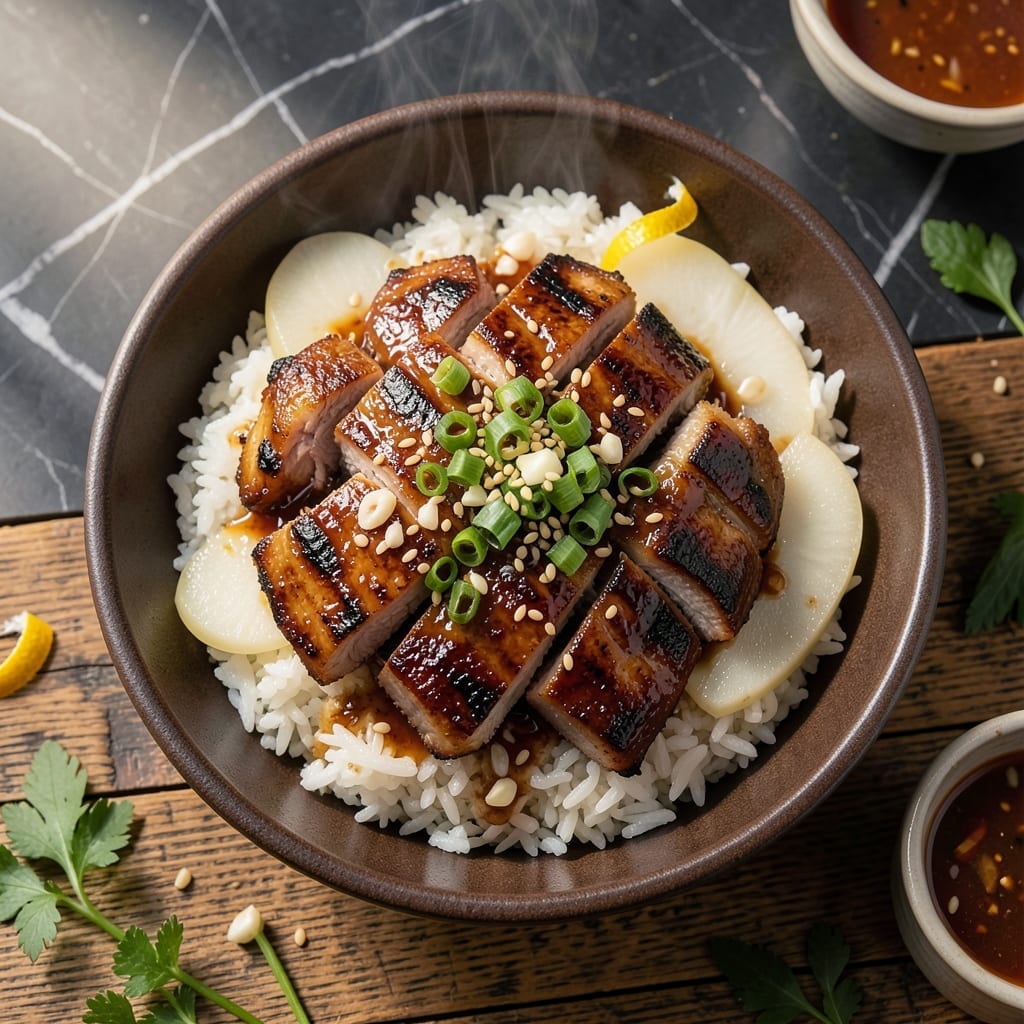
This marinade transforms pork into tender, caramelized perfection with every bite. Thin slices soak up the sweet-savory blend, ensuring maximum flavor in each mouthful.
Grill over high heat for those signature charred edges, then serve with rice and kimchi for the full Korean BBQ experience.
Ingredients for Korean Bbq Pork Bulgogi
Thin pork slices and a bold marinade deliver that signature Korean BBQ flavor.
| Ingredient | Amount | Notes |
|---|---|---|
| Pork Shoulder 🐖 | 1 ½ lb | Thinly sliced for marinating |
| Soy Sauce 🫙 | ½ cup | Low-sodium preferred for balance |
| Brown Sugar 🍚 | ¼ cup | Packed, for caramelization |
| Asian Pear 🍐 | ½ whole | Grated, adds natural sweetness |
| Garlic Cloves 🧄 | 6 cloves | Minced for depth of flavor |
| Fresh Ginger 🌿 | 1 tbsp | Grated, essential for authenticity |
| Sesame Oil 🫒 | 2 tbsp | Toasted for nutty aroma |
| Rice Vinegar 🍶 | 2 tbsp | Balances sweetness with acidity |
| Gochujang 🌶️ | 1 tbsp | Korean chili paste for heat |
| Sesame Seeds 🌰 | 2 tbsp | Toasted, for garnish |
| Green Onions 🧅 | 4 whole | Thinly sliced for freshness |
| Black Pepper 🌶️ | 1 tsp | Freshly ground for best results |
| Vegetable Oil 🫒 | 1 tbsp | For grilling prevention |
[recipe_ingredient_scaler]
The pork shoulder is non-negotiable for authentic texture—look for well-marbled cuts at Korean markets or a trusted butcher. Asian pear is the secret tenderizer; Bosc or Anjou varieties work best if authentic Asian pears aren’t available. Kikkoman soy sauce offers consistent quality, but any reputable brand will suffice. Fresh ginger and garlic should be firm and fragrant—avoid any with soft spots or sprouting.
No Asian pear? Substitute with grated apple or pineapple for similar enzymatic tenderizing. Gochujang can be adjusted to taste—reduce to 1 tsp for milder heat or omit entirely for a sweeter profile. Soy sauce alternatives like tamari or coconut aminos work at a 1:1 ratio. If sesame oil is unavailable, perilla oil offers a comparable nutty depth, though it’s less common outside specialty stores.
Marinate the pork for at least 4 hours, ideally overnight, for maximum flavor penetration. Cooked bulgogi keeps in the fridge for 3-4 days and freezes beautifully for up to 3 months. Reheat gently to preserve the caramelized edges that make this dish special.
Why You’ll Love This Recipe
- Minimal Chopping Required: I just slice the pork shoulder and Asian pear, then the marinade does all the work.
- Sweet-Savory Magic: The brown sugar and soy sauce caramelize into this glossy, finger-licking glaze.
- Weeknight Lifesaver: I throw it together Sunday, grill midweek—dinner’s ready faster than takeout.
- Stretches Far: One batch of pork shoulder feeds my family for two meals, and the leftovers make killer tacos.
Step-by-Step Instructions for Korean BBQ Pork Bulgogi
Master the marinating and grilling process for tender, caramelized pork with authentic Korean flavors.
Step 1: Prepare the Marinade Base
In a large bowl, whisk together the 0.5 cup soy sauce, 0.25 cup brown sugar, 2 tbsp sesame oil, 2 tbsp rice vinegar, 1 tbsp gochujang, and 1 tsp black pepper until the brown sugar fully dissolves. This creates the sweet-savory foundation that defines bulgogi.
The brown sugar should be packed firmly before measuring to ensure proper caramelization during cooking. The gochujang adds subtle heat and depth, while the rice vinegar balances the sweetness with necessary acidity.
Step 2: Incorporate Aromatics and Fruit
Add the 6 cloves minced garlic, 1 tbsp grated fresh ginger, and 0.5 whole Asian pear (grated) to the marinade. Stir vigorously to combine all ingredients, pressing the grated pear against the bowl sides to release its juices. The pear contains natural enzymes that tenderize the pork while adding subtle sweetness.
I always use freshly grated ginger and minced garlic for maximum flavor impact. The Asian pear should be ripe but firm—overripe fruit can make the marinade too watery and less effective for tenderizing.
Step 3: Marinate the Pork Thoroughly
Place the 1.5 lb thinly sliced pork shoulder in the marinade, ensuring each piece is fully coated. Cover the bowl with plastic wrap and refrigerate for at least 4 hours, though overnight marinating yields the most flavorful results. The thin slices allow the marinade to penetrate deeply and quickly.
During marination, the pork will absorb the flavors and begin to tenderize. For best results, stir the mixture once or twice during the marinating period to redistribute the liquids and ensure even coverage.
Step 4: Grill to Caramelized Perfection
Heat 1 tbsp vegetable oil in a large skillet or grill pan over medium-high heat. Remove the pork from the marinade (reserving the marinade) and arrange the slices in a single layer without overcrowding. Cook for 3-4 minutes per side until the edges become deeply caramelized and the pork reaches 145°F internally.
Don’t discard the marinade—pour it into the pan during the last 2 minutes of cooking. The sugars in the marinade will create a glossy, sticky glaze that coats each piece of pork beautifully. Watch carefully to prevent burning.
Step 5: Finish and Garnish for Serving
Transfer the cooked pork to a serving platter. Sprinkle with 2 tbsp toasted sesame seeds and 4 whole thinly sliced green onions while still hot. The residual heat will soften the green onions slightly and release their aromatic oils.
The sesame seeds should be toasted in a dry pan just until fragrant and golden—this takes about 1-2 minutes over medium heat. Serve immediately with steamed rice and additional green onions on the side for garnish.
Pro Tips For Making Korean Bbq Pork Bulgogi
- Slice Thin Against Grain: Cut the pork shoulder into 1/8-inch slices against the grain—this makes it tender and absorbs the marinade better. I learned this the hard way after chewing through tough strips my first few attempts.
- Grate the Pear: Sounds weird, but finely grating the Asian pear into the marinade (instead of blending) releases its enzymes more effectively for tenderizing. My grandmother swore by this, and she was right.
- Don’t Overcrowd the Pan: Cook the pork in batches with space between pieces, or it’ll steam instead of caramelize. After burning three batches, I finally figured out patience is the thing that matters most here.
- Char on High Heat: Finish the bulgogi on high heat for 1-2 minutes to get those crispy, caramelized edges—the brown sugar needs this to shine. Yes, even if you’re impatient like me.
Pro Cooking Tips for This Recipe
Marinade Mastery
Always use freshly grated ginger and minced garlic—pre-packaged versions lack the vibrant punch that defines authentic bulgogi. I learned this the hard way at my first BBQ competition. 🌶️
Thin Slice Secret
Partially freeze the pork shoulder for 30 minutes before slicing to achieve paper-thin cuts. This technique ensures maximum marinade absorption and even cooking on the grill.
Pear Perfection
Choose a firm Asian pear—overripe fruit makes the marinade too watery. If unavailable, Bosc pears work as a substitute. The natural enzymes break down proteins for incredible tenderness.
Heat Control
Use medium-high heat and avoid overcrowding the pan. Cook in batches if needed to achieve proper caramelization without steaming the pork. I swear by my Lodge cast iron skillet for this.
Glaze Timing
Pour reserved marinade in during the final 2 minutes of cooking. This creates that signature sticky glaze without burning the sugars. Watch closely—the difference between perfect and burnt is seconds. 🔥
Rest Before Serving
Let the pork rest 5 minutes after cooking. This allows juices to redistribute, keeping every bite moist and flavorful. Garnish with toasted sesame seeds just before serving.
Nutrition Facts

Trained in classic French technique but raised on slow-cooked ribs and spicy rubs, she blends culinary skill with smoke and soul.
- Recipe for Boneless Pork Chops in Cast Iron Skillet: Sear and Baste to Juicy Perfection - October 3, 2026
- Recipe for Boneless Cross Rib Roast: Slow-Roasted Beef with Herb Crust - October 3, 2026
- Hamburgers in Sauce Recipe Crock Pot: Slow-Cooked Savory Delight - October 3, 2026