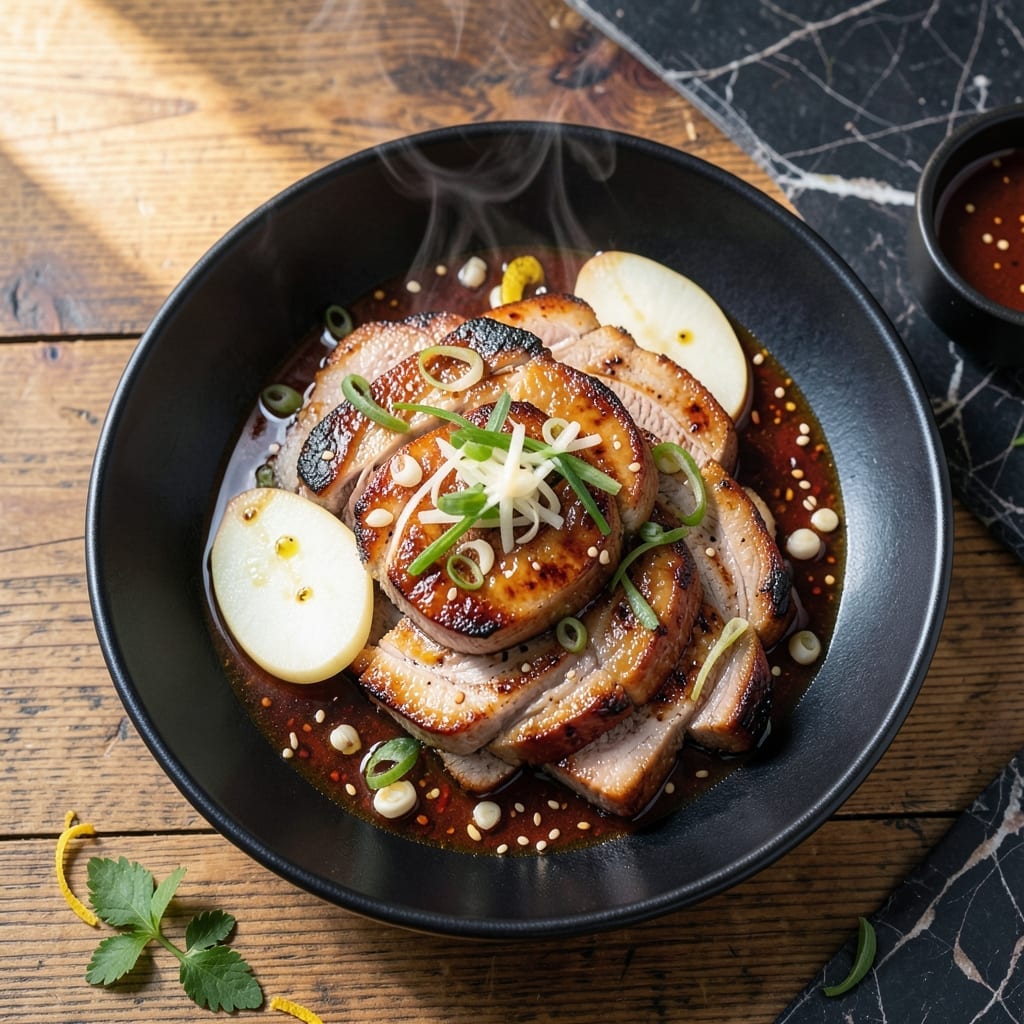
This recipe captures the essence of Korean BBQ with a marinade that transforms pork loin into tender, charred perfection. The balance of sweet, savory, and smoky flavors is what sets this dish apart.
I’ve refined this method over years, ensuring the meat stays juicy while achieving a caramelized crust. Serve with steamed rice and pickled vegetables for an authentic experience.
Ingredients for Korean Bbq Pork Loin
Transform pork loin with a vibrant Korean-inspired marinade and simple pantry staples.
| Ingredient | Amount | Notes |
|---|---|---|
| Pork Loin 🥩 | 2 lb | Boneless, cut into thin slices |
| Soy Sauce 🫒 | ½ cup | Low-sodium preferred for balance |
| Brown Sugar 🍚 | ½ cup | Packed, for caramelization |
| Asian Pear 🍐 | ½ whole | Peeled and grated for tenderness |
| Garlic Cloves 🧄 | 6 cloves | Minced for marinade depth |
| Fresh Ginger 🌿 | 1 tbsp | Peeled and grated finely |
| Sesame Oil 🫒 | 2 tbsp | Toasted for nutty aroma |
| Rice Vinegar 🍋 | 2 tbsp | Balances sweetness with acidity |
| Gochujang 🌶️ | 2 tbsp | Korean chili paste for heat |
| Green Onions 🧅 | 4 whole | Thinly sliced for garnish |
| Sesame Seeds 🌾 | 2 tbsp | Toasted for crunch and garnish |
| Black Pepper 🌶️ | 1 tsp | Freshly ground for best flavor |
| Cooking Oil 🫒 | 1 tbsp | Neutral oil for high-heat cooking |
[recipe_ingredient_scaler]
The pork loin is key here. Look for well-marbled cuts at the butcher or Whole Foods—it stays juicier during cooking. Asian pear is non-negotiable for authentic tenderness (Bosc pears work in a pinch). For the soy sauce, Kikkoman low-sodium is a reliable choice, but any quality brand will do. Gochujang can be found in the Asian aisle at H Mart or most larger grocery stores now.
No Asian pear? Kiwi or pineapple tenderizes similarly—use half a fruit. Gochujang too spicy? Reduce to 1 tbsp or swap for gochugaru (Korean chili flakes) at half the amount. The brown sugar can be light or dark. For extra depth, toast the sesame seeds before garnishing (worth the extra minute).
Marinate the pork for at least 4 hours—overnight is ideal. Cooked pork keeps 3-4 days in the fridge or 3 months frozen. Reheat gently to preserve the caramelized crust.
Why You’ll Love This Recipe
- One Pan Wonder: I toss everything—the pork loin, soy sauce, brown sugar, and garlic—in a single pan. Honestly, cleanup is almost as satisfying as the meal.
- Sweet-Savory Magic: The brown sugar caramelizes with the soy sauce, and the Asian pear adds this juicy tenderness that’s just ridiculous.
- Meal Prep Hero: I make a big batch on Sunday, and it’s my lunch savior all week—tastes just as good reheated in a wrap or over rice.
- Budget Stretcher: Pork loin is affordable, and this recipe feeds my family of four with leftovers. I’ll be real: that’s a win in my book.
Step-by-Step Instructions for Korean BBQ Pork Loin
This method ensures perfectly charred, tender pork with layers of sweet, savory, and spicy flavor.
Step 1: Prepare the Marinade Base
In a large bowl, combine the 0.5 cup soy sauce, 0.5 cup brown sugar, 2 tbsp sesame oil, 2 tbsp rice vinegar, and 2 tbsp gochujang. Whisk until the brown sugar fully dissolves and the mixture becomes smooth and glossy.
Add the 6 cloves minced garlic, 1 tbsp grated fresh ginger, and 1 tsp black pepper. Stir well to distribute the aromatics evenly. The marinade should have a deep reddish-brown color and a balance of sweet, salty, and spicy notes.
Step 2: Tenderize and Marinate the Pork
Peel and grate the 0.5 whole Asian pear directly into the marinade, stirring to incorporate. The natural enzymes in the pear will help tenderize the pork. Slice the 2 lb pork loin into thin, even strips (about ¼-inch thick) to maximize surface area for flavor absorption.
Add the pork slices to the marinade, ensuring each piece is fully coated. Cover the bowl and refrigerate for at least 4 hours, or preferably overnight. The longer it marinates, the deeper the flavors penetrate and the more tender the pork becomes.
Step 3: Cook the Pork to Charred Perfection
Heat 1 tbsp cooking oil in a large skillet or grill pan over medium-high heat. Working in batches to avoid overcrowding, remove the pork from the marinade (reserve any excess marinade) and cook for 3-4 minutes per side.
You want to achieve a deep caramelization on each piece, so resist the urge to stir too often. Let the pork develop a rich, dark crust before flipping. The edges should look slightly charred, and the internal temperature should reach 145°F.
Step 4: Rest and Garnish for Serving
Transfer the cooked pork to a serving platter and let it rest for 5 minutes. This allows the juices to redistribute, ensuring every bite is moist and flavorful. While the pork rests, thinly slice the 4 whole green onions.
Sprinkle the pork with the sliced green onions and 2 tbsp sesame seeds just before serving. For extra crunch, toast the sesame seeds lightly in a dry pan for 1-2 minutes until fragrant. Serve with steamed rice and additional marinade on the side if desired.
Pro Tips For Making Korean Bbq Pork Loin
- Slice Thinly First: Freeze the pork loin for 20-30 minutes before slicing—it firms up just enough to cut paper-thin strips without mangling them. I learned this the hard way after too many uneven, chewy bites.
- Grate the Pear: Skip the blender and use a fine grater for the Asian pear; it releases more juice and blends into the marinade better than chunks. Sounds weird, but it works.
- Don’t Over-Marinate: More than 4 hours in the soy-brown sugar marinade turns the pork mushy, especially with the pear’s enzymes breaking it down. 2-3 hours is the sweet spot.
- Char on High: Sear the pork on high heat for 1-2 minutes per side to get that caramelized crust from the sugar—then drop to medium to cook through without burning the garlic.
Storing and Reheating This Dish
Refrigerator Storage
Let the cooked pork cool to room temperature within 2 hours, then transfer to an airtight container. It stays fresh in the fridge at 40°F or below for up to 4 days. The flavors deepen overnight, making leftovers even more delicious. ❄️
Freezer Storage
For longer storage, wrap individual portions tightly in plastic wrap and place in a freezer-safe bag. Squeeze out excess air to prevent freezer burn. This method preserves quality for up to 3 months without losing texture or flavor.
Stovetop Reheating
Reheat in a skillet over medium-low heat with a splash of water or marinade to maintain moisture. Cover and warm for 5-7 minutes, stirring occasionally. This keeps the edges from drying out while restoring the caramelized crust. 🔥
Microwave Reheating
Place pork on a microwave-safe dish, sprinkle with 1-2 tbsp water, and cover with a damp paper towel. Heat on 50% power in 1-minute intervals until reaching 165°F, stirring between intervals for even warming.
Oven Reheating
Preheat oven to 300°F, spread pork on a baking sheet, and cover with foil. Warm for 10-12 minutes, then uncover for 2-3 minutes to crisp the edges. This method works best for larger batches.
Nutrition Facts

Trained in classic French technique but raised on slow-cooked ribs and spicy rubs, she blends culinary skill with smoke and soul.
- Recipe for Boneless Pork Chops in Cast Iron Skillet: Sear and Baste to Juicy Perfection - October 3, 2026
- Recipe for Boneless Cross Rib Roast: Slow-Roasted Beef with Herb Crust - October 3, 2026
- Hamburgers in Sauce Recipe Crock Pot: Slow-Cooked Savory Delight - October 3, 2026