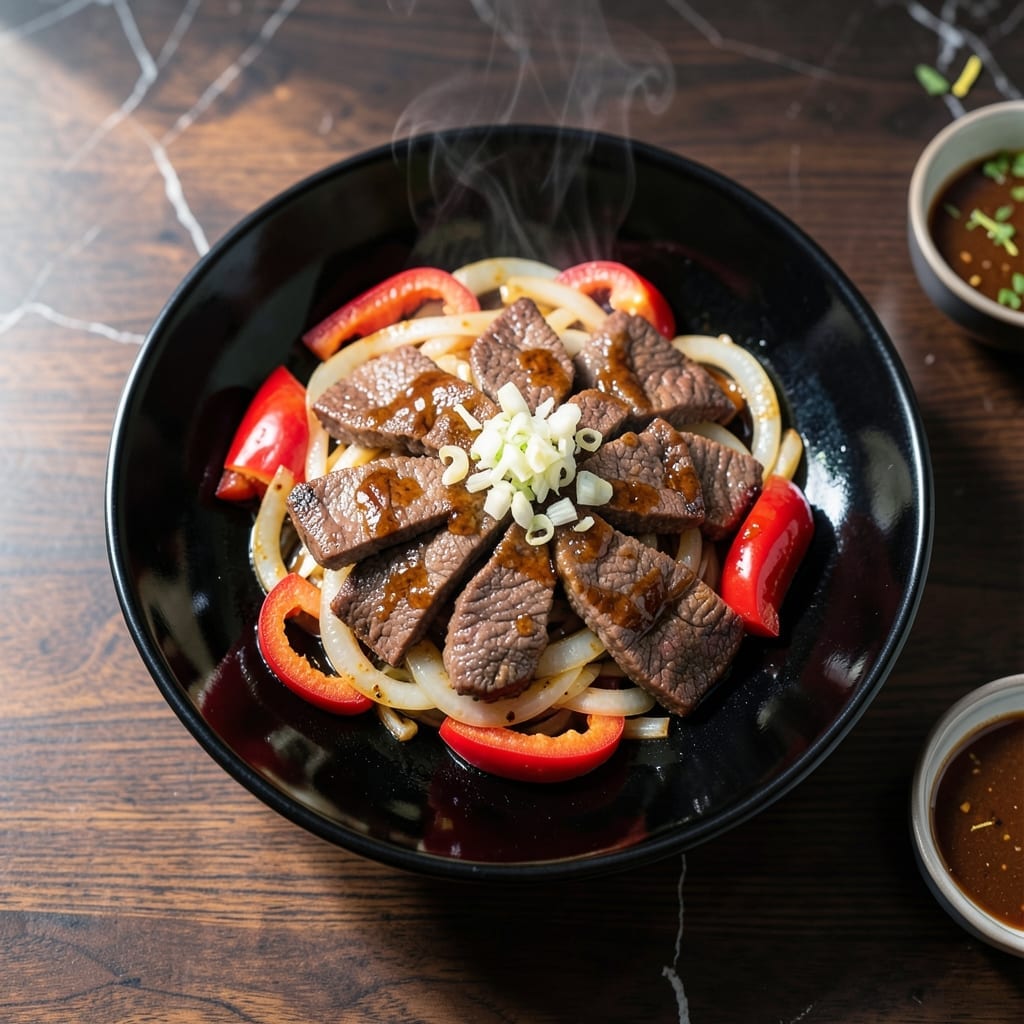
This Japanese BBQ stir fry brings smoky-sweet depth to your wok with minimal effort. The secret lies in balancing rich, caramelized flavors with fresh vegetables and tender protein.
I developed this method to capture authentic tastes without complex techniques. The result is a dish with restaurant-quality layers that comes together in under 30 minutes.
Ingredients for Japanese Bbq Stir Fry
Pantry staples meet fresh produce for a wok-ready dish with serious depth.
| Ingredient | Amount | Notes |
|---|---|---|
| Thinly Sliced Beef 🥩 | 1 ½ lb | Ribeye or sirloin, sliced against grain |
| Soy Sauce 🫕 | ½ cup | Low-sodium preferred for balance |
| Mirin 🍶 | ⅓ cup | Sweet rice wine for depth |
| Sake 🍶 | ⅓ cup | Dry Japanese rice wine |
| Brown Sugar 🍚 | 3 tbsp | Light or dark works |
| Garlic Cloves 🧄 | 4 cloves | Minced for maximum flavor |
| Fresh Ginger 🌿 | 1 tbsp | Grated, peel first |
| Bell Peppers 🌶️ | 2 whole | Assorted colors, sliced thin |
| Broccoli Florets 🥦 | 3 cups | Cut into bite-sized pieces |
| Carrots 🥕 | 2 whole | Julienned or thinly sliced |
| Scallions 🧅 | 4 whole | Sliced, whites and greens separated |
| Vegetable Oil 🫒 | 3 tbsp | High smoke point for stir-frying |
| Sesame Seeds 🌰 | 1 tbsp | Toasted for garnish |
| Rice Vinegar 🍶 | 1 tbsp | For finishing brightness |
[recipe_ingredient_scaler]
The beef is the star—ribeye or sirloin give you that melt-in-your-mouth texture. Slice against the grain for tenderness. I grab mine from Whole Foods or a local butcher for quality you can taste. The soy sauce should be Japanese-style (like Kikkoman), not the thicker Chinese varieties. Mirin and sake are non-negotiable for authentic flavor—look for them in the Asian aisle (or the refrigerator section at H Mart).
No mirin? 1 tbsp sugar + 1 tbsp water + 1 tbsp rice vinegar works in a pinch. Sake can be swapped for dry sherry or white wine. Bell peppers not your thing? Snap peas or zucchini add great crunch. If you’re short on fresh ginger, ground ginger at one-third the amount gets you close (but fresh is better).
Leftovers keep 3-4 days in the fridge—reheat in a skillet to keep the veggies crisp. The sauce base (soy, mirin, sake) can be mixed ahead and stored 1 week in the fridge. Freeze the beef sliced and ready for 1 month.
Why You’ll Love This Recipe
- I’ll be real: it tastes even better the next day, and the beef stays tender for meal prep.
- One Pan Magic: I just toss the thinly sliced beef with soy sauce, mirin, and sake—no fancy techniques, just a hot pan and 15 minutes.
- Umami Bomb: That sweet-savory glaze from the brown sugar and mirin? Ridiculously good with every bite of beef.
- Weeknight Hero: Honestly, it’s my go-to for busy evenings when I need dinner fast but still crave restaurant-quality flavor.
Step-by-Step Instructions for Japanese BBQ Stir Fry
Here’s the method that delivers that signature smoky-sweet flavor with perfect wok char.
Step 1: Prepare the Marinade and Slice Vegetables
In a bowl, whisk together the 0.5 cup soy sauce, 0.33 cup mirin, 0.33 cup sake, and 3 tbsp brown sugar until the sugar dissolves. This creates that iconic sweet-savory base that defines this dish.
Thinly slice the 2 whole bell peppers and 2 whole carrots, cut the 3 cups broccoli florets into bite-sized pieces, and separate the whites and greens of the 4 whole scallions. Mince the 4 cloves garlic cloves and grate the 1 tbsp fresh ginger. Having everything prepped ensures you can move quickly once cooking starts.
Step 2: Marinate the Beef for Maximum Flavor
Place the 1.5 lb thinly sliced beef in a shallow dish and pour about half of the marinade over it. Toss to coat evenly, ensuring every piece is well saturated. Let it marinate for 15-20 minutes while you finish prepping the vegetables.
Real talk: don’t skip this step. The marinade tenderizes the beef and infuses it with that deep umami flavor. If you’re short on time, even 10 minutes makes a noticeable difference, but the full 20 minutes is ideal for maximum flavor penetration.
Step 3: Stir-Fry the Beef and Vegetables
Heat 2 tbsp of the 3 tbsp vegetable oil in a wok or large skillet over high heat until it shimmers. Add the marinated beef in a single layer (work in batches if needed) and sear for 2-3 minutes until browned and nearly cooked through. Remove the beef and set aside.
In the same pan, add the remaining 1 tbsp vegetable oil if needed, then toss in the garlic, ginger, bell peppers, and carrots. Stir-fry for 3-4 minutes until the vegetables start to soften but retain a slight crunch. Add the broccoli florets and cook for another 2 minutes until bright green and tender-crisp.
Step 4: Combine and Finish with Signature Touches
Return the beef to the wok along with any accumulated juices. Pour in the remaining marinade and toss everything together over high heat for 2-3 minutes until the sauce thickens slightly and coats every piece.
Stir in the scallion whites and cook for 30 seconds until fragrant. Remove from heat and finish with the 1 tbsp rice vinegar for brightness and the 1 tbsp sesame seeds for nutty depth. Garnish with the scallion greens just before serving for a fresh, vibrant finish.
Pro Tips For Making Japanese Bbq Stir Fry
- Sear Beef First: Crank the heat to high and sear the thinly sliced beef in batches—this locks in juices and prevents steaming. I learned this the hard way after ending up with gray, soggy meat instead of caramelized edges.
- Deglaze With Sake: After searing, pour in 2 tablespoons of sake to scrape up those browned bits from the pan. Sounds weird, but it adds depth to the sauce that water just can’t.
- Skip Overcrowding: Resist the urge to dump all the beef in at once—it’ll drop the pan’s temperature and boil instead of browning. A single layer, even if it takes an extra minute, actually changes the outcome.
- Balance The Sauce: Taste before serving and add a splash of mirin if it’s too salty or a pinch of brown sugar if it’s too sharp. My grandmother swore by this, and she was right: the sauce should be rich, not one-note.
Perfect Pairings for This Recipe
Side Dish Harmony
Steamed jasmine rice soaks up the smoky-sweet sauce beautifully. I cook mine with a 1:1.25 ratio of rice to water for perfect texture. For extra flair, top with furikake seasoning—it adds a nutty, umami crunch. 🌟
Fresh Contrasts
A simple cucumber salad with rice vinegar and sesame seeds cuts through the richness. Thinly slice 1 English cucumber and toss with 1 tbsp rice vinegar and ½ tsp sugar. The cool crunch balances the dish perfectly.
Wine Pairings
An off-dry Riesling from Washington state complements the sweet-savory profile. The acidity refreshes your palate between bites. For beer lovers, a crisp Sapporo or Asahi keeps the flavors authentic. 🍺
Quick Pickles
Try quick-pickled daikon radish and carrots for tangy contrast. Slice thin, then soak in ½ cup rice vinegar, 1 tbsp sugar, and ½ tsp salt for 30 minutes. They add brightness to every forkful.
Finishing Touches
Extra toasted sesame seeds and sliced scallions on the table let guests customize. I also set out sriracha for those who want heat. These small additions make the dish feel restaurant-style at home.
Nutrition Facts

Trained in classic French technique but raised on slow-cooked ribs and spicy rubs, she blends culinary skill with smoke and soul.
- Recipe for Boneless Pork Chops in Cast Iron Skillet: Sear and Baste to Juicy Perfection - October 3, 2026
- Recipe for Boneless Cross Rib Roast: Slow-Roasted Beef with Herb Crust - October 3, 2026
- Hamburgers in Sauce Recipe Crock Pot: Slow-Cooked Savory Delight - October 3, 2026