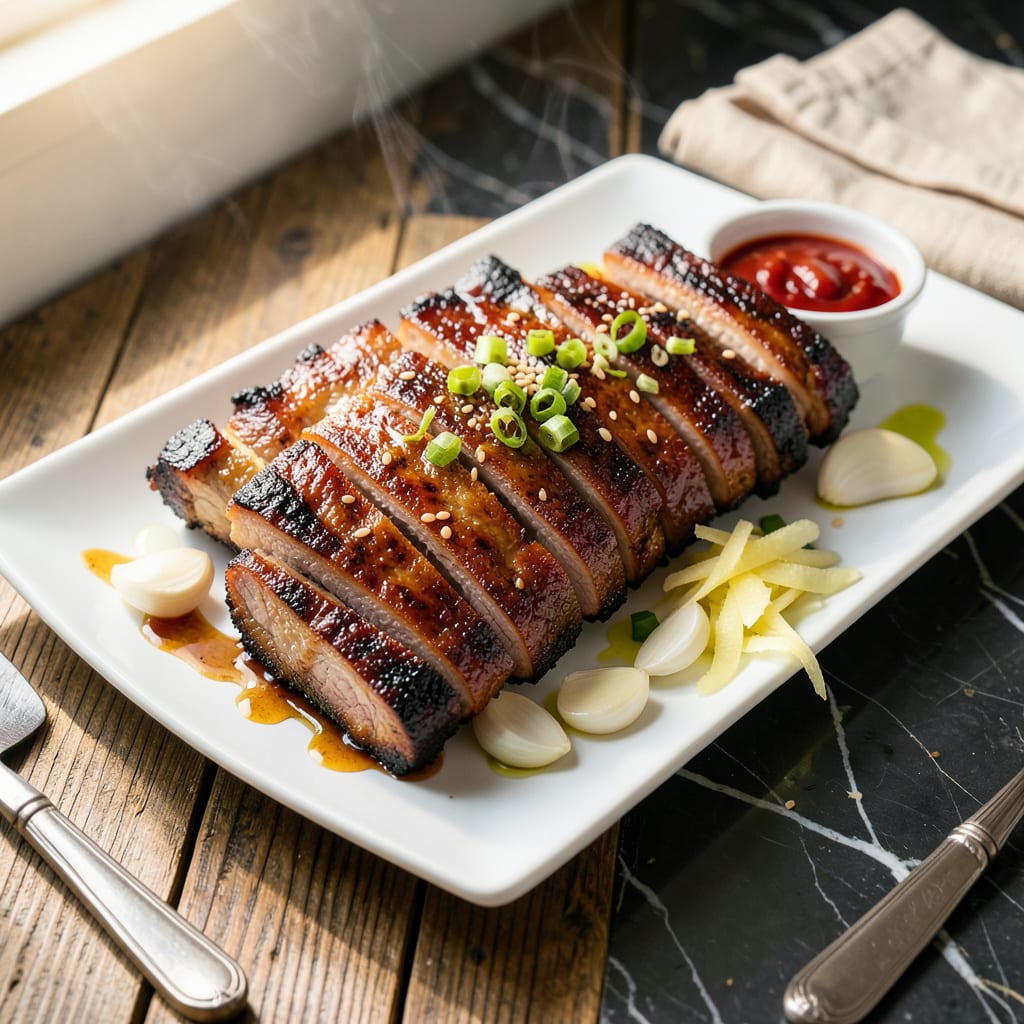
I still remember the first time hickory smoke mingled with Korean marinade at my family cookout. This dish transforms pork ribs into a sweet and smoky masterpiece with traditional techniques.
Marinated ribs meet high heat to develop a caramelized crust while staying tender inside. The balance of soy, sugar, and garlic creates complex flavors that define authentic Korean BBQ.
Ingredients for Korean Bbq Pork Ribs
Sweet, smoky, and packed with umami—these ribs need just a few hours to marinate.
| Ingredient | Amount | Notes |
|---|---|---|
| Pork Baby Back Ribs 🍖 | 3 lb | Racks trimmed of membrane |
| Soy Sauce 🫒 | ¾ cup | Low-sodium preferred for balance |
| Brown Sugar 🍚 | ½ cup | Packed, light or dark |
| Garlic Cloves 🧄 | 8 cloves | Minced for maximum flavor infusion |
| Fresh Ginger 🌿 | 2 tbsp | Peeled and finely grated |
| Gochujang 🌶️ | 3 tbsp | Korean chili paste for heat |
| Sesame Oil 🫒 | 2 tbsp | Toasted for depth of flavor |
| Rice Vinegar 💧 | 2 tbsp | Balances sweetness in marinade |
| Green Onions 🧅 | 4 whole | Thinly sliced for garnish |
| Asian Pear 🍐 | ½ whole | Peeled and grated (optional tenderizer) |
| Black Pepper 🌶️ | 1 tsp | Freshly ground for best results |
| Hickory Wood Chips 🪵 | 1 cup | Soaked for smoking |
| Toasted Sesame Seeds 🌰 | 2 tbsp | For garnish and crunch |
[recipeingredientscaler]
The ribs are everything here. Baby back ribs give you that perfect meat-to-bone ratio, and most butchers will trim the membrane for you if you ask nicely. I always grab mine from Costco for bulk savings, but Whole Foods has great organic options too. Look for ribs with good marbling—this keeps them juicy through the long cooking process (worth the extra minute to check).
No gochujang? Sriracha plus a pinch of sugar gets you close, but the fermented complexity won’t be the same. Asian pear is a traditional tenderizer—substitute with 2 tbsp pineapple juice if you can’t find it. The soy sauce can be tamari for gluten-free, and coconut sugar works at a 1:1 ratio for the brown sugar. Don’t skip the sesame oil—it’s the soul of the marinade.
Marinate the ribs overnight for maximum flavor penetration. They’ll keep in the fridge for 2 days before cooking, but don’t go longer or the acidity starts to break down the meat. Leftovers? Reheat gently in a 300°F oven wrapped in foil—they’ll stay tender for 3 days.
Why You’ll Love This Recipe
- Hands-Off Cooking: I toss the ribs with soy, brown sugar, garlic, and ginger, then let the oven do the work—no babysitting required.
- Sticky Sweet Heat: The brown sugar caramelizes with the soy and garlic into this glossy, finger-licking glaze that clings to every rib.
- Crowd-Pleasing Feast: I serve these at summer cookouts, and they disappear faster than I can refill the platter.
- Leftovers? Even Better: Honestly, the flavors deepen overnight, so I always make extra for next-day sandwiches.
Step-by-Step Instructions for Korean BBQ Pork Ribs
This method delivers tender ribs with a sticky-sweet glaze that caramelizes beautifully on the grill.
Step 1: Prepare the Ribs and Marinade
Start by removing the membrane from the 3 lb pork baby back ribs. Slide your fingers under the thin membrane at one end, then pull it off in one sheet. This ensures the marinade penetrates the meat directly for maximum flavor.
In a bowl, whisk together the 0.75 cup soy sauce, 0.5 cup brown sugar, 8 cloves minced garlic cloves, 2 tbsp grated fresh ginger, 3 tbsp gochujang, 2 tbsp sesame oil, and 2 tbsp rice vinegar until the brown sugar dissolves completely. For extra tenderness, add the 0.5 whole peeled and grated Asian pear.
Step 2: Marinate and Soak Wood Chips
Place the ribs in a large resealable bag and pour the marinade over them. Massage the marinade into the meat, ensuring every surface is coated. Seal and refrigerate for at least 4 hours, or preferably overnight. The longer it marinates, the deeper the flavor penetration.
Meanwhile, soak the 1 cup hickory wood chips in water for at least 30 minutes. This prevents them from burning too quickly on the grill and ensures a steady, aromatic smoke. Drain them just before you’re ready to start grilling.
Step 3: Grill with Indirect Heat
Preheat your grill to medium heat (350-375°F). If using a charcoal grill, bank the coals to one side. For a gas grill, turn off the center burners and leave the outer ones on. Add the soaked hickory wood chips to the hot coals or place them in a smoker box on the gas grill.
Remove the ribs from the marinade (reserve the marinade for basting) and sprinkle both sides with the 1 tsp black pepper. Place the ribs bone-side down on the cooler side of the grill. Cover and cook for 1.5 to 2 hours, turning and basting with the reserved marinade every 20-30 minutes.
Step 4: Finish and Garnish
During the last 10 minutes of cooking, move the ribs to the hotter side of the grill to caramelize the glaze. Watch closely to prevent burning—the sugar in the marinade can char quickly.
Transfer the ribs to a cutting board and let them rest for 5-10 minutes. Slice between the bones into individual ribs and arrange on a platter. Garnish with the thinly sliced 4 whole green onions and sprinkle with the 2 tbsp toasted sesame seeds for added texture and visual appeal.
Pro Tips For Making Korean Bbq Pork Ribs
- Parboil the Ribs: Simmer the ribs for 20-30 minutes before marinating to remove impurities and help the meat absorb the soy-garlic-glaze better—I learned this the hard way after my first few batches turned out chewy.
- Grate the Ginger: Fresh ginger is non-negotiable here, and grating it (instead of mincing) releases more of its juice and flavor into the marinade, which makes a real difference in the final taste.
- Skip the Overcrowding: Resist the urge to pile all the ribs in one layer when grilling or baking—giving them space guarantees even caramelization on the brown sugar glaze.
- Rest Before Serving: After cooking, tent the ribs with foil and let them sit for 10 minutes so the juices redistribute—sounds weird, but it works and keeps them from drying out.
Regional Styles of korean bbq pork ribs
Seoul-Style Galbi
The most traditional approach uses beef short ribs (galbi), but pork ribs work beautifully too. In Seoul, you’ll find these cooked on tabletop grills with a heavier emphasis on soy sauce and pear puree for tenderness. I love the communal aspect of this style. 🔥
Busan Spicy Variation
Down south in Busan, they amp up the heat with extra gochujang and often add gochugaru (Korean chili flakes) to the marinade. The result is fiery and deeply savory. I’ve had versions with 1 tbsp gochugaru that left a lasting impression.
Jeju Island Citrus
Jeju’s version incorporates local hallabong (a citrus fruit) for brightness. Since hallabong can be hard to find, I substitute orange zest and a splash of juice. It cuts through the richness while keeping the marinade authentically Korean.
Royal Court Style
Historically, Korean royalty enjoyed a more refined version with honey instead of brown sugar and pine nuts for garnish. The honey creates a glossier glaze, while pine nuts add a delicate crunch. I save this for special occasions.
Modern Fusion
In Los Angeles’ Koreatown, you’ll find fusion takes with miso paste or sriracha blended into the marinade. These adaptations reflect the immigrant experience, blending traditions with local tastes. Honestly, some of these are my new favorites.
Nutrition Facts

Trained in classic French technique but raised on slow-cooked ribs and spicy rubs, she blends culinary skill with smoke and soul.
- Recipe for Boneless Pork Chops in Cast Iron Skillet: Sear and Baste to Juicy Perfection - October 3, 2026
- Recipe for Boneless Cross Rib Roast: Slow-Roasted Beef with Herb Crust - October 3, 2026
- Hamburgers in Sauce Recipe Crock Pot: Slow-Cooked Savory Delight - October 3, 2026