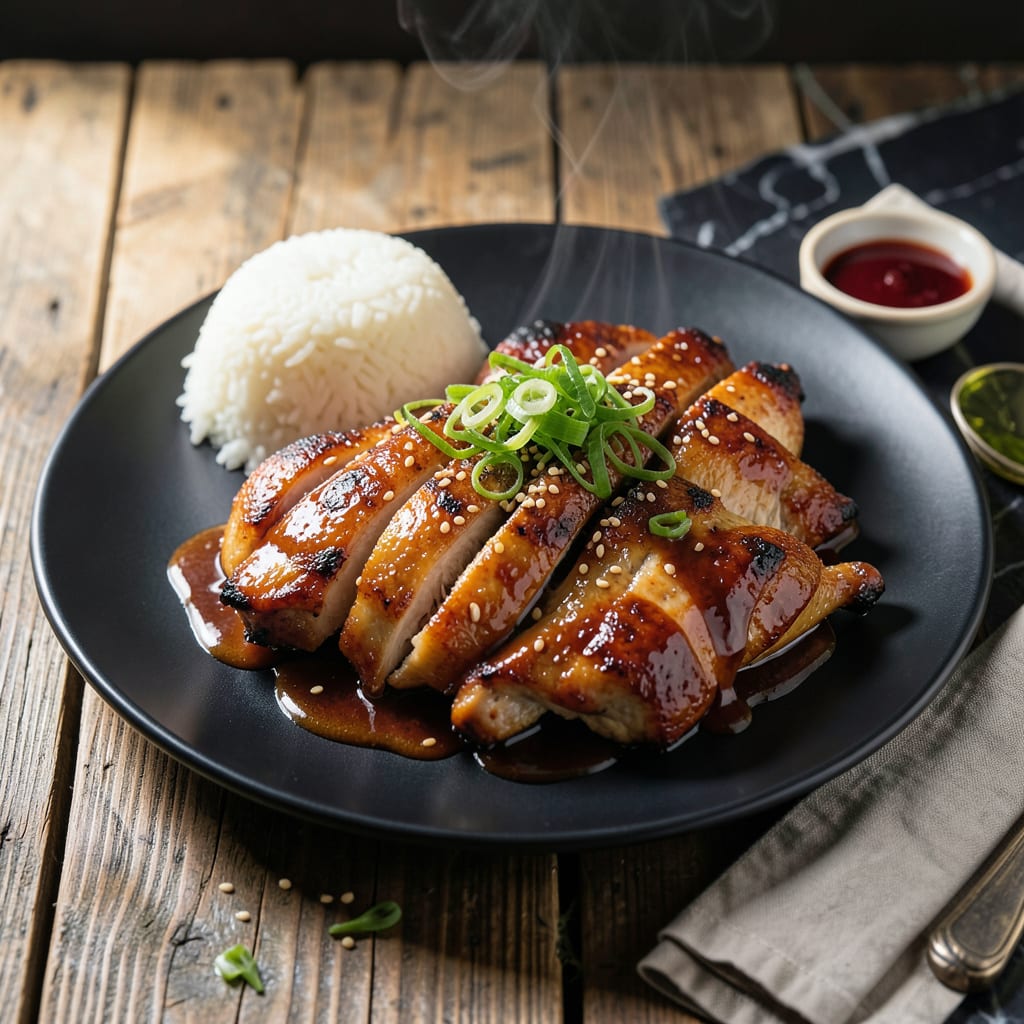
This oven-baked chicken delivers perfectly caramelized Korean BBQ flavors without the grill. The sauce transforms into a glossy glaze that clings to every piece.
With a balance of sweet, spicy, and savory notes, this dish achieves restaurant-quality results through a simple baking method. The high heat ensures sticky, finger-licking goodness.
Ingredients for Korean Bbq Sauce Chicken Oven
Every ingredient here builds that signature sticky-sweet Korean BBQ glaze, ready for the oven.
| Ingredient | Amount | Notes |
|---|---|---|
| Boneless Skinless Chicken Thighs 🍗 | 2 lb | Patted dry for crispiness |
| Gochujang 🌶️ | ½ cup | Korean chili paste, mild or hot |
| Soy Sauce 🫒 | ¼ cup | Low-sodium preferred for balance |
| Brown Sugar 🍚 | ⅓ cup | Light or dark, packed firmly |
| Honey 🍯 | 3 tbsp | Substitute agave if needed |
| Rice Vinegar 💧 | 2 tbsp | Unseasoned for clean acidity |
| Fresh Garlic Cloves 🧄 | 4 cloves | Minced finely for even distribution |
| Fresh Ginger Root 🌿 | 1 tbsp | Grated, peel removed first |
| Sesame Oil 🫒 | 1 tbsp | Toasted for depth of flavor |
| Cornstarch 🌾 | 1 tbsp | For thickening the glaze |
| Toasted Sesame Seeds 🌰 | 1 tbsp | For garnish, light golden color |
| Green Onions 🧅 | 3 whole | Thinly sliced for fresh finish |
| Neutral Oil 🫒 | 1 tbsp | Avocado or vegetable oil |
| Kosher Salt 🧂 | 1 tsp | Diamond Crystal preferred |
| Ground Black Pepper 🌶️ | ½ tsp | Freshly ground for best results |
[recipe_ingredient_scaler]
The gochujang is non-negotiable—look for it in the Asian aisle at Whole Foods or H Mart. For the best flavor, choose a brand with minimal additives like Sempio or CJ. Chicken thighs stay juicier than breasts through the high-heat baking. If your grocery store doesn’t carry fresh ginger, organic tubed ginger (the kind in the produce section) works in a pinch, though fresh is superior.
Short on time? Pre-minced garlic in jars saves a step (drain the liquid first). No gochujang? Miso paste plus sriracha can approximate the flavor, but the depth won’t be the same. Brown sugar can be swapped for coconut sugar, though the caramelization might differ slightly. For a gluten-free version, tamari replaces soy sauce without issue.
The sauce keeps in the fridge for 1 week before using—great for meal prep. Baked chicken stores well too, 4-5 days refrigerated. Reheat in the oven to revive the sticky texture. Freeze the sauce for 3 months if making ahead.
Why You’ll Love This Recipe
- One Pan Magic: I toss everything on a sheet pan and let the oven do the work—no babysitting, no flipping.
- Sweet Spicy Bliss: Gochujang’s heat meets honey’s sweetness, and the thighs soak it all up like a flavor sponge.
- Feeds the Week: Leftovers taste even better the next day, packed over rice or stuffed in a wrap.
- Budget Winner: Thighs stay juicy and cost half what breasts do, and a little sauce goes a long way.
Step-by-Step Instructions for Korean BBQ Sauce Chicken
Master the technique for achieving that signature sticky, caramelized glaze with tender chicken every time.
Step 1: Prepare and Season the Chicken
Pat all 2 lb Boneless Skinless Chicken Thighs completely dry with paper towels. This critical step ensures proper browning and helps the glaze cling to the meat. Season both sides evenly with the 1 tsp Kosher Salt and 0.5 tsp Ground Black Pepper.
Arrange the thighs in a single layer on a rimmed baking sheet. I always use a wire rack on the baking sheet to allow air circulation, which prevents steaming and promotes even cooking. Let the seasoned chicken rest at room temperature for 15 minutes while you prepare the glaze.
Step 2: Create the Korean BBQ Glaze
In a medium saucepan, combine the 0.5 cup Gochujang, 0.25 cup Soy Sauce, 0.33 cup Brown Sugar, 3 tbsp Honey, 2 tbsp Rice Vinegar, minced 4 cloves Fresh Garlic Cloves, and grated 1 tbsp Fresh Ginger Root. Whisk until smooth and all the brown sugar dissolves.
Place the saucepan over medium heat and bring to a gentle simmer. Cook for 5-7 minutes, stirring frequently, until the mixture thickens slightly and darkens. In a small bowl, mix the 1 tbsp Cornstarch with 2 tbsp of water to create a slurry, then whisk it into the simmering glaze. Continue cooking for 1-2 minutes until it reaches a syrupy consistency that coats the back of a spoon.
Step 3: Bake and Glaze the Chicken
Preheat your oven to 400°F. Drizzle the 1 tbsp Neutral Oil over the seasoned chicken thighs and toss to coat evenly. Bake on the middle rack for 20 minutes, then flip each piece and bake for an additional 10 minutes.
Remove the chicken from the oven and brush generously with the glaze on all sides. Return to the oven and bake for another 8-10 minutes, basting with more glaze halfway through, until the chicken reaches an internal temperature of 175°F and the glaze has caramelized into a sticky, glossy coating.
Step 4: Rest, Garnish, and Serve
Transfer the glazed chicken to a serving platter and let it rest for 5 minutes. This allows the juices to redistribute, ensuring moist, tender meat. While the chicken rests, drizzle any remaining glaze over the top and sprinkle with the 1 tbsp Toasted Sesame Seeds and thinly sliced 3 whole Green Onions.
Finally, drizzle the 1 tbsp Sesame Oil over the chicken for an extra layer of aroma and richness. The sesame oil should be added at the end to preserve its delicate flavor. Serve immediately while the glaze is still glossy and the sesame seeds are crisp.
Pro Tips For Making Korean Bbq Sauce Chicken Oven
- Preheat the Oven: Crank it to 400°F—any lower and the gochujang-sugar glaze won’t caramelize properly, just steam. I learned this the hard way after pulling out pale, sad chicken.
- Trim the Thighs: Snip off excess fat or connective tissue from the boneless thighs so the sauce clings evenly. Sounds tedious, but it actually changes the outcome.
- Skip the Overcrowding: Leave space between pieces on the tray—otherwise, they’ll stew instead of roast. After burning three batches, I finally figured out the steam was the culprit.
- Thin the Honey: Warm the honey for 10 seconds in the microwave before mixing with gochujang and soy sauce. Makes a real difference in how smoothly it coats the chicken.
Flavor Customization for These Flavors
Spice Level Adjustments
For milder heat, reduce the gochujang to ⅓ cup and add 2 tbsp tomato paste to maintain thickness. I often do this for friends who prefer less fire. For extra kick, add 1 tsp gochugaru (Korean chili flakes) to the glaze. 🌶️
Sweetness Variations
Swap the brown sugar for coconut sugar for a deeper, caramel-like flavor. For a lighter touch, reduce honey to 2 tbsp and add 1 tbsp maple syrup. The sweetness should balance the heat without overwhelming it.
Umami Boosters
Add 1 tbsp fish sauce or 1 tsp anchovy paste to the glaze for an extra savory depth. I discovered this trick at a local BBQ competition—it enhances the Korean flavors beautifully. A splash of 1 tbsp mirin adds subtle sweetness too.
Fruity Twists
Stir in ¼ cup pineapple juice to the glaze for a tropical note. For a bold move, add 2 tbsp grated Asian pear—it tenderizes the chicken while adding natural sweetness. These tweaks work well with the sticky-sweet foundation.
Herbal Infusions
Forage some wild Korean perilla leaves or add 1 tsp dried thyme to the glaze for an earthy dimension. I love adding these to dishes after my coastal rides. A sprinkle of toasted nori flakes before serving adds seaweed umami.
Crunchy Toppings
Beyond sesame seeds, try topping with crushed roasted peanuts or fried shallots for extra texture. The contrast with the sticky glaze is incredible. I sometimes mix in 1 tsp furikake for a Japanese-Korean fusion touch. 💛
Nutrition Facts

Trained in classic French technique but raised on slow-cooked ribs and spicy rubs, she blends culinary skill with smoke and soul.
- Recipe for Boneless Pork Chops in Cast Iron Skillet: Sear and Baste to Juicy Perfection - October 3, 2026
- Recipe for Boneless Cross Rib Roast: Slow-Roasted Beef with Herb Crust - October 3, 2026
- Hamburgers in Sauce Recipe Crock Pot: Slow-Cooked Savory Delight - October 3, 2026