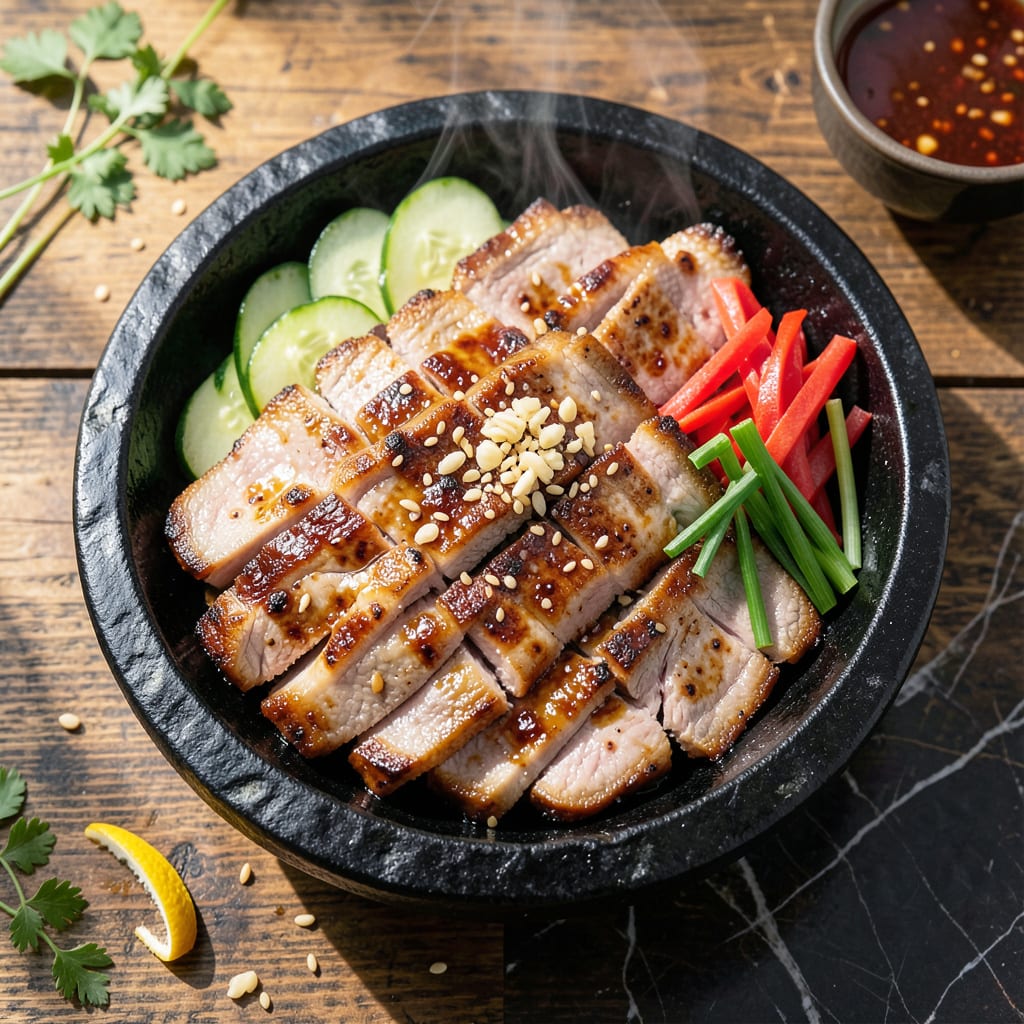
This marinade transforms tender pork tenderloin into a caramelized, flavor-packed masterpiece. The balance of sweet and savory creates depth that rivals any Korean BBQ joint.
With just a few hours of marinating time, this dish delivers restaurant-quality results at home. The secret is in the precise ratio of soy, sugar, and aromatic ingredients.
Ingredients for Korean Bbq Pork Tenderloin
Transform pork tenderloin with this balanced Korean-inspired marinade for restaurant-quality results at home.
| Ingredient | Amount | Notes |
|---|---|---|
| Pork Tenderloin 🥩 | 1 ½ lb | Trimmed of silver skin |
| Soy Sauce 🥢 | ½ cup | Low-sodium for balance |
| Brown Sugar 🍚 | ¼ cup | Light or dark works |
| Garlic Cloves 🧄 | 6 cloves | Minced finely for even flavor |
| Fresh Ginger 🌿 | 1 tbsp | Grated or minced |
| Sesame Oil 🫒 | 1 tbsp | Toasted for depth |
| Rice Vinegar 🍯 | 2 tbsp | Balances sweetness |
| Gochujang 🌶️ | 2 tbsp | Korean chili paste essential |
| Asian Pear 🍐 | ½ whole | Grated, adds natural sweetness |
| Green Onions 🧅 | 4 whole | Thinly sliced for garnish |
| Toasted Sesame Seeds 🌰 | 1 tbsp | For finishing touch |
| Black Pepper 🌶️ | 1 tsp | Freshly ground preferred |
| Vegetable Oil 🫒 | 1 tbsp | High smoke point for searing |
[recipe_ingredient_scaler]
The pork tenderloin must be fresh with a rosy hue—avoid grayish or dried-out cuts. Whole Foods or Costco offer consistent quality, while Asian markets often carry pre-trimmed options. For gochujang, Sempio or Kochukaru brands deliver authentic flavor. The sesame oil should be toasted, not raw; look for Kadokawa or Ottogi for the best aroma.
No gochujang? Sriracha plus 1 tsp miso paste approximates the depth. Brown sugar can be swapped for honey or coconut sugar at 1:1 ratio. Asian pear not available? Grated apple or pineapple works as a tenderizer. For a gluten-free version, use tamari instead of soy sauce. The ginger and garlic can be swapped for paste at half the quantity.
Marinate the pork for at least 4 hours, preferably overnight, for maximum flavor penetration. Leftovers keep in the fridge for 3-4 days or freeze for up to 3 months. Always bring meat to room temperature before cooking for even doneness.
Why You’ll Love This Recipe
- One Pan Marvel: I toss the pork with soy, brown sugar, garlic and ginger, let it marinate, then roast—single pan, minimal cleanup.
- Flavor Bomb: That sweet-spicy garlic-ginger glaze caramelizes into a sticky crust that’s honestly hard to resist.
- Weeknight Hero: Between us, it’s my go-to for busy evenings—prep in the morning, dinner in 30 minutes flat.
- Stretches Far: One tenderloin feeds four with leftovers that taste even better the next day in a sandwich or stir-fry.
Step-by-Step Instructions for Korean BBQ Pork Tenderloin
Master the marinade timing and searing technique for fall-apart tender results every time.
Step 1: Prepare the Marinade Base
In a bowl, whisk together the 0.5 cup soy sauce, 0.25 cup brown sugar, 2 tbsp rice vinegar, 2 tbsp gochujang, and 1 tbsp sesame oil until the brown sugar fully dissolves. The mixture should be smooth with no visible sugar granules.
Add the 6 cloves garlic cloves (minced) and 1 tbsp fresh ginger (grated), stirring to distribute evenly. I find that letting this base sit for 5 minutes allows the flavors to begin melding before adding the remaining ingredients.
Step 2: Incorporate the Asian Pear and Season
Grate the 0.5 whole Asian pear directly into the marinade. The pear’s natural enzymes work as a tenderizer, ensuring the pork remains juicy. Stir in the 1 tsp black pepper—freshly ground makes all the difference in flavor intensity.
This is the moment that matters: taste the marinade now. It should balance sweet, salty, and umami with a subtle heat from the gochujang. Adjust the sweetness or spice if needed, but remember the pork will mellow these flavors during marination.
Step 3: Marinate the Pork Tenderloin
Place the 1.5 lb pork tenderloin (trimmed of silver skin) in a resealable bag or shallow dish. Pour the marinade over, ensuring all surfaces are coated. Massage the marinade into the meat for 30 seconds to help it penetrate.
Refrigerate for at least 4 hours, but overnight yields the most tender and flavorful results. The pork should develop a slightly tacky surface as it absorbs the marinade. Don’t skip this—rushing the marination leads to uneven flavor and texture.
Step 4: Sear and Finish the Pork
Heat 1 tbsp vegetable oil in a large skillet over medium-high heat until it shimmers. Remove the pork from the marinade (reserve the marinade) and sear on all sides for 2-3 minutes per side until deep golden brown.
Reduce heat to medium, pour the reserved marinade into the skillet, and cover. Simmer for 12-15 minutes, turning the pork occasionally, until the internal temperature reaches 145°F. The marinade will thicken slightly into a glossy sauce.
Step 5: Rest and Garnish for Serving
Transfer the pork to a cutting board and let it rest, tented with foil, for 10 minutes. This allows the juices to redistribute, ensuring every slice stays moist. Thinly slice the pork against the grain for maximum tenderness.
Garnish with the 4 whole green onions (thinly sliced) and 1 tbsp toasted sesame seeds just before serving. The green onions add a fresh contrast to the rich, savory pork, while the sesame seeds provide a nutty crunch.
Pro Tips For Making Korean Bbq Pork Tenderloin
- Slice Thin Against Grain: Cut the pork tenderloin into 1/4-inch slices before marinating—this maximizes surface area for the soy-brown sugar glaze and guarantees tender bites. I learned this the hard way after chewing through thick, stubborn pieces.
- Bloom Garlic and Ginger: Sauté the minced garlic and ginger in a little oil for 30 seconds before adding to the marinade—it deepens their flavor and removes any raw bite. Sounds weird, but it works.
- Don’t Overcook Tenderloin: Pull the pork off the heat at 140°F internal temp—it’ll rise to 145°F while resting. After burning three batches, I finally figured out tenderloin dries out fast if you push it past this.
- Use Fresh Ginger Only: Skip the powdered stuff; fresh ginger’s bright, zesty kick is non-negotiable in Korean BBQ marinades. My grandmother swore by this, and she was right.
Health Benefits of This Dish
Lean Protein Boost
Pork tenderloin is one of the leanest cuts, packing 26 grams of protein per 3-ounce serving with only 4 grams of fat. This makes it ideal for muscle repair and satiety without excess calories. I love how it fuels my coastal rides without weighing me down. 💪
Rich in B Vitamins
This cut delivers a powerhouse of B vitamins, especially B6 and B12, which support energy metabolism and nervous system health. Just one serving provides about 30% of your daily B6 needs and 20% of B12.
Iron and Zinc Source
Pork tenderloin contains heme iron, which your body absorbs more easily than plant-based iron. It also provides zinc, crucial for immune function. A 3-ounce serving offers about 10% of your daily iron and 15% of zinc.
Low in Saturated Fat
With only 1.5 grams of saturated fat per serving, this cut is heart-healthy compared to other meats. The marinade’s soy sauce and sesame oil add healthy unsaturated fats, making this dish a balanced choice.
Antioxidant Benefits
The garlic and ginger in the marinade aren’t just flavorful—they’re packed with antioxidants. Garlic supports immune health, while ginger aids digestion. Together, they enhance the dish’s nutritional profile beautifully. ✨
Natural Tenderizer
The Asian pear in the marinade contains enzymes that naturally tenderize the meat, making it easier to digest. This traditional Korean technique also adds a touch of natural sweetness without refined sugar.
Nutrition Facts

Trained in classic French technique but raised on slow-cooked ribs and spicy rubs, she blends culinary skill with smoke and soul.
- Recipe for Boneless Pork Chops in Cast Iron Skillet: Sear and Baste to Juicy Perfection - October 3, 2026
- Recipe for Boneless Cross Rib Roast: Slow-Roasted Beef with Herb Crust - October 3, 2026
- Hamburgers in Sauce Recipe Crock Pot: Slow-Cooked Savory Delight - October 3, 2026