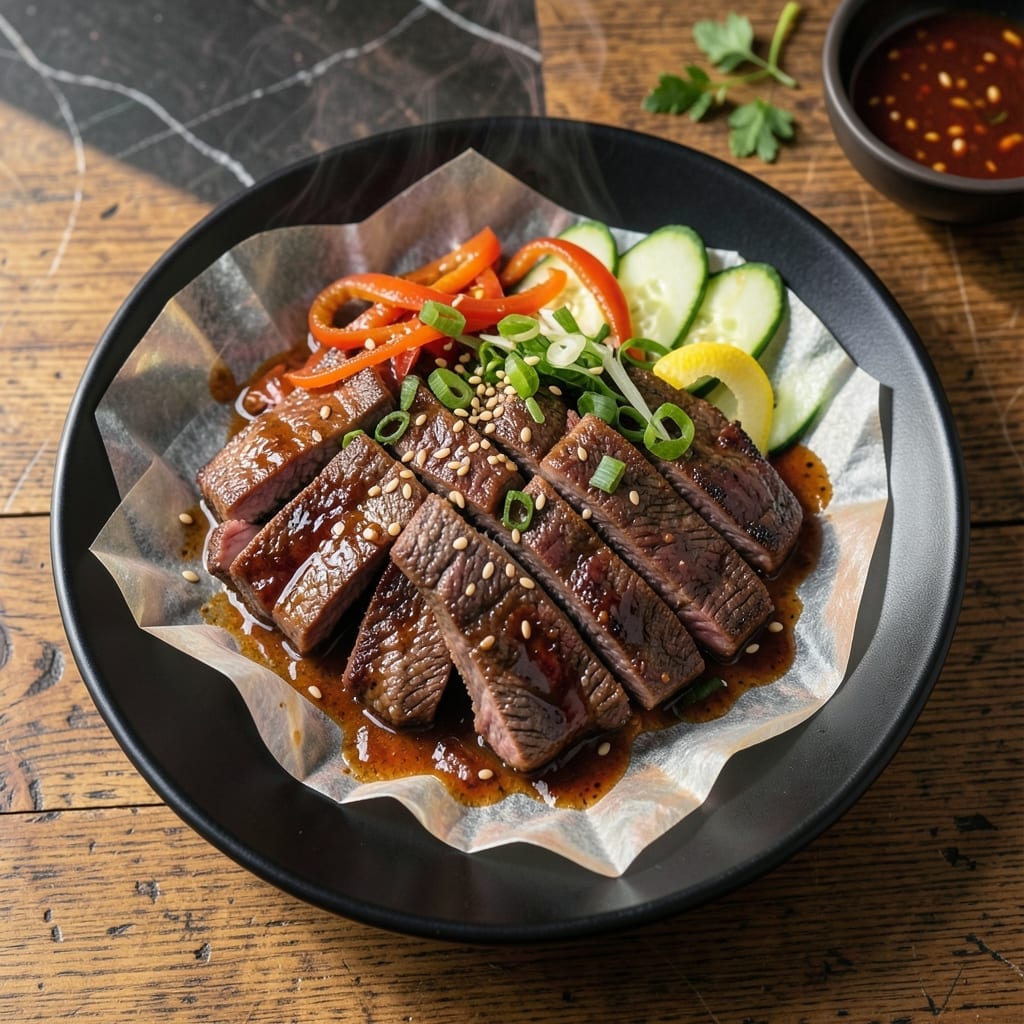
This recipe transforms simple rice paper into crispy, flavor-packed wraps filled with tender Korean BBQ beef. The marinade is the star, balancing sweet, savory, and umami notes perfectly.
Each bite delivers a satisfying crunch with juicy, caramelized meat inside. The technique ensures the wraps stay intact while achieving that signature crispy texture.
Ingredients for Korean Bbq Rice Paper
Transform simple wrappers with bold marinated beef and crisp texture for standout results.
| Ingredient | Amount | Notes |
|---|---|---|
| Rice Paper Wrappers 🍚 | 12 sheets | 8-inch diameter, spring roll variety |
| Ribeye Steak 🥩 | 1 ½ lb | Thinly sliced against the grain |
| Soy Sauce 🫒 | ½ cup | Low-sodium preferred for balance |
| Brown Sugar 🍚 | ¼ cup | Packed, for caramelization |
| Garlic Cloves 🧄 | 6 cloves | Minced finely for marinade |
| Fresh Ginger 🌿 | 1 tbsp | Finely grated, peeled first |
| Sesame Oil 🫒 | 2 tbsp | Toasted variety for depth |
| Rice Vinegar 🫒 | 2 tbsp | Unseasoned for acidity balance |
| Gochujang 🌶️ | 2 tbsp | Korean chili paste for heat |
| Pear 🍐 | ½ whole | Asian pear, grated for tenderness |
| Green Onions 🧅 | 4 whole | Thinly sliced for garnish |
| Sesame Seeds 🌰 | 2 tbsp | Toasted for garnish |
| Neutral Oil 🫒 | ½ cup | For frying, high smoke point |
| Kosher Salt 🧂 | 1 tsp | Diamond Crystal preferred |
| Black Pepper 🌶️ | ½ tsp | Freshly ground for best flavor |
[recipe_ingredient_scaler]
The beef selection is critical for optimal texture. Ribeye offers the perfect fat marbling for juicy, tender results—flank steak works as a leaner alternative. Source from Whole Foods or a trusted butcher for quality cuts. Ensure the rice paper wrappers are spring roll variety (8-inch diameter) for proper crispness. Asian pears add natural sweetness and tenderness to the marinade.
Substitute brown sugar with coconut sugar for a deeper flavor profile. No gochujang? Sriracha plus miso paste (1 tbsp each) mimics the complexity. Beef broth with a dash of soy sauce can replace pear in a pinch. For gluten-free, use tamari instead of soy sauce. The sesame oil must be toasted—light sesame oil lacks depth.
Marinated beef keeps 2-3 days in the fridge; freeze for up to 3 months. Rice paper wrappers dry out quickly—store in an airtight container with a damp towel. Toast sesame seeds just before serving for maximum crunch. Leftovers reheat best in an air fryer to maintain crispness.
Why You’ll Love This Recipe
- No Cook Wraps: I just soak the rice paper, fill with steak, and roll—no stove needed for assembly.
- Sweet & Savory: The ribeye soaks up that soy-brown sugar–garlic marinade like it was born for it.
- Feeds a Party: I set out a platter with fixings and everyone builds their own wraps at the table.
- Leftovers Reinvented: Honestly, cold marinated steak slices taste even better the next day in a salad.
Step-by-Step Instructions for Korean BBQ Rice Paper Wraps
Master the technique for achieving perfectly crispy rice paper with deeply marinated ribeye every time.
Step 1: Prepare the Korean BBQ Marinade
In a mixing bowl, combine the 0.5 cup soy sauce, 0.25 cup brown sugar, minced 6 cloves garlic cloves, grated 1 tbsp fresh ginger, 2 tbsp sesame oil, 2 tbsp rice vinegar, and 2 tbsp gochujang. Whisk until the brown sugar fully dissolves and the marinade appears smooth and glossy.
Next, finely grate the 0.5 whole pear (peeled first) directly into the marinade. The natural enzymes in the pear act as a tenderizer while adding subtle sweetness. Stir in the 1 tsp kosher salt and 0.5 tsp black pepper to complete the marinade base.
Step 2: Marinate and Slice the Ribeye
Place the 1.5 lb ribeye steak in a resealable plastic bag or shallow dish. Pour the prepared marinade over the steak, ensuring all surfaces are coated. Marinate at room temperature for 30 minutes, or refrigerate for up to 4 hours for deeper flavor penetration.
After marinating, slice the ribeye against the grain into thin strips, about ¼-inch thick. This cross-grain slicing ensures each piece remains tender during cooking. Pat the slices dry with paper towels to promote better searing, but reserve the marinade for later use.
Step 3: Fry the Rice Paper Wrappers
Heat 0.5 cup neutral oil in a deep skillet or Dutch oven over medium-high heat until it reaches 350°F. While the oil heats, submerge each of the 12 sheets rice paper wrappers in warm water for 5-8 seconds until pliable but not fully softened. They should still have a slight stiffness to hold their shape.
Carefully place a single wrapper in the hot oil and fry for 1-2 minutes per side until golden brown and puffed. The wrapper should expand slightly and develop a crisp texture. Use a slotted spoon to transfer to a paper towel-lined plate to drain excess oil. Repeat with remaining wrappers, maintaining oil temperature between batches.
Step 4: Cook the Marinated Ribeye
In a separate large skillet, heat a small amount of the reserved marinade over high heat until it begins to sizzle. Add the sliced ribeye in a single layer, working in batches if necessary to avoid overcrowding. Sear for 2-3 minutes per side until the edges are caramelized and the meat reaches your desired doneness.
The ribeye should develop a glossy, dark crust from the sugar in the marinade. Avoid stirring too frequently—let the meat develop a proper sear. Once cooked, transfer to a cutting board and let rest for 5 minutes before slicing further if needed.
Step 5: Assemble and Garnish
Place a crispy rice paper wrapper on a serving plate. Add a portion of the cooked ribeye to the center. Drizzle with any remaining cooked marinade for extra flavor. Garnish with thinly sliced 4 whole green onions and 2 tbsp sesame seeds, which should be lightly toasted for enhanced aroma.
Serve immediately while the rice paper is still crisp. The contrast between the tender, flavorful ribeye and the crispy wrapper should be evident in every bite. For best results, assemble just before eating to maintain the texture of the rice paper.
Pro Tips For Making Korean Bbq Rice Paper
- Pre-Soft Rice Paper: Dip rice paper in warm water for exactly 5-7 seconds—any longer and it’ll tear when you try to wrap. I learned this the hard way after ruining half a pack by over-soaking.
- Slice Against Grain: Cut the ribeye into paper-thin slices against the grain for maximum tenderness. Sounds tedious, but it actually changes the outcome—no one wants chewy Korean BBQ.
- Balance the Marinade: Use 1 part brown sugar to 2 parts soy sauce in your marinade to avoid a cloyingly sweet glaze. My grandmother swore by this ratio, and she was right.
- Skip the Overcrowding: Cook the steak in batches if needed—crowding the pan steams the meat instead of searing it. After burning three batches, I finally figured out patience pays off here.
Common Mistakes When Making This Dish
🔥 Overcrowding the Pan
Stuffing too many rice paper wraps into the pan at once lowers the temperature, leading to soggy, unevenly cooked wraps instead of crispy ones. This also makes flipping difficult and can cause sticking.
Fix: Cook in batches with space between each wrap. Use medium-high heat and a well-oiled pan to ensure even browning.
🍳 Skipping the Pre-Soak for Rice Paper
Dry rice paper can crack or tear when filled, ruining the texture and presentation. Without soaking, the wraps won’t soften enough to fold properly or cook evenly.
Fix: Dip each sheet in warm water for 5–10 seconds until pliable. Pat dry gently before filling to avoid excess moisture.
⏰ Overfilling the Wraps
Packing too much Korean BBQ and veggies into each wrap makes them burst open while cooking. This creates a mess and uneven cooking, with some bits burning before others cook through.
Fix: Use about 2–3 tablespoons of filling per wrap. Fold tightly but leave room for expansion as the ingredients heat up.
🌡️ Using Low Heat
Low heat results in steamed, rubbery rice paper instead of the desired crispy texture. The marinade’s sugars may also caramelize too slowly, leading to a bland flavor.
Fix: Heat the pan to medium-high before adding the wraps. Check for a slight sizzle when placing them down to confirm the right temperature.
Nutrition Facts

Trained in classic French technique but raised on slow-cooked ribs and spicy rubs, she blends culinary skill with smoke and soul.
- Recipe for Boneless Pork Chops in Cast Iron Skillet: Sear and Baste to Juicy Perfection - October 3, 2026
- Recipe for Boneless Cross Rib Roast: Slow-Roasted Beef with Herb Crust - October 3, 2026
- Hamburgers in Sauce Recipe Crock Pot: Slow-Cooked Savory Delight - October 3, 2026