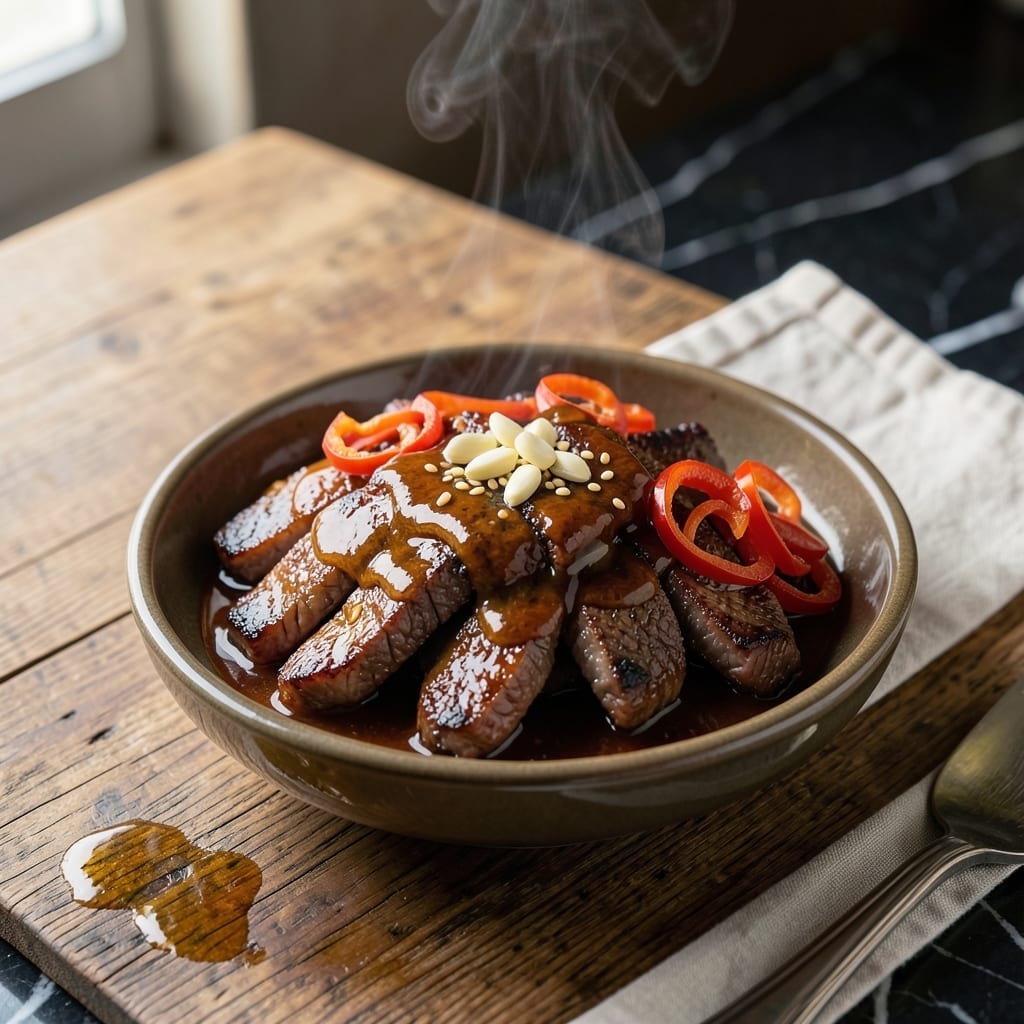
This Korean BBQ sauce delivers a sweet and savory punch with deep umami richness. It transforms simple stir fries into restaurant-quality dishes.
With just a few pantry staples, this versatile sauce comes together quickly. Use it as a marinade, glaze, or finishing touch for meats and vegetables.
Ingredients for Korean Bbq Stir Fry Sauce
These pantry staples create a bold, umami-packed sauce in minutes.
| Ingredient | Amount | Notes |
|---|---|---|
| Soy Sauce 🫒 | ½ cup | Low-sodium preferred for balance |
| Brown Sugar 🍚 | ⅓ cup | Packed, for deep sweetness |
| Rice Vinegar 🍯 | 3 tbsp | Unseasoned variety essential |
| Sesame Oil 🫒 | 1 tbsp | Toasted for rich aroma |
| Gochujang 🌶️ | 2 tbsp | Korean chili paste for heat |
| Garlic Cloves 🧄 | 4 cloves | Minced for maximum flavor |
| Fresh Ginger 🌿 | 1 tbsp | Peeled and finely grated |
| Honey 🍯 | 2 tbsp | For natural sweetness |
| Sesame Seeds 🌰 | 1 tbsp | Toasted for garnish |
[recipe_ingredient_scaler]
The gochujang is non-negotiable here—H Mart or Korean markets carry authentic versions. Soy sauce quality matters too; Kikkoman or Pearl River Bridge are solid choices. For the sesame oil, Kadoya is a reliable brand (the dark bottle protects the delicate flavor). Fresh ginger and garlic are key for that bright, punchy base. Skip the pre-minced stuff in jars—it’s never as vibrant.
No gochujang? Sriracha plus a pinch of sugar gets you close, but the depth won’t be the same. Brown sugar can be swapped for coconut sugar or maple syrup at a 1:1 ratio. Rice vinegar is ideal, but apple cider vinegar in a pinch. If you’re avoiding honey, agave or maple syrup works—just add a splash of water to thin slightly.
This keeps 1 week in the fridge if sealed tight. For longer storage, freeze in ice cube trays—perfect for portioning. The flavors actually deepen after a day, so make it ahead if you can.
Why You’ll Love This Recipe
- Five Minute Mix: I just dump all the ingredients in a bowl—soy sauce, brown sugar, rice vinegar, sesame oil, and gochujang—and stir. No cooking required.
- Sweet-Spicy Balance: The brown sugar caramelizes the gochujang’s heat while the rice vinegar cuts through, so every bite is complex but never overwhelming.
- Endless Uses: I’ve slathered this on chicken, tofu, and even roasted veggies. It’s my weeknight shortcut for turning plain meals into something special.
- Fridge Friendly: A batch keeps for weeks, so I always have a flavor boost ready. Honestly, it’s saved me from more than one last-minute dinner panic.
Step-by-Step Instructions for Korean BBQ Stir Fry Sauce
This method combines all ingredients in the right sequence for maximum flavor development.
Step 1: Bloom Aromatics in Sesame Oil
Heat a small saucepan over medium-low heat. Add the 1 tbsp Sesame Oil and allow it to warm for 30 seconds until it becomes fragrant but not smoking. Toasted sesame oil has a low smoke point, so keep the heat moderate to preserve its nutty aroma.
Add the 4 cloves Garlic Cloves and 1 tbsp Fresh Ginger, stirring constantly for 1-2 minutes until the garlic turns light golden at the edges. This blooming process releases the essential oils and deepens their flavors, creating the aromatic foundation for your sauce.
Step 2: Combine Liquid Ingredients and Sweeteners
Pour in the 0.5 cup Soy Sauce, 3 tbsp Rice Vinegar, 0.33 cup Brown Sugar, and 2 tbsp Honey. Stir well to dissolve the brown sugar completely—this may take 2-3 minutes as the mixture comes to a gentle simmer.
The unseasoned rice vinegar provides a clean acidity that balances the sweetness, while the low-sodium soy sauce ensures you control the salt level. Maintain a gentle simmer, not a boil, to prevent the sugars from caramelizing too quickly and potentially burning.
Step 3: Incorporate Gochujang for Depth
Reduce heat to low and add the 2 tbsp Gochujang. Whisk vigorously for 1-2 minutes until the chili paste is fully incorporated and the sauce takes on a rich, reddish-brown hue. Gochujang can be thick and sticky, so persistent whisking prevents clumping.
Allow the sauce to simmer for an additional 3-4 minutes until it thickens slightly and the flavors meld. You’ll notice the sauce becomes glossy and coats the back of a spoon—this indicates it has reached the proper consistency.
Step 4: Finish and Store
Remove the saucepan from heat and let the sauce cool for 5 minutes. Stir in the 1 tbsp Sesame Seeds to distribute them evenly throughout the sauce. The residual heat will lightly toast the seeds, enhancing their nutty flavor without burning them.
Transfer to a clean, airtight jar or container. The sauce will continue to thicken slightly as it cools to room temperature. For best results, let it sit for at least 30 minutes before using to allow all the flavors to fully marry. This yields enough sauce for 4 servings.
Pro Tips For Making Korean Bbq Stir Fry Sauce
- Simmer the Sugar: Cook the brown sugar for 1-2 minutes in the soy sauce first—I learned this the hard way after ending up with gritty sauce because it never fully dissolved.
- Bloom the Gochujang: Fry the gochujang in a little sesame oil for 30 seconds before adding liquids. It deepens the flavor way more than just stirring it in cold.
- Skip the Boiling: Keep the heat at a gentle simmer, never a rolling boil, or the vinegar will overpower everything and the sauce will reduce too fast.
- Finish with Sesame: Stir in the sesame oil at the very end, off the heat—adding it early makes it taste bitter, and you lose that bright, nutty aroma.
Best Sauces and Condiments for This korean bbq stir fry sauce
Spicy Options 🔥
For those who love a kick in their Korean BBQ stir fry, gochujang is a must-try. This fermented red chili paste delivers deep, spicy-sweet flavors with a hint of umami. You can use it as a base for a homemade sauce by mixing it with soy sauce, garlic, and honey. If you prefer store-bought, Sempio Gochujang is a popular choice. For extra heat, add a dash of gochugaru (Korean chili flakes) or a drizzle of Sriracha.
Sweet and Tangy
Balance the savory notes with a sweet and tangy sauce. Bulgogi sauce is a classic option, blending soy sauce, brown sugar, pear puree, and garlic for a rich, caramelized finish. For a quick fix, CJ Bibigo Bulgogi Sauce works great. Another homemade favorite is a mix of honey, rice vinegar, and sesame oil—perfect for drizzling over grilled meats or veggies.
Umami-Packed
Deep, savory flavors shine in sauces like ssamjang, a thick, spicy-savory paste made from doenjang (soybean paste) and gochujang. It’s ideal for dipping or spreading on lettuce wraps. For a store-bought shortcut, Ottogi Ssamjang is a reliable pick. Another umami booster is soy-garlic sauce, combining soy sauce, minced garlic, and a touch of sesame oil for a simple yet flavorful option.
Nutrition Facts

Trained in classic French technique but raised on slow-cooked ribs and spicy rubs, she blends culinary skill with smoke and soul.
- Recipe for Boneless Pork Chops in Cast Iron Skillet: Sear and Baste to Juicy Perfection - October 3, 2026
- Recipe for Boneless Cross Rib Roast: Slow-Roasted Beef with Herb Crust - October 3, 2026
- Hamburgers in Sauce Recipe Crock Pot: Slow-Cooked Savory Delight - October 3, 2026