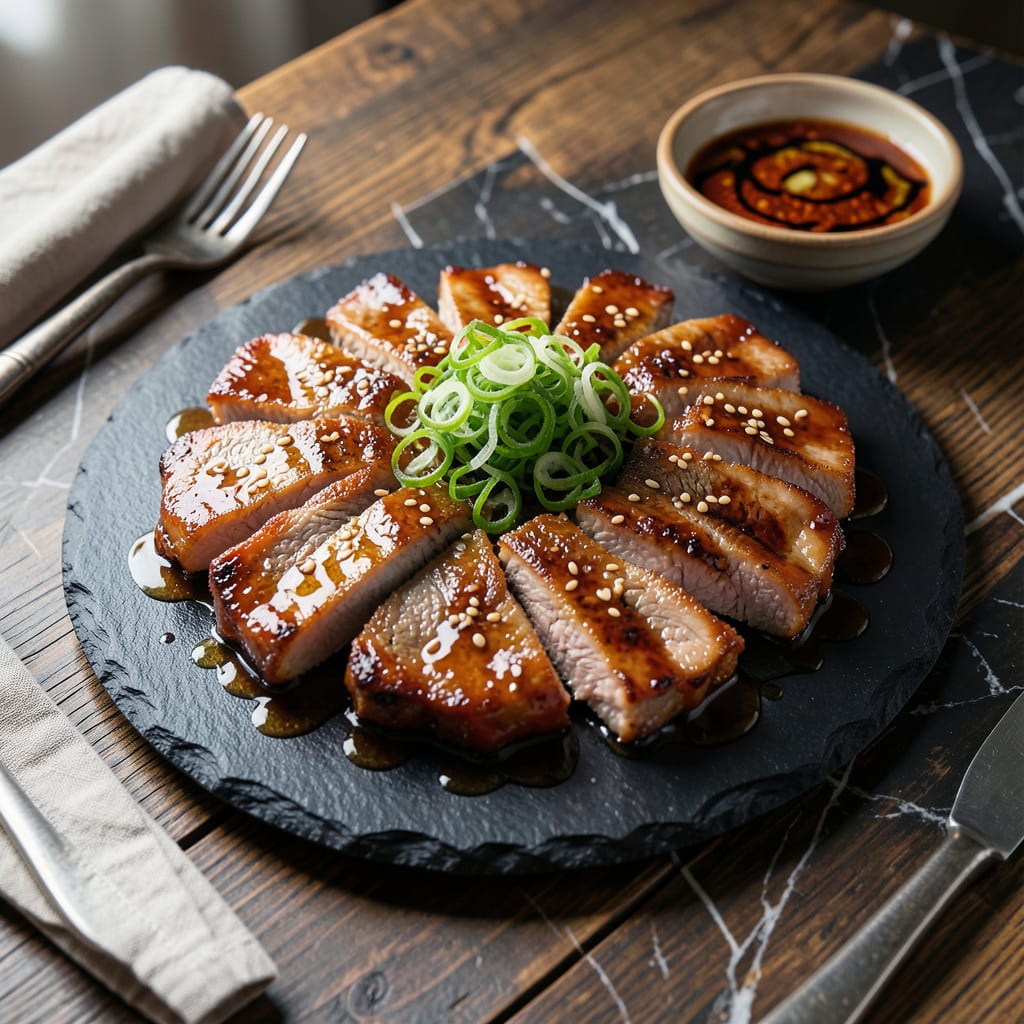
This Korean BBQ sauce delivers the perfect balance of sweet and spicy flavors to elevate any pork dish. The gochujang base provides depth while maintaining a smooth, glossy consistency.
With just a few simple ingredients and 10 minutes of prep, this sauce transforms grilled meats into restaurant-quality creations. Store in the fridge for up to a week for maximum versatility.
Ingredients for Korean Bbq Sauce Recipe for Pork
Nine ingredients transform into a glossy, balanced glaze for grilled pork.
| Ingredient | Amount | Notes |
|---|---|---|
| Gochujang 🌶️ | ½ cup | Korean red pepper paste, essential for depth |
| Soy Sauce 🫒 | ¼ cup | Low-sodium preferred for balance |
| Brown Sugar 🍚 | 3 tbsp | Packed, for caramelized sweetness |
| Rice Vinegar 💧 | 2 tbsp | Balances sweetness and spice |
| Sesame Oil 🫒 | 1 tbsp | Toasted for nutty aroma |
| Fresh Garlic Cloves 🧄 | 4 cloves | Minced for bold flavor |
| Fresh Ginger 🌿 | 1 tbsp | Grated, adds zesty warmth |
| Honey 🍯 | 2 tbsp | Smooths out heat, adds shine |
| Toasted Sesame Seeds 🌾 | 1 tsp | For garnish and texture |
[recipe_ingredient_scaler]
The gochujang is non-negotiable—look for Sempio or Chung Jung One brands at Asian markets or the international aisle. These have the right spice-to-sweetness ratio without additives. Fresh ginger and garlic are key for bright, zesty notes (the jarred stuff just won’t cut it). Trader Joe’s carries solid gochujang if you’re in a pinch, but check the label for added sugars.
Out of gochujang? Miso paste plus sriracha can substitute in a 2:1 ratio, though the flavor profile shifts. Brown sugar can be swapped for maple syrup or coconut sugar at a 1:1 ratio. No rice vinegar? Apple cider vinegar works, but reduce by half a teaspoon to avoid overpowering. Sesame oil is irreplaceable—don’t skip it.
This keeps beautifully in the fridge for 1 week (the flavors deepen over time). For longer storage, freeze in ice cube trays for 3 months. Bring to room temperature before using, as the cold dulls the spices. Always give it a stir before brushing on pork.
Why You’ll Love This Recipe
- 5-Minute Mix: I just stir gochujang, soy, brown sugar, vinegar and sesame oil in one bowl—no cooking, no fuss.
- Sweet-Spicy Kick: The gochujang and brown sugar give that sticky, caramelized glaze with a little heat I crave.
- Marinade or Glaze: I slather it on pork ribs for marinating or brush it on at the end for a glossy finish. Works both ways.
- Stretches for Days: One batch covers two meals—tonight’s dinner and tomorrow’s lunch wraps without breaking the bank.
Step-by-Step Instructions for Korean BBQ Sauce for Pork
This technique ensures maximum flavor extraction and perfect consistency every time.
Step 1: Bloom Aromatics in Sesame Oil
Heat the 1 tablespoon sesame oil in a medium saucepan over medium-low heat until it shimmers. Add the 4 cloves fresh garlic cloves and 1 tablespoon fresh ginger, stirring constantly for 45-60 seconds until fragrant but not browned.
This initial bloom releases the essential oils from the garlic and ginger, creating a flavor foundation that will carry through the entire sauce. The sesame oil’s nutty aroma will deepen as it heats, signaling it’s ready for the next ingredients.
Step 2: Combine Wet and Sweet Components
Add the 0.5 cup gochujang, 0.25 cup soy sauce, and 2 tablespoons rice vinegar to the saucepan. Stir well to combine, then add the 3 tablespoons brown sugar and 2 tablespoons honey. The mixture will thicken slightly as the sugar begins to dissolve.
As you stir, you’ll notice the sauce darken and become glossy. The gochujang will break down into the liquid, creating a smooth, vibrant red base. The vinegar’s acidity will balance the sweetness of the brown sugar and honey, while the soy sauce adds depth and umami.
Step 3: Simmer to Desired Consistency
Increase the heat to medium and bring the mixture to a gentle simmer. Reduce the heat to medium-low and let it cook for 8-10 minutes, stirring occasionally to prevent sticking.
The sauce should reduce slightly and coat the back of a spoon when ready. You’ll see small bubbles breaking at the surface as it simmers, and the aroma will become richer and more complex. The gochujang’s spiciness will mellow as it cooks, blending perfectly with the other flavors.
Step 4: Finish and Garnish
Remove the saucepan from heat and let the sauce cool for 5 minutes. The mixture will thicken further as it cools, reaching the perfect glaze consistency for brushing onto pork.
Just before serving or using, stir in the 1 teaspoon toasted sesame seeds. The seeds add a subtle crunch and visual appeal, while their toasty flavor complements the sauce’s depth. This sauce is now ready to elevate your pork dishes to restaurant-quality status.
Pro Tips For Making Korean Bbq Sauce Recipe For Pork
- Bloom the Gochujang: Cook the gochujang in a little sesame oil for 1-2 minutes before adding liquids—this deepens its flavor and removes the raw edge. I learned this the hard way after my first few batches tasted flat.
- Balance the Sweetness: Brown sugar can overpower, so start with half what you think you need, then adjust. The vinegar and soy will mellow it out as it simmers for 5-7 minutes.
- Skip the Boiling: Keep the heat at a gentle simmer, not a rolling boil, or the sugars in the brown sugar and gochujang will burn and turn bitter. After ruining a batch this way, I now use medium-low heat.
- Finish with Sesame Oil: Stir in the sesame oil at the very end, off the heat—this preserves its nutty aroma. Adding it too early just wastes that fresh, toasty flavor.
Creative Variations of These Flavors
Spicy Sriracha Twist
Replace 2 tbsp gochujang with 2 tbsp sriracha for extra heat while keeping the base flavors. I add 1 tbsp lime juice to brighten the profile. This version pairs perfectly with grilled pork chops and brings a Thai-inspired kick. 🌶️
Sweet and Tangy
Swap brown sugar for maple syrup and add 1 tbsp apple cider vinegar for a fruitier tang. This variation caramelizes beautifully on pork ribs and has a smoother texture. The maple adds a subtle woodsy note.
Umami Bomb
Stir in 1 tbsp fish sauce and 1 tsp miso paste at the end for deeper umami. This works wonders with pork belly slices and gives the sauce a richer, more complex finish. I discovered this at a local BBQ competition.
Citrus Infusion
Add 1 tbsp orange zest and 2 tbsp fresh orange juice for a bright, citrusy lift. The acidity cuts through the richness of pork shoulder, making each bite more vibrant. This reminds me of coastal rides with fresh seafood.
Smoky Depth
Incorporate 1 tsp smoked paprika and ½ tsp liquid smoke for a campfire-inspired twist. This pairs exceptionally well with slow-cooked pulled pork and adds that outdoor cooking aroma I grew up with. 🔥
Herbal Touch
Finish with 1 tbsp chopped fresh cilantro and 1 tsp toasted sesame seeds for freshness. This brings a light, herbaceous note that balances the sauce’s richness. I forage wild cilantro for this when I can.
Nutrition Facts

Trained in classic French technique but raised on slow-cooked ribs and spicy rubs, she blends culinary skill with smoke and soul.
- Recipe for Boneless Pork Chops in Cast Iron Skillet: Sear and Baste to Juicy Perfection - October 3, 2026
- Recipe for Boneless Cross Rib Roast: Slow-Roasted Beef with Herb Crust - October 3, 2026
- Hamburgers in Sauce Recipe Crock Pot: Slow-Cooked Savory Delight - October 3, 2026