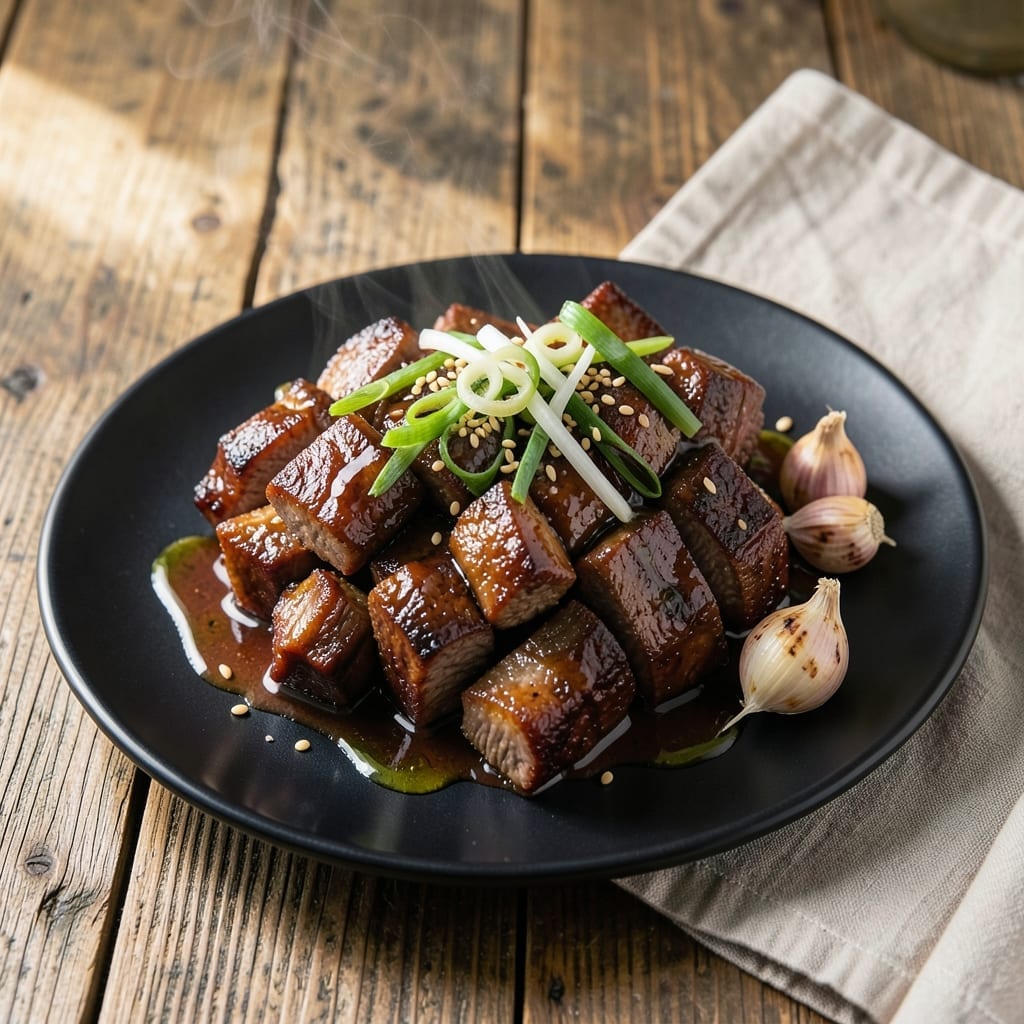
This Korean-style braised chuck roast transforms a humble cut into a dish of remarkable tenderness. The marinade infuses deep, complex flavors that develop beautifully during the slow cooking process.
I developed this method to achieve the perfect balance between rich, savory notes and the melt-in-your-mouth texture that defines great Korean beef. The key is patience—allowing the meat to absorb the marinade and then braise until fork-tender.
The result is a dish that’s both comforting and sophisticated, with layers of flavor from soy, garlic, and a touch of sweetness. Each bite delivers the tenderness promised by the long, slow cooking method.
Serve with steamed rice and quick-pickled vegetables for a complete meal that’s sure to impress.
Ingredients for Korean Beef Recipe Chuck Roast
Transform chuck roast with a bold marinade and slow braise for exceptional tenderness.
| Ingredient | Amount | Notes |
|---|---|---|
| Chuck Roast 🥩 | 2 lb | Well-marbled, cut into 2-inch cubes |
| Soy Sauce 🫒 | ¾ cup | Low-sodium preferred for balance |
| Brown Sugar 🟤 | ½ cup | Packed, for caramelized sweetness |
| Garlic Cloves 🧄 | 8 cloves | Minced for even distribution |
| Fresh Ginger 🌿 | 2 tbsp | Peeled and finely grated |
| Sesame Oil 🫒 | 2 tbsp | Toasted, for nutty depth |
| Rice Vinegar 🍚 | ¼ cup | Balances richness with acidity |
| Gochujang 🌶️ | 2 tbsp | Korean chili paste for heat |
| Beef Broth 🥣 | 1 ½ cups | Low-sodium to control seasoning |
| Green Onions 🧅 | 4 whole | Thinly sliced, for garnish |
| Sesame Seeds 🌰 | 1 tbsp | Toasted, for crunch and finish |
| Vegetable Oil 🫒 | 2 tbsp | Neutral flavor for searing |
| Black Pepper 🌶️ | 1 tsp | Freshly ground for best flavor |
[recipe_ingredient_scaler]
The chuck roast is non-negotiable—look for well-marbled pieces at Whole Foods or a trusted butcher. Avoid lean cuts; the fat renders down during braising, creating that signature melt-in-your-mouth texture. For the gochujang, Kochukaru or Sempio brands offer authentic flavor. Fresh ginger and garlic are essential; pre-minced versions lack the potency needed for this dish.
No gochujang? Sriracha plus 1 tsp miso paste approximates the depth (use half the amount). Brown sugar can be swapped for coconut sugar, though the flavor profile shifts slightly. For a gluten-free version, tamari replaces soy sauce seamlessly. The rice vinegar can be substituted with apple cider vinegar in a pinch, but the subtle sweetness of rice vinegar complements the dish better.
The braised beef keeps for 4-5 days in the fridge and freezes for 3 months. Store in airtight containers with some liquid to prevent drying. Reheat gently on the stove with a splash of water or broth to restore the sauce’s consistency.
Why You’ll Love This Recipe
- One Pot Wonder: I just brown the chuck roast, toss in the soy sauce, brown sugar, garlic, and ginger, then let it simmer—no fancy techniques, no extra pans.
- Sweet-Savory Magic: The brown sugar caramelizes with the soy sauce to create this sticky, finger-licking glaze on the beef that’s honestly hard to resist.
- Meal Prep Hero: I make a big batch on Sunday and it tastes even better reheated—great over rice, in tacos, or straight from the fridge at midnight.
- Budget Stretcher: Chuck roast is cheap, feeds my whole family, and the leftovers (if there are any) freeze beautifully for another busy weeknight.
Step-by-Step Instructions for Korean Beef Chuck Roast
Achieve melting tenderness with this refined technique for deeply flavored braised beef.
Step 1: Sear the Chuck Roast Cubes
Heat the 2 tbsp vegetable oil in a large Dutch oven over medium-high heat until shimmering. Add the 2 lb chuck roast cubes in a single layer, working in batches if necessary to avoid crowding. Sear undisturbed for 3-4 minutes per side until deeply browned on all surfaces.
This Maillard reaction develops complex flavors that form the foundation of your dish. Don’t rush this step—proper browning ensures rich, caramelized notes throughout the braising liquid. The cubes should release easily from the pot when properly seared.
Step 2: Build the Marinade Base
Reduce heat to medium and add the 8 cloves garlic cloves and 2 tbsp fresh ginger to the pot. Sauté for 1-2 minutes until fragrant, stirring constantly to prevent burning. Immediately pour in the 0.75 cup soy sauce, 0.25 cup rice vinegar, 2 tbsp gochujang, and 0.5 cup brown sugar.
Stir vigorously with a wooden spoon, scraping up all the browned bits from the bottom of the pot. This deglazing step transforms those flavorful fond into a rich, complex sauce base. Cook for 3-4 minutes until the sugar begins to dissolve and the mixture thickens slightly.
Step 3: Braise to Tender Perfection
Return all the seared chuck roast cubes to the pot along with any accumulated juices. Add the 1.5 cups beef broth and 2 tbsp sesame oil. Stir to combine, ensuring all pieces are submerged in the liquid. Season with the 1 tsp black pepper.
Bring to a simmer, then reduce heat to low. Cover and braise for 2 to 2.5 hours, stirring occasionally, until the beef is fork-tender and the sauce has reduced to a thick, glossy consistency. The meat should pull apart with minimal resistance when tested with a fork.
Step 4: Finish and Garnish
Once the chuck roast is tender, remove the lid and cook for an additional 10-15 minutes to allow the sauce to thicken further. Skim any excess fat from the surface if desired, though the rendered fat from the chuck roast adds depth to the final dish.
Just before serving, stir in half of the 4 whole green onions (thinly sliced) and sprinkle with the 1 tbsp sesame seeds. Transfer to a serving dish and garnish with the remaining green onions. The sauce should cling to each piece of beef, delivering layers of sweet, savory, and spicy notes in every bite.
Pro Tips For Making Korean Beef Recipe Chuck Roast
- Sear the Chuck First: I learned this the hard way—skipping the sear leaves the beef bland. A hot pan with a little oil for 2-3 minutes per side locks in flavor before braising.
- Grate the Ginger: Sounds tedious, but freshly grated ginger melts into the sauce better than minced, and a microplane makes it take 30 seconds.
- Trim Excess Fat: A little marbling is good, but big fat caps won’t render down and just make the dish greasy. I trim anything thicker than ¼ inch before cooking.
- Use Low Sodium Soy: Regular soy sauce can make the dish too salty once it reduces. Low sodium lets you control the seasoning—especially since brown sugar and garlic add their own depth.
Wine and Beer Pairings for korean beef recipe chuck roast
Korean Beer Pairings
I love serving this with Hite or OB Golden Lager—their crisp, clean profiles cut through the richness while complementing the gochujang heat. The light carbonation refreshes your palate between bites. 🍺
Bold Red Wines
A Malbec from Argentina stands up to the bold flavors with its dark fruit notes and velvety tannins. The wine’s smokiness mirrors the caramelized depth from the braising process. Serve slightly chilled for best results.
White Wine Options
For white wine lovers, an off-dry Riesling from Germany or Washington State balances the spice beautifully. The subtle sweetness contrasts the heat while the acidity cleanses your palate.
Craft Beer Alternatives
Try a Belgian-style Dubbel with its caramel and dark fruit notes that echo the brown sugar in the dish. The malty complexity stands up to the meat’s richness without overwhelming it. 💫
Non-Alcoholic Pairings
A sparkling yuzu soda or Korean barley tea offers refreshing contrast. The citrus in yuzu soda brightens the dish, while the nutty, toasty notes of barley tea complement the sesame undertones.
Nutrition Facts
Frequently Asked Questions
Can I use a different cut of beef?
Chuck roast is ideal for its marbling, but brisket or short ribs work too. Avoid lean cuts like sirloin—they won’t achieve the same tenderness after braising.
How do I know when it’s done?
The beef should pull apart easily with a fork after 2-2.5 hours. If it resists, continue cooking in 30-minute increments until tender.
What if my sauce is too thin?
Remove the lid and simmer uncovered for 10-15 minutes. The liquid will reduce and thicken as it cooks down.
Can I make this ahead of time?
The flavors deepen when reheated. Store in an airtight container for up to 5 days in the fridge.

Trained in classic French technique but raised on slow-cooked ribs and spicy rubs, she blends culinary skill with smoke and soul.
- Recipe for Boneless Pork Chops in Cast Iron Skillet: Sear and Baste to Juicy Perfection - October 3, 2026
- Recipe for Boneless Cross Rib Roast: Slow-Roasted Beef with Herb Crust - October 3, 2026
- Hamburgers in Sauce Recipe Crock Pot: Slow-Cooked Savory Delight - October 3, 2026