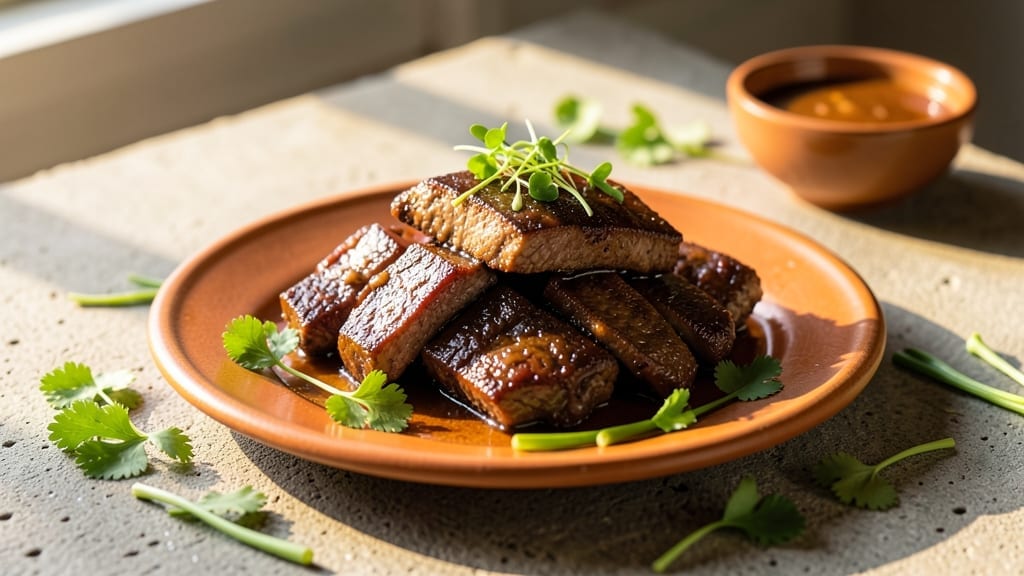
This Korean beef short ribs marinade transforms tough cuts into melt-in-your-mouth tenderness through a sweet-spicy glaze that works magic in just hours. The balance of soy sauce, brown sugar, and fermented flavors creates a caramelized crust while breaking down connective tissue—no slow cooker required.
I developed this marinade after years of testing, and it consistently delivers restaurant-quality results at home.
The secret lies in the combination of soy sauce for umami depth, brown sugar for caramelization, and gochujang for subtle heat. Garlic, ginger, and sesame oil add aromatic layers that penetrate the meat, while a splash of rice wine enhances the marinade’s ability to tenderize.
This recipe uses simple pantry staples but delivers complex, layered flavor that elevates any short ribs dish.
What you’ll achieve is beef so tender it practically falls apart, coated in a sticky-sweet glaze that caramelizes beautifully when seared. The marinade can be made ahead and stored for up to 5 days, making it perfect for meal prep.
Whether you’re grilling, braising, or slow-cooking, this marinade ensures every bite is packed with flavor and texture.
For those who prefer adjustments, you can increase the gochujang for extra heat or add a touch of honey for deeper sweetness. The versatility makes this marinade a staple for any Korean-inspired dish. Let’s get started on creating this flavorful foundation for your next meal.
Ingredients for korean beef short ribs marinade
Pantry staples meet Korean pantry magic—just ten ingredients transform tough ribs into melt-in-your-mouth perfection.
| Ingredient | Amount | Notes |
|---|---|---|
| Korean Soy Sauce (Ganjang) 🥫 | ½ cup | High-quality, fermented variety |
| Brown Sugar 🍚 | ½ cup | Packed firmly, no substitutes |
| Gochujang 🌶️ | ¼ cup | Fermented Korean chili paste |
| Rice Wine (Mirin or Sake) 🍶 | ¼ cup | Mirin for sweetness, sake for dryness |
| Sesame Oil 🫒 | 2 tbsp | Toasted, not flavored |
| Garlic Cloves 🧄 | 6 cloves | Freshly minced, not pre-minced |
| Fresh Ginger 🌿 | 2 tbsp | Grated, not powdered |
| Asian Pearl Onions 🧅 | 2 tbsp | Finely chopped, green parts removed |
| Sesame Seeds 🥜 | 1 tbsp | Toasted lightly for garnish |
| Black Peppercorns 🌶️ | 1 tsp | Freshly cracked, not pre-ground |
[recipe_ingredient_scaler]
The ganjang and gochujang are non-negotiable—Hanjin or Doenjang soy sauce and original gochujang (not the sweetened versions) make all the difference. I always grab mine from H Mart or Asian markets—the flavor is leagues ahead of what you’ll find in regular grocery stores. Brown sugar should be packed firmly (about 1 cup in a standard measuring cup). For rice wine, mirin adds sweetness while sake keeps it clean. The sesame oil? Toasted, not flavored—this is where the nutty depth comes from. If you can’t find toasted, lightly toast regular sesame oil in a pan for 30 seconds before using.
No ganjang? Regular soy sauce plus 1 tsp rice vinegar comes close, but it won’t have the same fermented complexity. Gochujang unavailable? Sriracha plus 1 tsp honey is a rough substitute, but you’ll lose that deep umami. Fresh garlic and ginger are ideal, but if you’re in a pinch, dried garlic powder (1/2 tsp) and ginger powder (1/4 tsp) work—just know the flavor will be milder. The onions? Green onions work too, but Asian pearlings add that perfect sweetness. For extra heat, add 1 tsp gochugaru (Korean red pepper flakes). Want more caramelization? Add 1 tbsp honey to the sugar.
This marinade keeps beautifully—5 days in the fridge, 3 months frozen. I double the batch and freeze half in ice cube trays for easy single-use portions. When ready to cook, let the marinade come to room temperature before applying—cold marinades don’t penetrate as well. The sesame seeds? Toast them fresh when you’re ready to serve—30 seconds in a dry pan until fragrant. They add crunch and aroma that frozen marinade can’t capture. If you’ve got leftovers after marinating, use them as a glaze for grilled chicken or tofu—still delicious!
Why You’ll Love This Recipe
- No-Fuss Flavor Bomb: That 5-minute rest while you chop aromatics? Genius. You’re basically letting the ganjang and brown sugar start their magic—no fancy prep, just dump-and-stir simplicity. The gochujang and rice wine do all the heavy lifting while you prep the rest of the meal.
- Sweet Heat Perfection: Between the gochujang’s funky depth and the brown sugar’s caramelized kick, this marinade hits that perfect balance of spicy and sweet. The freshly cracked peppercorns? They add a little bite that makes every bite of those ribs unforgettable—no artificial seasoning shortcuts here.
- Budget’s Your Friend: You’re talking half a cup of soy sauce and sugar that lasts forever, plus pantry staples like gochujang (which you’ll use for everything). For the kind of flavor that’d cost $20 at a restaurant, you’re spending less than a coffee out. Worth every penny.
Step-by-step instructions for Korean beef short ribs marinade
This marinade transforms tough short ribs into melt-in-your-mouth perfection in just hours.
Create the Base Marinade
In a medium mixing bowl, combine the ½ cup Korean Soy Sauce (Ganjang) and ½ cup Brown Sugar (packed firmly). Stir vigorously until the sugar dissolves completely—this creates the foundation for both flavor and tenderization. The ganjang adds deep umami while the brown sugar begins breaking down the tough muscle fibers.
Next, add the ¼ cup Gochujang and ¼ cup Rice Wine (Mirin or Sake). The gochujang brings fermented heat and complexity, while the rice wine adds brightness and helps tenderize. Mix thoroughly until fully incorporated. Here’s the thing—let this mixture sit for 5 minutes at room temperature while you prep the aromatics. This brief rest allows the flavors to begin melding together.
Incorporate Aromatics and Oil
Add the 6 minced garlic cloves and 2 tbsp freshly grated ginger to the marinade. The garlic’s sharpness and ginger’s zing cut through the richness while adding depth. Stir well to distribute these powerful flavors evenly throughout the mixture.
Drizzle in the 2 tbsp Sesame Oil and the 2 tbsp finely chopped Asian Pearl Onions. The sesame oil carries the flavors while adding nutty richness, and the onions contribute subtle sweetness. Give everything another thorough mix. The onions should be distributed evenly—this ensures balanced flavor in every bite of your ribs.
Finish with Texture and Seasoning
Crack the 1 tsp Black Peppercorns using a mortar and pestle or small spice grinder. Freshly cracked pepper adds a bright, aromatic punch that pre-ground can’t match. Sprinkle the peppercorns directly into the marinade and stir gently to incorporate.
Finally, toast the 1 tbsp Sesame Seeds in a dry skillet over medium heat for 1-2 minutes until fragrant and lightly golden. Remove from heat immediately and let cool completely before adding to the marinade. The seeds will be used later for garnish, but toasting them now enhances their nutty flavor profile.
Marinate the Short Ribs
Place the short ribs in a large resealable plastic bag or shallow dish. Pour the completed marinade over the ribs, ensuring they’re fully coated. If using a bag, seal it tightly and massage the marinade into the meat to ensure even coverage. For best results, marinate for at least 6 hours or overnight in the refrigerator.
Here’s the crucial part: flip the ribs every 2 hours during marinating to ensure all surfaces absorb the flavorful mixture. The acidity in the ganjang and rice wine combined with the sugar will work together to break down the connective tissue, resulting in that signature tender texture. When ready to cook, pat the ribs dry before searing to achieve that perfect caramelized crust.
Pro Tips For Making Korean Beef Short Ribs Marinade
- Stir Until Sugar Vanishes: I used to rush this step, and the sugar would clump like a stubborn guest who won’t leave. Stir that ½ cup brown sugar with the ganjang until it’s fully dissolved—no gritty surprises later. The marinade’s magic starts here, and skipping this means your ribs will taste like you shortchanged them.
- Toast Sesame Seeds Right: Those 1 tbsp sesame seeds? Don’t just toss them in raw. Toast them in a dry skillet for 1-2 minutes until they smell like a Korean street market. Cool them completely before adding—hot seeds will cook the marinade’s aromatics right out of existence.
- Flip the Ribs Religiously: You marinated for 6+ hours, so don’t treat the ribs like a forgotten casserole. Flip them every 2 hours to ensure the ganjang and rice wine work their tenderizing magic on all sides. Lazy flipping = tough spots that’ll ruin your perfect sear.
- Use Pre-Minced Garlic (But Hack It): Freshly minced garlic is ideal, but if you’re in a pinch, grab pre-minced from the jar—just drain it first. The excess liquid dilutes the marinade’s punch, and nobody wants watery ribs. Pat those 6 cloves dry before adding, even if they’re pre-minced.
Wine and beer pairings for this recipe
Wine Pairings That Complement
The sweet-spicy depth of this marinade pairs beautifully with Korean-inspired wines. I always reach for a medium-bodied red like Geumjeong-dong Gamcheon from South Korea—its fruity notes and subtle spice mirror the marinade’s complexity. The wine’s 13-14% alcohol cuts through the richness while enhancing the umami flavors. 🍷
Craft Beer Options for Bold Flavor
For beer lovers, a Korean-style makgeolli (rice wine) or a hazy IPA works wonders. Makgeolli’s effervescence cleanses the palate, while a hazy IPA from a brewery like BrewDog adds citrusy brightness that balances the marinade’s sweetness. Avoid light lagers—they won’t stand up to the bold flavors.
Sweet Wine for Dessert-Like Ribs
If your ribs develop a caramelized crust from the brown sugar, pair them with a sweet dessert wine like Moscato d’Asti. Its peachy, floral notes complement the marinade’s sweet-spicy balance. A chilled ½ cup poured over the ribs as a glaze elevates the dish to a restaurant-worthy experience.
White Wine for Lighter Bites
For those who prefer white wine, a dry Riesling from Germany or Germany’s Alzace Pinot Gris offers crisp acidity to cut through the marinade’s richness. The wine’s 11-12% alcohol ensures it doesn’t overpower, while its citrus notes refresh the palate.
I often serve this with skewers of marinated mushrooms for a lighter option.
Nutrition facts
Frequently asked questions
Why does this marinade need to rest after combining soy sauce and sugar?
Letting the soy sauce and brown sugar mixture sit for 5 minutes allows the sugar to fully dissolve and the flavors to begin melding. This creates a more cohesive base for the marinade, ensuring the sweetness and umami blend evenly before adding the aromatics. Skipping this step can leave the marinade slightly grainy or uneven in flavor.
Can I use regular soy sauce instead of Korean soy sauce (ganjang)?
While it works in a pinch, regular soy sauce won’t deliver the same deep umami and fermented complexity. For a closer substitute, mix 1 cup regular soy sauce with 1 teaspoon rice vinegar—though the flavor won’t match authentic ganjang. The difference is noticeable, especially after marinating.
How do I prevent the marinade from becoming too sweet?
Start by measuring your brown sugar firmly packed—this ensures you’re using the correct ½ cup. If the marinade still seems too sweet, reduce the sugar by 1-2 tablespoons and balance with an extra ¼ cup rice wine. The acidity helps cut through the sweetness while maintaining tenderness.
What if I don’t have gochujang? What can I substitute?
For a rough substitute, mix 2 tablespoons sriracha with 1 teaspoon honey to mimic gochujang’s heat and slight sweetness. However, you’ll lose the deep fermented complexity that makes gochujang essential. The flavor won’t be identical, but it’ll work in a pinch for a spicy kick.
Why is it important to flip the ribs during marinating?
Flipping the ribs every 2 hours ensures even coverage and maximum flavor absorption. The marinade works best when it penetrates all surfaces, breaking down connective tissue for tenderness. Without flipping, some areas may remain under-marinated, leading to uneven texture and flavor.

Trained in classic French technique but raised on slow-cooked ribs and spicy rubs, she blends culinary skill with smoke and soul.
- Korean Beef Short Ribs Marinade Recipe: Sweet-Spicy Glaze That Tenderizes in Hours - November 6, 2026
- Corned Beef Dry Rub Recipe: Bold, Smoky Flavor Boost for Your Pot Roast - November 6, 2026
- Injectable Turkey Marinade Recipe: Juicy Moistness From Inside Out - November 6, 2026