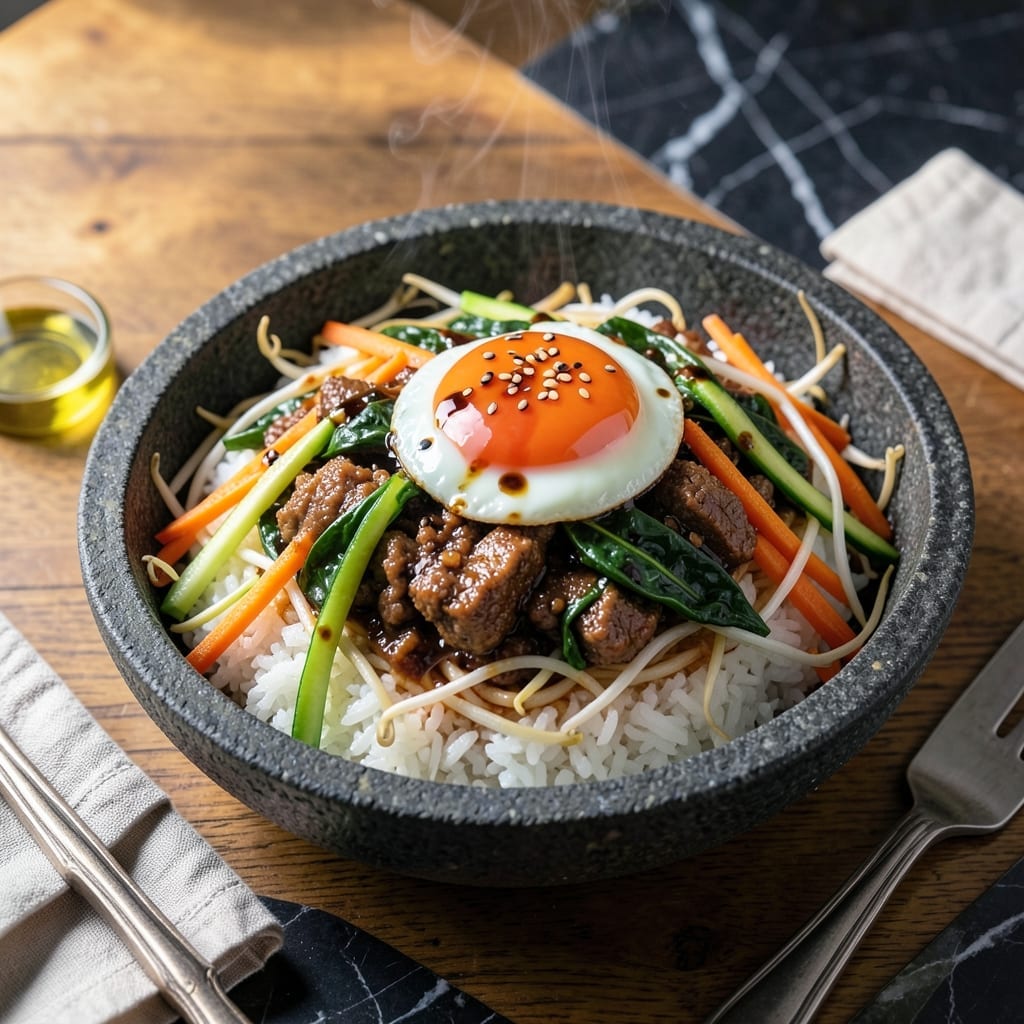
This vibrant dish brings together tender ground beef, crisp vegetables, and warm rice in perfect harmony. A flavorful gochujang sauce ties all the components together beautifully.
Each bite delivers a balance of textures and flavors—savory meat, fresh veggies, and a hint of spice. The dish is as satisfying to prepare as it is to eat.
Ingredients for Korean Bibimbap Recipe Ground Beef
Tender beef, crisp veggies, and warm rice come together with a bold gochujang sauce for this vibrant dish.
| Ingredient | Amount | Notes |
|---|---|---|
| Ground Beef 🥩 | 1 lb | 80/20 lean-to-fat ratio preferred |
| White Rice 🍚 | 2 cups | Short-grain or jasmine variety |
| Carrots 🥕 | 2 whole | Julienne-cut for even cooking |
| Zucchini 🥒 | 1 whole | Matchstick-cut or shredded |
| Spinach 🥬 | 4 cups | Fresh baby spinach preferred |
| Bean Sprouts 🌱 | 1 cup | Blanched before using |
| Gochujang 🌶️ | 3 tbsp | Korean red pepper paste |
| Soy Sauce 🫒 | 2 tbsp | Low-sodium preferred |
| Sesame Oil 🫒 | 1 tbsp | Toasted for depth of flavor |
| Garlic Cloves 🧄 | 4 cloves | Minced finely for sauce |
| Brown Sugar 🍚 | 1 tbsp | Balances gochujang heat |
| Sesame Seeds 🌰 | 1 tbsp | Toasted for garnish |
| Vegetable Oil 🫒 | 1 tbsp | For cooking beef and veggies |
| Large Eggs 🥚 | 4 whole | One per serving, fried sunny-side up |
| Green Onions 🧅 | ½ cup | Thinly sliced for garnish |
[recipe_ingredient_scaler]
The ground beef should be well-marbled for optimal flavor and texture. 80/20 lean-to-fat ratio is ideal, available at most Whole Foods or Costco locations. For the rice, short-grain or jasmine varieties provide the right chewy texture. The gochujang is non-negotiable—look for Sempio or Annie Chun’s brands at H Mart or the international aisle for authentic Korean heat.
No gochujang? Mix 2 tbsp sriracha with 1 tbsp miso paste for a passable substitute. Zucchini can be swapped for mushrooms or bell peppers. For a gluten-free version, tamari instead of soy sauce works perfectly. The brown sugar can be replaced with honey or maple syrup. Spinach wilts quickly, so prep it just before cooking.
Leftovers keep well for 3-4 days in the fridge. Store the gochujang sauce separately to maintain its vibrant flavor. Reheat the rice with a splash of water to restore moisture. The dish actually improves as the flavors meld overnight (worth the extra minute).
Why You’ll Love This Recipe
- One Pan Meal: I love that everything—ground beef, veggies, and rice—cooks together with minimal cleanup.
- Umami Bomb: The gochujang and soy sauce with the beef create this deep, savory flavor that’s ridiculously good.
- Meal Prep Hero: Honestly, this tastes even better the next day, so I make a big batch for lunches all week.
- Budget Friendly: Ground beef stretches far, and those carrots, zucchini, and spinach keep it affordable without sacrificing taste.
Step-by-Step Instructions for Korean Bibimbap with Ground Beef
Master the technique behind this iconic dish with precise timing and layering.
Step 1: Prepare the Rice and Vegetables
Cook the 2 cups White Rice according to package instructions until tender and fluffy. Meanwhile, blanch the 1 cup Bean Sprouts in boiling water for 2-3 minutes until just tender, then shock in ice water to preserve the crisp texture.
Julienne the 2 whole Carrots and matchstick-cut the 1 whole Zucchini. Sauté both separately in a portion of the 1 tbsp Vegetable Oil over medium-high heat for 3-4 minutes until slightly softened but still vibrant in color. Set aside.
Step 2: Cook the Ground Beef with Aromatics
Heat the remaining Vegetable Oil in a skillet over medium-high heat. Add the 1 lb Ground Beef and cook, breaking it apart with a spoon, for 5-6 minutes until fully browned and crumbly.
Reduce heat to medium and stir in the minced 4 cloves Garlic Cloves, 2 tbsp Soy Sauce, 1 tbsp Brown Sugar, and 1 tbsp Sesame Oil. Cook for 2 minutes until the mixture is fragrant and the liquid has mostly evaporated.
Step 3: Sauté the Spinach and Prepare Garnishes
In the same skillet, add the 4 cups Spinach and cook over medium heat for 1-2 minutes until just wilted. Transfer to a bowl. Wipe the skillet clean and heat it over medium-low heat to fry the 4 whole Large Eggs sunny-side up, ensuring the whites are set but the yolks remain runny.
Thinly slice the 0.5 cup Green Onions and toast the 1 tbsp Sesame Seeds in a dry pan over low heat for 1-2 minutes until golden and aromatic.
Step 4: Assemble the Bibimbap
Divide the cooked White Rice among four bowls. Arrange the cooked Ground Beef, Carrots, Zucchini, Spinach, and Bean Sprouts in sections on top of the rice. Place a fried Large Egg in the center of each bowl.
Drizzle each serving with 3 tbsp Gochujang, sprinkle with toasted Sesame Seeds and sliced Green Onions. Serve immediately while hot, instructing diners to mix all components thoroughly before eating to blend the flavors and textures.
Pro Tips For Making Korean Bibimbap Recipe Ground Beef
- Pre-cook the rice: Start your rice first—it takes the longest. I learned this the hard way after my veggies got cold waiting for the rice to finish.
- Drain the beef: After browning the ground beef, drain the fat completely or your bibimbap will be greasy. Sounds tedious, but it actually changes the outcome.
- Salt the spinach: When blanching spinach, toss it with a pinch of salt right after draining. My grandmother swore by this, and she was right—it keeps the color bright.
- Uniform veggie cuts: Slice carrots and zucchini into thin, even matchsticks so they cook quickly and look restaurant-worthy. I skip this when I’m lazy, but the dish is noticeably better when I don’t.
Health Benefits of This Dish
Nutrient-Rich Balance
This dish delivers a complete nutritional profile with high-quality protein from the 1 lb ground beef, providing all essential amino acids for muscle repair. The 4 cups spinach contribute iron and vitamin K, essential for blood health and bone strength. 💪
Fiber Boost
The 2 cups white rice, 2 whole carrots, and 1 cup bean sprouts offer a fiber-rich foundation that supports digestion. Bean sprouts add plant-based protein and vitamin C, while carrots provide beta-carotene for eye health.
Healthy Fats
Sesame oil and seeds in this creation deliver heart-healthy unsaturated fats. The 1 tbsp sesame seeds also pack calcium and zinc, while the 4 large eggs offer choline for brain function and vitamin D.
Metabolism Support
Garlic and gochujang bring serious flavor and health perks. The 4 cloves garlic support immunity, while 3 tbsp gochujang contains capsaicin, which may boost metabolism. The 1 tbsp brown sugar provides quick energy without overpowering natural flavors.
Low-Calorie Density
Despite its hearty appearance, this meal is packed with low-calorie, high-volume veggies like zucchini and spinach. The 1 tbsp vegetable oil keeps added fats minimal while ensuring proper cooking. 🥗
Antioxidant Power
The colorful vegetables—carrots, zucchini, and spinach—are rich in antioxidants that combat inflammation. The 0.5 cup green onions add a final touch of vitamin C and flavor without extra calories.
Nutrition Facts
Frequently Asked Questions
Can I use a different protein instead of beef?
Chicken, turkey, or tofu work well as substitutes. For best results, cook ground chicken for 4-5 minutes or press and pan-fry tofu until golden.
How do I adjust the spice level?
Reduce or omit the 3 tbsp gochujang for milder flavor. For extra heat, add 1 tsp Korean chili flakes. Taste the sauce before assembling.
What if my rice turns out dry?
Cook short-grain rice with a 1:1.25 rice-to-water ratio. If it dries out, sprinkle 1-2 tbsp water and reheat covered for 2 minutes.
Can I prep the veggies in advance?
Yes! Store cut vegetables in airtight containers for up to 2 days. Blanch bean sprouts just before assembling to maintain crispness.

Trained in classic French technique but raised on slow-cooked ribs and spicy rubs, she blends culinary skill with smoke and soul.
- Recipe for Boneless Pork Chops in Cast Iron Skillet: Sear and Baste to Juicy Perfection - October 3, 2026
- Recipe for Boneless Cross Rib Roast: Slow-Roasted Beef with Herb Crust - October 3, 2026
- Hamburgers in Sauce Recipe Crock Pot: Slow-Cooked Savory Delight - October 3, 2026