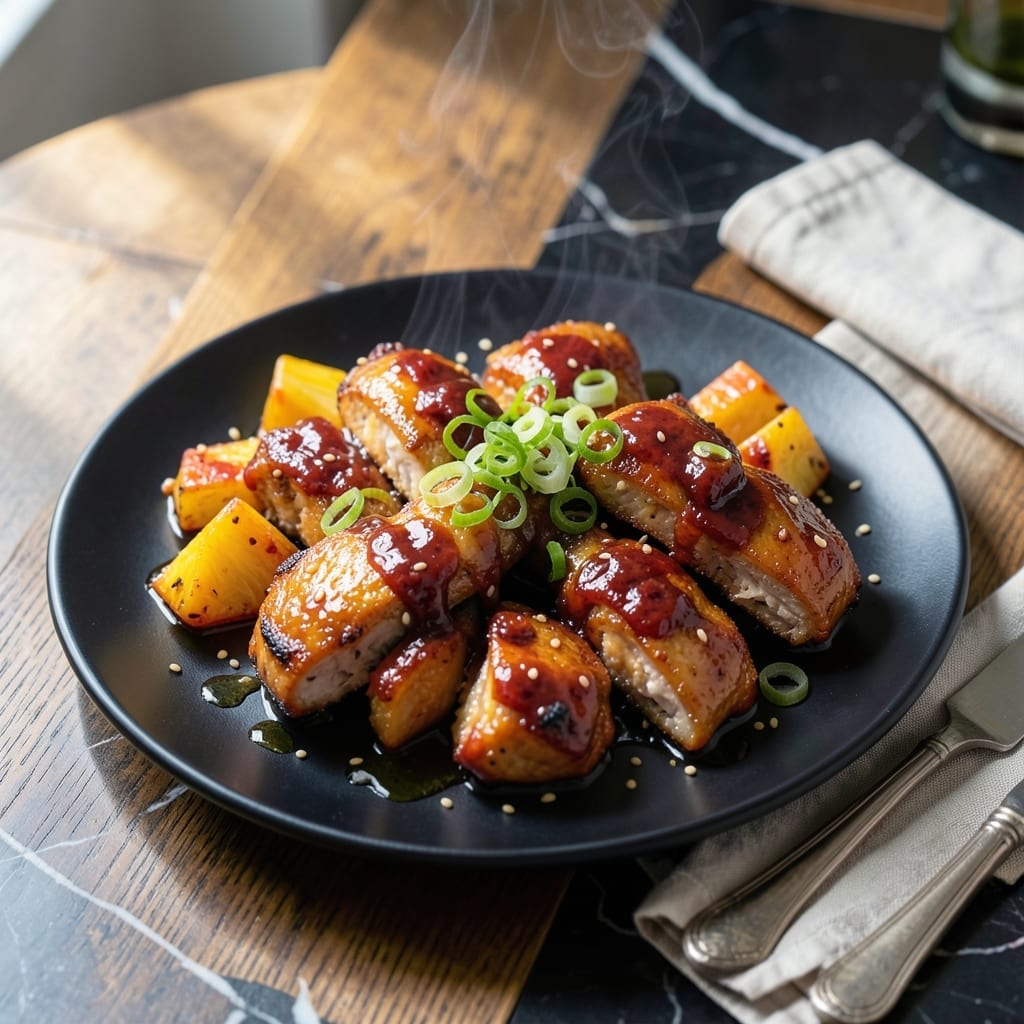
This fusion dish brings together bold Korean flavors with tropical Hawaiian influences for a truly unique dining experience. The combination of sweet and spicy creates a perfect balance that’s both exciting and approachable.
I developed this recipe after experimenting with different ways to blend these two cuisines. The key is using gochujang for heat and depth, balanced with pineapple juice and brown sugar for that island sweetness.
What results is tender chicken coated in a glossy, sticky sauce that’s packed with complex flavors. The dish comes together quickly, making it ideal for weeknight dinners with a gourmet touch.
Serve with steamed rice to soak up every bit of the delicious sauce. The contrast of flavors will keep everyone coming back for more.
Ingredients for Korean Chicken Recipe Hawaiian
Pantry staples meet bold flavors for this island-inspired fusion dish.
| Ingredient | Amount | Notes |
|---|---|---|
| Boneless Chicken Thighs 🍗 | 1 ½ lb | Skin-on or skinless, cut into bite-sized pieces |
| Gochujang 🌶️ | ¼ cup | Korean red pepper paste, essential for heat |
| Pineapple Juice 🍍 | ¾ cup | Canned or fresh, no added sugar |
| Brown Sugar 🍯 | ¼ cup | Light or dark, packed |
| Soy Sauce 🫒 | 3 tbsp | Low-sodium preferred for balance |
| Rice Vinegar 🍋 | 1 tbsp | Adds necessary tang to the sauce |
| Fresh Garlic 🧄 | 4 cloves | Minced for maximum flavor |
| Fresh Ginger 🌿 | 1 tbsp | Grated or minced finely |
| Sesame Oil 🫒 | 1 tsp | Toasted variety for depth |
| Cornstarch 🌾 | 1 tbsp | For thickening the sauce |
| Green Onions 🧅 | 3 whole | Thinly sliced for garnish |
| Sesame Seeds 🌰 | 1 tsp | Toasted for garnish |
| Vegetable Oil 🫒 | 2 tbsp | Neutral flavor for cooking |
| Steamed White Rice 🍚 | 2 cups | Cooked, for serving |
[recipe_ingredient_scaler]
The gochujang and pineapple juice are non-negotiable here. Look for gochujang at an Asian market (or the international aisle at Whole Foods). It’s spicy, sweet, and funky all at once. For the pineapple juice, canned works in a pinch (just avoid the added sugar kind). I always grab the small cans so I don’t waste any. Chicken thighs stay juicier than breasts—skin-on adds extra richness if you’re into that.
No gochujang? Sriracha plus a little miso paste gets you in the ballpark, but it won’t be the same. Fresh ginger is ideal, but ground ginger at half the amount works. Out of pineapple juice? Orange juice with a splash of lime can sub in. The soy sauce should be low-sodium—regular can make the dish too salty. If you’ve got coconut aminos, they add a nice depth too.
This sauce thickens as it cools, so don’t stress if it seems thin at first. Keeps 3-4 days in the fridge—reheat gently so the chicken doesn’t dry out. Freezes for 2 months if you double the batch (and you should).
Why You’ll Love This Recipe
- One Pan Wonder: I just dump the gochujang, pineapple juice, and soy sauce with the chicken thighs—no fancy steps, just flavor.
- Sweet & Spicy Fix: That gochujang kick balanced with the brown sugar and pineapple? I crave it all week.
- Feeds a Crowd: I make a big batch for Sunday dinner and it’s gone by Tuesday—even the picky eaters ask for more.
- Budget Stretcher: Boneless thighs stay cheap, and the sauce makes them taste like a restaurant dish. Honestly, it’s my secret to eating well without overspending.
Step-by-Step Instructions for Korean Chicken Hawaiian
Here’s my foolproof method for nailing this sweet and spicy fusion every time.
Step 1: Sear the Chicken Thighs
Heat the 2 tablespoons vegetable oil in a large skillet over medium-high heat until it shimmers. Add the 1.5 lb boneless chicken thighs (cut into bite-sized pieces) in a single layer, working in batches if needed. Don’t crowd the pan—this steams the chicken instead of searing it.
Cook for 5-6 minutes until the pieces develop a golden-brown crust on all sides and are cooked through. You’ll know they’re done when they release easily from the pan and the juices run clear. Transfer the chicken to a plate and set aside.
Step 2: Build the Flavor Base
In the same skillet, reduce heat to medium and add the 4 cloves fresh garlic (minced) and 1 tablespoon fresh ginger. Sauté for 30-45 seconds until fragrant—just until the raw edge disappears but before they brown. This creates the aromatic foundation for your sauce.
Immediately add the 0.25 cup gochujang, 0.25 cup brown sugar, 3 tablespoons soy sauce, and 1 tablespoon rice vinegar. Stir constantly for 1-2 minutes until the sugar dissolves and the mixture becomes smooth and glossy.
Step 3: Create the Pineapple Glaze
Pour in the 0.75 cup pineapple juice and stir to combine. Bring the mixture to a gentle simmer and let it cook for 3-4 minutes until it reduces slightly and thickens. This is where the Hawaiian sweetness meets the Korean heat.
In a small bowl, mix the 1 tablespoon cornstarch with 1 tablespoon water to create a slurry. Stir this into the sauce and cook for another 1-2 minutes until it reaches a syrupy consistency that coats the back of a spoon.
Step 4: Finish and Garnish
Return the chicken to the skillet and toss to coat evenly in the sauce. Cook for 2-3 minutes until everything is heated through and the chicken is fully glazed. Drizzle with the 1 teaspoon sesame oil and stir to incorporate—this adds that final layer of nutty depth.
Transfer the Korean chicken Hawaiian to a serving dish and garnish with the 3 whole green onions (thinly sliced) and 1 teaspoon sesame seeds. Serve immediately over the 2 cups steamed white rice for the perfect balance of sweet, spicy, and savory flavors.
Pro Tips For Making Korean Chicken Recipe Hawaiian
- Sear Chicken First: I learned this the hard way—browning the chicken thighs in a hot pan before adding the sauce gives them that sticky, caramelized edge. Skip this and you’ll end up with pale, soggy meat.
- Bloom the Gochujang: Cook the gochujang in the pan for 1-2 minutes before adding liquids. Sounds weird, but it actually deepens the flavor and removes that raw, pasty taste.
- Reduce the Sauce: After the chicken is cooked, let the sauce simmer uncovered for 3-4 minutes. This thickens it so it clings to the chicken instead of pooling at the bottom.
- Use Fresh Pineapple: Canned pineapple juice works, but fresh pineapple juice adds a brightness that balances the gochujang’s heat. I was skeptical until I tried it—now I never go back.
Regional Styles of This Recipe
Korean BBQ Style
For a more traditional Korean approach, swap the pineapple juice for ½ cup Korean pear purée. The natural sweetness and enzymes tenderize the chicken beautifully. I also add 1 tbsp toasted sesame seeds directly to the sauce for extra nutty depth. 🌟
Hawaiian Luau Version
Embrace the island vibes by adding ½ cup diced fresh pineapple along with the juice. For extra tropical flair, include ¼ cup diced red bell pepper and 2 tbsp minced macadamia nuts to the finished dish. The crunch contrasts perfectly with the sticky sauce.
Spicy Maui Twist
Increase the heat with 1 tbsp sriracha and 1 tsp red pepper flakes added to the sauce. Balance it with 2 tbsp honey instead of brown sugar. This version reminds me of the spicy-sweet flavors I fell in love with on my first trip to Hawaii.
Busan Meets Waikiki
Combine 1 tbsp doenjang (fermented soybean paste) with the gochujang for deeper umami. Finish with 1 tbsp toasted coconut flakes and a squeeze of lime. The fermented notes from Korea pair surprisingly well with the tropical coconut.
Seoul Street Food
For a quicker version, use 1 lb pre-cut chicken and reduce the sauce by half. Serve on buttered toasted buns with pickled radishes. This is my go-to when I want that Korean-Hawaiian fusion in sandwich form for Sunday family dinners.
Nutrition Facts
Frequently Asked Questions
Can I use chicken breast instead of thighs?
Yes, but thighs stay juicier. If using breasts, cut them into 1-inch pieces and reduce cooking time to 4-5 minutes to prevent dryness. The sauce helps keep them moist.
What’s the best substitute for gochujang?
Mix 2 tablespoons sriracha with 1 tablespoon miso paste for similar heat and depth. It won’t be identical but works in a pinch.
How do I make the sauce thicker?
Simmer it longer or add an extra ½ teaspoon cornstarch mixed with water. The sauce thickens as it cools, so don’t over-reduce it.
Can I prepare this ahead of time?
The dish keeps 3-4 days refrigerated and reheats well. For best results, store sauce and chicken separately, then combine when reheating.

Trained in classic French technique but raised on slow-cooked ribs and spicy rubs, she blends culinary skill with smoke and soul.
- Recipe for Boneless Pork Chops in Cast Iron Skillet: Sear and Baste to Juicy Perfection - October 3, 2026
- Recipe for Boneless Cross Rib Roast: Slow-Roasted Beef with Herb Crust - October 3, 2026
- Hamburgers in Sauce Recipe Crock Pot: Slow-Cooked Savory Delight - October 3, 2026