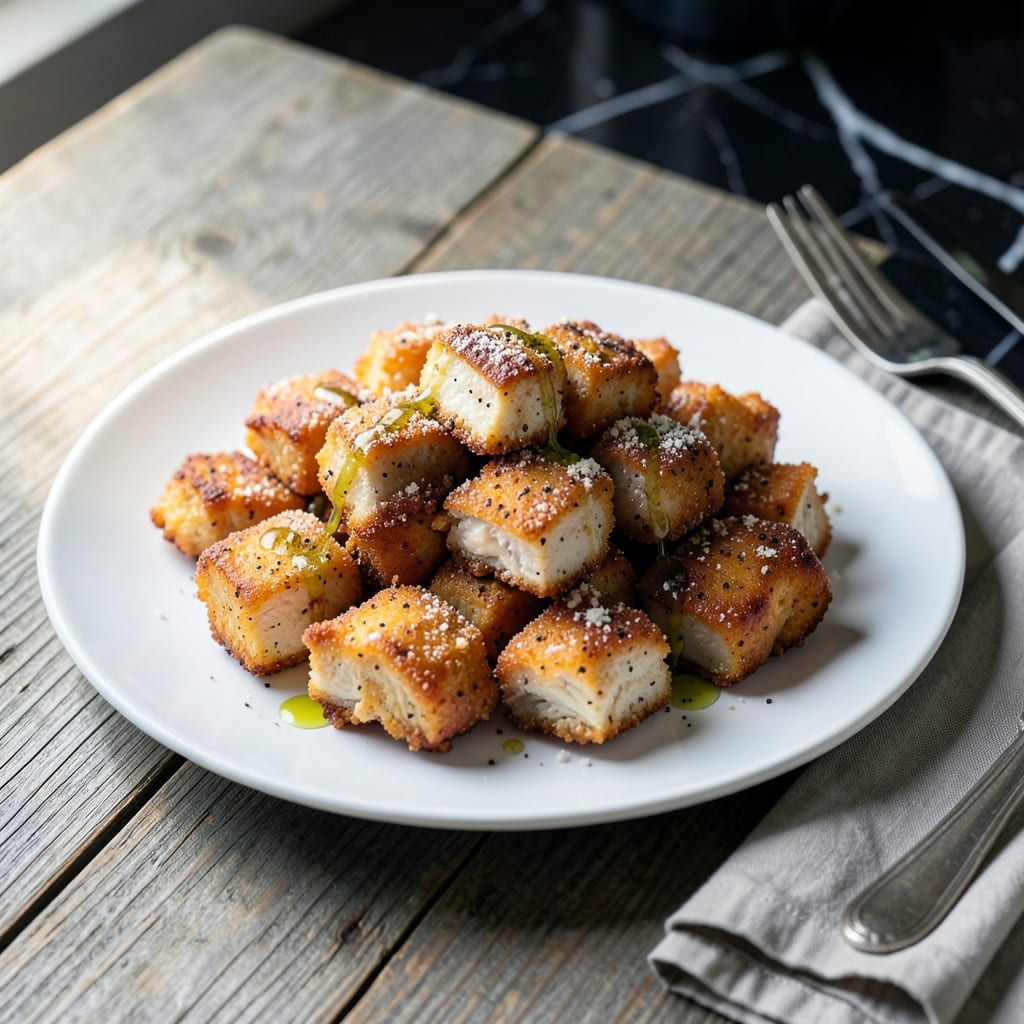
This Korean fried chicken recipe transforms chicken breast into an irresistible dish with its double-crisp coating and sticky gochujang glaze. The secret lies in a two-step frying process that ensures every piece stays extra crunchy.
What sets this version apart is the balance between the crispy exterior and juicy interior, achieved through a simple batter and careful frying technique. The gochujang glaze adds a perfect blend of sweet, spicy, and savory flavors.
You’ll end up with golden-brown chicken pieces coated in a glossy, finger-licking sauce. The texture contrast between the crunchy shell and tender meat makes it impossible to resist.
Ideal for game days, gatherings, or a flavorful weeknight dinner. Here’s how to make it at home.
Ingredients for Korean Fried Chicken Recipe Chicken Breast
Transform chicken breast with crispy coatings and a bold gochujang glaze using these ingredients.
| Ingredient | Amount | Notes |
|---|---|---|
| Boneless Skinless Chicken Breast 🍗 | 1 ½ lb | Cut into 1-inch pieces |
| All-Purpose Flour 🌾 | 1 cup | For first coating layer |
| Cornstarch 🌾 | ½ cup | For extra crispiness |
| Baking Powder 🧂 | 1 tsp | Helps batter puff |
| Kosher Salt 🧂 | 1 tsp | Divided for seasoning |
| Ground Black Pepper 🌶️ | ½ tsp | Freshly cracked preferred |
| Large Egg 🥚 | 1 whole | For batter binding |
| Cold Water 💧 | ¾ cup | For thin batter consistency |
| Gochujang Paste 🌶️ | ½ cup | Korean chili paste base |
| Honey 🍯 | ¼ cup | Balances spice and heat |
| Soy Sauce 🫒 | 3 tbsp | Low-sodium recommended |
| Rice Vinegar 🍚 | 2 tbsp | Adds tangy brightness |
| Minced Garlic 🧄 | 3 cloves | Freshly minced preferred |
| Grated Fresh Ginger 🌿 | 1 tbsp | Essential for depth |
| Sesame Oil 🫒 | 1 tbsp | For finishing aroma |
| Vegetable Oil 🫒 | 4 cups | For deep frying |
[recipe_ingredient_scaler]
The chicken breast must be fresh and uniformly cut—Whole Foods or Costco offer reliable quality. For the double-crisp effect, cornstarch is non-negotiable; it creates that signature crunch. Gochujang paste varies by brand; Sempio or Chung Jung One deliver consistent heat and depth. Baking powder in the batter might seem unusual, but it’s the professional trick for that airy, puffed texture.
No gochujang? Sriracha plus 1 tbsp miso paste gets you 80% there. Honey can be swapped for brown sugar or maple syrup at equal amounts. For gluten-free, replace all-purpose flour with rice flour at a 1:1 ratio. The egg in the batter can be omitted—use sparkling water instead for a lighter, tempura-like coating. Vegetable oil can be peanut or canola if preferred.
Fry in batches to avoid crowding—this keeps the oil at proper temperature for maximum crisp. Leftovers (if any exist) reheat best in a 400°F oven for 10 minutes. The glaze thickens as it cools, so thin with a splash of water if needed. Consume within 2 days for peak texture.
Why You’ll Love This Recipe
- No-Fuss Coating: I just toss chicken in flour, cornstarch, and baking powder—no messy marinades, no complicated steps.
- Addictive Crunch: That cornstarch and baking powder combo gives it this ridiculous crispy exterior every single time.
- Weeknight MVP: Honestly, it’s my go-to when I need something fast but still special enough for guests.
- Stretches Further: One pound of chicken breast feeds four with leftovers, and it’s just as good cold the next day.
Step-by-Step Instructions for Korean Fried Chicken
Master the double-frying technique for an ultra-crispy exterior and juicy interior with this method.
Step 1: Prepare the Chicken and Create the Batter
Cut the 1.5 lb boneless skinless chicken breast into 1-inch pieces and pat them completely dry with paper towels. This ensures the coating adheres properly and prevents splattering during frying.
In a large bowl, whisk together the 1 cup all-purpose flour, 0.5 cup cornstarch, 1 tsp baking powder, 1 tsp kosher salt, and 0.5 tsp ground black pepper. In a separate bowl, beat the 1 whole large egg with the 0.75 cup cold water until fully combined.
Pour the wet mixture into the dry ingredients and stir just until a thin, lumpy batter forms. The batter should coat the back of a spoon but still drip off easily. Overmixing will develop gluten, resulting in a dense, chewy coating rather than a light, crispy one.
Step 2: First Fry for Structure and Cooking
Heat the 4 cups vegetable oil in a heavy-bottomed pot or Dutch oven to 325°F. Use a deep-fry or candy thermometer to monitor the temperature accurately. Maintaining the correct temperature is crucial for even cooking and a crispy texture.
Dip each piece of chicken into the batter, allowing any excess to drip off, then carefully lower it into the hot oil. Work in batches to avoid overcrowding the pot, which would cause the oil temperature to drop too low. Fry the chicken for 6-8 minutes, turning occasionally, until the coating is set and light golden brown but not fully crisp.
Remove the chicken with a slotted spoon and drain on a wire rack set over a baking sheet. This allows air to circulate around the pieces, preventing them from becoming soggy as they cool slightly.
Step 3: Create the Gochujang Glaze
While the chicken rests, combine the 0.5 cup gochujang paste, 0.25 cup honey, 3 tbsp soy sauce, 2 tbsp rice vinegar, 3 cloves minced garlic, and 1 tbsp grated fresh ginger in a saucepan. Place over medium heat and bring to a gentle simmer.
Cook for 3-4 minutes, stirring frequently, until the sauce thickens slightly and becomes glossy. The sauce should coat the back of a spoon but still be pourable. Remove from heat and stir in the 1 tbsp sesame oil for added aroma. Keep the sauce warm while you complete the second fry.
Step 4: Second Fry for Maximum Crispiness
Increase the oil temperature to 375°F. Return the chicken to the hot oil in batches and fry for an additional 2-3 minutes until the coating is deep golden brown and ultra-crispy. The second fry at a higher temperature ensures the exterior becomes shatteringly crisp while the interior stays tender and juicy.
Drain the chicken again on the wire rack. The coating should be noticeably darker and much crisper than after the first fry. This double-frying technique is what sets Korean fried chicken apart, delivering that signature crunch with every bite.
Step 5: Toss in Gochujang Glaze and Serve
Working quickly while the chicken is still hot, transfer it to a large bowl. Pour about half of the warm gochujang glaze over the chicken and toss gently to coat evenly. Add more glaze as needed to achieve your desired level of coverage, ensuring each piece is thoroughly coated.
The glaze should cling to the crispy coating, creating a sticky, glossy finish. Serve immediately while the chicken is still hot and crispy. The contrast of the sweet, spicy, tangy glaze with the crunchy exterior and tender interior makes this dish irresistible.
Pro Tips For Making Korean Fried Chicken Recipe Chicken Breast
- Pound the Breasts: Use a rolling pin or meat mallet to even out the chicken breasts to ½-inch thickness—this guarantees even cooking and prevents dry, chewy edges.
- Double Dust the Chicken: Toss the chicken in cornstarch first, then dip in the flour-baking powder mix; this extra step creates a shatteringly crisp crust that clings better than a single coat.
- Skip the Overcrowding: Fry in small batches with at least an inch of space between pieces, or the oil temp drops and you’ll end up with soggy, greasy chicken instead of that signature crunch.
- Rest Before Frying: Let the breaded chicken rest for 10 minutes on a wire rack before frying—this helps the coating set so it doesn’t slide off in the oil.
Flavor Customization for These Flavors
Spice Level Adjustments
For milder heat, reduce gochujang paste to ¼ cup and add 2 tbsp extra honey. This balances the flavors while keeping the signature sweet-spicy profile. I often do this for friends who prefer less heat.
Sweet and Tangy Twist
Add 1 tbsp lime juice and 1 tbsp extra honey to the glaze for a brighter, sweeter finish. The acidity cuts through the richness beautifully. I love this variation for summer gatherings.
Umami Boost
Stir in 1 tbsp fish sauce or 1 tsp MSG into the glaze for deeper savory notes. This small addition enhances all the other flavors without overpowering them. 💫
Extra Crispy Coating
Replace ½ the all-purpose flour with rice flour in the batter for an even crunchier texture. This is a popular trick in Korean restaurants for that addictive crunch.
Garlic Lovers Version
Double the minced garlic to 6 cloves in the glaze and add 1 tsp garlic powder to the batter. The extra garlic adds incredible depth and aroma to every bite.
Smoky Depth
Add ½ tsp smoked paprika to the batter for a subtle smoky flavor that complements the gochujang glaze perfectly. It’s a small change with big impact. 🔥
Nutrition Facts
Frequently Asked Questions
Why use chicken breast instead of thighs?
Chicken breast stays juicier when double-fried due to its lean nature. The method creates a crispier coating since breast meat holds the batter better than darker meat.
Can I bake instead of frying?
Baking at 400°F for 20-25 minutes works but won’t achieve the same crunch. Toss baked pieces in warm glaze for best results.
How do I keep the coating crispy?
Drain on a wire rack, not paper towels, to avoid steam. Serve immediately and keep pieces in a single layer.
What if my glaze is too thick?
Thin with 1-2 tsp water and reheat gently. The sauce should coat the back of a spoon but still drizzle easily.

Trained in classic French technique but raised on slow-cooked ribs and spicy rubs, she blends culinary skill with smoke and soul.
- Recipe for Boneless Pork Chops in Cast Iron Skillet: Sear and Baste to Juicy Perfection - October 3, 2026
- Recipe for Boneless Cross Rib Roast: Slow-Roasted Beef with Herb Crust - October 3, 2026
- Hamburgers in Sauce Recipe Crock Pot: Slow-Cooked Savory Delight - October 3, 2026