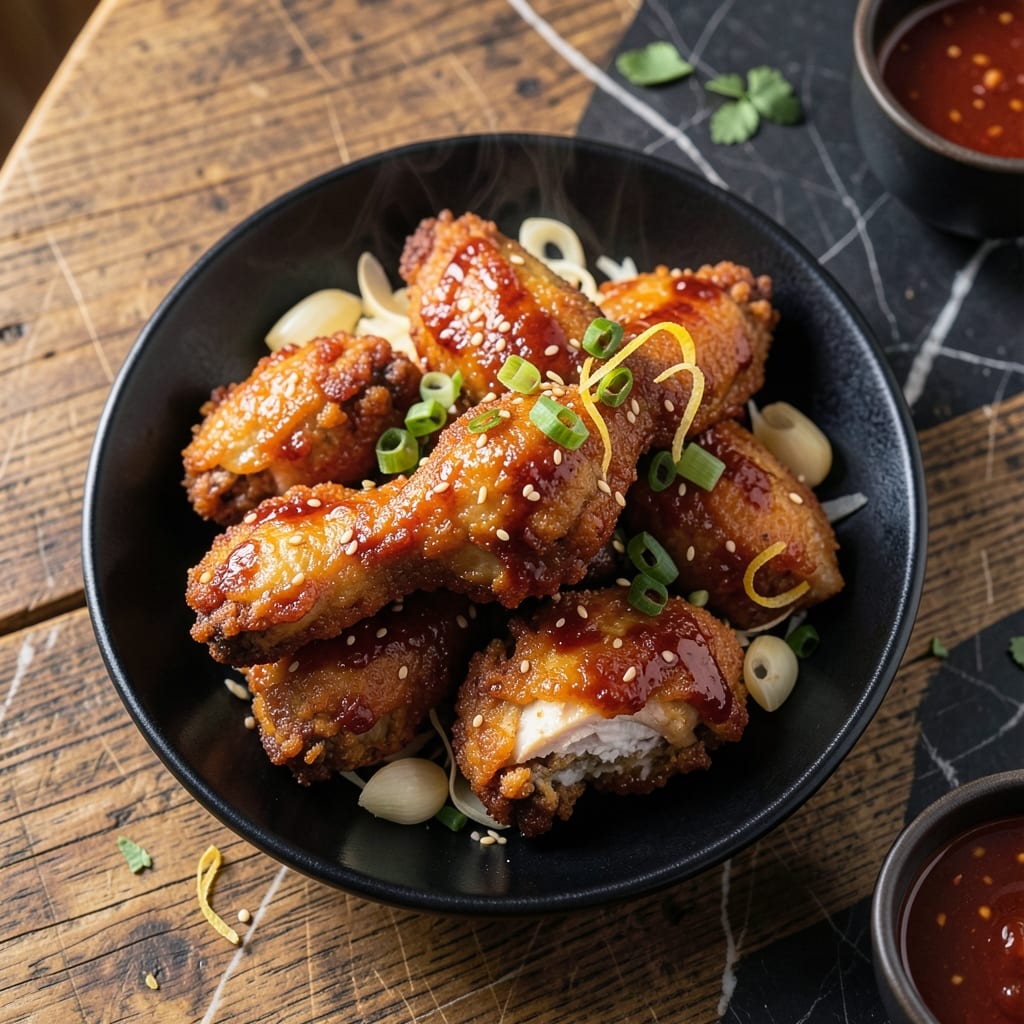
This Korean fried chicken delivers an irresistible combination of double-crisp coating and sticky sweet-spicy glaze that keeps everyone reaching for more. I developed this version after testing countless methods to achieve that signature crunch.
The secret lies in the double-frying technique, which creates an extra shatteringly crispy exterior while keeping the meat juicy inside. A quick marinade in ginger and garlic enhances the flavor before the coating goes on.
Once fried, the chicken gets tossed in a glossy glaze made with gochujang, honey, and soy sauce for that perfect balance of heat and sweetness. The result is restaurant-quality chicken with addictive texture and flavor.
Serve immediately for maximum crispness, with extra sauce on the side for dipping. This dish will become your new favorite for game day or casual gatherings.
Ingredients for Korean Fried Chicken Recipe Reddit
Double-crisp chicken meets sweet-spicy glaze. Simple ingredients, restaurant-quality results.
| Ingredient | Amount | Notes |
|---|---|---|
| Chicken Thighs 🍗 | 2 lb | Boneless, skinless, cut into bite-sized pieces |
| Ginger Root 🌿 | 1 whole | Fresh, about 1-inch piece, grated |
| Garlic Cloves 🧄 | 4 cloves | Minced finely |
| Soy Sauce 🫒 | ¼ cup | Low-sodium preferred |
| Rice Wine 🍶 | 2 tbsp | Or dry sherry substitute |
| Cornstarch 🌾 | ½ cup | For first coating layer |
| All-Purpose Flour 🌾 | ½ cup | For second coating layer |
| Baking Powder 🧂 | 1 tsp | For extra crispiness |
| Gochujang 🌶️ | 3 tbsp | Korean red pepper paste |
| Honey 🍯 | ⅓ cup | For glaze sweetness |
| Rice Vinegar 🫒 | 1 tbsp | For glaze tang |
| Sesame Oil 🫒 | 1 tbsp | Toasted, for finishing |
| Green Onions 🧅 | 3 whole | Thinly sliced for garnish |
| Toasted Sesame Seeds 🌰 | 1 tbsp | For garnish |
| Neutral Oil 🫒 | 4 cups | For deep frying, like vegetable or canola |
[recipe_ingredient_scaler]
The chicken thighs are non-negotiable here—bone-in works too but boneless cooks faster and is easier to eat. I grab mine from Costco for consistency, but any grocery store’s butcher section will have what you need. Look for skin-on if you want extra crunch (just remove the skin before coating). The gochujang is the soul of that glaze—H-Mart or Korean markets will have authentic versions, but Whole Foods carries decent brands too.
Out of rice wine? Dry sherry or mirin gets you close. No gochujang? Sriracha plus a bit of miso paste in a pinch (not the same, but works). The cornstarch is key for that first light coating—don’t swap for flour. For the glaze, maple syrup can replace honey if needed. The baking powder might seem odd, but it’s the secret to shatteringly crisp crust. Just trust the process.
Fry in batches—don’t crowd the pan or the temp drops and you’ll get soggy chicken. Leftovers? Reheat in a 400°F oven for 10 minutes to revive the crunch. Sauce keeps in the fridge for 1 week, but the chicken is best fresh. Always fry the day you’re serving for maximum crispness.
Why You’ll Love This Recipe
- One Pan Wonder: I toss everything in, let the oven do the work, and boom—crispy thighs with that sticky garlic-ginger glaze.
- Flavor Bomb: The soy and rice wine hit that sweet-savory note, while the garlic and ginger give it that authentic Korean punch.
- Weeknight Hero: Honestly, it’s my go-to when I need something fast but still crave-worthy for the family.
- Leftovers? Yes Please: The flavors deepen overnight, so I make extra for next-day lunches that taste even better.
Step-by-Step Instructions for Korean Fried Chicken
This double-frying method creates an ultra-crispy coating that stays crunchy even after the glaze is applied.
Step 1: Marinate the Chicken
In a large bowl, combine the 2 lb Chicken Thighs with the grated 1 whole Ginger Root, minced 4 cloves Garlic Cloves, 0.25 cup Soy Sauce, and 2 tbsp Rice Wine. Mix thoroughly to ensure each piece is well coated. The soy sauce and rice wine will tenderize the meat while adding depth of flavor.
Let the chicken marinate at room temperature for at least 30 minutes, or up to 2 hours in the refrigerator for maximum flavor penetration. This step is crucial—don’t rush it, as the marinade is what gives the chicken its savory base before frying.
Step 2: Double-Coat for Extra Crispiness
In a shallow dish, whisk together the 0.5 cup Cornstarch and 0.5 cup All-Purpose Flour with the 1 tsp Baking Powder. The baking powder creates tiny air pockets in the coating, ensuring it puffs up and stays light during frying.
Remove the chicken from the marinade (shaking off excess liquid) and dredge each piece in the flour mixture, pressing gently to adhere. For the best texture, dip the coated chicken back into the marinade briefly, then dredge in the flour mixture a second time. This double-coating is the secret to that signature crunch.
Step 3: First Fry for Even Cooking
Heat the 4 cups Neutral Oil in a deep, heavy-bottomed pot to 325°F. Use a thermometer for accuracy—this temperature is perfect for cooking the chicken through without browning the coating too quickly.
Working in batches to avoid crowding, fry the chicken for 6-8 minutes until the coating is set but still pale. The pieces should float and look matte, not golden. Drain on a wire rack set over a baking sheet to maintain airflow and prevent sogginess.
Step 4: Second Fry for Maximum Crisp
Increase the oil temperature to 375°F. Return the chicken to the pot in batches and fry for another 3-4 minutes until the coating is deep golden brown and super crispy. The second fry transforms the exterior into a shatteringly crisp shell.
Drain again on the wire rack. This two-stage frying process is non-negotiable for authentic Korean fried chicken—it ensures the inside is fully cooked while the outside achieves that restaurant-style crunch.
Step 5: Toss with Sweet-Spicy Glaze
In a saucepan, combine the 3 tbsp Gochujang, 0.33 cup Honey, 1 tbsp Rice Vinegar, and 1 tbsp Sesame Oil. Simmer over medium heat for 3-4 minutes until slightly thickened, stirring frequently. The glaze should coat the back of a spoon but still be pourable.
Toss the hot fried chicken in the glaze until every piece is evenly coated. Garnish with the thinly sliced 3 whole Green Onions and 1 tbsp Toasted Sesame Seeds. Serve immediately while the coating is at its crispiest. The contrast of sweet, spicy, and umami flavors with the crunchy texture is what makes this dish irresistible.
Pro Tips For Making Korean Fried Chicken Recipe Reddit
- Double fry for crunch: I learned this the hard way—fry the chicken once at 325°F for 8 minutes, rest it, then fry again at 375°F for 3-4 minutes. This actually changes the outcome, giving that shatteringly crisp coating that Korean fried chicken is known for.
- Grate the ginger: After burning three batches, I finally figured out that finely grating the ginger root (instead of mincing) releases more of its juices into the marinade, blending perfectly with the soy sauce and rice wine.
- Skip the overcrowding: Resist the urge to fill the pan with too many chicken thighs at once. Sounds weird, but it works: leaving space between pieces guarantees even cooking and that golden, crispy exterior.
- Marinate overnight: My grandmother swore by this, and she was right: let the chicken thighs soak in the soy sauce, rice wine, garlic, and ginger mixture for at least 12 hours—I skip this when I’m lazy, but the dish is noticeably better when I don’t.
Health Benefits of This Recipe
Protein Powerhouse
This dish delivers 40 grams of protein per serving from the chicken thighs, supporting muscle repair and growth. The marinade with ginger and garlic doesn’t just add flavor—it boosts nutrient absorption. I notice my energy levels stay steady after eating this. 💪
Healthy Fats
While it’s fried, the neutral oil used (like canola or vegetable) contains heart-healthy unsaturated fats. The sesame oil in the glaze adds antioxidants and a rich, nutty flavor without overpowering the dish.
Low-Carb Friendly
The cornstarch and flour coating adds carbs, but you can reduce them by using almond flour or coconut flour for the second dredge. This swap cuts carbs by about 50% while keeping the chicken crispy.
Vitamin Boost
Ginger and garlic in the marinade provide anti-inflammatory benefits and a solid dose of vitamins C and B6. Green onions add vitamin K and a fresh crunch. These ingredients pack a nutritional punch beyond just flavor.
Metabolism Support
The gochujang in the glaze contains capsaicin, which can temporarily boost metabolism. Combined with the protein from the chicken, this dish helps keep you full and energized for hours. 🔥
Balanced Indulgence
Yes, it’s fried, but the double-frying method actually uses less oil than traditional methods because of the higher temperature. Paired with veggie sides, this becomes a balanced meal rather than just a guilty pleasure.
Nutrition Facts
Frequently Asked Questions
What’s the best oil for frying?
Use a neutral oil with a high smoke point like vegetable, canola, or peanut oil. These handle the 375°F temperature without burning. Avoid olive oil—it has a lower smoke point and can impart unwanted flavor.
Can I use chicken breast instead?
Thighs are ideal for juiciness, but breasts work if cut into small, even pieces. Reduce frying time by 1-2 minutes per batch to prevent dryness. Brine the breast first for extra moisture.
How do I keep it crispy longer?
Drain on a wire rack, not paper towels, to avoid steam. Reheat in a 400°F oven for 10 minutes if needed. Never microwave—it’ll turn the coating soggy instantly.
Can I make the glaze less spicy?
Replace half the gochujang with 1 tbsp miso paste or extra honey. Start with 1 tbsp gochujang and adjust to taste. The vinegar balances heat, so keep that in.

Trained in classic French technique but raised on slow-cooked ribs and spicy rubs, she blends culinary skill with smoke and soul.
- Recipe for Boneless Pork Chops in Cast Iron Skillet: Sear and Baste to Juicy Perfection - October 3, 2026
- Recipe for Boneless Cross Rib Roast: Slow-Roasted Beef with Herb Crust - October 3, 2026
- Hamburgers in Sauce Recipe Crock Pot: Slow-Cooked Savory Delight - October 3, 2026