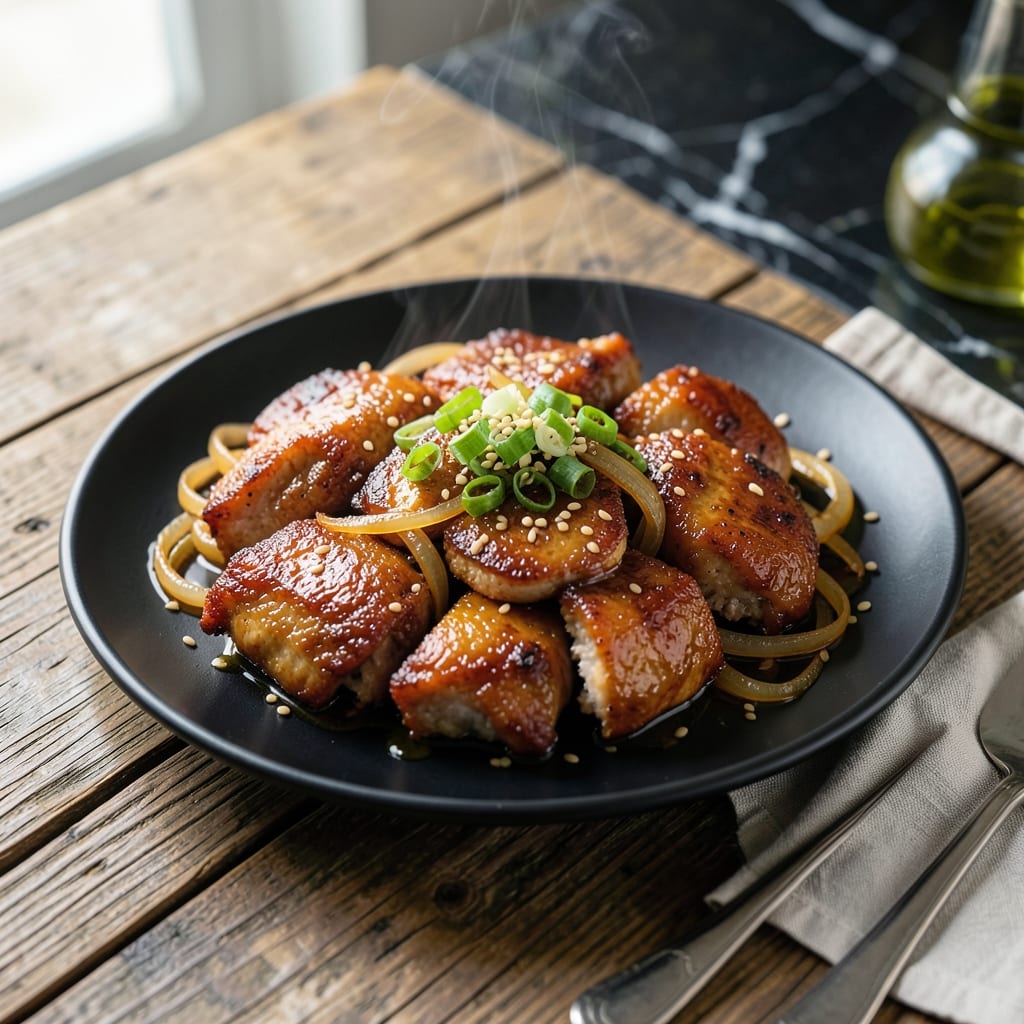
This one-pan dish brings together the bold flavors of Korean cuisine with the comforting sweetness of Filipino cooking. I developed this recipe after years of experimenting with fusion techniques in my small kitchen.
The secret lies in balancing sweet and savory elements through a carefully crafted marinade. Soy sauce, brown sugar, and garlic form the foundation, while gochujang adds that signature Korean heat.
Cooked in a single skillet, the pork becomes tender and caramelized, absorbing all the complex flavors. Each bite delivers a perfect harmony of tastes that feels both familiar and exciting.
Serve this over steamed rice to soak up every last drop of the rich, flavorful sauce. The fusion of these two culinary traditions creates something truly special.
Ingredients for Korean Pork Recipe Filipino Style
Sweet soy, fiery gochujang, and tender pork come together for this fusion dish.
| Ingredient | Amount | Notes |
|---|---|---|
| Pork Shoulder 🥩 | 1 ½ lb | Cut into bite-sized pieces |
| Soy Sauce 🥣 | ½ cup | Low-sodium preferred for balance |
| Brown Sugar 🍚 | ½ cup | Packed, light or dark |
| Gochujang 🌶️ | 3 tbsp | Korean red pepper paste |
| Garlic Cloves 🧄 | 6 cloves | Minced for maximum flavor |
| Onion 🧅 | 1 whole | Yellow or white, thinly sliced |
| Sesame Oil 🫒 | 1 tbsp | Toasted for depth |
| Rice Vinegar 💧 | 2 tbsp | Balances sweetness and heat |
| Ginger 🌿 | 1 tbsp | Freshly grated, peeled |
| Green Onions 🌱 | 4 whole | Thinly sliced for garnish |
| Steamed Rice 🍚 | 4 cups | Cooked, for serving |
| Black Pepper 🌶️ | ½ tsp | Freshly ground preferred |
| Sesame Seeds 🌰 | 1 tsp | Toasted, for garnish |
[recipe_ingredient_scaler]
The pork is the star here. Pork shoulder gives you that melt-in-your-mouth texture—pork loin stays too lean. Most grocery stores carry it pre-cut (look for bone-in for extra flavor), but the butcher counter at Whole Foods or H-Mart is ideal. I always ask for the fat cap left on (worth the extra minute). Gochujang is non-negotiable—find it in the Asian aisle or H-Mart for authentic flavor.
No gochujang? Sriracha with a teaspoon of miso paste gets you in the ballpark. Brown sugar can be swapped for coconut sugar (same amount), but it’ll darken faster. Out of rice vinegar? Apple cider vinegar works at one-third the amount. For the soy sauce, tamari is a great gluten-free sub. The garlic and ginger can be from jars in a pinch, but fresh is noticeably better (don’t skip this part).
This tastes even better the next day—3-4 days in the fridge, 3 months frozen. Reheat gently with a splash of water to keep the pork tender. I always make double the sauce so there’s extra for drizzling over rice. Store leftovers in airtight containers.
Why You’ll Love This Recipe
- One Pan Magic: I just toss pork shoulder with soy sauce, brown sugar, and gochujang, then let the oven do the work.
- Sweet & Spicy Fix: The combo of brown sugar and gochujang gives that addictive caramelized kick with every bite.
- Meal Prep Hero: I make a big batch on Sunday and it reheats beautifully for lunches all week.
- Budget Stretcher: Pork shoulder is cheap, and this feeds my whole family with leftovers for days.
Step-by-Step Instructions for Korean Pork Filipino Style
This fusion dish comes together quickly with bold flavors that’ll have everyone asking for seconds.
Step 1: Sear the Pork Shoulder for Depth
Heat a large skillet over medium-high heat and add the 1.5 lb Pork Shoulder pieces. Let them sear undisturbed for 3-4 minutes until the edges turn golden brown. You’ll see the fat start to render out—that’s your cue to flip.
Searing locks in the juices and creates a rich, caramelized base for the sauce. Don’t overcrowd the pan; work in batches if needed to ensure each piece gets proper contact with the heat. Transfer the pork to a plate and set aside.
Step 2: Build the Flavor Foundation
In the same skillet, add the 1 tbsp Sesame Oil, then toss in the 1 whole Onion and sauté for 2-3 minutes until softened. Add the 6 cloves Garlic Cloves and 1 tbsp Ginger, stirring constantly for 30 seconds until fragrant.
This aromatic trio is the backbone of the dish. The sesame oil adds a nutty depth, while the garlic and ginger infuse the oil with layers of flavor. Watch closely—garlic burns quickly, and burnt bits will make the sauce bitter.
Step 3: Create the Sweet and Spicy Sauce
Return the pork to the skillet and pour in the 0.5 cup Soy Sauce, 0.5 cup Brown Sugar, 3 tbsp Gochujang, and 2 tbsp Rice Vinegar. Stir well to coat the pork evenly. The gochujang will melt into the liquid, creating a glossy, slightly thick sauce.
Bring the mixture to a gentle simmer, then reduce the heat to medium-low. Let it cook for 15-20 minutes, stirring occasionally, until the pork is tender and the sauce has reduced slightly. The brown sugar caramelizes as it cooks, balancing the heat from the gochujang and the saltiness of the soy sauce.
Taste and adjust seasoning if needed—though the soy sauce and gochujang pack a punch, so go easy. The rice vinegar cuts through the richness, adding a subtle tang that ties everything together.
Step 4: Finish and Garnish
Once the pork is cooked through and the sauce has thickened to your liking, sprinkle in the 0.5 tsp Black Pepper. Stir to combine, then remove from heat. The pepper adds a subtle warmth that complements the other bold flavors.
Garnish with the 4 whole Green Onions and 1 tsp Sesame Seeds, which add a fresh crunch and nutty finish. Serve immediately over 4 cups Steamed Rice to soak up every last bit of the sauce. The rice balances the intensity of the pork, making each bite perfectly harmonious.
Pro Tips For Making Korean Pork Recipe Filipino Style
- Marinate Overnight: I learned this the hard way—pork shoulder needs at least 8 hours in the soy-garlic-gochujang mix to tenderize and absorb the flavors. Less than that, and the meat stays chewy and bland.
- Score the Fat: Cut shallow slits into the pork shoulder’s fat cap before marinating so the sauce penetrates deeper. Sounds tedious, but it actually changes the outcome.
- Watch the Sugar: Brown sugar burns fast over high heat. After burning two batches, I finally figured out to cook the pork on medium-low and baste frequently.
- Use Fresh Garlic: Skip the pre-minced stuff—freshly crushed garlic cloves release more aroma and bite into the marinade. My grandmother swore by this, and she was right.
Creative Variations of This korean pork recipe filipino style
Filipino Adobo Twist
Swap the gochujang for ½ cup Filipino adobo sauce (mix ⅓ cup soy sauce, 3 tbsp vinegar, 1 tbsp brown sugar, 5 crushed garlic cloves, and 1 tsp black peppercorns). This simplifies the marinade while keeping it deeply flavorful. Simmer the pork in this mixture for 25-30 minutes. 🌟
Coconut Milk Addition
For a creamier, more Filipino-inspired version, stir in 1 cup coconut milk when adding the soy sauce mixture. This mellows the heat and adds richness. The sauce will be slightly thinner but incredibly luscious. Garnish with toasted coconut flakes for texture.
Pineapple Sweetness
Add 1 cup fresh pineapple chunks along with the pork during the final 5 minutes of cooking. The natural sugars caramelize beautifully, adding a tropical sweetness that complements the savory sauce. This variation feels like a party in your mouth.
Spicy Longganisa Style
Boost the heat by adding 2 tbsp sriracha and 1 tsp smoked paprika to the sauce. This mimics the bold flavors of Filipino longganisa sausage. I love how the smokiness pairs with the brown sugar for a complex, layered taste. 🔥
Vegetable-Packed Version
Stir in 1 diced bell pepper and 1 cup sliced cabbage when you add the onions. This adds texture and makes the dish more substantial. The veggies soak up the sauce beautifully, making it a complete, one-pan meal.
Slow Cooker Method
Combine all ingredients in a slow cooker and cook on low for 6-8 hours. This hands-off approach lets the flavors meld deeply. The pork becomes fall-apart tender, and the sauce reduces naturally. Perfect for busy weeknights in my Boston apartment.
Nutrition Facts
Frequently Asked Questions
Can I use a different cut of pork?
Yes, but pork shoulder is ideal for tenderness. Pork loin works but may dry out faster. For best results, choose cuts with some fat marbling.
How can I make it less spicy?
Reduce the gochujang to 1 tablespoon or replace it with 1 tablespoon miso paste for milder flavor. Balance with extra brown sugar if needed.
What’s the best way to store leftovers?
Keep in an airtight container in the fridge for 3-4 days. Reheat gently with a splash of water to maintain moisture.
Can I cook this in a slow cooker?
Combine all ingredients and cook on low for 6-8 hours. The pork will be fall-apart tender, and the flavors will meld beautifully.

Trained in classic French technique but raised on slow-cooked ribs and spicy rubs, she blends culinary skill with smoke and soul.
- Recipe for Boneless Pork Chops in Cast Iron Skillet: Sear and Baste to Juicy Perfection - October 3, 2026
- Recipe for Boneless Cross Rib Roast: Slow-Roasted Beef with Herb Crust - October 3, 2026
- Hamburgers in Sauce Recipe Crock Pot: Slow-Cooked Savory Delight - October 3, 2026