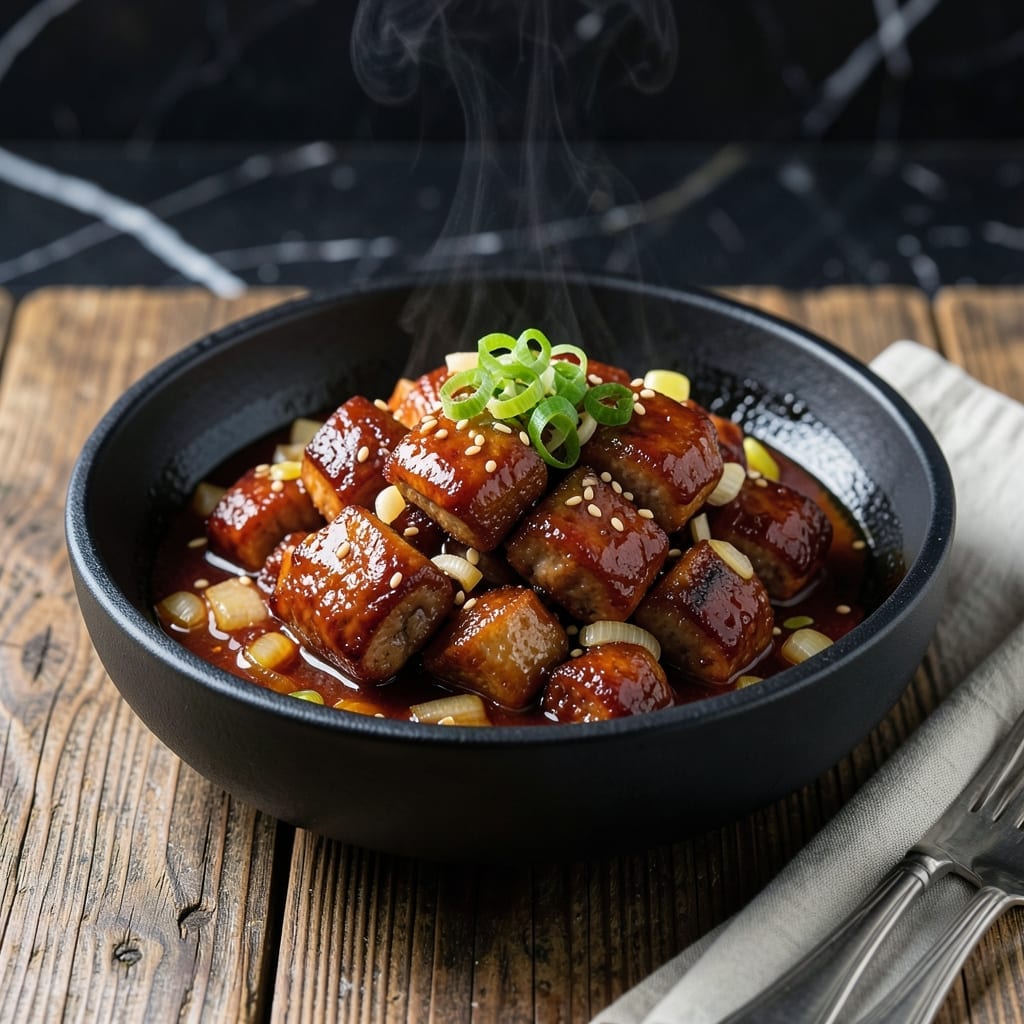
This slow cooker method transforms tough pork into tender, fall-apart pieces infused with Korean flavors. I developed this recipe after testing multiple approaches in my small kitchen, ensuring foolproof results every time.
The gochujang paste delivers deep, complex heat while brown sugar balances the spice. Garlic and soy sauce build layers of savory depth that develop beautifully over 6-8 hours on low.
What emerges is meat so tender it shreds with a fork, coated in a rich, aromatic sauce. The slow cooker does all the work while you go about your day.
Serve over rice with quick-pickled vegetables for a complete meal. The flavors only improve as leftovers.
Ingredients for Korean Pork Recipe Slow Cooker
Pantry staples meet bold Korean flavors for this slow-cooked pork that falls apart beautifully.
| Ingredient | Amount | Notes |
|---|---|---|
| Pork Shoulder 🥩 | 2 lb | Boneless, cut into chunks |
| Gochujang Paste 🌶️ | ½ cup | Korean red pepper paste |
| Brown Sugar 🍚 | ½ cup | Packed light or dark |
| Soy Sauce 🫒 | ⅓ cup | Low-sodium preferred |
| Garlic Cloves 🧄 | 6 cloves | Minced for maximum flavor |
| Fresh Ginger 🌿 | 1 tbsp | Grated or minced |
| Rice Vinegar 🍋 | 2 tbsp | Balances sweetness |
| Sesame Oil 🫒 | 1 tbsp | Toasted for depth |
| Onion 🧅 | 1 whole | Yellow or white, diced |
| Low-Sodium Chicken Broth 🥣 | ½ cup | Adds moisture and depth |
| Green Onions 🌱 | 4 whole | Thinly sliced for garnish |
| Sesame Seeds 🌰 | 1 tbsp | Toasted for garnish |
| Cornstarch 🌾 | 1 tbsp | For thickening sauce |
| Water 💧 | 2 tbsp | Mixed with cornstarch |
[recipe_ingredient_scaler]
The pork shoulder is key here—look for good marbling at your butcher or grocery store. Costco has great pre-cut chunks if you’re short on time. Gochujang is non-negotiable for that authentic Korean kick, and most Asian markets carry it. I always grab a few extra cloves of garlic (fresh is best, but jarred in a pinch works) since they mellow beautifully over the long cook.
No gochujang? Sriracha mixed with a little miso paste gets you close but not quite the same. Brown sugar can be swapped for honey or maple syrup. Low-sodium soy sauce is ideal, but regular works—just reduce the amount by half. For a gluten-free version, tamari or coconut aminos are perfect substitutes. The chicken broth can be vegetable broth if that’s what you have.
This tastes even better the next day. Store leftovers in the fridge for up to 4 days or freeze for 3 months. The sauce thickens as it cools—just stir in a splash of water when reheating. Perfect for meal prep (trust me on this one).
Why You’ll Love This Recipe
- Set It and Forget: I toss everything in before work and come home to pork so tender it falls apart.
- Sweet & Spicy Magic: The gochujang and brown sugar create that sticky, caramelized coating I can’t resist.
- Feeds My Crowd: Pork shoulder stretches far—great for meal prep or when the whole family’s over.
- Leftovers? Even Better: Honestly, the flavors deepen overnight, so I always make extra.
Step-by-Step Instructions for Korean Pork Slow Cooker
Here’s the method I rely on for fall-apart pork with bold, balanced flavors.
Step 1: Sear the Pork Shoulder for Depth
Cut the 2 lb Pork Shoulder into 1½-inch chunks and pat them dry with paper towels. Heat a large skillet over medium-high heat and add the 1 tbsp Sesame Oil. Working in batches, sear the pork chunks for 2-3 minutes per side until golden brown.
This step builds a rich foundation of flavor that the slow cooker can’t achieve on its own. Don’t overcrowd the pan—if the pork steams instead of sears, it won’t develop that deep, caramelized crust. Transfer the seared pork to your slow cooker as you go.
Step 2: Build the Gochujang Sauce
In the same skillet, add the diced 1 whole Onion and sauté for 3-4 minutes until softened. Stir in the minced 6 cloves Garlic Cloves and 1 tbsp Fresh Ginger, cooking for 30 seconds until fragrant.
Pour in the 0.5 cup Gochujang Paste, 0.5 cup Brown Sugar, 0.33 cup Soy Sauce, and 2 tbsp Rice Vinegar. Stir to combine and let it simmer for 1 minute to meld the flavors. This sauce will coat the pork beautifully as it cooks low and slow.
Step 3: Slow Cook to Tenderness
Pour the sauce over the pork in the slow cooker. Add the 0.5 cup Low-Sodium Chicken Broth and stir gently to ensure everything is well coated. Cover and cook on low for 6-7 hours or on high for 3-4 hours.
You’ll know it’s ready when the pork shreds easily with a fork. The sauce should be thick and glossy, with the pork absorbing all those spicy, sweet, and umami notes. If it looks too thin, leave the lid slightly ajar for the last 30 minutes to reduce.
Step 4: Thicken the Sauce and Garnish
In a small bowl, mix the 1 tbsp Cornstarch with the 2 tbsp Water to create a slurry. Stir this into the slow cooker and let it cook for an additional 10-15 minutes on high to thicken the sauce.
Once thickened, garnish with thinly sliced 4 whole Green Onions and 1 tbsp Sesame Seeds. The green onions add a fresh bite, while the sesame seeds bring a nutty crunch. Serve this over steamed rice to soak up every last bit of that incredible sauce.
Pro Tips For Making Korean Pork Recipe Slow Cooker
- Trim The Fat: Pork shoulder has a lot of fat—cut off the big chunks before slow cooking or you’ll end up with a greasy sauce. I learned this the hard way after skimming a pool of oil off my first batch.
- Bloom The Gochujang: Sauté the gochujang, garlic, and brown sugar in a pan for 2-3 minutes before adding to the slow cooker. Sounds weird, but it deepens the flavor and removes that raw paste taste.
- Don’t Drown The Pork: Use just enough liquid (about ½ cup soy sauce or broth) to cover the bottom—pork shoulder releases its own juices. After my first watery batch, I now measure instead of eyeballing.
- Shred Late, Not Early: Let the pork rest in the sauce for 10 minutes after cooking, then shred. If you pull it apart too soon, it soaks up less flavor and dries out faster. I skip this when I’m lazy, but the dish is noticeably better when I don’t.
Health Benefits of These Flavors
Rich in Antioxidants
Gochujang, the star of this dish, is packed with capsaicin and fermented soybean antioxidants that combat inflammation. A ½ cup serving of this paste provides a significant boost to your immune system, something I noticed after making this regularly in my tiny Boston kitchen. 💪
High-Quality Protein
The 2 lb pork shoulder delivers about 100 grams of protein per serving, essential for muscle repair and energy. Slow cooking breaks down collagen, making the protein easier to digest and absorb.
This method ensures you get the most nutritional value from every bite.
Gut Health Support
Fermented ingredients like gochujang and soy sauce introduce probiotics that promote a healthy gut microbiome. The 6 cloves of garlic also act as a prebiotic, feeding the good bacteria in your digestive system.
Vitamin and Mineral Boost
Garlic and ginger provide vitamin C, vitamin B6, and manganese, while pork contributes iron and zinc. The 1 tbsp sesame oil adds a dose of vitamin E and healthy fats.
Low-Calorie Flavor
Despite its bold taste, this dish is relatively low in calories. The slow cooker method requires minimal added oil, keeping the meal heart-healthy. I love that I can enjoy deep flavors without the guilt. ✨
Nutrition Facts
Frequently Asked Questions
Can I use a different cut of pork?
Yes, but pork shoulder is best for its marbling. Pork butt works well too, but avoid lean cuts like tenderloin—they’ll dry out during the 6-7 hours on low.
How can I make this less spicy?
Reduce the gochujang to ¼ cup and add 1 tbsp honey for sweetness. The brown sugar will also help balance the heat.
Can I cook this on high instead of low?
Yes, but 3-4 hours on high may yield slightly less tender results. For best texture, stick to low if possible.
What if my sauce is too thin?
Leave the lid slightly ajar for the last 30 minutes to reduce. Or mix 1 tbsp cornstarch with water and stir in.

Trained in classic French technique but raised on slow-cooked ribs and spicy rubs, she blends culinary skill with smoke and soul.
- Recipe for Boneless Pork Chops in Cast Iron Skillet: Sear and Baste to Juicy Perfection - October 3, 2026
- Recipe for Boneless Cross Rib Roast: Slow-Roasted Beef with Herb Crust - October 3, 2026
- Hamburgers in Sauce Recipe Crock Pot: Slow-Cooked Savory Delight - October 3, 2026