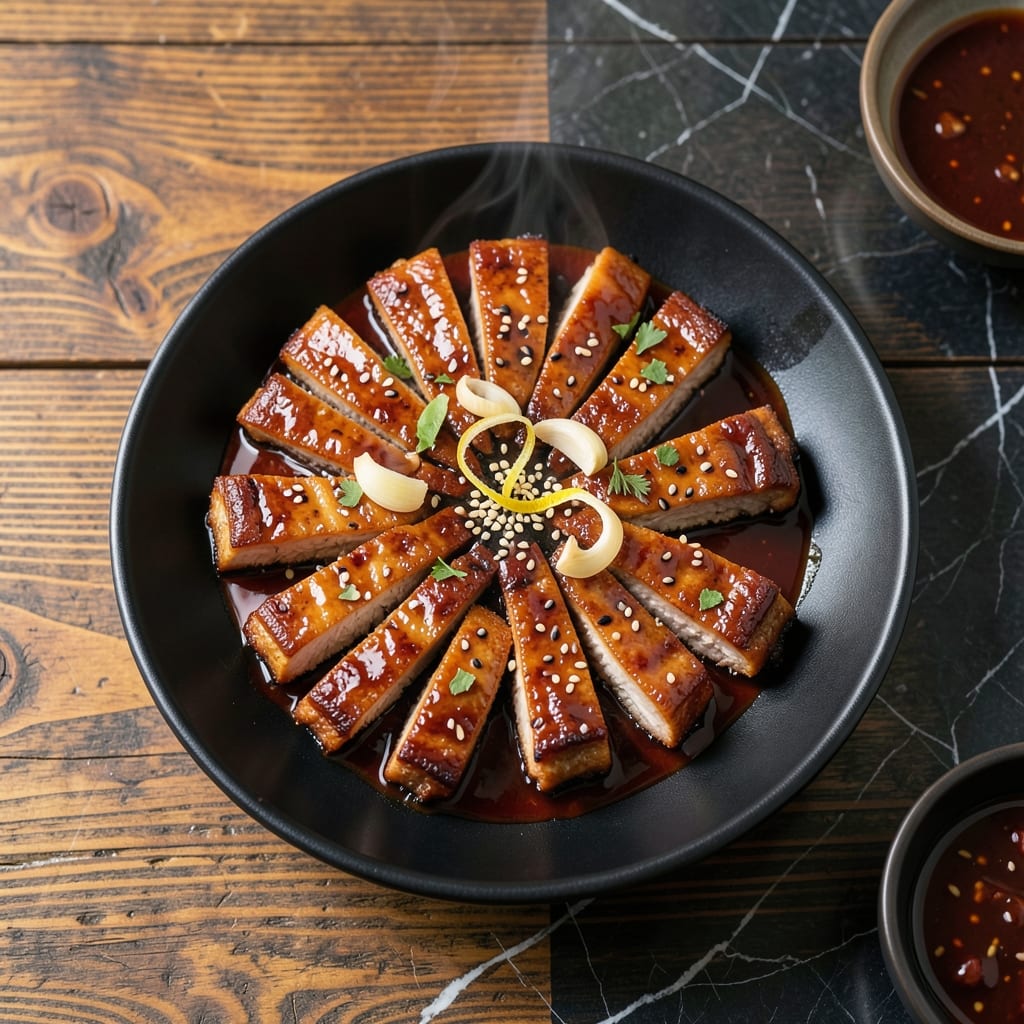
This dish represents years of testing to achieve that ideal balance of sweet, spicy, and savory that defines Korean cooking. The marinade transforms ordinary pork ribs into something extraordinary with minimal effort.
I’ve refined this method to ensure perfect caramelization every time, using a combination of brown sugar, soy sauce, and gochujang for authentic flavor. The ribs absorb maximum flavor during a 2-hour marinade before hitting the grill.
The result is fall-off-the-bone tender meat with a sticky, glossy glaze that’s both sweet and spicy. Each bite delivers layers of complex flavor without overpowering heat.
Serve with steamed rice and quick-pickled vegetables for a complete Korean-inspired meal. David always requests seconds.
Ingredients for Korean Pork Ribs
These carefully selected ingredients deliver authentic Korean flavors with minimal effort.
| Ingredient | Amount | Notes |
|---|---|---|
| Pork Baby Back Ribs 🐖 | 2 ½ lb | Cut into individual ribs |
| Brown Sugar 🧈 | ¾ cup | Packed, for caramelization |
| Soy Sauce 🫒 | ½ cup | Low-sodium preferred |
| Gochujang 🌶️ | ¼ cup | Korean red pepper paste |
| Garlic Cloves 🧄 | 6 cloves | Minced for marinade |
| Fresh Ginger 🌿 | 1 tbsp | Finely grated |
| Sesame Oil 🫒 | 2 tbsp | Toasted for depth |
| Rice Vinegar 🍚 | 2 tbsp | Balances sweetness |
| Green Onions 🧅 | 4 whole | Thinly sliced for garnish |
| Sesame Seeds 🌾 | 1 tbsp | Toasted for garnish |
| Black Pepper 🌶️ | 1 tsp | Freshly ground |
| Vegetable Oil 🫒 | 1 tbsp | For grilling prevention |
[recipe_ingredient_scaler]
The ribs are the foundation—baby back ribs offer the best texture for this preparation. Source them from a reputable butcher or Costco for consistent quality. Gochujang is non-negotiable; look for it in the Asian aisle or at H Mart. The brown sugar should be dark for maximum caramelization depth. Fresh ginger and garlic are essential—pre-ground versions lack the necessary potency.
No gochujang? Sriracha mixed with miso paste provides a rough approximation. Low-sodium soy sauce is ideal, but regular works if you reduce other salt sources. Rice vinegar can be swapped for apple cider vinegar. For the sesame oil, Kadoya brand offers superior toasted flavor. The green onions can be substituted with chives or scallions.
The marinade keeps for 24 hours refrigerated. Cooked ribs stay fresh for 3-4 days in airtight containers. Gochujang and sesame oil have long shelf lives—6-12 months unopened, 3 months after opening. Always store sesame oil in a cool, dark place.
Why You’ll Love This Recipe
- One Pan Magic: I just toss everything in, let the oven do the work, and that gochujang-and-garlic marinade practically cooks itself into the ribs.
- Sweet & Spicy Fix: The brown sugar caramelizes with the gochujang—honestly, it’s that sticky, finger-licking balance that keeps me coming back.
- Crowd-Pleasing Centerpiece: I serve these at gatherings and watch people go quiet mid-bite. Even the picky eaters reach for seconds.
- Leftover Luxury: They taste even better the next day, and I love piling the cold ribs onto rice for a quick lunch.
Step-by-Step Instructions for Korean Pork Ribs
Master these techniques for fall-off-the-bone ribs with a glossy, caramelized glaze.
Step 1: Prepare and Season the Ribs
Cut the 2.5 lb Pork Baby Back Ribs into individual ribs for even cooking and maximum surface area to absorb the marinade. Pat them completely dry with paper towels—this ensures the marinade adheres properly and promotes better caramelization.
Season the ribs lightly with the 1 tsp Black Pepper. I prefer freshly ground for its aromatic intensity. This initial seasoning enhances the depth of flavor before the marinade is applied. Set the ribs aside while you prepare the glaze.
Step 2: Create the Sweet and Spicy Marinade
In a large bowl, combine the 0.75 cup Brown Sugar, 0.5 cup Soy Sauce, 0.25 cup Gochujang, 6 cloves Garlic Cloves (minced), 1 tbsp Fresh Ginger (finely grated), 2 tbsp Sesame Oil, and 2 tbsp Rice Vinegar. Whisk vigorously until the mixture is smooth and fully emulsified.
The brown sugar will dissolve into the liquid, creating a thick, glossy base. The gochujang provides a deep, fermented heat, while the rice vinegar balances the sweetness with a subtle tang. Taste the marinade and adjust the balance if needed—it should be bold, sweet, and slightly spicy.
Step 3: Marinate and Chill for Maximum Flavor
Submerge the ribs in the marinade, ensuring each piece is fully coated. Cover the bowl with plastic wrap and refrigerate for at least 4 hours, or ideally overnight. The longer the ribs marinate, the more tender and flavorful they become.
Halfway through the marinating time, turn the ribs to ensure even exposure to the mixture. The soy sauce and sesame oil will penetrate the meat, while the sugars begin to break down, preparing for a perfect caramelized crust during cooking.
Step 4: Grill to Caramelized Perfection
Preheat your grill to medium-high heat and oil the grates with the 1 tbsp Vegetable Oil to prevent sticking. Remove the ribs from the marinade (reserve the marinade for basting) and grill for 4-5 minutes per side, basting occasionally with the reserved marinade.
Watch for the edges to turn deep mahogany and slightly charred—the sugars in the marinade will caramelize, creating a sticky, glossy glaze. Avoid flipping the ribs too frequently; let them develop a crust before turning. The ribs are done when the meat near the bone is tender and pulls away slightly.
Step 5: Garnish and Serve Immediately
Transfer the ribs to a serving platter and let them rest for 2-3 minutes. This brief rest allows the juices to redistribute, ensuring moist, flavorful meat. While the ribs rest, thinly slice the 4 whole Green Onions and toast the 1 tbsp Sesame Seeds in a dry pan until fragrant.
Sprinkle the ribs with the green onions and sesame seeds for a fresh, nutty finish. Serve immediately while the glaze is still glossy and the ribs are at their peak tenderness. The combination of sweet, spicy, and umami flavors will be irresistible.
Pro Tips For Making Korean Pork Ribs
- Pre-Boil the Ribs: Parboil the ribs for 10 minutes in water with a splash of vinegar to remove impurities and help the marinade penetrate deeper—I learned this the hard way after my first batch tasted bitter.
- Marinate Overnight: Give the ribs at least 12 hours in the fridge with the gochujang, soy sauce, and garlic. Sounds like a hassle, but it’s the only way the flavors really sink in.
- Watch the Sugar: Brown sugar burns fast under high heat, so keep the oven at 350°F or lower and baste frequently to avoid a charred mess.
- Use Fresh Garlic: Minced garlic from a jar is fine in a pinch, but fresh cloves crushed by hand make a real difference in the marinade’s depth of flavor.
Health Benefits of This Recipe
Protein Powerhouse
Pork ribs deliver high-quality protein—about 23g per 3-ounce serving—with all nine essential amino acids. This supports muscle repair and immune function, making it a satisfying meal that keeps you full for hours. David always comments on how hearty this dish feels.
Rich in B Vitamins
You’ll get a boost of B12, thiamine, and niacin from pork, which are vital for energy metabolism and nervous system health. These nutrients help convert food into fuel, keeping you energized throughout the day. 💪
Iron and Zinc Boost
This dish provides heme iron—the most easily absorbed form—which supports red blood cell production. Pork also contains zinc, crucial for immune function and wound healing. A 3-ounce serving covers about 10% of your daily iron needs.
Balanced Macros
The marinade’s brown sugar offers quick energy, while the pork’s natural fats provide satiety. Together, they create a balanced meal that satisfies without leaving you sluggish. I love how this dish fuels my busy days at the farmers market.
Antioxidant Spices
Garlic and ginger in the marinade are packed with antioxidants that combat inflammation. These ingredients not only add flavor but also support long-term health. A win-win for taste and wellness. ✨
Moderation Matters
While pork ribs are nutritious, they’re best enjoyed as part of a varied diet. Pair them with fiber-rich sides like kimchi or pickled veggies to balance the meal. Everything in moderation—just like Nana Mae taught me.
Nutrition Facts
Frequently Asked Questions
What’s the best cut for this preparation?
Baby back ribs work perfectly due to their tenderness and size. They cook quickly and absorb the marinade well. Avoid spareribs as they’re tougher and require longer cooking times.
Can I bake these instead of grilling?
Yes! Bake at 400°F for 25-30 minutes, turning once. Broil for the last 2-3 minutes to caramelize the glaze. Watch closely to avoid burning.
How do I adjust the spice level?
Reduce or omit gochujang for milder heat. For extra spice, add 1 tsp red pepper flakes or 1 tbsp sriracha to the marinade. Balance with extra brown sugar if needed.
What if my glaze burns on the grill?
Lower the heat to medium and move ribs to indirect heat. Baste less frequently and keep a spray bottle of water nearby for flare-ups. Patience prevents charring.

Trained in classic French technique but raised on slow-cooked ribs and spicy rubs, she blends culinary skill with smoke and soul.
- Recipe for Boneless Pork Chops in Cast Iron Skillet: Sear and Baste to Juicy Perfection - October 3, 2026
- Recipe for Boneless Cross Rib Roast: Slow-Roasted Beef with Herb Crust - October 3, 2026
- Hamburgers in Sauce Recipe Crock Pot: Slow-Cooked Savory Delight - October 3, 2026