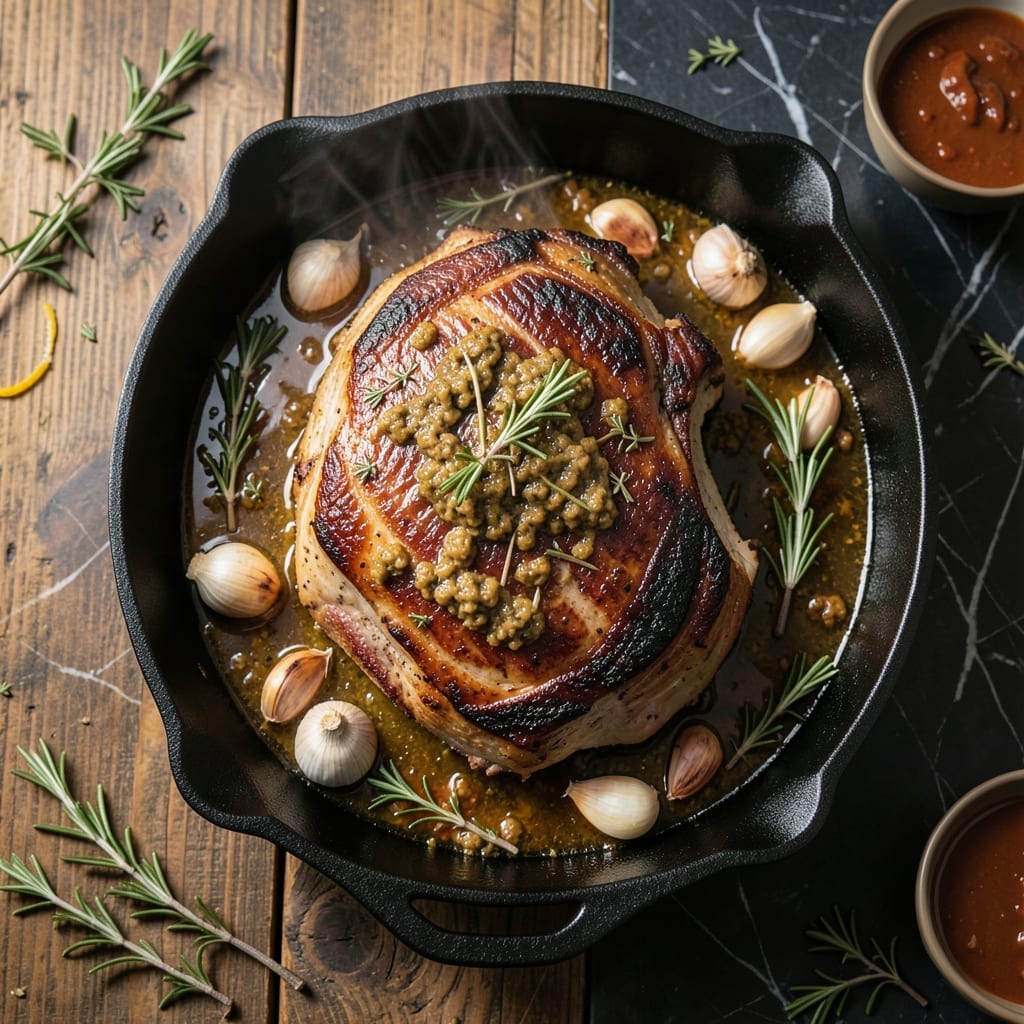
This garlic-herb encrusted rib roast transforms a special occasion into an unforgettable meal. I developed this method after years of testing, focusing on a foolproof crust that locks in juices while creating a flavorful exterior.
The secret lies in the herb blend, which forms a golden crust as it roasts. I use a combination of fresh rosemary, thyme, and garlic for maximum aroma. The meat stays tender and moist, with every bite bursting with savory depth.
You’ll achieve restaurant-quality results with simple techniques and common ingredients. The aroma alone will have your guests gathering around the kitchen, eager for that first slice.
Perfect for Sunday dinners or holiday feasts. Here’s how to make this centerpiece dish.
Ingredients for Paula Deen Rib Roast
Prime rib roast and fresh herbs create this showstopping centerpiece with restaurant-quality results.
| Ingredient | Amount | Notes |
|---|---|---|
| Bone-In Rib Roast 🥩 | 5 lb | Prime grade preferred, fat cap intact |
| Fresh Rosemary 🌿 | ¼ cup | Finely chopped, stems discarded |
| Fresh Thyme 🍃 | ¼ cup | Leaves stripped from stems |
| Garlic Cloves 🧄 | 8 cloves | Minced to fine paste |
| Kosher Salt 🧂 | 2 tbsp | Diamond Crystal preferred for texture |
| Black Pepper 🌶️ | 1 tbsp | Freshly cracked, coarse grind |
| Dijon Mustard 🟡 | ¼ cup | Acts as crust binder |
| Extra-Virgin Olive Oil 🫒 | ¼ cup | For herb paste consistency |
| Unsalted Butter 🧈 | 4 tbsp | Softened to room temperature |
| Red Wine 🍷 | 1 cup | Dry variety like Cabernet Sauvignon |
| Beef Stock 🥫 | 1 cup | Low-sodium preferred for reduction |
| Yellow Onion 🧅 | 1 whole | Roughly chopped for pan base |
| Carrots 🥕 | 3 whole | Peeled, cut into chunks |
| Celery Stalks 🥬 | 3 pieces | Cut into large pieces |
[recipe_ingredient_scaler]
The rib roast is the star—prime grade from Costco or a trusted butcher gives you the best marbling. Look for a roast with a thick fat cap (that’s flavor insurance). I always ask for the bones to be frenched (the meat scraped away from the bone ends) for that fancy presentation. The herbs need to be fresh—dried won’t give you that vibrant crust or aroma.
No prime grade available? Choice grade works fine, just don’t overcook it. Out of Dijon mustard? Whole-grain mustard at half the amount adds a nice texture, or horseradish for a spicy kick. If you’re skipping the wine, use extra beef stock with a splash of balsamic vinegar. The butter can be swapped for duck fat if you’re feeling extra decadent (trust me, it’s worth it).
Bring the roast to room temperature before cooking—about 2 hours on the counter. Leftover roast makes incredible sandwiches (pile it high on crusty bread with horseradish mayo). The pan juices freeze beautifully for future gravy—good for 3 months in airtight containers.
Why You’ll Love This Recipe
- I’ll be real: this is my go-to for Christmas dinner, but it works for Sunday supper too.
- Minimal Effort: I just rub the roast with rosemary, thyme, garlic, and salt—no marination, no fuss.
- Herb-Crusted Bliss: That crust from the fresh herbs and garlic? Ridiculously good with every juicy bite.
- Holiday Hero: I’ll be real: this is my go-to for Christmas dinner, but it works for Sunday supper too.
Step-by-Step Instructions for Garlic-Herb Encrusted Rib Roast
Here’s my proven method for creating a showstopping centerpiece with a perfectly crisp crust.
Step 1: Prepare the Herb-Garlic Paste
In a small bowl, combine the 0.25 cup fresh rosemary, 0.25 cup fresh thyme, 8 cloves garlic cloves, 2 tbsp kosher salt, 1 tbsp black pepper, 0.25 cup Dijon mustard, and 0.25 cup extra-virgin olive oil. I like to use a fork to mash everything together into a thick paste, ensuring the herbs and garlic are evenly distributed throughout.
This paste will serve as both a flavor boost and a binding agent for the crust. The Dijon mustard acts as a natural adhesive, helping the herb mixture cling to the roast during cooking. You should end up with about 1 cup of fragrant, chunky paste.
Step 2: Sear and Coat the Rib Roast
Pat the 5 lb bone-in rib roast completely dry with paper towels. This is crucial for achieving a good sear. Heat a large, heavy skillet over medium-high heat and add 2 tbsp of the 4 tbsp unsalted butter. When the butter stops foaming, sear the roast on all sides until deeply browned, about 2-3 minutes per side.
Transfer the seared roast to a roasting rack set in a large pan. While it’s still hot, spread the herb-garlic paste evenly over the entire surface, pressing it in gently with your hands. The paste should form a thick, even layer that will transform into a flavorful crust as it roasts.
Step 3: Create the Aromatic Base and Roast
Scatter the 1 whole yellow onion, 3 whole carrots, and 3 pieces celery stalks in the bottom of the roasting pan beneath the rack. These vegetables will serve as a natural roasting rack while infusing the meat with additional flavor. Pour the 1 cup red wine and 1 cup beef stock into the pan, being careful not to wash off the herb paste.
Roast in a preheated 450°F oven for 20 minutes, then reduce the heat to 325°F and continue roasting. For medium-rare, cook until an instant-read thermometer inserted into the thickest part of the roast registers 125-130°F, which should take about 1.5 to 2 hours total, depending on your oven.
Step 4: Rest and Serve
Transfer the roast to a cutting board and tent loosely with foil. Let it rest for at least 20-30 minutes before carving. This resting period allows the juices to redistribute throughout the meat, ensuring every slice is moist and flavorful.
While the roast rests, you can make a quick pan sauce by skimming the fat from the pan drippings and simmering the remaining liquid with any leftover herb paste. Strain and serve alongside the carved roast for an extra burst of flavor.
Carve the roast between the ribs into thick slices, serving each portion with some of the aromatic vegetables and pan sauce. The meat should be tender and juicy with a beautifully browned, herb-crusted exterior.
Pro Tips For Making Paula Deen Rib Roast
- Room Temp First: Pull the rib roast out of the fridge at least 2 hours before cooking—cold meat seizes up in the oven, and I learned this the hard way with uneven doneness.
- Crush the Herbs: Rub the fresh rosemary and thyme between your palms before applying to release their oils, otherwise the flavor stays too subtle against the rich beef.
- Salt Overnight: Dry-brine the roast with kosher salt the night before; it penetrates deep and guarantees a juicier result, even if it feels like overkill at first.
- Skip the Cover: Resist the urge to tent with foil while roasting—Paula’s method works best with dry heat for that perfect crust, and covering just steams the surface.
Essential Equipment for paula deen rib roast
Roasting Pan Essentials
Invest in a heavy-duty stainless steel roasting pan with a rack—I use a 16-inch All-Clad that’s lasted me years. The rack elevates the roast, allowing heat to circulate evenly for that perfect crust. A dark pan can cause over-browning, so stick with light-colored stainless. 💡
Thermometer Accuracy
An instant-read thermometer is non-negotiable for rib roast. I swear by my ThermoWorks Thermapen—it gives readings in 2-3 seconds and is accurate to ±0.7°F. Check the thickest part of the meat, avoiding bones and fat pockets.
Skillet for Searing
A heavy-bottomed skillet is key for that initial sear. My go-to is a 12-inch Lodge cast iron—it retains heat beautifully and can go straight from stovetop to oven. Preheat it for 5 minutes to ensure even browning.
Heat-Resistant Tools
Use long-handled tongs and oven mitts rated to 500°F for safety when handling hot pans. I keep a pair of OXO silicone mitts near my stove—they’re flexible enough to grip but protect up to 600°F. ⚡
Carving Setup
A sharp carving knife (I use a Wüsthof 8-inch) and a stable cutting board are musts. Place a damp towel under the board to prevent slipping. Slice between the ribs in one smooth motion for clean, even pieces.
Pan Sauce Supplies
Have a fine-mesh strainer and fat separator ready for making pan sauce. I use a 2-cup OXO separator—it’s easy to pour and clean. Skim the fat first, then reduce the juices on the stovetop for a rich, flavorful sauce.
Nutrition Facts
Frequently Asked Questions
How long should I let the roast rest before carving?
Let the roast rest for at least 20-30 minutes after removing it from the oven. This allows the juices to redistribute, ensuring moist, flavorful slices. Skipping this step can lead to dry meat.
Can I use dried herbs instead of fresh?
Fresh herbs are strongly recommended for the best flavor. If you must use dried, reduce the amount by half (2 tbsp rosemary, 2 tbsp thyme) and rehydrate them in 1 tbsp olive oil before mixing.
What internal temperature should I aim for?
For perfect medium-rare, cook until the internal temperature reaches 125-130°F. Use an instant-read thermometer to check the thickest part, avoiding bones. The temperature will rise 5-10°F during resting.
Can I prepare the herb paste ahead of time?
Yes! The herb-garlic paste can be made up to 2 days in advance and stored in an airtight container in the fridge. This saves time on the day of cooking.

Trained in classic French technique but raised on slow-cooked ribs and spicy rubs, she blends culinary skill with smoke and soul.
- Recipe for Boneless Pork Chops in Cast Iron Skillet: Sear and Baste to Juicy Perfection - October 3, 2026
- Recipe for Boneless Cross Rib Roast: Slow-Roasted Beef with Herb Crust - October 3, 2026
- Hamburgers in Sauce Recipe Crock Pot: Slow-Cooked Savory Delight - October 3, 2026