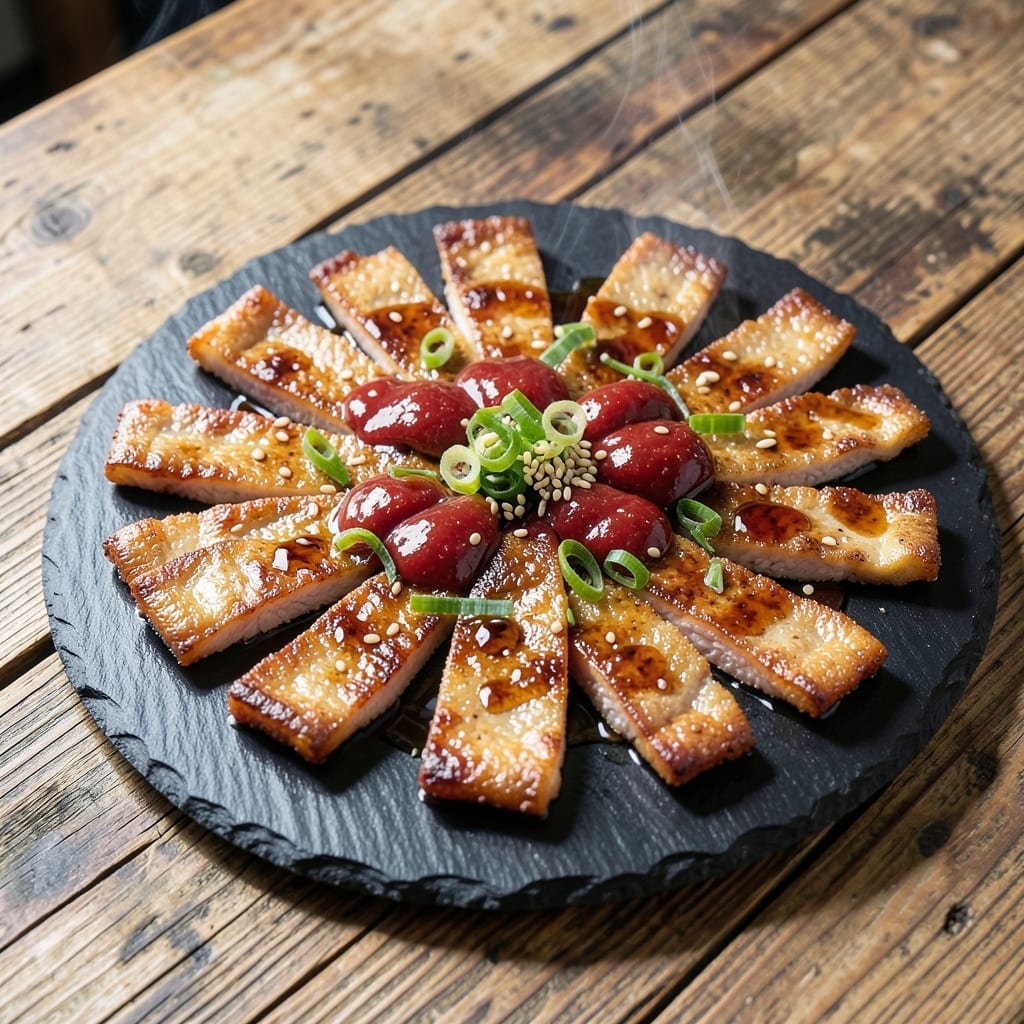
This Korean BBQ twist on pork skin delivers crispy, shatteringly light chicharrón with a glossy sweet-savory glaze. I developed this method to showcase the skin’s natural richness while adding layers of umami and caramelization.
The key is slow-rendering the fat before finishing with high heat, then brushing on a sticky glaze that clings to every ridge. The result is a dish that balances texture and flavor perfectly.
Ingredients for Korean Pork Skin Bbq
Fresh pork skin and a handful of pantry staples build this crispy, glaze-kissed dish from scratch.
| Ingredient | Amount | Notes |
|---|---|---|
| Pork Skin 🥓 | 1 ½ lb | Fresh, uncooked, fat-on |
| Kosher Salt 🧂 | 2 tbsp | For initial seasoning |
| Gochujang 🌶️ | ½ cup | Korean red pepper paste |
| Soy Sauce 🫒 | ¼ cup | Low-sodium preferred |
| Honey 🍯 | 3 tbsp | For glaze sweetness |
| Rice Vinegar 💧 | 2 tbsp | Balances sweetness and salt |
| Minced Garlic 🧄 | 4 cloves | Freshly minced for depth |
| Grated Ginger 🌿 | 1 tbsp | Freshly grated for zing |
| Sesame Oil 🫒 | 1 tbsp | Toasted for aroma |
| Brown Sugar 🍚 | 2 tbsp | For caramelization in glaze |
| Green Onions 🧅 | 4 whole | Thinly sliced for garnish |
| Sesame Seeds 🌾 | 1 tbsp | Toasted for garnish |
| Vegetable Oil 🫒 | 1 cup | For frying, neutral flavor |
[recipe_ingredient_scaler]
The pork skin is everything here. Ask your butcher for uncooked skin with the fat layer intact—this isn’t the pre-cooked stuff you’ll find in some grocery stores. I get mine from H-Mart or a local Asian market where turnover is high (fresher product). Look for pieces with even thickness—about 1/4 inch is ideal. If buying in bulk, freeze extras in a single layer before bagging to prevent sticking.
No gochujang? Sriracha mixed with a spoonful of miso paste gets you close but won’t have the same depth. Substitute agave or maple syrup for honey if needed. The soy sauce should be Korean if possible—Jin Ganjang is a solid brand. For the rice vinegar, apple cider vinegar works in a pinch, but it’s slightly fruitier. Skip the pre-minced garlic and ginger—the fresh stuff makes a noticeable difference.
Rendered pork skin keeps 3-4 days in the fridge once cooled. The glaze can be made a week ahead and stored in the fridge—just warm slightly before brushing. For best texture, serve the chicharrón immediately after glazing. Leftovers lose some crispness but still taste great reheated in a dry skillet.
Why You’ll Love This Recipe
- Set It and Forget: I just toss the pork skin with salt, let it crisp up, and brush on the gochujang-honey glaze at the end—hardly any active work.
- Sweet-Spicy Crunch: That contrast of sticky, spicy gochujang and soy with the shatter-crisp skin? Ridiculously good.
- Feeds a Hungry Table: I serve this at game nights and it disappears faster than the snacks. Honestly, it’s the only dish I don’t have to nag people to try.
- Leftovers? Better: The flavors deepen overnight, so I actually make extra—cold pork skin straight from the fridge is my secret late-night snack.
Step-by-Step Instructions for Korean Pork Skin BBQ
Achieve perfect crispness with this method, tested for consistent results every time.
Step 1: Cure the Pork Skin
Begin by cutting the 1.5 lb Pork Skin into 2-inch wide strips. I use kitchen shears for clean cuts through the fat and skin. Rub the strips thoroughly with 2 tbsp Kosher Salt on all sides, paying special attention to the flesh side.
Place the salted strips in a single layer on a wire rack set over a baking sheet. Refrigerate uncovered for 8-12 hours or overnight. This curing step draws out moisture, which is essential for achieving that ultra-crispy texture we’re after.
Step 2: Dry and Fry the Pork Skin
After curing, rinse the pork skin under cold water to remove excess salt, then pat completely dry with paper towels. The skin should feel tacky but not wet. Heat 1 cup Vegetable Oil in a large, deep skillet over medium-high heat to 350°F.
Fry the pork skin strips in batches, being careful not to overcrowd the pan. Fry for 8-10 minutes until golden brown and puffed, turning occasionally with tongs. The skin will transform from translucent to opaque and crisp as it cooks. Transfer to a paper towel-lined plate to drain.
Step 3: Prepare the Sweet-Savory Glaze
In a saucepan, combine 0.5 cup Gochujang, 0.25 cup Soy Sauce, 3 tbsp Honey, 2 tbsp Rice Vinegar, 4 cloves Minced Garlic, 1 tbsp Grated Ginger, 1 tbsp Sesame Oil, and 2 tbsp Brown Sugar.
Bring the mixture to a simmer over medium heat, then reduce to low heat and cook for 3-4 minutes, stirring constantly. The glaze should thicken slightly and become glossy. Keep an eye on it—gochujang can burn easily if left unattended.
Step 4: Toss and Garnish
While the pork skin is still warm, toss it in the saucepan with about ½ cup of the prepared glaze. Use tongs to coat each piece evenly. The crispy skin will soften slightly as it absorbs the glaze, creating the perfect balance of textures.
Transfer to a serving platter and drizzle with any remaining glaze. Thinly slice the 4 whole Green Onions and sprinkle over the top along with 1 tbsp Sesame Seeds for a fresh finish. Serve immediately while the skin is still crisp.
Pro Tips For Making Korean Pork Skin Bbq
- Score the Skin: Use a sharp knife to make shallow crosshatches in the pork skin—about 1/4 inch apart. I learned this the hard way: unscored skin puffs unevenly and stays chewy instead of turning crispy.
- Salt Overnight: Rub the skin generously with kosher salt and refrigerate uncovered for at least 12 hours. This draws out moisture so it renders fat and crisps up faster on the grill.
- Balance the Sauce: Thin gochujang with a splash of soy sauce and honey (2:1:1 ratio) to prevent burning. Sounds weird, but it works: undiluted paste scorches before the pork cooks through.
- Finish Over Coals: Start on direct high heat to render fat, then move to indirect for the last 3–4 minutes. After burning three batches, I finally figured out that direct heat alone chars the sauce before the skin crisps.
Health Benefits of This Recipe
Protein Powerhouse
This dish delivers 25 grams of protein per serving from the pork skin alone, making it a satisfying option for muscle maintenance. The collagen in pork skin also supports skin and joint health, which I appreciate after long days at the smoker. 💪
Low-Carb Option
With virtually no carbs from the pork skin itself, this recipe fits perfectly into low-carb or keto diets. The glaze adds about 15 grams of carbs per serving, but you can reduce this by cutting the honey in half without sacrificing flavor.
Rich in B Vitamins
Pork skin is packed with B vitamins, particularly B1 and B12, which are essential for energy metabolism. A 1.5 lb serving provides a significant portion of your daily needs, keeping you energized.
Healthy Fats
While pork skin contains fat, much of it renders out during cooking, leaving behind crispy, flavorful protein. The remaining fat includes monounsaturated fats, which are heart-healthy when consumed in moderation.
Gut Health Boost
The ginger and garlic in the glaze aren’t just for flavor—they also support digestive health. I’ve found that dishes like this, with their aromatic spices, help me feel lighter after meals. 💛
Antioxidant Properties
Gochujang contains fermented chili peppers, which are rich in antioxidants like capsaicin. This compound not only adds heat but also supports a healthy immune system.
Nutrition Facts

Trained in classic French technique but raised on slow-cooked ribs and spicy rubs, she blends culinary skill with smoke and soul.
- Recipe for Boneless Pork Chops in Cast Iron Skillet: Sear and Baste to Juicy Perfection - October 3, 2026
- Recipe for Boneless Cross Rib Roast: Slow-Roasted Beef with Herb Crust - October 3, 2026
- Hamburgers in Sauce Recipe Crock Pot: Slow-Cooked Savory Delight - October 3, 2026