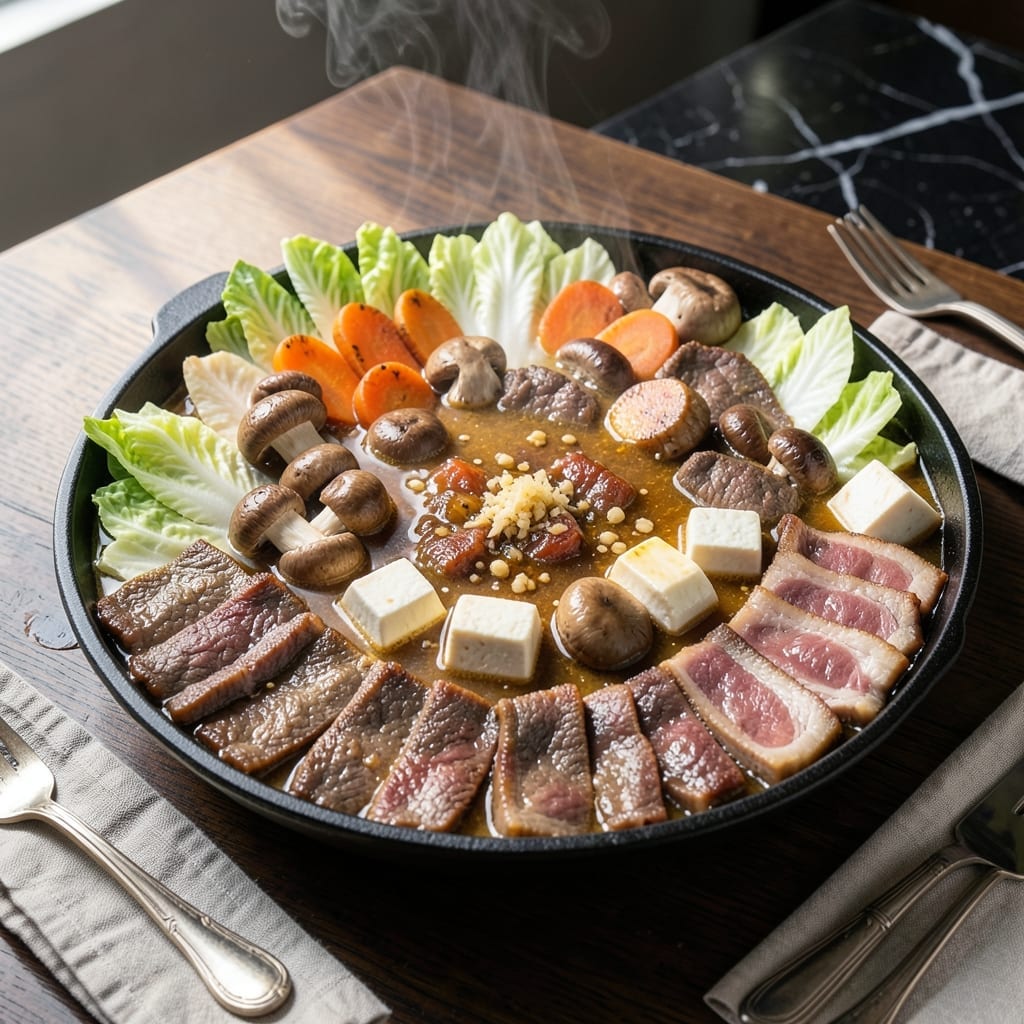
This spicy-sweet hot pot delivers tender meats and vegetables in a rich, aromatic broth that defines Korean BBQ tradition. The balance of heat and sweetness creates a deeply satisfying experience.
I perfected this method to ensure the meats stay tender while the broth develops complex flavors. It’s a complete dish that brings the interactive joy of Korean dining to your table.
Ingredients for Korean Bbq Hot Pot
Quality meats and fresh vegetables combine with bold Korean flavors for this authentic hot pot experience.
| Ingredient | Amount | Notes |
|---|---|---|
| Thinly Sliced Beef 🥩 | 1 ½ lb | Ribeye or sirloin preferred |
| Thinly Sliced Pork 🥓 | 1 lb | Pork shoulder or belly |
| Napa Cabbage 🥬 | 1 whole | Cut into bite-sized pieces |
| Shiitake Mushrooms 🍄 | 8 oz | Fresh or rehydrated dried |
| Carrots 🥕 | 2 whole | Julienned for quick cooking |
| Tofu 🧈 | 14 oz | Firm or extra-firm, pressed |
| Gochujang 🌶️ | ½ cup | Korean red pepper paste |
| Soy Sauce 🥣 | ½ cup | Low-sodium preferred |
| Brown Sugar 🍚 | ¼ cup | Light or dark variety |
| Garlic Cloves 🧄 | 6 cloves | Minced for maximum flavor |
| Fresh Ginger 🌿 | 2 tbsp | Grated or finely minced |
| Sesame Oil 🫒 | 2 tbsp | Toasted for depth |
| Rice Wine 🍶 | ¼ cup | Dry sherry substitute works |
| Beef Broth 🥣 | 4 cups | Low-sodium for control |
| Green Onions 🧅 | 4 whole | Thinly sliced for garnish |
[recipe_ingredient_scaler]
The meats are non-negotiable for tenderness. Ribeye or sirloin for beef, pork shoulder or belly for pork—both slice thinly against the grain for melt-in-your-mouth texture. Asian markets often pre-slice these for hot pot, saving time. For Napa cabbage, look for firm, tightly packed heads with vibrant green leaves. Shiitake mushrooms should feel heavy for their size, indicating freshness.
No gochujang? Sriracha plus 1 tbsp miso paste works in a pinch, though the flavor profile shifts. Substitute honey for brown sugar if needed, but reduce slightly to avoid over-sweetening. Vegetable broth can replace beef broth for a lighter version. For extra heat, add sliced jalapeños (the Korean variety if available). The tofu can be swapped for mushroom tofu for deeper umami.
Prep all ingredients before heating the broth—hot pot moves fast. Leftovers keep 3-4 days in the fridge, though the meats are best fresh. The broth intensifies overnight, making it perfect for ramen base the next day. Store gochujang in the fridge after opening for up to 1 year.
Why You’ll Love This Recipe
- One Pot Meal: I just toss the beef, pork, and veggies into the broth and let it all cook together—minimal cleanup, maximum flavor.
- Umami Bomb: The shiitake mushrooms and thinly sliced beef soak up that savory Korean BBQ sauce like a dream.
- Feeds a Crowd: Honestly, I’ve served this at dinner parties and weeknight family meals with equal success.
- Leftovers Win: Between us, the flavors taste even better the next day, and it reheats beautifully for lunch.
Step-by-Step Instructions for Korean BBQ Hot Pot
Master this technique for fall-apart meats and vegetables steeped in a rich, aromatic broth.
Step 1: Prepare the Spicy-Sweet Broth Base
In a large pot, heat the sesame oil over medium heat until shimmering. Add the minced garlic cloves and grated fresh ginger, stir-frying for 1-2 minutes until fragrant but not browned. This builds the aromatic foundation for your broth.
Whisk in the gochujang, soy sauce, and brown sugar until smooth. Cook for 2-3 minutes, stirring constantly, until the mixture darkens slightly and the sugar dissolves completely. This step develops depth of flavor in the broth.
Carefully pour in the rice wine and beef broth, stirring to combine. Bring to a gentle simmer and maintain for 10 minutes to allow the flavors to meld. The broth should be deeply colored and aromatic.
Step 2: Add and Cook the Vegetables
Add the bite-sized pieces of napa cabbage, shiitake mushrooms, and julienned carrots to the simmering broth. The vegetables should be just submerged. Cook for 5-7 minutes until the cabbage softens and the carrots begin to tenderize.
While the vegetables cook, cut the tofu into 1-inch cubes and add to the pot. The tofu will absorb the broth’s flavors as it heats through. Avoid stirring too vigorously to prevent the tofu from breaking apart.
Step 3: Cook the Meats to Perfection
Add the thinly sliced beef and thinly sliced pork to the pot, ensuring they are covered by the broth. Cook for 8-10 minutes on medium-low heat, skimming any foam that rises to the surface. This ensures clean, clear broth.
The meats are done when they turn opaque and are tender when pierced with a fork. The beef should be fully cooked but still juicy, while the pork should be tender and no longer pink. The thin slices guarantee quick, even cooking.
Step 4: Finish and Serve Immediately
Once all ingredients are cooked through, taste the broth and adjust seasoning if needed. The broth should balance spicy, sweet, and umami flavors. Turn off the heat and let the hot pot sit for 2 minutes to allow the flavors to settle.
Ladle the hot pot into bowls, ensuring each serving contains a variety of meats, vegetables, and tofu. Garnish with the thinly sliced green onions for a fresh finish. Serve immediately while piping hot for the best experience.
Pro Tips For Making Korean Bbq Hot Pot
- Pre-cook the noodles: If using udon or glass noodles, parboil them for 1-2 minutes before adding to the hot pot—I learned this the hard way after pulling out rock-hard noodles from my first attempt.
- Slice against the grain: For the beef and pork, make sure to slice against the grain into 1/8-inch thick pieces. Sounds tedious, but it actually changes the outcome—no more chewy meat.
- Skip the overcrowding: Resist the urge to dump everything in at once. Cook in batches if needed, especially with the cabbage and mushrooms, or you’ll end up with a soggy, uneven mess.
- Use a flavorful broth: Start with a rich anchovy or kelp broth instead of plain water—my grandmother swore by this, and she was right. It infuses the meat and veggies with depth from the first bite.
Pro Cooking Tips for This Recipe
Broth Depth Secrets
Bloom your garlic and ginger in sesame oil first—this builds a fragrant base. I learned this trick at a Seoul hot pot spot, and it changed my broth game forever. The oil extracts more flavor from the aromatics. 💡
Gochujang Technique
Whisk the gochujang with soy sauce and brown sugar before adding liquids. This prevents clumping and ensures even distribution. Cook it for 2-3 minutes to deepen the flavor—you’ll taste the difference.
Meat Slicing Tip
Freeze the beef and pork for 30 minutes before slicing for paper-thin cuts. This is how Korean BBQ spots get that melt-in-your-mouth texture. Always slice against the grain for maximum tenderness.
Veggie Timing
Add napa cabbage first since it takes longest to soften. Then add mushrooms and carrots. The tofu goes in last—it only needs 5 minutes to heat through and absorb the broth’s flavors.
Foam Skimming
As the meats cook, impurities rise to the surface as foam. Skim this off with a fine mesh strainer for a clean, clear broth. I keep a small ladle just for this purpose—it’s a game-changer. 🔥
Resting Time
Let the hot pot rest for 2 minutes after cooking. This allows the flavors to settle and the meats to reabsorb some of the broth. The difference in taste and texture is noticeable.
Nutrition Facts

Trained in classic French technique but raised on slow-cooked ribs and spicy rubs, she blends culinary skill with smoke and soul.
- Recipe for Boneless Pork Chops in Cast Iron Skillet: Sear and Baste to Juicy Perfection - October 3, 2026
- Recipe for Boneless Cross Rib Roast: Slow-Roasted Beef with Herb Crust - October 3, 2026
- Hamburgers in Sauce Recipe Crock Pot: Slow-Cooked Savory Delight - October 3, 2026