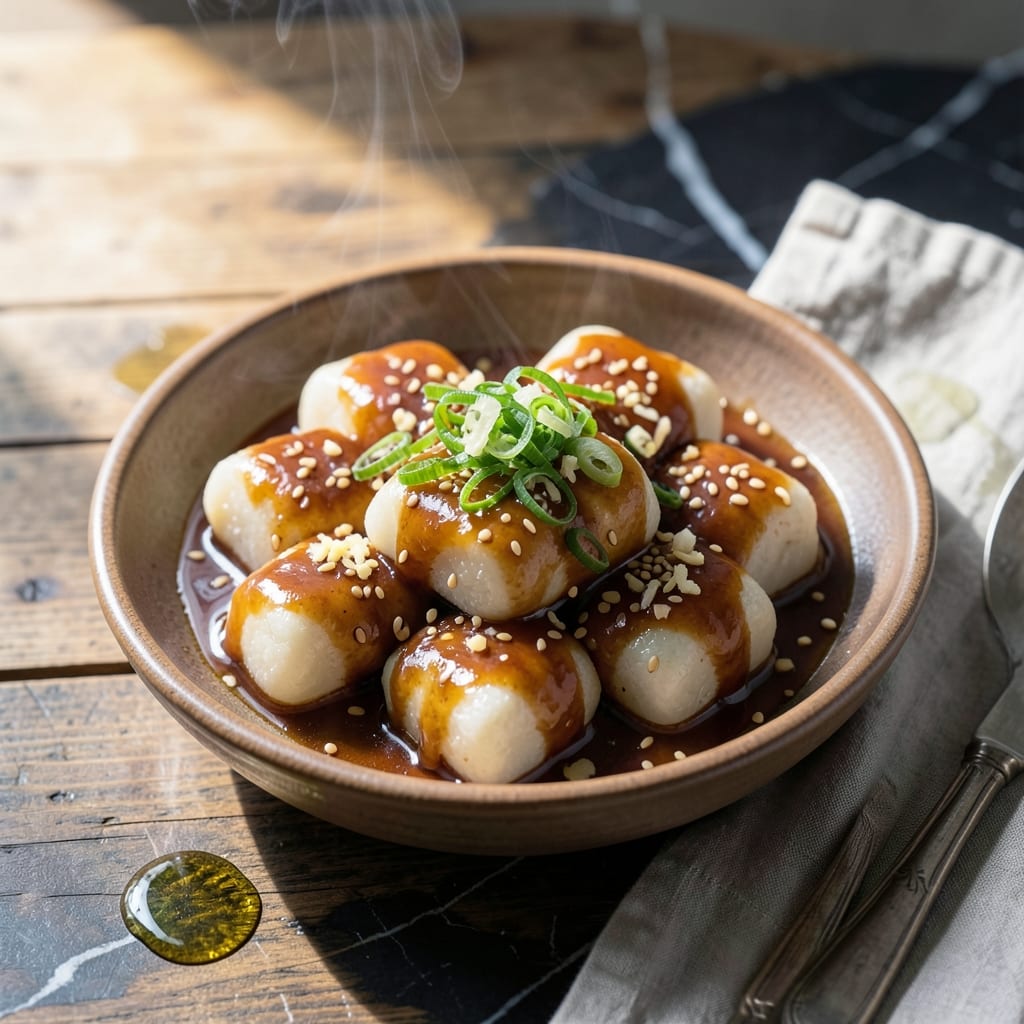
I remember my first bite of Korean rice cakes from a street vendor in Seoul—the chewy texture and spicy kick were unforgettable. This version brings that same magic to your kitchen with simple ingredients.
The secret is soaking the rice cakes first, which ensures they cook evenly and absorb the bold, savory-sweet sauce perfectly. I use gochujang for heat and a touch of sugar to balance it out.
You’ll end up with glossy, tender rice cakes coated in a sticky, fiery sauce that’s addictive. It’s the kind of dish that disappears fast, so make extra.
Perfect as a snack, appetizer, or even a light meal. Here’s how to nail it every time.
Ingredients for Korean Rice Cake Recipe Maangchi
Simple ingredients transform into chewy, spicy Korean rice cakes with bold, addictive flavor.
| Ingredient | Amount | Notes |
|---|---|---|
| Korean Rice Cakes 🍙 | 1 lb | Cylindrical, white, for tteokbokki |
| Gochujang 🌶️ | 3 tbsp | Korean red pepper paste |
| Soy Sauce 🫒 | 2 tbsp | Low-sodium preferred |
| Brown Sugar 🍯 | 1 tbsp | Or regular granulated |
| Garlic Cloves 🧄 | 4 cloves | Minced for maximum flavor |
| Ginger 🌿 | 1 tbsp | Freshly grated |
| Sesame Oil 🫒 | 1 tbsp | Toasted for aroma |
| Vegetable Broth 🥣 | 1 ½ cups | Low-sodium or homemade |
| Green Onions 🧅 | ½ cup | Thinly sliced, for garnish |
| Sesame Seeds 🌾 | 1 tbsp | Toasted, for garnish |
| Corn Syrup 🧈 | 1 tbsp | For glossy sauce |
| Red Pepper Flakes 🌶️ | 1 tsp | Korean gochugaru preferred |
[recipe_ingredient_scaler]
The rice cakes are the star here. Look for the cylindrical white kind (not the pounded flat ones) at Asian markets or the Korean section of well-stocked grocery stores. Maangchi brand is a solid choice if you’re unsure. Soak them in warm water for 20 minutes before cooking—this ensures that even texture and prevents dry spots.
No gochujang? Sriracha plus a bit of miso paste can work in a pinch, but the flavor won’t be the same. For the broth, water plus a bouillon cube is fine. The sesame oil is non-negotiable though—it adds that nutty depth. If you’re out of brown sugar, honey or maple syrup can substitute (but remember this is vegetarian, so honey’s fair game).
Leftovers keep in the fridge for 3-4 days and reheat beautifully. The sauce thickens as it cools, so add a splash of water when warming. Freeze the rice cakes separately (before saucing) for up to 3 months if you want to prep ahead.
Why You’ll Love This Recipe
- One Pot Wonder: I throw everything into a pan—rice cakes, gochujang, soy sauce—and let the flavors meld while I set the table.
- Sweet Heat Balance: The brown sugar tames the gochujang’s spice, and the garlic adds that deep, savory punch I crave.
- Feeds a Crowd: Between us, I double the batch for parties—it’s the first thing gone, even with picky eaters.
- Keeps for Days: Leftovers taste even better the next day, and honestly, it’s my favorite lazy lunch straight from the fridge.
Step-by-Step Instructions for Spicy Korean Rice Cakes
This method delivers perfectly chewy rice cakes in a rich, glossy sauce with balanced heat and sweetness.
Step 1: Prepare the Rice Cakes and Aromatics
Soak the 1 lb Korean Rice Cakes in cold water for 10-15 minutes if they’re hard (fresh ones can skip this). This softens them and prevents a gummy texture. Meanwhile, mince the 4 cloves Garlic Cloves and grate the 1 tbsp Ginger—freshness matters here.
Drain the rice cakes and set aside. Thinly slice the 0.5 cup Green Onions, keeping the white and green parts separate for layered flavor. This prep ensures everything cooks evenly and the aromatics release their full potential.
Step 2: Build the Flavorful Sauce Base
In a large skillet or pot, heat the 1 tbsp Sesame Oil over medium heat. Add the minced garlic and grated ginger, stirring for 30 seconds until fragrant but not browned. Burnt garlic turns bitter, so keep the heat moderate.
Add the 3 tbsp Gochujang, 2 tbsp Soy Sauce, 1 tbsp Brown Sugar, 1 tbsp Corn Syrup, and 1 tsp Red Pepper Flakes. Stir for 1-2 minutes until the mixture darkens slightly and the sugar dissolves. This creates the deep, complex foundation of your sauce.
Step 3: Simmer the Rice Cakes in the Sauce
Pour in the 1.5 cups Vegetable Broth and stir to combine. Add the drained rice cakes, ensuring they’re mostly submerged. Bring to a gentle simmer over medium-high heat, then reduce to medium-low.
Cook uncovered for 8-10 minutes, stirring occasionally, until the rice cakes are tender and the sauce thickens enough to coat the back of a spoon. The sauce should cling to the rice cakes with a glossy sheen—this is where the corn syrup works its magic.
Step 4: Finish and Garnish for Serving
Once the rice cakes are chewy and the sauce has reduced, turn off the heat. Stir in the white parts of the green onions you set aside earlier. Taste and adjust seasoning if needed—though the balance should be perfect with these measurements.
Transfer to a serving dish and sprinkle with the remaining green onion tops and 1 tbsp Sesame Seeds. The sesame seeds add a nutty crunch that contrasts beautifully with the soft rice cakes. Serve immediately while hot and saucy.
Pro Tips For Making Korean Rice Cake Recipe Maangchi
- Soak the Rice Cakes: I learned this the hard way—dry rice cakes stay rock-hard even after cooking. Soak them in warm water for 15-20 minutes before adding to the sauce.
- Bloom the Gochujang: Cook the gochujang with a little oil for 1-2 minutes before adding liquids. It deepens the flavor and removes the raw paste taste.
- Skip the Overcrowding: After burning three batches, I finally figured out that rice cakes need space in the pan. Cook in batches if needed to avoid steaming instead of searing.
- Mince Garlic Fine: My grandmother swore by this, and she was right: finely minced garlic distributes better in the sauce and prevents bitter chunks in your final dish.
Troubleshooting This Recipe
Sauce Too Thin
If your sauce isn’t coating the rice cakes after 8-10 minutes, simmer uncovered for 3-5 more minutes. Stir frequently to prevent sticking. I find adding ½ tsp cornstarch mixed with 1 tbsp cold water thickens it instantly. Remember, the sauce thickens further as it cools. 🔥
Rice Cakes Too Hard
This usually means they weren’t soaked long enough. Fresh rice cakes need 10-15 minutes in warm water. For extra-stubborn ones, soak in hot water for 20 minutes. If they’re still hard after cooking, simmer 5 minutes longer in extra broth.
Sauce Too Spicy
Balance the heat by stirring in 1 tsp honey or 1 tbsp milk. The sugar in honey neutrals capsicum burn while adding depth. For immediate relief, serve with a side of cool cucumber slices. I always keep honey on hand for this.
Sticking to Pan
Use a heavy-bottomed pot and ensure heat stays at medium. If sticking occurs, quickly add ¼ cup water and scrape the bottom. A non-stick skillet works wonders here. Stir more frequently if your stove runs hot.
Sauce Too Sweet
Add 1 tsp soy sauce or ½ tsp rice vinegar to cut the sweetness. The vinegar brightens flavors without thinning the sauce. Taste after each addition—it’s easy to overcorrect. I prefer the vinegar approach for its complexity.
Rice Cakes Mushy
Over-soaking or overcooking causes this. Soak only until pliable, then cook exactly 8-10 minutes. If they’re already mushy, serve immediately—they’ll firm up slightly as they cool. Use fresh rice cakes next time for better texture.
Nutrition Facts
Frequently Asked Questions
What type of rice cakes work best?
Use cylindrical white rice cakes labeled for tteokbokki. Avoid flat pounded ones. Soak hard cakes in warm water for 10-15 minutes before cooking.
Can I make this less spicy?
Reduce gochujang to 2 tbsp and skip red pepper flakes. Balance heat with 1 tsp honey or serve with cool cucumber slices.
How do I store leftovers?
Keep in an airtight container for 3-4 days. Reheat with a splash of water to thin the sauce. Freeze uncooked rice cakes for up to 3 months.

Trained in classic French technique but raised on slow-cooked ribs and spicy rubs, she blends culinary skill with smoke and soul.
- Recipe for Boneless Pork Chops in Cast Iron Skillet: Sear and Baste to Juicy Perfection - October 3, 2026
- Recipe for Boneless Cross Rib Roast: Slow-Roasted Beef with Herb Crust - October 3, 2026
- Hamburgers in Sauce Recipe Crock Pot: Slow-Cooked Savory Delight - October 3, 2026