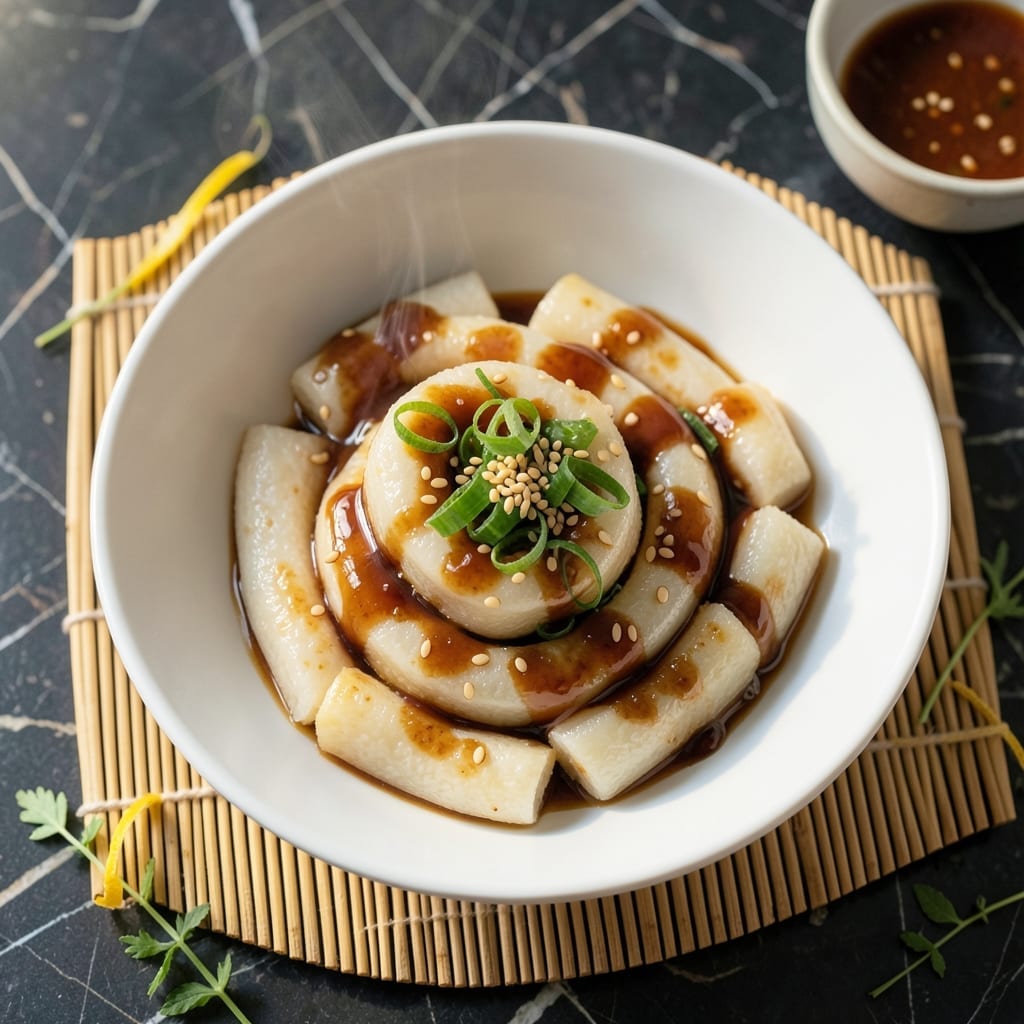
There’s something magical about achieving that perfect chewy texture of Korean rice cakes at home. This method transforms simple rice flour into pillowy bites with an irresistible bounce.
Traditional Korean techniques ensure these cakes develop their signature soft yet slightly resistant bite. The process is straightforward but requires patience as the dough steams to perfect consistency.
Once shaped, they’re ready for your choice of sweet or savory glaze. The result is a dish that captures the essence of Korean street food.
Serve warm for the best experience, as the texture is most vibrant fresh from the steamer.
Ingredients for Korean Rice Cake Recipe with Rice Flour
Transform rice flour into pillowy, chewy delights with these essential Korean pantry staples.
| Ingredient | Amount | Notes |
|---|---|---|
| Glutinous Rice Flour 🌾 | 2 cups | Also called sweet rice flour |
| Water 💧 | 1 ¼ cups | Warm, for dough consistency |
| Salt 🧂 | ½ tsp | Fine sea salt preferred |
| Sugar 🍚 | 2 tbsp | Granulated, for subtle sweetness |
| Sesame Oil 🫒 | 1 tsp | Toasted, for aroma |
| Soy Sauce 🥄 | 2 tbsp | Low-sodium for balance |
| Rice Vinegar 🍶 | 1 tbsp | For tangy brightness |
| Gochugaru 🌶️ | 1 tbsp | Korean red pepper flakes |
| Garlic Cloves 🧄 | 3 cloves | Minced for glaze depth |
| Green Onions 🧅 | 3 whole | Thinly sliced for garnish |
| Sesame Seeds 🌰 | 1 tbsp | Toasted for crunch |
| Cornstarch 🌾 | 2 tbsp | For dusting work surface |
| Maple Syrup 🍁 | 2 tbsp | Vegan sweetener option |
[recipe_ingredient_scaler]
The rice flour is non-negotiable—glutinous (sweet) rice flour is the only one that delivers that signature bounce. Find it at H Mart or Korean grocery stores in the baking aisle. I’ve seen it labeled as mochiko too. Avoid regular rice flour—it won’t work. The gochugaru (Korean red pepper flakes) should be bright red and mild unless you want heat. Look for coarse, vibrant flakes for the best texture.
No gochugaru? Substitute half the amount with cayenne (careful—it’s spicier) or just skip it for a milder glaze. Out of rice vinegar? Apple cider vinegar works in a pinch. For the glaze, swap maple syrup with agave or brown sugar syrup. The sesame oil can’t be replaced—it’s essential for that nutty aroma. If you’re gluten-free, double-check your soy sauce (tamari is a safe 1:1 swap).
Dough keeps 1 day in the fridge (tightly wrapped) but it’s best used fresh. Steamed cakes hold at room temp for 2 hours or refrigerate for 3 days. Reheat by steaming or microwaving with a damp paper towel. Freeze unsteamed dough balls for 1 month—thaw before cooking.
Why You’ll Love This Recipe
- The texture is spot-on: soft, slightly sticky, with just enough sweetness from the sugar to balance the savory sesame oil.
- 5-Ingredient Magic: I love that it only needs glutinous rice flour, water, salt, sugar, and sesame oil—no hunting for obscure ingredients.
- Chewy Perfection: The texture is spot-on: soft, slightly sticky, with just enough sweetness from the sugar to balance the savory sesame oil.
- Meal Prep Hero: I make a big batch on Sunday and toss them into soups or stir-fries all week—holds up like a champ.
Step-by-Step Instructions for Korean Rice Cake With Rice Flour
This method transforms simple ingredients into pillowy, chewy rice cakes with irresistible texture.
Step 1: Create the Dough Base
In a large mixing bowl, whisk together the 2 cups Glutinous Rice Flour, 0.5 tsp Salt, and 2 tbsp Sugar until no lumps remain. The sugar adds subtle sweetness that balances the savory glaze beautifully.
Gradually pour in the 1.25 cups Water while stirring continuously with a wooden spoon. The water should be warm to help activate the rice flour’s binding properties. Mix until a thick, sticky batter forms that pulls away from the bowl sides slightly.
Drizzle in the 1 tsp Sesame Oil and fold it in completely. This adds aromatic depth to the rice cakes and prevents sticking during shaping. The dough should be cohesive but still quite sticky to the touch.
Step 2: Shape and Steam the Rice Cakes
Dust your work surface generously with 2 tbsp Cornstarch to prevent sticking. The cornstarch creates a barrier between the dough and your counter, making it easier to handle the naturally sticky rice flour mixture.
Turn out the dough and knead gently for 2-3 minutes until smooth. Divide the dough into 4 equal portions for consistent sizing. Roll each portion into a 1-inch thick cylinder, then cut into 1-inch pieces to form individual rice cakes.
Arrange the rice cakes in a steamer basket lined with parchment paper, leaving ½ inch between each piece. Steam for 15-20 minutes until the rice cakes become translucent and slightly springy to the touch. They’ll plump up significantly during steaming.
Step 3: Prepare the Sweet-Savory Glaze
While the rice cakes steam, minced the 3 cloves Garlic Cloves finely and thinly slice the 3 whole Green Onions. In a small saucepan, combine the 2 tbsp Soy Sauce, 1 tbsp Rice Vinegar, 1 tbsp Gochugaru, 2 tbsp Maple Syrup, and the minced garlic.
Simmer over medium heat for 3-4 minutes, stirring constantly, until the mixture thickens slightly and becomes glossy. The soy sauce provides saltiness, the vinegar adds brightness, while the gochugaru gives a gentle heat that’s perfectly balanced by the maple syrup’s sweetness.
Step 4: Coat and Finish the Rice Cakes
Carefully transfer the steamed rice cakes to a large bowl. Pour the warm glaze over the hot rice cakes and toss gently but thoroughly to coat evenly. The rice cakes will absorb some of the glaze, creating layers of flavor in every bite.
Sprinkle the sliced green onions and 1 tbsp Sesame Seeds over the glaze-coated rice cakes. Toss once more to distribute the garnishes. The sesame seeds add a nutty crunch that contrasts beautifully with the chewy rice cakes.
Let the rice cakes rest for 5 minutes to allow the flavors to meld completely. Serve warm for the best texture and flavor experience.
Pro Tips For Making Korean Rice Cake Recipe With Rice Flour
- Steam Evenly: Use a steamer with a tight lid and medium-high heat—after burning my first batch, I learned uneven steam leaves some rice cakes gummy and others dry.
- Rest the Dough: Let the glutinous rice flour mixture sit for 10 minutes before shaping; it relaxes the starch and makes the cakes smoother, not cracked.
- Skip Cold Water: I was skeptical until I tried it, but warm water (about 110°F) blends into the rice flour better and prevents lumps that ruin the texture.
- Oil Your Hands: Rub sesame oil on your palms before shaping—it keeps the dough from sticking and adds a subtle nutty flavor to the finished cakes.
Wine and Beer Pairings for This Recipe
Korean Beer Pairings
I love pairing these chewy delights with Hite or Cass—Korean lagers with crisp, clean profiles that cut through the sweet-savory glaze. Their light carbonation refreshes your palate between bites. Serve chilled at 35-40°F for best results.
Light Rice Ales
Korean rice ale like Kloud offers a slightly sweet, smooth complement to the rice cakes’ texture. The subtle maltiness enhances the dish’s natural sweetness without overpowering. These are harder to find but worth the search at specialty Asian markets. 🍺
Soju Cocktails
Mix soju with a splash of yuja tea or grapefruit juice for a refreshing accompaniment. The clean, slightly sweet soju (about 20% ABV) balances the glaze’s complexity. I prefer Jinro or Chum Churum brands.
Non-Alcoholic Options
For a non-alcoholic pair, try sikhye (sweet rice drink) from the Korean market’s refrigerated section. Its malty sweetness mirrors the rice cakes’ base flavors. Serve ice cold for maximum refreshment. ❄️
Fruit-Infused Beers
Plum or yuzu-infused beers from Japanese breweries add a fruity brightness that contrasts beautifully with the gochugaru’s gentle heat. Look for Suntory or Asahi seasonal releases.
Green Tea Pairing
A chilled Korean barley tea or green tea provides an earthy counterpoint to the sweetness. The tea’s subtle bitterness cleanses your palate. I brew mine strong and serve over ice for a Portland summer afternoon treat. 💛
Nutrition Facts
Frequently Asked Questions
Can I use regular rice flour instead of glutinous?
No, regular rice flour won’t give you the chewy texture. Glutinous rice flour is essential for that signature bounce. It’s the starch content that creates the stretchy, pillowy result.
How do I prevent the dough from sticking?
Dust your surface and hands generously with cornstarch. The dough is naturally sticky, so reapply cornstarch as needed while shaping. It creates a barrier that makes handling much easier.
Can I make these without a steamer?
Use a colander or sieve over a pot of boiling water with a tight lid. Line it with parchment and poke holes for steam. Steam for 18-22 minutes, checking water level halfway.
How long can I store the finished rice cakes?
Keep them in an airtight container in the fridge for up to 3 days. Reheat by steaming or microwaving with a damp paper towel to restore the soft texture.

Trained in classic French technique but raised on slow-cooked ribs and spicy rubs, she blends culinary skill with smoke and soul.
- Recipe for Boneless Pork Chops in Cast Iron Skillet: Sear and Baste to Juicy Perfection - October 3, 2026
- Recipe for Boneless Cross Rib Roast: Slow-Roasted Beef with Herb Crust - October 3, 2026
- Hamburgers in Sauce Recipe Crock Pot: Slow-Cooked Savory Delight - October 3, 2026