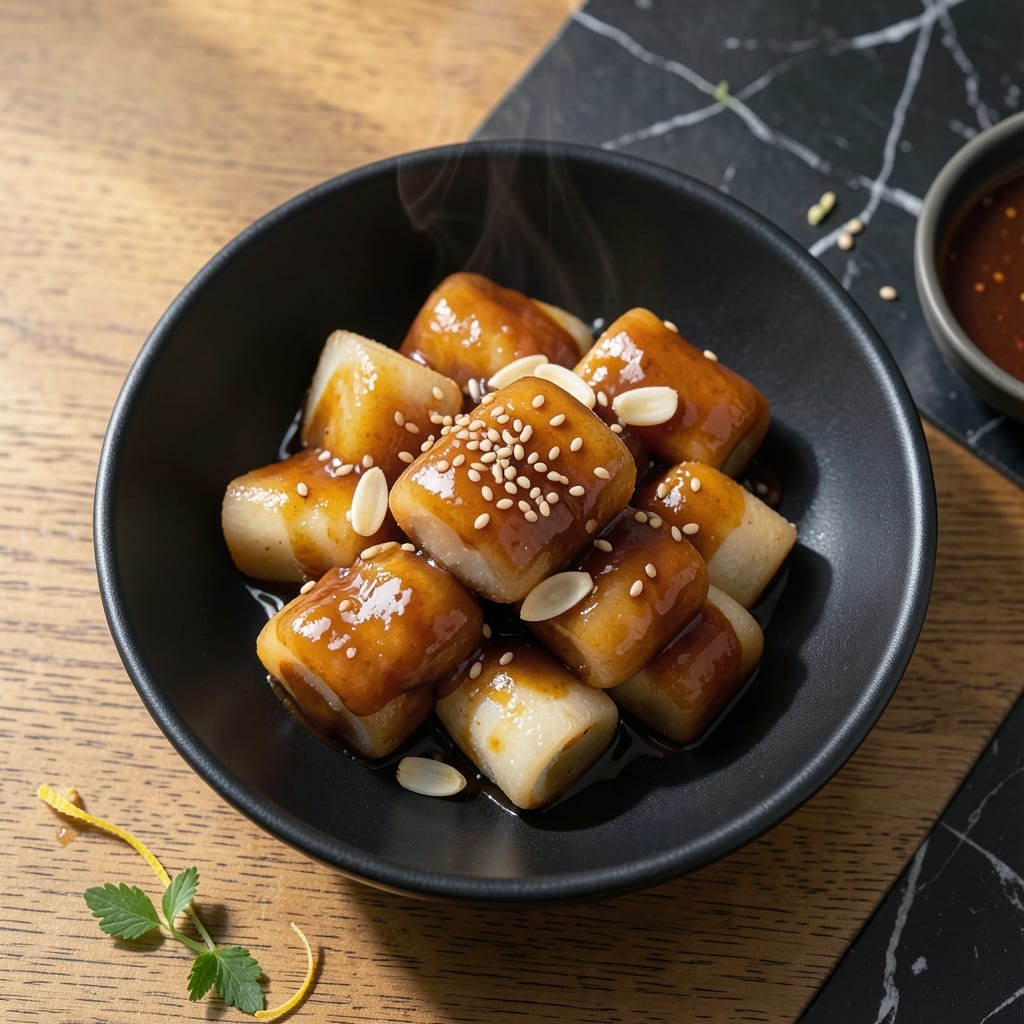
I developed this mild yet flavorful rice cake dish for those who prefer a gentler take on Korean flavors. Without gochujang, the natural sweetness of the rice cakes shines through.
The secret lies in a savory soy-based sauce with garlic and sesame oil. This combination creates depth without spice, letting the chewy texture of the rice cakes take center stage.
What results is a comforting, versatile dish that works as a main course or side. The rice cakes become tender and slightly sticky, soaking up every bit of the aromatic sauce.
Perfect for weeknight dinners or when you want authentic Korean taste without the heat. This method delivers consistent, restaurant-quality results every time.
Ingredients for Korean Rice Cake Recipe Without Gochujang
Fresh rice cakes soak up a rich, savory sauce with garlic and sesame. Simple, flavorful, no heat.
| Ingredient | Amount | Notes |
|---|---|---|
| Korean Rice Cakes 🍚 | 1 lb | Cylindrical, fresh or thawed |
| Soy Sauce 🫒 | ½ cup | Low-sodium preferred |
| Sesame Oil 🫒 | 2 tbsp | Toasted for aroma |
| Garlic Cloves 🧄 | 6 cloves | Minced finely |
| Brown Sugar 🍚 | 2 tbsp | Or coconut sugar |
| Rice Vinegar 🍋 | 1 tbsp | For tangy balance |
| Vegetable Broth 🥕 | 1 cup | Low-sodium or homemade |
| Green Onions 🧅 | 4 whole | Thinly sliced for garnish |
| Sesame Seeds 🌾 | 1 tbsp | Toasted for garnish |
| Carrot 🥕 | 1 whole | Julienned for texture |
| Zucchini 🥒 | 1 whole | Thinly sliced |
| Mushrooms 🍄 | ½ lb | Shiitake or white button |
| Corn Starch 🌾 | 1 tbsp | For sauce thickening |
| Black Pepper 🌶️ | ½ tsp | Freshly ground |
[recipe_ingredient_scaler]
Rice cakes are everything here. Look for the cylindrical kind at Korean markets (or H Mart) in the refrigerated section—fresh is ideal, but frozen works too (thaw completely before cooking). The soy sauce should be Korean brand like Jin or Sempio for authentic flavor. I grab mine from Trader Joe’s in a pinch, but the Asian grocery version is worth the trip if you’re nearby.
No rice vinegar? Apple cider vinegar at half the amount works. Brown sugar can be swapped for coconut sugar or maple syrup—just adjust to taste. If you’re missing green onions, regular onion finely diced adds similar flavor. The veggies are flexible too: bell peppers, spinach, or even tofu would be great additions (or swaps for the mushrooms).
Leftovers keep beautifully—actually taste better the next day. Store in an airtight container for up to 4 days in the fridge. Freeze without veggies for up to 3 months (the rice cakes can get mushy otherwise). Reheat with a splash of water to loosen the sauce.
Why You’ll Love This Recipe
- One Pot Wonder: I just toss the rice cakes with soy sauce, sesame oil, and garlic—no fancy steps, no mess.
- Sweet-Savory Magic: The brown sugar caramelizes with the soy for that sticky, umami-packed glaze I crave.
- Weeknight Hero: Honestly, it’s my 15-minute dinner when I’m too tired to think.
- Budget Stretcher: A bag of rice cakes feeds four for pennies, and leftovers taste even better.
Step-by-Step Instructions for Korean Rice Cake Without Gochujang
Here’s how I make this savory dish with perfect texture every single time.
Step 1: Soak and Prep the Korean Rice Cakes
If using frozen 1 lb Korean Rice Cakes, soak them in cold water for 20-30 minutes until soft and pliable. Drain thoroughly and set aside. For fresh rice cakes, simply rinse briefly under cold water to remove any excess starch.
While they soak, thinly slice the 4 whole Green Onions and set aside for garnish. Julienne the 1 whole Carrot into matchstick pieces and thinly slice the 1 whole Zucchini. These veggies will add color and crunch to your dish.
Step 2: Create the Sauce Base
In a small bowl, whisk together the 0.5 cup Soy Sauce, 2 tbsp Sesame Oil, 2 tbsp Brown Sugar, 1 tbsp Rice Vinegar, and 0.5 tsp Black Pepper until the sugar fully dissolves. This creates the foundation of your savory-sweet sauce.
Mince the 6 cloves Garlic Cloves finely—this is crucial as it will melt into the sauce, infusing every bite with aromatic flavor. I always press my knife blade flat against the minced garlic to create a paste-like consistency for maximum flavor extraction.
Step 3: Stir-Fry the Vegetables
Heat a large skillet or wok over medium-high heat. Add the sliced 0.5 lb Mushrooms and stir-fry for 3-4 minutes until they begin to release their moisture and turn golden brown. This develops their umami depth.
Add the minced garlic and stir constantly for 30 seconds until fragrant—don’t let it burn. Then add the julienned carrot and sliced zucchini, stir-frying for another 2-3 minutes until they start to soften but retain some bite.
Step 4: Combine Everything and Thicken
Pour the 1 cup Vegetable Broth into the skillet with the vegetables, scraping up any browned bits from the bottom. Add the drained rice cakes and the sauce mixture. Stir gently to combine, ensuring the rice cakes are fully coated.
Let it simmer for 5-7 minutes until the rice cakes are tender and have absorbed much of the liquid. In a small bowl, mix the 1 tbsp Corn Starch with 2 tablespoons of cold water to create a slurry, then stir it into the skillet. Cook for another 1-2 minutes until the sauce thickens to a glossy consistency that clings to the rice cakes.
Step 5: Finish and Garnish
Remove from heat and stir in half of the sliced green onions. The sauce should have reduced enough to create a beautiful, glossy coating on each rice cake. Taste and adjust seasoning if needed—though with the balanced sauce, it should be perfect.
Transfer to serving dishes and garnish with the remaining green onions and 1 tbsp Sesame Seeds. The dish should have a mix of textures: chewy rice cakes, tender vegetables, and that unmistakable savory-sweet flavor profile. Serve immediately while hot.
Pro Tips For Making Korean Rice Cake Recipe Without Gochujang
- Soak the Rice Cakes: Cover them in warm water for 10-15 minutes before cooking—I learned this the hard way after ending up with chewy, undercooked centers.
- Bloom the Garlic: Cook minced garlic in sesame oil for 30 seconds until fragrant, but don’t let it brown or it’ll turn bitter.
- Simmer, Don’t Boil: Keep the sauce at a gentle simmer to let the rice cakes absorb the soy-sugar flavor without turning mushy.
- Finish with Sesame Oil: Drizzle 1 teaspoon of sesame oil at the end—sounds simple, but it adds a nutty depth that ties the whole dish together.
Storing and Reheating This Dish
Short-Term Storage
Let your rice cakes cool completely before transferring to airtight containers. They’ll keep beautifully in the fridge for up to 4 days. I’ve found the flavors actually deepen overnight as the sauce soaks in. ❄️
Freezing for Later
For longer storage, freeze without vegetables for up to 3 months. The rice cakes can get mushy otherwise. Use quart-sized freezer bags and lay them flat to save space. Leave 1 inch headspace for expansion.
Stovetop Reheating
This is my preferred method. Reheat gently over medium-low heat with a splash of water or broth. Stir occasionally for 5-7 minutes until hot. The sauce will loosen beautifully, coating the rice cakes perfectly. 🔥
Microwave Method
For quick meals, microwave covered with a damp paper towel. Use 70% power for 2-3 minutes, stir, then continue in 30-second bursts until reaching 165°F. Add water if dry.
Reviving Texture
If the rice cakes seem tough after storage, simmer with 2 tbsp water for 2-3 minutes. This restores their chewy texture. Taste and adjust seasoning—sometimes a pinch of salt or splash of soy sauce helps.
Nutrition Facts
Frequently Asked Questions
Can I use regular rice instead of rice cakes?
No, regular rice won’t work here. Rice cakes have a unique chewy texture that absorbs the sauce beautifully. Regular rice would turn mushy and not provide the same satisfying bite.
What can I use instead of brown sugar?
You can substitute with coconut sugar or maple syrup. Both add similar sweetness while maintaining the dish’s balance. Adjust to taste as sweetness levels may vary.
How do I prevent the rice cakes from sticking?
Soak them thoroughly before cooking and use medium-high heat. Stir frequently and add a splash of water if they begin to stick. A well-seasoned pan helps too.
Can I make this dish ahead of time?
Yes! The flavors actually improve overnight. Store in an airtight container for up to 4 days in the fridge. Reheat gently with water to restore texture.

Trained in classic French technique but raised on slow-cooked ribs and spicy rubs, she blends culinary skill with smoke and soul.
- Recipe for Boneless Pork Chops in Cast Iron Skillet: Sear and Baste to Juicy Perfection - October 3, 2026
- Recipe for Boneless Cross Rib Roast: Slow-Roasted Beef with Herb Crust - October 3, 2026
- Hamburgers in Sauce Recipe Crock Pot: Slow-Cooked Savory Delight - October 3, 2026