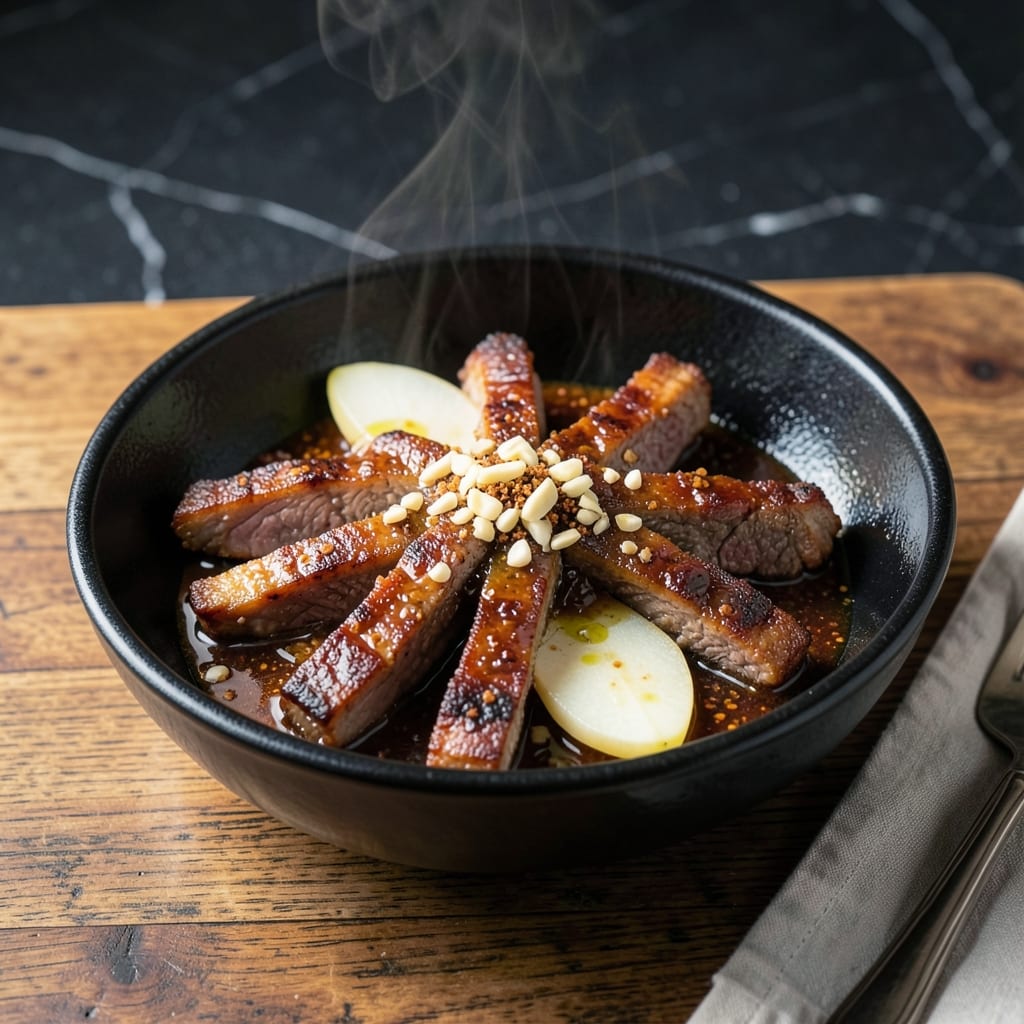
I’ve perfected this method for achieving tender Korean short ribs in the Instant Pot with minimal effort. The pressure cooker transforms tough cuts into melt-in-your-mouth meat while infusing every bite with deep, savory-sweet flavor.
The secret lies in a balanced marinade of soy sauce, brown sugar, and Asian pear, which breaks down fibers and adds complexity. A quick sear before pressure cooking develops rich caramelized notes that define this dish.
In under an hour, you’ll have fall-off-the-bone ribs coated in a glossy, reduced glaze. The Instant Pot locks in moisture while concentrating the sauce into a sticky, finger-licking finish.
This approach delivers authentic Korean flavors with modern convenience. The result is consistently tender meat that absorbs the sweet soy glaze beautifully.
Ingredients for Korean Short Rib Recipe Instant Pot
These bold ingredients create melt-in-your-mouth ribs with sweet-savory depth in record time.
| Ingredient | Amount | Notes |
|---|---|---|
| Beef Short Ribs 🥩 | 2 ½ lb | Bone-in, cut into 3-inch pieces |
| Soy Sauce 🫕 | ¾ cup | Low-sodium preferred for balance |
| Brown Sugar 🍚 | ½ cup | Light or dark, packed |
| Asian Pear 🍐 | 1 whole | Peeled, grated for marinade |
| Garlic Cloves 🧄 | 6 cloves | Minced for maximum flavor |
| Fresh Ginger 🌿 | 1 tbsp | Peeled, finely grated |
| Sesame Oil 🫒 | 2 tbsp | Toasted for depth of flavor |
| Rice Vinegar 🍶 | 2 tbsp | Balances sweetness in marinade |
| Gochujang 🌶️ | 1 tbsp | Korean chili paste, adjust to taste |
| Green Onions 🧅 | 4 whole | Thinly sliced for garnish |
| Sesame Seeds 🌰 | 1 tbsp | Toasted for garnish |
| Vegetable Oil 🫒 | 2 tbsp | High smoke point for searing |
| Beef Broth 🥣 | ½ cup | Low-sodium for controlled seasoning |
| Cornstarch 🌾 | 1 tbsp | For thickening the sauce |
[recipe_ingredient_scaler]
The ribs are everything here. Bone-in Korean-style short ribs (often labeled ‘flanken cut’) are ideal—ask your butcher at Whole Foods or H-Mart if you can’t find them pre-cut. Look for good marbling; that fat renders down into pure flavor. Asian pear is the secret weapon (Bosc or Anjou work too)—its enzymes tenderize the meat while adding subtle sweetness you can’t replicate.
No Asian pear? Substitute grated apple or additional brown sugar. Gochujang can be swapped for sriracha in a pinch (use 2 tbsp). For the soy sauce, Kikkoman low-sodium is my go-to, but any quality brand works. If you’re avoiding gluten, tamari at a one-to-one ratio gets the job done. The sesame oil is non-negotiable though—it brings that authentic Korean aroma.
Marinate the ribs for at least 2 hours (overnight is best). Cooked ribs hold well in the fridge for 3-4 days. The sauce thickens as it cools—reheat gently with a splash of water. Leftovers make killer tacos or rice bowls.
Why You’ll Love This Recipe
- Set It and Forget: I toss everything in the Instant Pot and walk away—no babysitting, no stirring, just tender ribs in under an hour.
- Sweet-Savory Magic: The Asian pear and brown sugar caramelize with the soy and garlic into this sticky, finger-licking glaze.
- Feeds My Crew: I double the batch and we’ve got leftovers for rice bowls, tacos, or straight from the fridge at midnight.
- Budget Stretch: Short ribs feel fancy, but one pot and affordable ingredients mean I can serve a crowd without the splurge.
Step-by-Step Instructions for Korean Short Ribs in Instant Pot
Here’s the method I use to get fall-off-the-bone ribs with a glossy, sweet-savory glaze.
Step 1: Sear the Beef Short Ribs
Set your Instant Pot to the Sauté function and add the 2 tablespoons vegetable oil. When the oil shimmers, add the 2.5 lb Beef Short Ribs in a single layer, working in batches if necessary. Sear for 3-4 minutes per side until deeply browned on all sides.
This step builds the foundation of flavor for your dish. Don’t rush it—you want a rich, dark crust on the ribs. The meat will release easily from the pot when it’s properly seared. Transfer the seared ribs to a plate and set aside temporarily.
Step 2: Build the Marinade Base
In the same pot, add the 1 whole Asian Pear (peeled and grated), 6 cloves Garlic Cloves (minced), and 1 tablespoon Fresh Ginger (grated). Sauté for 1-2 minutes until fragrant. This aromatic trio infuses the oil with incredible depth before the liquid goes in.
Pour in the 0.75 cup Soy Sauce, 0.5 cup Brown Sugar, 2 tablespoons Sesame Oil, 2 tablespoons Rice Vinegar, 1 tablespoon Gochujang, and 0.5 cup Beef Broth. Stir well to dissolve the brown sugar and combine all the flavors.
Step 3: Pressure Cook to Tender Perfection
Return the seared ribs to the pot, along with any accumulated juices. Secure the lid and set the valve to Sealing. Cook on High Pressure for 35 minutes. The Instant Pot will take about 10-15 minutes to come to pressure before the cooking time begins.
This is where the magic happens. The pressure breaks down the collagen in the ribs, transforming tough meat into buttery, tender morsels. When the cooking time is up, allow a natural release for 10 minutes, then quick-release any remaining pressure.
Step 4: Thicken the Sauce and Finish
Carefully remove the ribs and set them aside. Skim any excess fat from the surface of the sauce. In a small bowl, mix the 1 tablespoon Cornstarch with 2 tablespoons of cold water to create a slurry. Stir the slurry into the sauce in the Instant Pot.
Set the pot back to Sauté and cook for 3-5 minutes, stirring constantly, until the sauce thickens enough to coat the back of a spoon. Return the ribs to the pot and coat them thoroughly in the glossy, reduced sauce.
Garnish with the 4 whole Green Onions (thinly sliced) and 1 tablespoon Sesame Seeds just before serving. The green onions add a fresh contrast, while the sesame seeds provide a nutty crunch to every bite.
Pro Tips For Making Korean Short Rib Recipe Instant Pot
- Brown the Ribs: Sear the short ribs in the Instant Pot first—about 3-4 minutes per side on sauté mode. I learned this the hard way: skipping this step leaves the meat pale and the sauce lacking depth.
- Grate the Pear: Use a fine grater for the Asian pear so it melts into the sauce. Sounds weird, but it works: the texture disappears but the natural sweetness and tenderness it adds is noticeable.
- Skip the Overcrowding: Don’t stack the ribs—arrange them in a single layer if possible. After burning a batch, I finally figured out that crowded ribs steam instead of sear, and the flavors don’t develop as well.
- Use Fresh Garlic: Mince the garlic cloves just before adding them to the pot. My grandmother swore by this, and she was right: pre-minced garlic from a jar tastes harsh and can overpower the sweet-savory balance.
Creative Variations of korean short rib recipe instant pot
Spicy Gochujang Boost
Double the gochujang to 2 tablespoons and add 1 teaspoon red pepper flakes for serious heat lovers. The extra chili paste deepens the sauce’s color while adding smoky complexity. I love this version when I want bold, fiery flavors. 🌶️
Citrus-Kissed Variation
Add 2 tablespoons orange juice and 1 tablespoon zest to the marinade for bright, zesty notes that cut through the richness. The citrus also helps tenderize the meat further. This became my summer go-to for lighter meals.
Pineapple Sweetness
Replace the Asian pear with 1 cup crushed pineapple (with juice) for tropical flair. The natural enzymes in pineapple work similarly to pear, while adding a juicy sweetness. This pairs perfectly with rice or noodles.
Mushroom Umami Depth
Stir in 1 cup sliced shiitake mushrooms when building the sauce base. They soak up the marinade beautifully and add meaty texture. I typically use fresh, but dried work too—just rehydrate them first.
Honey-Sesame Glaze
Swap the brown sugar for ½ cup honey and add an extra 1 tablespoon sesame oil at the end. The honey creates a stickier glaze with floral notes. This version feels extra luxurious. 💛
Quick Weeknight Swap
Use boneless beef chuck cut into 1-inch cubes instead of ribs for faster cooking. Reduce pressure time to 20 minutes. The flavor is nearly identical, and it’s easier to find at regular grocery stores.
Nutrition Facts
Frequently Asked Questions
What can I use instead of Asian pear?
Grated apple or additional brown sugar works well. The pear’s enzymes tenderize the meat, but these substitutes provide similar sweetness and texture.
Can I use boneless ribs?
Yes, but reduce pressure cooking time to 20 minutes. Boneless cuts cook faster and still absorb the marinade beautifully.
How do I thicken the sauce without cornstarch?
Simmer the sauce uncovered on Sauté mode for 5-7 minutes. The liquid will reduce naturally, creating a glossy finish.
Can I make this ahead of time?
The ribs taste even better the next day. Store in an airtight container for up to 3-4 days.

Trained in classic French technique but raised on slow-cooked ribs and spicy rubs, she blends culinary skill with smoke and soul.
- Recipe for Boneless Pork Chops in Cast Iron Skillet: Sear and Baste to Juicy Perfection - October 3, 2026
- Recipe for Boneless Cross Rib Roast: Slow-Roasted Beef with Herb Crust - October 3, 2026
- Hamburgers in Sauce Recipe Crock Pot: Slow-Cooked Savory Delight - October 3, 2026