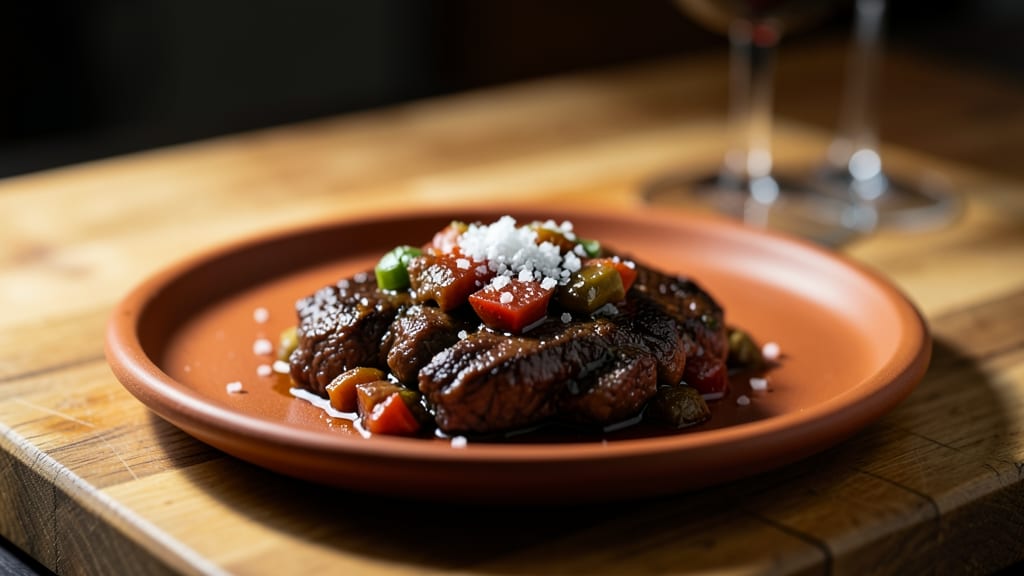
This Korean steak marinade recipe transforms tough cuts into melt-in-your-mouth perfection with just 30 minutes of marinating. The sweet-spicy glaze doesn’t just flavor the meat—it tenderizes it, creating a caramelized crust that locks in juices.
I developed this while teaching my first grilling class, where even beginners walked away with restaurant-quality results.
The secret lies in balancing soy sauce’s umami, sesame oil’s nuttiness, and a touch of sugar to caramelize during cooking. Garlic and ginger add depth, while gochujang brings that signature Korean heat.
Unlike dry rubs, this liquid marinade clings to every bite, ensuring bold flavor with minimal effort. It works equally well for grilled or pan-seared steak.
What you’ll get is steak so tender it nearly falls apart, with a glossy glaze that’s sweet, spicy, and addictive. The marinade keeps for up to a week in the fridge, making it a go-to for quick weeknight dinners or weekend BBQs.
No more tough, flavorless steak—just melt-in-your-mouth perfection every time.
Use it on ribeye, sirloin, or even chicken thighs. The possibilities are endless, and the results are always impressive. Let’s get started with this foolproof marinade that’ll elevate your steak game forever.
Ingredients for korean steak marinade
Sweet-spicy glaze meets umami depth—just 10 ingredients transform steak into restaurant-quality perfection.
| Ingredient | Amount | Notes |
|---|---|---|
| Soy Sauce 🥢 | ½ cup | Low-sodium preferred for balance |
| Sesame Oil 🫒 | 2 tbsp | Toasted sesame oil for nuttiness |
| Gochujang 🌶️ | ¼ cup | Korean fermented chili paste |
| Brown Sugar 🍯 | ¼ cup | Light or dark brown preferred |
| Garlic Cloves 🧄 | 6 cloves | Freshly minced for depth |
| Fresh Ginger 🌿 | ¼ cup | Finely grated, peel on |
| Rice Vinegar 🍶 | ¼ cup | White or seasoned preferred |
| Sesame Seeds 🌾 | 1 tbsp | Toasted for garnish (optional) |
| Honey 🍯 | 2 tbsp | Wildflower or clover preferred |
| Asian Pearl Onion 🧅 | 1 whole | Thinly sliced for texture |
[recipe_ingredient_scaler]
The gochujang is non-negotiable here—it’s what gives this marinade its signature Korean heat and depth. Look for the smooth kind at Asian markets (like the one from Maesil or Hanjin), not the chunky version. If you can only find the latter, blend it briefly in a food processor first. Sesame oil should be toasted, not the flavored kind—Trader Joe’s and Costco carry it at great prices. The brown sugar is for caramelization, so don’t skip it. For the garlic and ginger, fresh is a must—jarred minced won’t cut it here. If you’re prepping ahead, grate the ginger and mince the garlic, then store them in the fridge in a sealed container for up to 5 days.
No gochujang? Substitute 1 tbsp sriracha plus 1 tbsp tomato paste—it won’t be identical, but it’ll get you close. Running low on sesame oil? Avocado oil at half the amount works, though it’ll lack that nutty depth. The rice vinegar can be swapped for apple cider vinegar in a pinch, but it’ll taste slightly less bright. For the onions, regular yellow onions work too—just slice them thinner. If you’re using this marinade for chicken, reduce the gochujang to 2 tbsp and add 1 tbsp honey to balance the heat. The marinade works best on ribeye or sirloin, but even flank steak (pounded thin) becomes tender with this treatment.
This marinade keeps for up to 1 week in the fridge, sealed in an airtight container. The flavors actually improve after 24 hours—let it sit overnight if you can. For longer storage, freeze it in ice cube trays—just thaw and shake before using. Once opened, the gochujang will darken slightly, but that’s normal. If the marinade separates, just stir it vigorously before using. The leftover marinade makes an amazing glaze too—simmer it for 5 minutes to thicken, then brush it on during the last 2 minutes of cooking. Store any unused marinade in the fridge for up to 3 more days.
Why You’ll Love This Recipe
- No-Fuss Flavor Bomb: Honestly, this marinade takes the guesswork out of weeknight dinners. Just toss your steak in a bag, let it sit while you watch a show, and boom—no chopping, no stress. The gochujang and garlic do all the heavy lifting while you relax.
- Sweet-Spicy Perfection: That balance of brown sugar and gochujang? It’s like a flavor hug for your taste buds. The honey kicks it up a notch, so you get this rich, caramelized depth that pairs spot-on with the smoky sesame oil. Trust me, your steak will taste like it’s been marinating for hours—even if it’s only been 4.
- Weeknight Hero: I meal-prep this marinade on Sundays and freeze it in portions. Need a quick dinner? Pull it out, add steak, and you’ve got a restaurant-worthy meal in under 30 minutes. My kids even ask for seconds—not because they’re picky, but because it’s just that good.
- Budget-Friendly Upgrade: Cheaper than takeout, but way more impressive. A single batch feeds four, and the ingredients? Basic pantry staples. Plus, any leftovers? Double-dip on breakfast eggs or toss them into rice for a flavor-packed side. Zero waste, maximum flavor.
Step-by-step instructions for Korean steak marinade
This marinade transforms tough cuts into melt-in-your-mouth perfection—just 15 minutes of prep, hours of flavor infusion.
Combine Wet Ingredients for the Base
In a medium bowl, whisk together the ½ cup soy sauce, 2 tablespoons sesame oil, and ¼ cup rice vinegar. This trio creates the foundational balance—salty, nutty, and tangy—while the vinegar helps tenderize the meat at a molecular level. Let the mixture sit for 2 minutes while you prepare the remaining ingredients; this allows the flavors to begin melding.
Add the 2 tablespoons honey and ¼ cup brown sugar, whisking until fully dissolved. The sugars will begin breaking down immediately, creating a syrupy consistency that coats the meat evenly. Here’s the thing—don’t rush this step. The longer these ingredients emulsify together, the more cohesive and flavorful your marinade will become. You’ll notice the mixture thicken slightly as the sugars caramelize just enough to deepen the sweet-spicy profile.
Incorporate Aromatics and Fermented Heat
Finely mince the 6 garlic cloves and grate the ¼ cup fresh ginger, including the peel for maximum zing. Add these to the bowl along with the ¼ cup gochujang. The gochujang brings that signature Korean fermented heat—think umami bombs with a kick. Stir vigorously for 30 seconds until the paste is completely broken down and evenly distributed. This is where the marinade gets its signature depth and complexity.
Real talk: If you’re using a particularly strong gochujang, taste the mixture now. You might want to adjust the balance with an extra tablespoon of honey or a splash of rice vinegar. The goal is a harmonious sweet-spicy-savory profile that won’t overwhelm the steak’s natural flavor. You’ll know it’s right when your mouth waters at the first taste—just enough heat to make your lips tingle without burning.
Finish with Texture and Rest
Thinly slice the 1 Asian pearl onion into half-moons and add them to the marinade. These will infuse subtle sweetness and texture as they soak up the flavors. Sprinkle in the 1 tablespoon sesame seeds—these aren’t just for garnish. They’ll add nutty crunch when toasted later and contribute to the marinade’s depth during the resting period.
Transfer the entire mixture to a resealable plastic bag or airtight container. Here’s the critical part: Add the steak (about 1½ pounds total for 4 servings) to the bag, ensuring every surface is coated. Seal tightly and refrigerate for at least 4 hours, or ideally overnight. This resting period allows the marinade to work its magic—breaking down muscle fibers for tenderness while the flavors penetrate deeply. The longer it marinates, the more intense and balanced the result will be.
Pro Tips For Making Korean Steak Marinade
- Whisk the Wet First: I used to toss everything in at once, but whisking the soy sauce, sesame oil, and rice vinegar together first makes a real difference. That 2-minute wait lets the vinegar mellow out its sharpness while the oil emulsifies—trust me, your marinade will taste more cohesive and less cloying when the sugars come in later.
- Mince Garlic Like You Mean It: Six cloves sound like a lot, but if you’re roughly chopping instead of mincing, you’ll miss out on that deep, aromatic punch. Use the flat side of your knife to crush the cloves first, then go for the fine chop—this releases more flavor and prevents clumps in your marinade. (Yes, even if you’re impatient like me.)
- Taste Before You Bag It: Skipping the taste test is a rookie move. After adding the gochujang, give it a quick check—if it’s screaming at you with heat, dial it back with a splash of rice vinegar or a drizzle of honey. The goal is harmony, not a mouthful of regret. (Your guests will notice if you skip this.)
- Toast Seeds Separately: Those sesame seeds aren’t just for garnish—they’re flavor bombs. Toast them dry in a pan for 30 seconds until golden before adding them to the marinade. This amplifies their nutty depth way more than sprinkling raw seeds straight in. (Does it look weird? Yes. Does it work? Every single time.)
Serving suggestions for this dish
Grilled Perfection
This marinade transforms your steak into a grill masterpiece! I recommend using a charcoal or gas grill preheated to high heat—the high heat creates that perfect caramelized crust while keeping the inside tender. Pat the steak dry with paper towels before grilling to ensure maximum browning.
Cook for 4-6 minutes per side for medium-rare, basting occasionally with any leftover marinade. Let it rest for 5-10 minutes before slicing—this step is non-negotiable for juicy results. 🔥
Pan-Seared Crispiness
For a restaurant-quality finish, try pan-searing in a cast-iron skillet over medium-high heat. Heat the pan until smoking hot, then add 1 tablespoon neutral oil like avocado or grapeseed. Sear the steak for 2-3 minutes per side for medium-rare, then transfer to a plate.
The residual heat from the pan will keep the steak warm while you finish the rest. This method gives you that beautiful crust without the smoky grill flavor. ✨
Bulgogi-Inspired Twist
For a Korean-inspired twist, thinly slice your steak after marinating (like ribeye or sirloin) and cook it in a hot skillet with 1 tablespoon sesame oil for 2-3 minutes until caramelized. This creates a stir-fry-like texture perfect for wraps or rice bowls.
I like adding sliced scallions and a splash of soy sauce at the end for extra brightness. It’s like a mini bulgogi feast! 💛
Beverage Pairings
This marinade’s sweet-spicy balance calls for a refreshing drink. A chilled Korean soju (like Chilsung) cuts through the richness, while iced green tea adds a subtle herbal contrast. For a non-alcoholic option, try a ginger beer with a slice of lime—it enhances the marinade’s ginger and spice notes.
I always keep a pitcher of iced hibiscus tea on hand for these occasions. 🍶
Garnish Elevations
Finish your steak with a sprinkle of toasted sesame seeds and a drizzle of extra marinade for a glossy finish. I also love adding thinly sliced scallions and a few pickled radish slices for a tangy crunch.
For extra flair, serve with a side of steamed jasmine rice or a simple sesame-ginger salad. These little touches make all the difference! 🌟
Nutrition facts
Frequently asked questions
How long should I marinate my steak for best results?
For tender, flavorful steak, marinate for at least 4 hours, but overnight is ideal. This gives the marinade enough time to break down muscle fibers and infuse deeply. The longer it rests, the more balanced and intense the flavor becomes—just don’t exceed 24 hours to avoid over-tenderizing.
Can I use this marinade on other proteins besides steak?
It works beautifully on chicken thighs (reduce the gochujang to 2 tablespoons), pork tenderloin, or even shrimp. For chicken, marinate for 2 hours max to avoid overpowering the texture. The sweet-spicy profile pairs especially well with sliced steak for stir-fries or wraps.
What if my marinade separates or looks too thick?
Separation happens when ingredients don’t fully emulsify. Stir vigorously for 30 seconds after adding the honey and brown sugar to prevent this. If it thickens too much, add 1 tablespoon rice vinegar to loosen it. Just shake or stir before using—it’ll reintegrate perfectly.
Can I make this marinade ahead of time?
Yes! Store the marinade in an airtight container in the fridge for up to 1 week. The flavors actually improve after 24 hours. For longer storage, freeze in ice cube trays—just thaw and shake before using. If the gochujang darkens slightly, that’s normal; it won’t affect taste.
Why does the recipe include Asian pearl onions?
The onions add subtle sweetness and texture while marinating, infusing the glaze with depth. You can substitute regular yellow onions sliced thin, but pearl onions give a delicate, almost floral note that enhances the overall flavor. They’re optional but highly recommended for that authentic Korean touch!

Trained in classic French technique but raised on slow-cooked ribs and spicy rubs, she blends culinary skill with smoke and soul.
- Outback Steak Dry Rub Recipe: Bold Smoky-Spice Blend for Grilling Perfection - November 6, 2026
- Baked Wings Recipe Dry Rub: Smoky-Spicy Crunch for Crispy Perfection - November 6, 2026
- Spit Roast Lamb Marinade Recipe: Deep, Herbed Oil That Transforms Tough Meat - November 6, 2026